Skip to content

Wood stove installation in Texas typically runs $3,500 to $8,500 all in, with most North Texas homeowners landing between $4,500 and $7,000 once the stove, the chimney system, floor protection, and the permit are accounted for. The stove itself is rarely the biggest line item. What moves the number most is how the exhaust leaves the house. Running a new insulated Class A chimney up through a two-story roofline in Frisco costs considerably more than dropping a stainless liner down an existing masonry chimney in an older East Dallas home. Clearances matter just as much, because a stove that cannot legally sit where the homeowner wants it often needs wall shielding or a larger hearth pad. ALC inspects the existing system first, at no charge for repair evaluations, so the quote reflects the real venting situation.
Here is what the individual pieces of a Texas wood stove installation usually cost:
- Freestanding wood stove, unit only: $1,200 to $4,500. Small steel plate stoves sit at the bottom, soapstone and cast iron models with catalytic combustors at the top.
- New Class A insulated chimney system: $2,000 to $4,500 installed. Price tracks the height of the run and the roof pitch. A single-story ranch in Garland is straightforward; a steep two-story roofline needs more staging and bracing.
- Stainless liner into an existing masonry chimney: $2,500 to $5,000. Covers the insulated liner, appliance connector, top plate, and rain cap. Offsets and a deteriorated smoke chamber push it higher.
- Hearth pad or floor protection: $400 to $1,500. A prefabricated listed pad is the cheap route. Custom tile or stone over cement board runs higher, especially when the pad must be oversized for the loading door clearance.
- Wall shielding to reduce clearances: $300 to $900. Sheet metal or a listed heat shield with a ventilated air gap lets a stove sit closer to a combustible wall than the unshielded distance allows.
- Permit and municipal inspection: $75 to $350. Dallas, Fort Worth, Plano, and Frisco each handle these permits differently, and some require a licensed contractor to pull it.
- First-season sweep and inspection: $99.99. A new stove builds creosote faster than owners expect during break-in, and ALC includes a Level 1 inspection with the sweep.
The terms that show up on a wood stove quote, in plain language:
- Class A chimney. The insulated stainless chimney rated for solid fuel that carries exhaust from the ceiling up through the roof, as distinct from the pipe visible in the room.
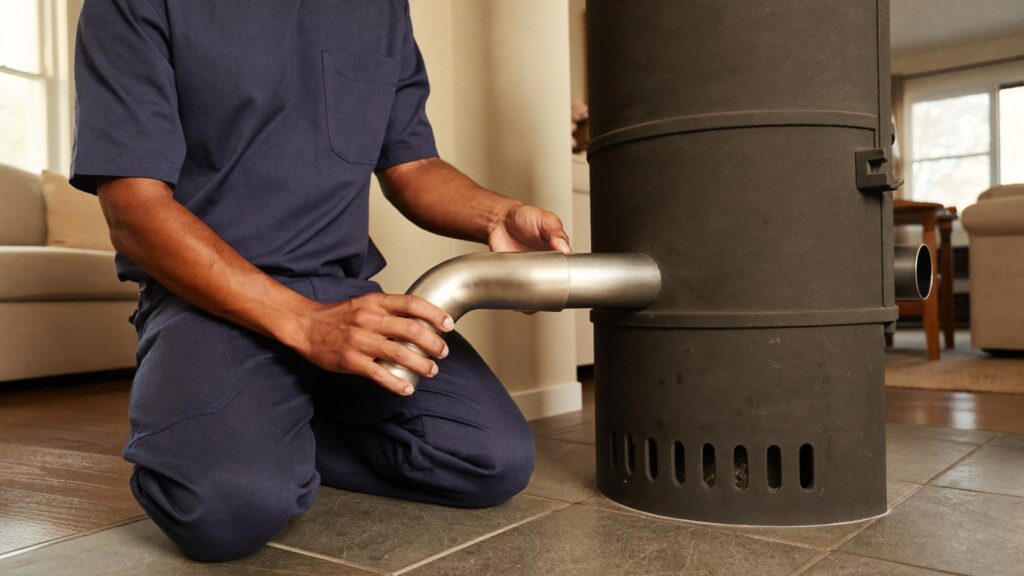
- Connector pipe. The single or double wall stove pipe bridging the stove’s flue collar and the chimney. It is not rated to pass through a ceiling or wall on its own.
- Clearance to combustibles. The minimum distance between any hot surface and anything that can burn, including drywall on wood studs, trim, cabinets, and flooring.
- Listed appliance. A stove tested to a standard such as UL 1482 and labeled with its own clearance numbers. Unlisted stoves fall back on the larger defaults in NFPA 211.
- Hearth pad. The non-combustible floor protection under and around the stove. Its required size and R-value both come from the stove’s label.
- Chimney liner. The stainless or clay conduit inside a masonry chimney that contains exhaust and protects the brick. An oversized flue needs one sized to the stove.
- Ceiling support box. The listed metal box carrying the chimney’s weight where it passes through the ceiling, holding the required air gap to the framing.
- Spark arrestor. The screen at the chimney top that keeps embers off the roof and the yard, which matters during a Texas burn ban or a dry August.
Treat every figure above as a starting point rather than a quote. Two houses on the same street can differ by three thousand dollars, because one has a usable masonry chimney and the other needs a full Class A run. A CSIA-certified professional has to look at the flue, measure the location, and read the stove’s label before anyone can give a real number. Be careful with the very low installation prices advertised every autumn. A quote well under $2,500 for a complete install is usually missing the liner, the permit, or the floor protection, and those pieces reappear as change orders once the crew is in the house.

Key Takeaways
- A complete wood stove installation in Texas runs $3,500 to $8,500, with the chimney system rather than the stove driving most of the spread.
- NFPA 211 sets a default clearance of 36 inches from an unlisted stove to combustible material, while a listed stove may sit as close as 6 to 18 inches per its label.
- Floor protection must extend at least 18 inches in front of the loading door and 8 inches beyond the sides and back on an unlisted installation.
- Venting a wood stove into an existing masonry fireplace flue almost always requires a correctly sized insulated stainless liner, at $2,500 to $5,000.
- The 3-2-10 rule applies: the chimney must terminate 3 feet above the roof penetration and 2 feet above anything within 10 horizontal feet.
- A wood stove burning through a North Texas winter needs at least one sweep and Level 1 inspection a year, which ALC provides at $99.99 for a single system.
What Does Wood Stove Installation Cost in Texas?
The stove is the part homeowners shop for and the chimney is the part that sets the budget. A $1,900 stove on a sound masonry chimney that only needs a liner can finish around $4,500. That same stove in a room with no chimney, on the far side of a two-story house in Prosper, can reach $8,000 once the Class A pipe, ceiling support box, insulation shield, flashing, and bracing are included.
Labor in the DFW market generally accounts for 35 to 50 percent of the installed total on a new Class A job, and less on a liner retrofit. Most installations take one to two working days, so a crew promising a finished stove in three hours is either working with an ideal flue or skipping something.
Is a wood stove cheaper than a fireplace?
Installed, a freestanding stove usually costs less than a new masonry fireplace and more than a basic prefabricated firebox, as our fireplace installation cost guide for Dallas lays out. Where the stove wins is heat per dollar, at 70 to 80 percent efficiency against an open fireplace that sends most of its heat up the flue.
What does a wood stove insert cost instead?
An insert that slides into an existing fireplace opening typically runs $3,000 to $7,000 installed with the liner, avoiding the hearth pad and the Class A chimney entirely. Our fireplace insert installation page explains which openings accept one.
What Clearances Does a Wood Stove Need Under NFPA 211?
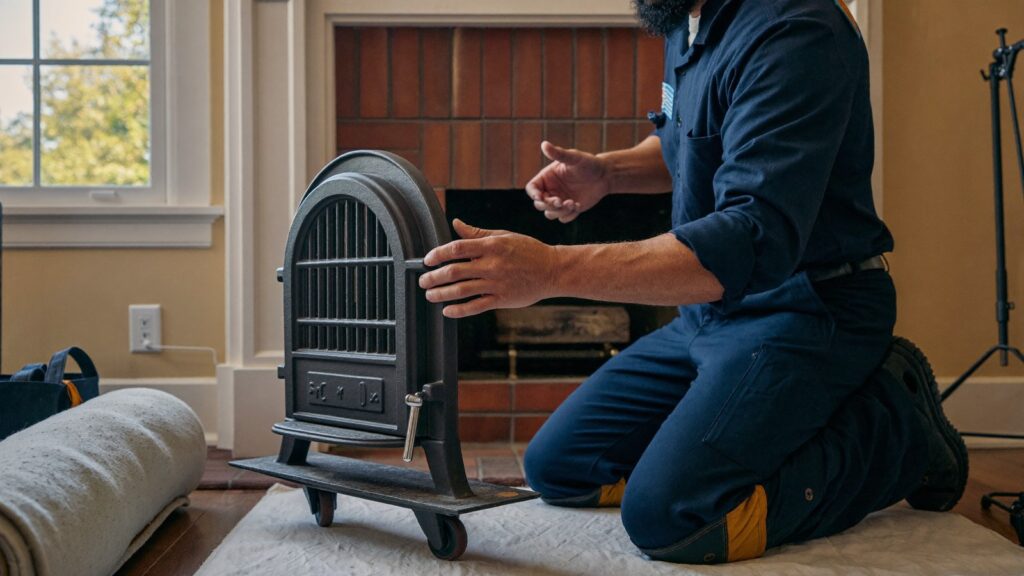
Clearance is where most do-it-yourself wood stove projects in Texas fail inspection, and it is the most common reason we get called out to move a stove installed the previous season. NFPA 211 draws a hard line between listed and unlisted stoves. A UL listing label governs, and its numbers are often far smaller than the code default, because the manufacturer tested the stove with its own shields fitted.
With no label, common on older units bought secondhand, the default applies: 36 inches of air space from the stove body to any combustible wall, and 18 inches from the connector pipe. Thirty-six inches is a lot of floor space in a typical Collin County living room, and that surprise is what sends most projects back to the drawing board.

How far does a wood stove pipe have to be from the wall?
Single wall connector pipe needs 18 inches to combustibles under the NFPA 211 default. Double wall connector pipe, being listed and tested, commonly allows 6 inches, and that difference alone often decides whether a corner installation works at all.
Can a wood stove sit on a carpeted floor?
Not directly. Carpet and pad are combustible, so a listed hearth pad or a site-built non-combustible assembly has to sit under the stove and extend past it by the distances on the label. Cutting the carpet back to the pad edge gives a cleaner and more level result.
Do You Need a Chimney Liner for a Wood Stove?
If the stove vents into an existing masonry chimney, almost always yes. A fireplace flue is sized for the large, relatively cool exhaust volume of an open fire. A wood stove produces a smaller and cooler stream, so in an oversized flue the gases slow, cool below the dew point, and deposit creosote on the way up. That is how a well-meaning installation becomes a chimney fire risk two winters later.
Liner sizing follows the stove’s flue collar, usually 6 inches, and the run should be continuous from the appliance connector to the top plate. We compare the materials in our guide to chimney liner types, and the service detail is on our chimney relining page. Older homes in Oak Cliff, Denton, and the historic pockets of Waxahachie often have unlined or collapsed flues.
Can a wood stove share a flue with a furnace?
No. NFPA 211 does not permit a solid fuel appliance to share a flue with a gas or oil appliance. A house with one chimney serving the furnace usually needs a second liner or a separate Class A run for the stove, which is an expensive surprise worth establishing before the stove is purchased.
Do You Need a Permit to Install a Wood Stove in Dallas or Fort Worth?
In nearly every DFW municipality, yes. A solid fuel burning appliance and its chimney are permitted mechanical work, and the final inspection documents that clearances, floor protection, and termination were done correctly. Fees generally land between $75 and $350. The larger variable is process, since some cities issue to the homeowner, others require a licensed contractor, and a few want a sketch of the stove location first.
Skipping the permit tends to cost more than pulling it. Carriers ask about solid fuel appliances, and an unpermitted stove that contributes to a fire gives them a reason to contest the claim. It also becomes a negotiating point at resale, where the buyer’s inspector flags the stove and the deal stalls until someone pays for a Level 2 inspection, which our post on the three chimney inspection levels explains.
Does a wood stove affect home insurance in Texas?
It can. Most Texas carriers will cover a home with a wood stove, but many ask for proof of professional installation, a permit record, or a recent inspection report. Homeowners who inherit a stove with an unknown history are the ones who run into trouble, which is reason enough to book a chimney inspection before the first burn.
What Kind of Chimney Does a Freestanding Wood Stove Need?
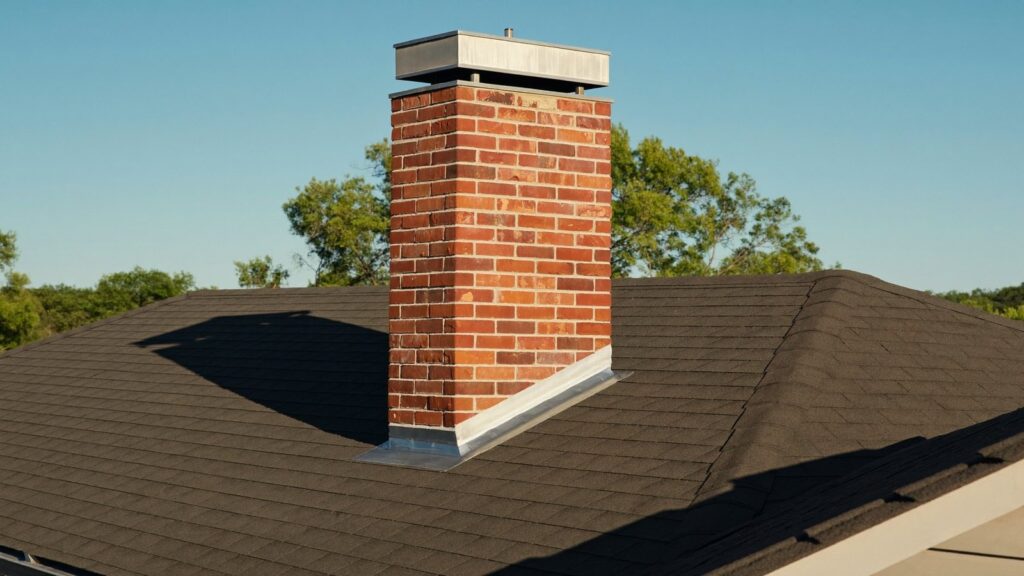
A freestanding wood stove needs a chimney rated for solid fuel, meaning either a listed Class A insulated chimney or a masonry chimney with a properly sized liner. B-vent, used for gas appliances, is not rated for wood and will not pass inspection. The chimney also has to terminate high enough to draft, which is the 3-2-10 rule: at least 3 feet above the roof penetration, and at least 2 feet above any part of the structure within 10 horizontal feet.
That rule causes real problems on the complicated rooflines common in newer Frisco, Prosper, and Flower Mound construction, where a stove on a lower roof section ends up in the wind shadow of a taller gable. The stove then smokes back into the room on cold mornings and drafts fine by afternoon. Adding 2 to 4 feet of insulated pipe with bracing runs $400 to $1,200, and getting the height right at installation is far cheaper than going back up later.
Does a wood stove chimney need to be straight?
Straight is best, and every offset costs draft. Two 30 degree offsets are generally acceptable and sometimes unavoidable when the chimney has to miss a roof truss, but a run with multiple bends will underperform, build creosote faster, and be harder to sweep.
Does a Wood Stove Make Sense in the North Texas Climate?
Dallas and Fort Worth see roughly 2,000 to 2,500 heating degree days in a typical year, far fewer than the northern markets wood stoves were designed for, so a stove here rarely pays for itself on fuel savings. What it provides is independence during the events North Texans actually worry about. When the grid went down in February 2021 and gas pressure dropped across the metroplex, the houses with a stove and a cord of seasoned oak stayed warm.
Intermittent use creates its own maintenance pattern. Stoves that run hot daily stay cleaner than stoves lit six or eight times a winter, often with wood that sat outside through a humid Texas summer. Short, smoldering fires are ideal conditions for creosote, which is why our sweeps often find heavier deposits in a lightly used Texas stove than in a hard-working one further north. Our article on creosote buildup explains why stage three glazing is expensive to remove.
What wood burns best in North Texas?
Post oak, red oak, pecan, and mesquite are the local hardwoods worth burning, and all need 9 to 12 months of seasoning under cover to reach the 20 percent moisture content a modern stove wants. Green wood makes the cool, smoky fires that coat a flue fastest.
How Do You Maintain a Wood Stove After Installation?
A stove concentrates deposits in a much smaller flue, so a given thickness of creosote represents a far larger percentage of the opening than in a fireplace. CSIA and NFPA 211 both call for annual inspection at minimum, which for a stove used through a DFW winter means a sweep and a Level 1 inspection every year, generally in late summer before the first cold front.
The homeowner side matters more than people expect. Burn dry wood, run the stove hot enough to keep the flue above condensing temperature, empty the ash to about an inch rather than bare metal, and watch the glass. Glass that blackens within a few fires means the wood is wet or the air is choked down too far. Our annual chimney maintenance checklist has the seasonal sequence, and anything structural goes to our chimney repair team.
How often does a wood stove chimney need sweeping?
At least once a year for any stove in regular use, and twice for daily burning or wood that is not fully seasoned. CSIA recommends sweeping when deposits reach roughly one eighth of an inch, and on a 6 inch stove flue that point arrives much sooner than most homeowners assume.
Wood Stove Installation Routes Compared
| Installation route | What the work involves | Typical installed cost | Permit required |
|---|---|---|---|
| New stove, new Class A chimney through the roof | Ceiling support box, insulation shield, insulated pipe, roof flashing, storm collar, bracing, hearth pad | $5,500 to $8,500 | Yes |
| New stove vented into an existing masonry chimney | Insulated stainless liner, appliance connector, thimble, top plate, rain cap, hearth pad | $4,000 to $6,500 | Yes |
| Wood insert into an existing fireplace opening | Insulated liner, block-off plate, surround panel, firebox prep | $3,000 to $7,000 | Usually |
| Replacing an existing stove on a sound chimney | Removal and disposal, connector rework, liner inspection, clearance re-check against the new label | $1,800 to $4,000 | Usually |
| Relocating a stove to another room | Full new chimney run, new hearth pad, patching the abandoned penetration | $5,000 to $9,000 | Yes |
| Correcting a failed or unpermitted installation | Clearance remediation, shielding, hearth extension, chimney height correction, re-inspection | $900 to $3,500 | Yes |
Why Choose ALC Chimney Service in Dallas and Fort Worth?
ALC Chimney Service is a family owned company with more than 15 years of combined experience on North Texas chimneys, and we have completed more than 10,000 jobs across the DFW metroplex. Our technicians are CSIA certified, and the company is licensed and insured. We hold a 5.0 rating from more than 172 Google reviews.
A chimney sweep with a Level 1 inspection is $99.99, and a double chimney is $189.99. Repair inspections are free, and we charge no trip fees anywhere in our service area, listed on our service areas page. Use that free inspection before you buy the stove, because knowing whether the existing flue can be lined or needs a full Class A run changes the budget by thousands.
Frequently Asked Questions
How much does it cost to install a wood stove in Texas?
Most complete installations run $3,500 to $8,500, with typical DFW projects between $4,500 and $7,000. The stove accounts for $1,200 to $4,500 and the chimney for most of the rest. A new Class A chimney costs $2,000 to $4,500 installed, while lining an existing masonry chimney runs $2,500 to $5,000.
Can I install a wood stove myself in Texas?
Most DFW cities permit solid fuel appliance work and require an inspection, and some require a licensed contractor to pull it. Even where homeowner installation is allowed, the clearance and termination rules in NFPA 211 are unforgiving, and a failed inspection means moving a stove that is already connected.
Do I need a liner to vent a wood stove into my fireplace?
In nearly every case yes. A fireplace flue is far larger than a stove needs, so exhaust cools and slows on the way up and deposits creosote heavily. A correctly sized insulated stainless liner, usually 6 inches to match the flue collar, runs $2,500 to $5,000.
What is the 3-2-10 rule for a wood stove chimney?
The chimney must terminate at least 3 feet above the point where it passes through the roof, and at least 2 feet above any part of the building within 10 horizontal feet. It keeps the chimney out of the turbulent air that pushes smoke back into the room. Adding height later costs $400 to $1,200.
How often should a wood stove chimney be swept?
At least once a year for a stove in regular use, and twice for daily burning or wood that is not fully seasoned. CSIA recommends sweeping once deposits reach about one eighth of an inch. ALC sweeps a single system with a Level 1 inspection for $99.99.
Is a wood stove worth it in the DFW climate?
It rarely pays back on fuel savings alone, given roughly 2,000 to 2,500 heating degree days a year. The value is resilience during a grid or gas failure, as February 2021 demonstrated across the metroplex, plus the output of a modern EPA-certified unit at 70 to 80 percent efficiency.
How long does a wood stove installation take?
One to two working days for most jobs. A liner retrofit into a sound masonry chimney can finish in a day, while a new Class A chimney through a two-story roof usually runs into a second. Municipal inspection is scheduled afterward and adds calendar time rather than labor.
If you are planning a wood stove for this winter, get the chimney looked at before you buy the stove. ALC Chimney Service offers a free repair inspection, a $99.99 sweep with a Level 1 inspection, and $189.99 for a double chimney, with no trip fees in our DFW service area. Call (877) 656-0851 or reach us through our contact page.
Find our chimney safety tips faster on Google