Skip to content

Most chimney repairs in North Richland Hills land between $350 and $3,500, with crown resurfacing and flashing work at the low end from $350 to $1,200, and a partial rebuild above the roofline running $1,800 to $4,500. ALC Chimney Service starts every repair with a free inspection, and our standard sweep with a Level 1 inspection is $99.99, or $189.99 for a double chimney. What moves the number in this part of Tarrant County is mostly age and water. North Richland Hills built out heavily between the late 1950s and the early 1980s, so a large share of the chimneys here are at or past the fifty year mark, and the crowns poured in that era were thin by modern standards. Add the expansive clay soil that shifts under these slabs, the spring hail that chews up flashing, and the hard freezes that split saturated brick, and the repair list grows quickly once water has been getting in for a few seasons.
Typical chimney repair pricing in North Richland Hills, and what drives each range:
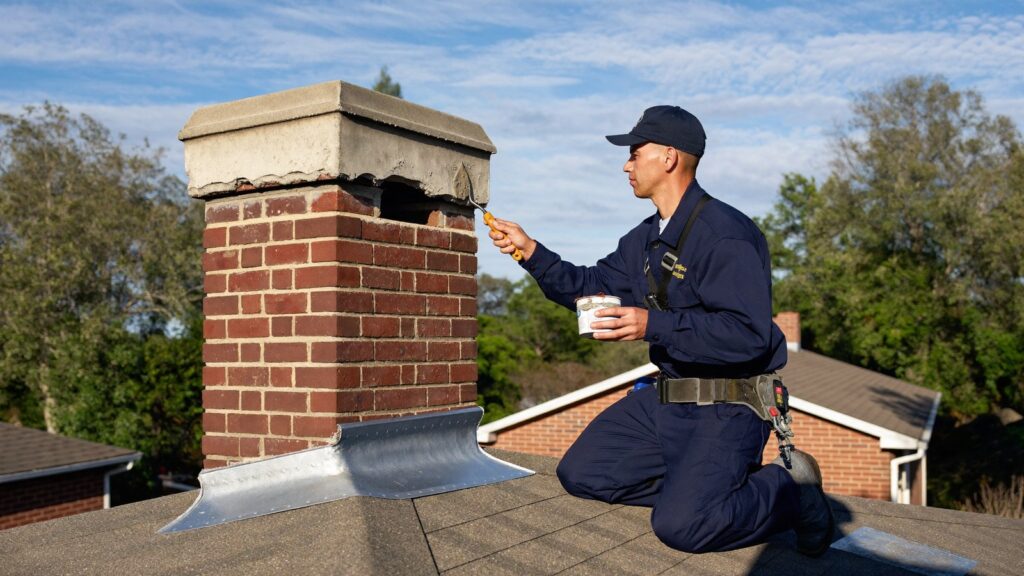
- Crown repair or resurfacing, $350 to $900. A sealant overlay across hairline cracking sits at the bottom. Price climbs with stack height and roof pitch.
- Full crown rebuild, $900 to $2,500. Once the old crown has broken apart it comes off and gets formed again with a proper overhang. Multi-flue crowns on the larger homes off North Tarrant Parkway cost more because there is more area to form.
- Flashing repair or replacement, $300 to $1,200. Resealing a sound step flashing is quick, while cutting new counterflashing into the mortar joints after a hail season takes a full morning and more material.
- Tuckpointing and mortar joint repair, $500 to $1,800. Repointing two feet of stack above the roofline is a different job from a chimney running down an exterior wall to grade.
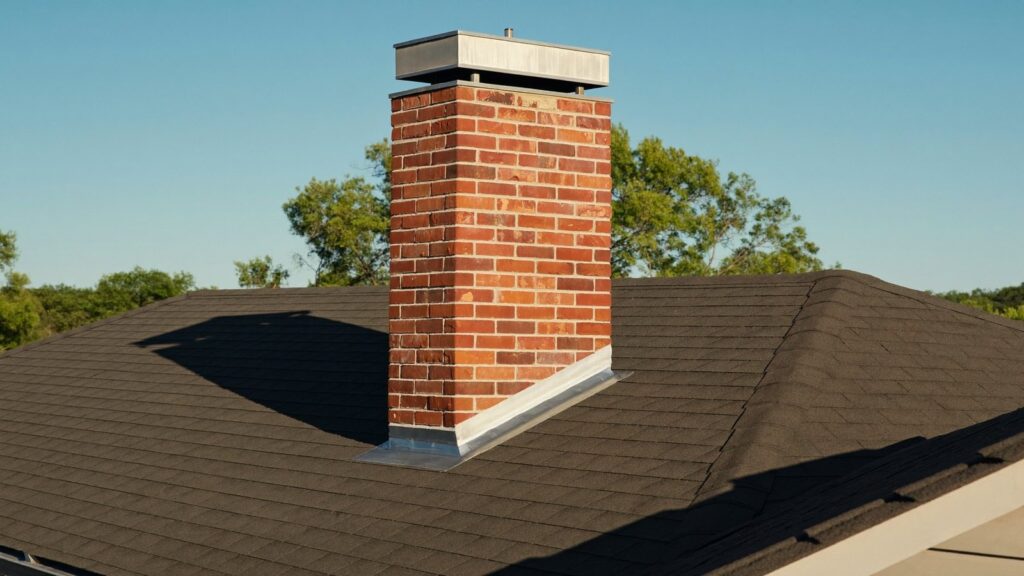
- Chimney cap installation, $175 to $900. A stainless single flue cap sits near the bottom, and a custom multi-flue cap or a full chase cover sits at the top.
- Firebox repair, $450 to $1,800. Repacking refractory joints and swapping split firebrick is routine, but rebuilding a bulging back wall runs past the top of this range.
- Partial rebuild above the roofline, $1,800 to $4,500. When brick has spalled past the point where repointing helps, the top courses come down and go back up on sound masonry.
The parts of the system your technician will name during the inspection:
- Chimney crown. The sloped concrete slab across the top of a masonry chimney that sheds water away from the brick, ideally with an overhang and a drip edge.
- Chase cover. The metal lid on a framed chase housing a factory built fireplace. It does the crown’s job on prefabricated systems and is usually the first part to rust through.
- Flashing. The layered sheet metal sealing the joint where the chimney passes through the roof, in two parts: base flashing against the shingles and counterflashing let into the mortar joints.
- Flue. The passage inside the chimney that carries smoke and combustion gases out of the house. One appliance normally needs one dedicated flue.
- Chimney liner. The clay tile, stainless steel or cast-in-place surface inside the flue that protects the surrounding masonry from heat and acidic condensate.
- Firebox. The chamber where the fire burns, built from refractory firebrick in a masonry fireplace or from steel and refractory panels in a prefabricated unit.
- Smoke chamber. The tapered space above the damper that funnels smoke into the flue. Rough smoke chambers trap creosote and cause draft complaints.
- Spalling. The flaking of a brick face after water soaks in and freezes. Spalled brick has to be replaced rather than coated.
Treat every figure above as a starting point rather than a quote, because pricing depends on what a technician finds once the crown, the flue and the firebox have been looked at in person, and two houses on the same street in Smithfield can need very different work. A CSIA-certified professional should evaluate the system first. One honest warning about this market: a $39 or $49 sweep coupon almost never covers an actual sweep. It buys a few minutes in your living room and a sales pitch, and Tarrant County homeowners call us every winter after paying several times what a straightforward job should have cost.

Key Takeaways
- Most chimney repairs in North Richland Hills fall between $350 and $3,500, and cost is driven by how long water has been getting into the masonry.
- A cracked crown is the most common finding on homes built here between 1960 and 1985, and crown work runs $350 to $2,500 depending on resurfacing versus a rebuild.
- NFPA 211 calls for chimneys, fireplaces and vents to be inspected at least once a year, and a Level 2 inspection is required after any event that could have damaged the system.
- Spalled brick cannot be sealed or painted back to health. Once the face has flaked off, the affected courses have to be replaced.
- Spring is the practical repair season in North Texas, since mortar cures properly in moderate temperatures and booking by August avoids the winter rush.
- A sweep and Level 1 inspection with ALC is $99.99, or $189.99 for a double chimney, with free repair inspections and no trip fee in the service area.
What does chimney repair cost in North Richland Hills?
The first repair is usually cheap and the fifth one is not. A homeowner who calls when the crown first shows hairline cracks is looking at $350 to $900 for a resurface. The same homeowner who waits five years, while rain runs down the inside of the stack every spring, now has a failed crown, saturated brick, rusted flashing and often a damaged firebox, which is how a $600 job becomes a $4,000 one.
Across the jobs we run in North Richland Hills, Watauga, Haltom City and the rest of northeast Tarrant County, the middle of the distribution sits around $900 to $1,500. That covers crown resurfacing, a new stainless cap and a flashing reseal, which is the package that stops water entry on a typical 1970s ranch. Jobs over $4,000 are rebuilds, relining, or a firebox past repair. Labor is the larger share of the bill, which is why stack height and roof pitch move the price more than homeowners expect.
Is the estimate actually free?
Ours is. We do not charge for a repair inspection and there is no trip fee inside the service area. What we will not do is quote a chimney over the phone from a photo, because the components that matter most, the crown, the flue interior and the smoke chamber, are the ones you cannot see from the driveway.
What should a chimney repair quote include?
A real quote names the component, the method and the material. “Repoint the north and west elevations above the roofline, grind to three quarters of an inch, type N mortar, color matched” tells you something. “Chimney repair, $2,400” tells you nothing and leaves the contractor free to decide later what that money bought.
Why do North Richland Hills chimneys crack and spall?

What does the clay soil have to do with it?
Northeast Tarrant County sits on expansive clay that swells when it takes on water and shrinks hard through a dry August, and the slab moves with it. A chimney is the heaviest single element attached to most houses here, so it responds to that movement before the rest of the structure does. The classic symptom is a stair step crack running diagonally through the mortar joints, or a gap opening between the chimney and the siding. Seasonal movement is normal in North Texas, but a crack wider at the top than the bottom is worth a Level 2 inspection.
How much damage does the freeze and thaw cycle really do?
More than people expect from a warm climate. The damage is not about how cold it gets, it is about how many times wet masonry crosses the freezing point. DFW runs through dozens of those cycles in an average winter, and a hard event like February 2021 can do in a week what a decade of normal weather would do. Water soaked into a brick expands by roughly nine percent when it freezes and pushes the face off from the inside, which is why a chimney that looked fine in November can be shedding brick chips by March.
Does hail damage chimneys?
It damages the metal parts. Tarrant County takes serious hail most springs, and the components that suffer are the chase cover on prefabricated systems, the cap, and the flashing. A dented chase cover holds standing water instead of shedding it, rusts through in a couple of seasons, and then drips down the outside of the flue pipe. If a storm was bad enough that your roof was inspected, the chimney should have been inspected too. Our guide to chimney flashing repair covers what to look for at the roof line.
What are the most common chimney repairs on older North Richland Hills homes?
North Richland Hills incorporated in 1953 and grew through the 1960s and 1970s, with later waves along North Tarrant Parkway and in the HomeTown development after 2000. That history shows up in the work. The older neighborhoods around Smithfield, Richland Terrace and Holiday Heights are full of masonry fireplaces with clay tile liners and thin poured crowns, while post-1990 construction tends to have factory built fireplaces inside a framed chase, which carries a different repair list.
On the masonry side the order of frequency runs crown, flashing, mortar joints, cap, firebox, liner. Crown repair leads because the original crowns were often poured flush with the brick with no overhang and no bond break, so they crack along the flue tile and send water straight into the stack. Flashing is second because thirty year old galvanized steel in contact with mortar corrodes, and because roof replacements frequently reuse old counterflashing instead of cutting in new. On the prefabricated side the chase cover is almost always the problem, since a builder grade galvanized cover with no slope ponds water, rusts, and lets it run down the chase.
When does the liner need attention?
Clay tile liners crack. A tile flue in a house from 1972 has been through thousands of heat cycles, and any chimney fire, even a small one the homeowner never noticed, can shear the tiles. Cracked tiles let heat and combustion gases reach the surrounding brick and framing, which is why a Level 2 inspection with a camera is the only honest way to assess a liner. Relining with stainless steel typically runs $2,000 to $5,500 depending on height, diameter and insulation.
What about the firebox?
Hairline cracks in refractory mortar joints are normal and get repacked during routine maintenance. What is not normal is a gap wide enough to see the surrounding brick through, a back wall leaning into the firebox, or missing chunks of firebrick, since those let heat reach combustible framing. Our breakdown of firebox crack repair versus a full rebuild walks through where the line sits.
How do I know whether I need a repair or a full rebuild?
There is a practical test. If the masonry below the damage is sound and plumb, you are looking at a repair. If the damage reaches below the roofline, if the stack is visibly out of plumb, or if more than roughly a third of the brick faces have spalled, you are looking at a rebuild of at least the section above the roof. A technician checks plumb on two faces, sounds the brick for hollow spots, and looks at the attic chase for water staining that shows how long this has been going on.
The cost gap is real. Repointing and crown work on a structurally sound chimney lands in the $900 to $2,500 band, a partial rebuild above the roofline is $1,800 to $4,500, and a full rebuild from the foundation runs $5,000 to $12,000. Because the gap is that wide, get a second opinion before authorizing a full rebuild, and ask to be shown the condition that makes it necessary. Our chimney repair service page explains how we scope this work, and a Level 2 chimney inspection produces the evidence either way.
Does homeowners insurance cover chimney repair in Tarrant County?
Sometimes, and the dividing line is sudden damage versus gradual deterioration. Hail that dents the chase cover, wind that takes the cap off, a lightning strike, or a chimney fire are typically covered. A crown that cracked slowly over twenty years, eroded mortar and spalling brick are classified as maintenance and declined consistently. The two often arrive together here, so if spring hail damaged your roof and you are already filing, have the chimney documented in the same claim. We provide written inspection reports with dated photographs and will send them directly to an adjuster.
What documentation helps a claim?
Dated photographs from before and after the event if you have them, an inspection report naming the components and the damage, and a scoped written estimate rather than a lump sum. Carriers push back hardest on vague estimates. A line item reading “replace hail damaged 24 gauge galvanized chase cover with stainless, 46 by 46 inches, with cricket” survives review far better than “chase cover, $1,100”.
When is the best time to schedule chimney repair in North Texas?
March through August. Mortar cures correctly in moderate temperatures, crews have real availability, and you are not trying to book a mason during the first cold week of November along with everyone else in the metroplex. Phones start ringing the first morning that drops below fifty degrees, and by mid December the schedule is two to three weeks out across most of DFW. There is a sequencing argument for spring as well, since a repair in May leaves the chimney dry and sealed before summer heat bakes the masonry and before the next winter’s freeze cycles arrive. Homeowners in neighboring Grapevine and Southlake run into the same pattern, since the whole northeast Tarrant corridor shares the weather and the same handful of qualified crews.
How long does a typical repair take?
Crown resurfacing, cap installation and flashing reseals are usually single day jobs. A crown rebuild is a day of work plus cure time before the chimney should be used. Repointing above the roofline runs one to two days, and a partial rebuild is two to four days depending on weather, since no masonry work happens in rain or a hard freeze.
How do I choose a chimney repair contractor in North Richland Hills?
Start with certification. The Chimney Safety Institute of America certifies technicians through an exam and continuing education, and CSIA certification is the baseline credential in this trade. Confirm general liability insurance and workers compensation, because this work happens on a roof. Ask how long the company has worked in Tarrant County specifically, since the clay soil behavior and the hail pattern here are local knowledge.
Then look at the inspection itself. A technician who goes on the roof, runs a camera down the flue, and shows you photographs of the findings is doing the job, while one who looks at the firebox from the living room and produces a four figure estimate is selling. Be skeptical of urgency as well. Real emergencies exist, including an active chimney fire and a flue blocked by a nest, but most findings can wait a week while you get a second opinion. The CSIA homeowner resources are a useful neutral reference while you compare bids.
| What the inspection finds | What it leads to if ignored | Typical repair cost |
|---|---|---|
| Hairline cracks in the chimney crown | Water enters the stack and spalling begins within two to three winters | $350 to $900 |
| Rusted or improperly reused flashing | Leaks into the attic and ceiling drywall beside the fireplace | $300 to $1,200 |
| Eroded mortar joints above the roofline | Brick loosens, the stack leans, repointing is no longer an option | $500 to $1,800 |
| Missing or damaged chimney cap | Rain, debris and animals enter the flue, liner cracks, nesting blockages | $175 to $900 |
| Cracked clay tile liner | Heat and combustion gases reach surrounding masonry and framing | $2,000 to $5,500 |
| Spalled brick above the roofline | Structural loss in the top courses, eventual partial collapse | $1,800 to $4,500 |
| Cracked firebox refractory panels | Heat transfer to combustible framing behind the firebox | $450 to $1,800 |
Why Choose ALC Chimney Service in North Richland Hills?
ALC Chimney Service is a family owned company working across Dallas and Fort Worth, and northeast Tarrant County is part of our regular route rather than an occasional trip. Our technicians are CSIA certified, and the company is licensed and insured with more than 15 years of combined experience and over 10,000 completed jobs across DFW. We hold a 5.0 rating from more than 172 Google reviews.
Pricing is published rather than negotiated at the door. A chimney sweep with a Level 1 inspection is $99.99, and a double chimney is $189.99. Repair inspections are free, and there are no trip fees anywhere in the service area. You get photographs of what we found and a scoped written estimate, and nothing gets repaired that we have not shown you first. Our North Richland Hills chimney services page lists sweeps, inspections, repairs, relining, caps and animal removal.
Frequently Asked Questions
How much does chimney repair cost in North Richland Hills, TX?
Most repairs fall between $350 and $3,500. Crown resurfacing, cap installation and flashing work sit at the lower end from $350 to $1,200. Repointing runs $500 to $1,800, and a partial rebuild above the roofline is $1,800 to $4,500. A full rebuild from the foundation starts around $5,000. The spread comes down to how much water has reached the masonry and for how long.
How often should a chimney be inspected in Texas?
NFPA 211 calls for an annual inspection of chimneys, fireplaces and vents regardless of how often the fireplace is used. In North Texas an annual Level 1 inspection is enough for a system in known condition. A Level 2 inspection is required after a chimney fire, a hail or wind event, a change of appliance or fuel, or a property sale.
Can I repair spalling brick myself with sealant?
No. Sealing or painting spalled brick traps the moisture that caused the problem inside the masonry and accelerates the damage. Spalled faces have to be cut out and replaced with matching brick, and the water entry at the crown, cap or flashing has to be corrected at the same time or the new brick goes the same way.
Is a cracked chimney crown dangerous?
Not immediately, which is why it gets ignored. The danger is cumulative. A cracked crown lets water into the stack, where it degrades mortar, cracks liner tiles over successive freeze cycles, and rusts the damper. A $500 crown repair in year one prevents several thousand dollars of consequential damage by year five.
Does a chimney need repair if we never use the fireplace?
Often yes, because almost all chimney deterioration in North Texas is weather driven rather than use driven. A chimney that has not had a fire in it for ten years still has a crown taking rain, flashing taking hail, and brick going through freeze cycles. An unused chimney also attracts nesting birds and squirrels, and that blockage becomes a problem the moment anyone lights a fire.
How long does chimney repair take?
Crown resurfacing, cap installation and flashing work are typically one day. Crown rebuilds take a day plus cure time before burning. Repointing above the roofline runs one to two days, and a partial rebuild takes two to four days. Weather drives the schedule, since masonry work stops in rain and in a hard freeze.
Will my homeowners insurance pay for chimney repair?
It depends on the cause. Sudden events such as hail, wind, lightning and chimney fires are usually covered. Gradual deterioration, including an aged crown, eroded mortar and spalling, is treated as maintenance and declined. If a storm damaged your roof, document the chimney in the same claim and provide a scoped estimate rather than a lump sum figure.
Do you work on prefabricated fireplaces as well as masonry?
Yes. A large share of post-1990 homes in North Richland Hills have factory built fireplaces inside a framed chase, and those need chase covers, flashing, cap work, refractory panel replacement and flue pipe service rather than masonry repair. The diagnosis and the parts are different, and we service both system types.
If your chimney is showing cracks, rust streaks, a stain on the ceiling beside the fireplace, or brick chips on the roof, get it looked at before the first cold snap. ALC Chimney Service offers a free repair inspection in North Richland Hills with no trip fee, and our sweep with a Level 1 inspection is $99.99, or $189.99 for a double chimney. Call (877) 656-0851 or request an appointment online and we will get a certified technician out to take a look.
Find our chimney safety tips faster on Google