Skip to content

The chimney 3-2-10 rule says a chimney has to extend at least 3 feet above the highest point where it passes through the roof, and it has to stand at least 2 feet taller than anything within 10 feet of it measured horizontally. That includes the roof ridge, a dormer, a second story wall and a parapet. The requirement comes from NFPA 211 and it is written into the International Residential Code at section R1003.9, which Dallas, Fort Worth and nearly every North Texas city enforces. When a chimney falls short, the fix in the DFW area usually runs between $450 and $3,200 depending on how many brick courses are missing and how hard the roof is to work on. ALC Chimney Service checks the termination height on every Level 1 inspection included with our $99.99 sweep, and the repair inspection itself is free.
What chimney height work typically costs in Dallas and Fort Worth:
- Adding one to three brick courses, $450 to $1,100. The common fix when a chimney misses the 3 foot mark by a few inches. Price moves with brick matching, since a 1970s Richardson or Garland blend is harder to source than a modern red.
- Extending a masonry chimney 2 to 4 feet, $1,200 to $3,200. Past about three courses the mason has to tie into sound brick below and often reset flue tile, which adds a second day on the roof.
- Rebuilding everything above the roofline, $2,400 to $6,500. Typical when the top of the stack is already spalling, because stacking new brick on failing brick buys a year or two at best.
- Metal flue extension on a prefabricated chimney, $350 to $900. Factory pipe sections are listed components, so cost depends on whether the manufacturer still makes the part.
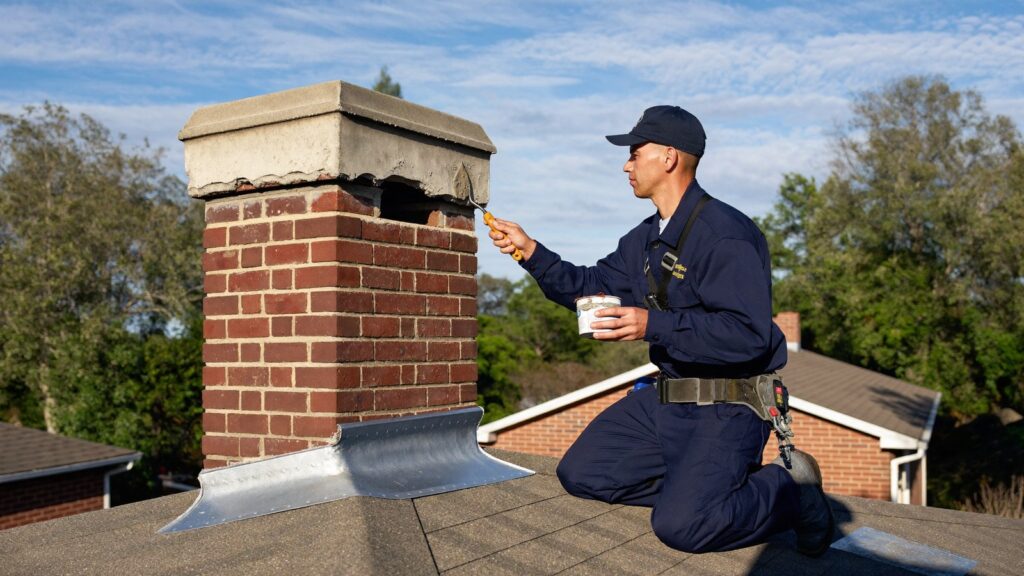
- Pouring a new crown after an extension, $400 to $1,200. A proper crown overhangs the brick and carries a drip edge, which is why it costs more than the thin mortar wash production builders left behind.
- Steep or two story roof access, add $150 to $450. A 12/12 pitch in Southlake or a three story Frisco roofline needs staging and a second technician.
The parts of the system this rule actually touches:
- Flue. The passage inside the chimney that carries smoke and combustion gas from the firebox out above the roof.
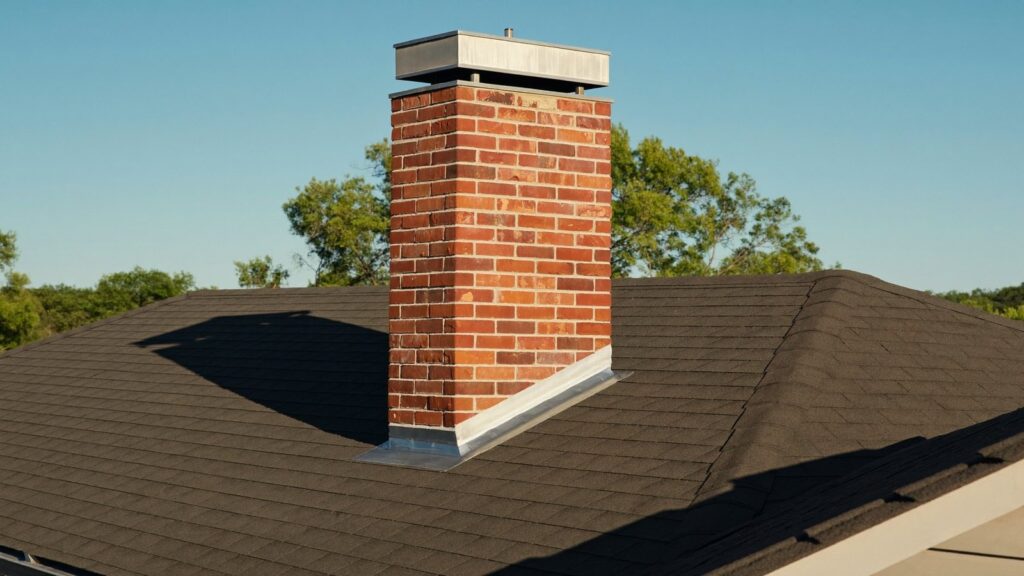
- Termination. The top of the chimney where the flue opens to outside air. Every measurement in the rule is taken to this point.
- Roof penetration. Where the chimney passes through the roof deck. The high side of that opening is where the 3 foot measurement begins.
- Ridge. The horizontal peak where two roof planes meet. On most hip and gable homes it is what triggers the 2 foot part of the rule.
- Chimney crown. The sloped concrete slab on top of a masonry chimney that sheds water off the brick and away from the flue.
- Chimney cap. The metal lid and spark screen over the flue opening, which keeps rain, birds and embers out.
- Draft. The upward pull created by hot gas rising inside a warm flue. Draft is what moves smoke out of the house instead of into the living room.
Treat every figure above as a starting point rather than a quote. Height work is priced off what the mason finds standing next to the stack, and two chimneys that look identical from the driveway can be a thousand dollars apart because one has sound brick below the roofline and the other does not. Have a CSIA-certified professional look at the flue, the crown and the flashing first, since all of it gets disturbed when the top comes off. One thing worth saying plainly: if a company advertises a $49 sweep and then tells you on the roof that your chimney is dangerously short and needs $4,000 of work today, slow down. A real height problem is measurable, and it will still be there next week when a second opinion comes out.

Key Takeaways
- A chimney must terminate at least 3 feet above the point where it penetrates the roof, measured on the high side of that opening.
- It must also stand 2 feet above anything within a 10 foot horizontal radius, which on a steep roof means far more than 3 feet of total height.
- The requirement sits in NFPA 211 and in IRC section R1003.9, and North Texas cities adopt it through the residential code.
- A chimney short by even a few inches draws poorly on windy days, and North Texas gets its worst wind in the months people start burning.
- Correcting the height in DFW generally costs $450 to $3,200, and a full rebuild above the roofline runs $2,400 to $6,500.
- Height alone does not fix every smoking fireplace, so a Level 2 inspection should rule out flue sizing, a blocked damper and creosote before anyone orders brick.
What is the chimney 3-2-10 rule?
The name is shorthand for three numbers that have to be satisfied at the same time. Three feet is the minimum vertical distance from the roof surface to the top of the flue. Two feet is the height the chimney has to clear anything within ten feet of it. Ten feet is the horizontal distance that defines what counts as nearby. It catches a surprising number of North Texas homes, particularly the ranch style builds of the 1960s and 1970s where the chimney sits low on a shallow slope.
What makes the rule confusing is that the two measurements compete. A chimney can be a full 4 feet above the shingles where it comes through the roof and still fail, because the ridge twelve feet away is 5 feet taller than the flue. The code does not average them. On a 10/12 pitch, a chimney placed low on the slope can need 8 or 9 feet of exposed masonry to satisfy the second condition. There is physics behind the numbers too. Wind moving over a roof separates into a turbulent zone that hugs the surface and spills over the ridge, and a flue sitting inside that zone gets positive pressure exactly when it needs to be pulling air up.
Where exactly does the 3 foot measurement start?
From the highest point where the chimney meets the roof surface, not the lowest. On a sloped roof the chimney penetrates at an angle, so the uphill side of that opening sits higher than the downhill side. Measuring from the downhill corner is the most common homeowner mistake, and it can make a chimney look compliant when it is 6 or 8 inches short.
What counts as a structure within 10 feet?
Any part of the building or anything attached to it. The ridge counts, a dormer counts, a second story wall counts. The ten feet is measured horizontally, as if you dropped a plumb line, so a ridge ten feet away across the slope may be closer than ten feet in plan view. Trees do not count for code purposes, though a heavy canopy over the stack will still ruin the draft.
Why does chimney height change the way a fireplace draws?
A chimney is a pump with no moving parts. Hot gas inside the flue is lighter than the cold air outside it, so it rises, and that rise pulls room air in through the fireplace opening behind it. The taller the column of hot gas, the stronger the pull. That is why a fireplace drafting cleanly in a two story house with a tall stack will struggle in a single story house where the flue is barely above the shingles.
North Texas adds its own twist. We get long stretches of mild weather where the temperature difference between inside and outside is small, which weakens the thermal pull on its own. Then comes the front that drops thirty degrees in four hours and brings a twenty five mile an hour north wind, which is the exact weather that makes people light a fire. A short chimney that behaves on a calm December evening will push smoke into the room on a gusty one.
The other half of the equation is the fireplace opening, which the flue has to be sized against, usually around a tenth of its area on a masonry fireplace. No amount of extra height compensates for an undersized flue, so read our breakdown of what each chimney inspection level covers before committing to masonry work.
Can a short chimney make a fireplace smoke in windy weather?
Yes, and wind is usually how homeowners discover the problem. When air moving over the roof hits the ridge it curls back down into a low pressure pocket on the leeward side, and a flue terminating inside that pocket can briefly reverse. The result is a puff of smoke into the room as a gust passes, which is why people describe it as intermittent.
Does a taller chimney always draw better?
Up to a point. Adding height increases the thermal pull, but a very tall exterior masonry chimney on a cold morning also cools the gas faster, and a cold flue drafts poorly and builds creosote more quickly. Past that ceiling the better answer is an insulated liner rather than more brick.
How do you check whether your chimney meets the 3-2-10 rule?
You need to be on the roof, or have someone up there with a tape and a level, because a short chimney rarely looks short from the ground. The measurement itself is simple. Run the tape from the high side of the roof penetration to the top of the flue tile or metal pipe, not to the top of the cap, then sight across to the ridge and anything else within ten feet and confirm the flue clears it by two feet.

Can you measure a chimney from the ground?
You can get an estimate. Stand back far enough to see the chimney and the ridge in one view and compare the exposed chimney height against a known reference such as a course of shingles, which is usually 5 and 5/8 inches of exposure. That tells you whether a professional measurement is worth booking. It is not something to hand a city inspector or a buyer’s agent.
Does a short chimney fail a home sale inspection?
It gets written up. A general home inspector will note the termination height as a deficiency, and a Level 2 chimney inspection documents it with measurements. It rarely kills a sale on its own, but it becomes a negotiation item, and buyers tend to discount it at more than the actual repair cost. Correcting it before listing usually costs less than conceding it at the table.
What does a Level 2 inspection add?
A Level 2 covers everything in a Level 1 plus accessible attic sections and a camera scan of the flue interior. That matters because height problems and liner problems produce the same symptom. A cracked, offset or glazed flue drafts badly no matter how tall the chimney is. Texas real estate transactions call for a Level 2 anyway, which we cover in our guide to the Level 2 chimney inspection for a home sale.
Does the 3-2-10 rule apply to prefabricated and metal chimneys?
It does, with an extra layer. Factory built fireplaces and their chimney systems are listed assemblies, tested and approved as a complete set of parts, so the manufacturer’s installation instructions govern. Those instructions almost always restate the 3-2-10 requirement alongside a maximum overall height and a list of approved pipe sections. Where the manufacturer is stricter than the code, the manufacturer wins.
Most DFW homes built after roughly 1990 have a prefabricated system behind what looks like a brick chimney, and that brick is usually a thin veneer over a framed chase. Two problems recur. A roofer removes a pipe section to work around the chase and does not put it back, or the chase was framed to a height the builder liked rather than the height the listing required. The fix is pipe rather than masonry, which is cheaper, but it has to be the manufacturer’s pipe, because mixing brands voids the listing and most insurers treat that as an unapproved installation.
If you are not sure which type you have, look inside the firebox. Metal panels and a round metal flue above the damper mean prefabricated. Firebrick laid in mortar with a rectangular clay flue means masonry. Our chimney inspection service in Dallas identifies the system type and the termination height on the first visit.
What about wood stoves and pellet appliances?
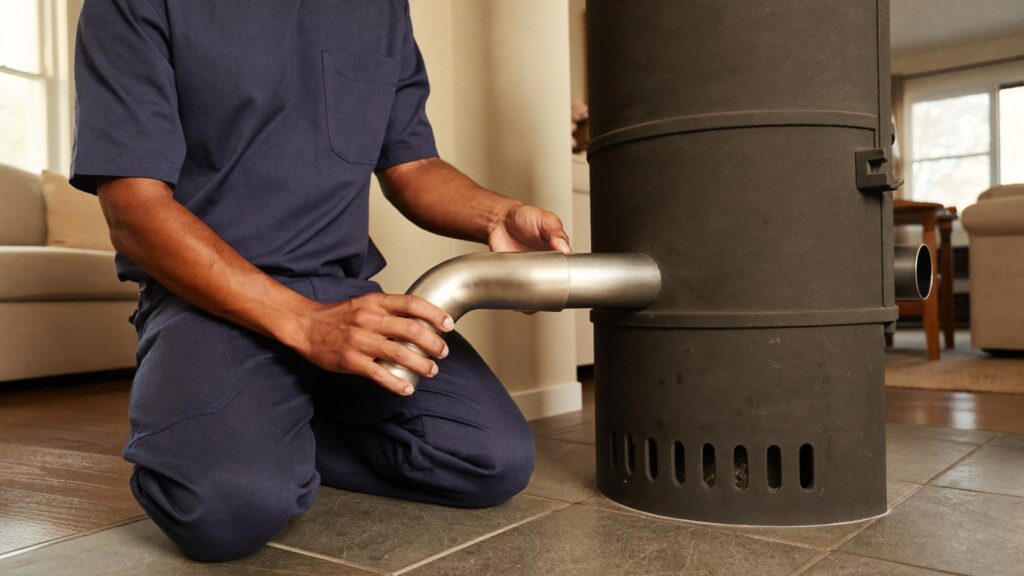
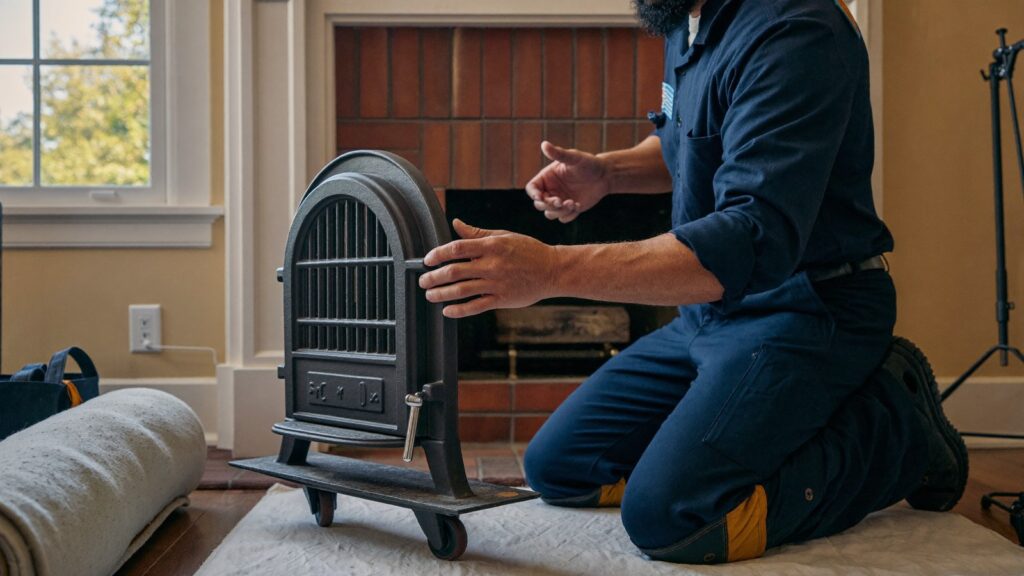
Wood stoves follow the same 3-2-10 geometry through NFPA 211, and the appliance listing adds its own minimum vertical run, often 12 to 15 feet from the stove outlet. Pellet appliances are power vented, so they follow the manufacturer’s vent terminal clearances instead, which we cover in our guide to wood stove installation in Texas.
How much does it cost to extend a chimney in Dallas and Fort Worth?
Most height corrections we do in the metroplex land between $450 and $3,200. The bottom of that range is a chimney missing the mark by one to three courses, where the mason pulls the crown, lays brick and pours a new crown in a single day. The top is a chimney needing 3 or 4 feet of new masonry, flue tile extension and a new cap, usually on a roof that needs staging. Full rebuilds above the roofline run $2,400 to $6,500, and they are the right call when the existing top courses are already spalling.
Prefabricated systems are cheaper, at $350 to $900 for a pipe extension and a new termination cap, assuming the parts are still available. Whatever the system, budget for the crown and the cap at the same time, since both come off to do the work and reinstalling a cracked crown on fresh masonry is money thrown away. Original flashing at the roofline is worth handling in the same visit too, because chimney repair in Dallas is cheaper when the access is already set up.
What drives the price up?
Roof pitch and height, because they decide whether one technician can work safely off a ladder or whether the job needs staging and a ground crew. Brick matching comes next. A discontinued blend from a 1978 Garland build may have to be salvaged or custom ordered, which adds several hundred dollars and a week of lead time.
Is a draft cap cheaper than bricks?
Often, at $300 to $850 installed. A wind directional or vacuum style cap can resolve a mild downdraft on a chimney that is only slightly short. It does not make a non-compliant chimney compliant, so if you are selling or pulling a permit it is no substitute. A standard cap from our chimney cap installation and repair service handles rain and animals, while draft specific designs cost more.
Do Dallas and Fort Worth require a permit to extend a chimney?
Usually yes. Both cities treat structural masonry work as permitted work under the residential code, and extending a chimney changes the structure above the roof. Crown work and small patch repairs often fall below the threshold, but adding courses to gain height generally does not. Each suburb runs its own permitting desk, so a job in Keller follows different paperwork than the same job in Mesquite.
The practical reason to pull the permit is not the fine. It is the paper trail. An inspected and permitted extension is documentation you hand a buyer three years from now, and it closes the question before a buyer’s inspector reopens it.
What a short chimney leads to if nobody corrects it:
| Finding at the chimney top | What it leads to if ignored | Typical DFW repair cost |
|---|---|---|
| Terminates less than 3 feet above the roof penetration | Failed inspection on sale, weak draft, smoke rollback into the room | $450 to $1,100 |
| Flue sits within 2 feet of a taller ridge or wall ten feet away | Wind driven downdraft, smoke and soot odor pushed back into the house | $1,200 to $3,200 |
| Short chimney with a heavy tree canopy overhead | Sluggish draft in mild weather and faster creosote accumulation | $1,200 to $3,200 plus tree work |
| Cracked crown on a chimney that is already short | Water into the brick, freeze damage, spalling that shortens it further | $400 to $1,200 |
| Prefab chimney with a pipe section removed by a roofer | Listing violation, clearance failure, carbon monoxide risk | $350 to $900 |
| Spalling brick through the top four courses | Loose masonry falling onto the roof and continued loss of height | $2,400 to $6,500 |
Why Choose ALC Chimney Service in Dallas and Fort Worth?
We are a family owned company working across the DFW metroplex, CSIA certified, licensed and insured, with more than 15 years of combined experience and over 10,000 jobs completed in North Texas. Our Google rating is 5.0 across 172 or more reviews. Height questions are one of the more common reasons people call us, usually after a home inspector flagged something or a windy evening went badly, and we would rather measure it properly than sell brick.
Our sweep is $99.99 and includes a Level 1 inspection, which covers the termination height along with the readily accessible parts of the system. A second chimney on the same visit brings the pair to $189.99. If we find a repair, the repair inspection is free, and there are no trip fees in our service area. You can see every city we cover on our service locations page.
Frequently Asked Questions
What does the 3-2-10 rule mean for a chimney?
It means a chimney must extend at least 3 feet above the point where it passes through the roof, and at least 2 feet above anything within 10 feet of it measured horizontally. Both conditions apply at the same time. The rule comes from NFPA 211 and appears in the International Residential Code at section R1003.9, which North Texas cities enforce through their adopted residential code.
Is the 3-2-10 rule a law or a guideline?
It is enforceable code across most of the United States, including Dallas and Fort Worth, because cities adopt the IRC and NFPA 211 by reference. For a chimney built before the current code, a city may treat it as a legal nonconforming condition until the chimney is altered. Once you touch it, current code applies to the work.
How tall should a chimney be above a steep roof?
Taller than most people expect. On a steep pitch the ridge rises quickly away from the chimney, so the 2 foot clearance over anything within 10 feet becomes the binding condition rather than the 3 foot minimum. On a 10/12 or 12/12 roof, a chimney set partway down the slope can need 7 to 9 feet of exposed height to comply.
Can I extend my chimney myself?
Masonry work above a roofline is not a reasonable homeowner project. It involves fall exposure, structural tie-in to existing brick, flue tile handling, and in most cities a permit and inspection. An extension that comes loose in a Texas wind event is both a liability and an insurance problem. Hire a CSIA-certified contractor who is licensed and insured.
Will extending my chimney stop it from smoking?
It will if height is the cause, and it will not if the cause sits elsewhere. Undersized flues, rusted dampers, creosote restriction, a cracked liner and a house under negative pressure from exhaust fans all produce the same symptom. A Level 2 inspection with a camera scan separates them, and it costs far less than guessing wrong with brick.
Does a chimney cap count toward the required height?
No. The measurement is taken to the top of the flue, meaning the top of the clay tile on a masonry chimney or the top of the metal pipe on a factory built system. The cap sits above that and adds nothing to the compliant height, though a well designed cap can improve how the chimney performs in wind.
How often should the termination height be checked?
Height does not change on its own, but the things around it do. A roof replacement, a room addition, a second story build or a new dormer can all put a compliant chimney out of compliance. Have it looked at as part of your annual sweep, and specifically after any roof or structural work. Our annual chimney maintenance checklist covers what else belongs on that visit.
What does NFPA 211 say about chimney height?
NFPA 211 is the standard for chimneys, fireplaces, vents and solid fuel burning appliances, and it sets the 3 foot and 2 foot in 10 foot minimums for residential chimney termination. The CSIA, which certifies chimney professionals, trains to the same standard. You can read more at the Chimney Safety Institute of America.
If you are not sure whether your chimney clears the ridge the way the code wants it to, the fastest way to find out is to have someone measure it. ALC Chimney Service covers Dallas, Fort Worth and the surrounding metroplex with a $99.99 sweep that includes a Level 1 inspection, $189.99 for a double chimney, a free repair inspection if we find something, and no trip fees in our service area. Call (877) 656-0851 or book through our contact page and we will tell you exactly where your chimney stands.
Find our chimney safety tips faster on Google