Skip to content
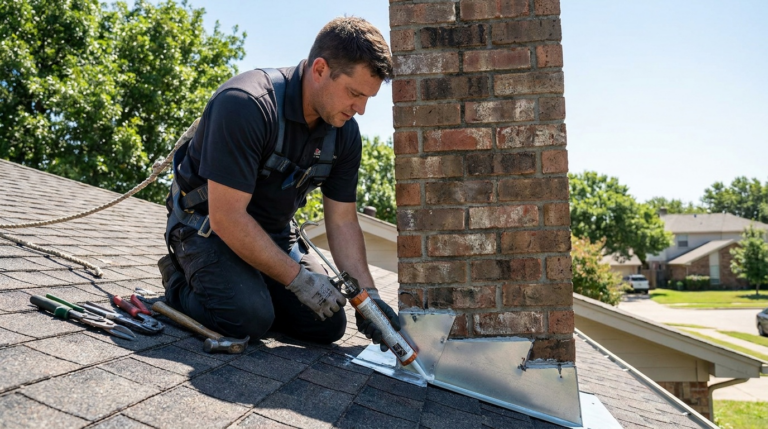
Chimney flashing repair in Dallas and across DFW stops roof leaks at the seam where your chimney meets the roof, and most jobs run about $300 to $1,800 depending on which pieces have failed. Most North Texas homeowners land in the middle for a step and counter flashing repair, with a simple reseal costing less and a full replacement with masonry work costing more. What moves the price is the roof pitch and height, the flashing material, the width of the chimney, the condition of the mortar joints, and how far the leak has already spread.
Chimney Flashing Repair Cost in Dallas / DFW
- Reseal existing flashing: $150 to $400, new sealant on sound metal
- Step flashing replacement: $300 to $600, woven into the shingle courses
- Counter flashing replacement: $500 to $1,200, reset into cut mortar joints
- Full flashing system replacement: $800 to $1,800, new base, step, and counter flashing
- Cricket or saddle on a wide chimney: about $1,000 and up, added to the job
- ALC repair inspection: free
Common Chimney Flashing Components
- Base or apron flashing: the front piece that folds up the brick and out over the shingles.
- Step flashing: L-shaped pieces woven between the shingle courses along the sides of the chimney.
- Counter flashing: metal set into the mortar joints that laps over and locks the step flashing in place.
- Cricket or saddle: a ridged diverter on the high side of wider chimneys that splits water around the brick.
- Sealant: high-temp, roof-grade caulk used as a secondary defense at the seams, never the primary seal.
Exact figures vary from home to home, so a CSIA-certified chimney professional should inspect the roof, flashing, and mortar joints before quoting a firm price. Try not to choose a company on the lowest number alone, because a caulk-only patch usually fails within a season and you end up paying twice for the same leak.
Key Takeaways
- Flashing is the layered metal that seals the chimney-to-roof joint, and it is the most common source of chimney leaks across DFW.
- Chimney flashing repair typically costs $300 to $1,800, driven by which pieces failed and whether the masonry needs work.
- Warning signs include ceiling stains after rain, rust streaks on the brick, and cracked or missing sealant.
- Counter flashing set into the mortar is the usual failure point, so flashing and masonry are often repaired together.
- A reseal suits newer flashing, while rusted or repeatedly leaking flashing is better replaced than patched.
- ALC Chimney Service offers a free repair inspection across Dallas and DFW at (877) 656-0851.
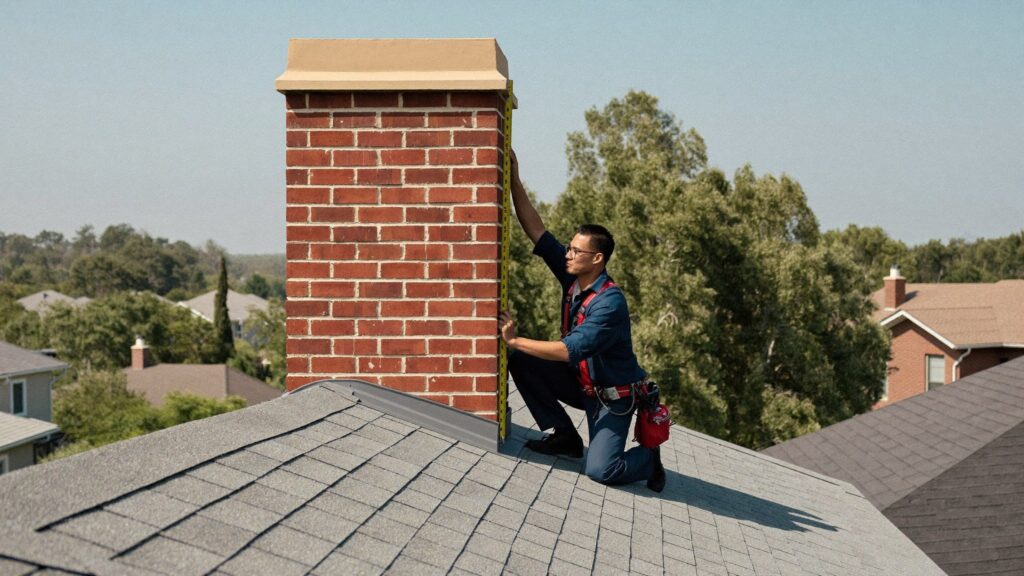
If you have ever seen a brown ring bloom on a ceiling after a hard Texas rain, there is a decent chance the flashing is the culprit. Not the cap, not the crown, not a cracked flue. The flashing. It is a small detail on the roof that people rarely think about until water is already inside the house, and by then the fix is usually bigger than it needed to be. So let me walk through what flashing is, why it fails here in North Texas, how you can tell yours is going, and what a proper repair looks like.
What is chimney flashing?
Chimney flashing is the layered metal that waterproofs the seam between the chimney and the roof deck. Brick and shingles expand and move at different rates, so you cannot just butt them together and hope. The flashing bridges that gap and channels rainwater back onto the shingles instead of down into the framing. Most of it is aluminum, galvanized steel, or copper if someone spent the money.
A full flashing system is really a few pieces working together, and it helps to know the names because a good tech will use them when they explain the repair:
- Base or apron flashing sits at the front, the downhill side of the chimney, and folds up the brick and out over the shingles.
- Step flashing is a run of small L-shaped pieces woven in between each course of shingles along the sides of the chimney. Each piece laps the one below it, like scales.
- Counter flashing (some people call it cap flashing) tucks into a groove cut in the mortar joints and folds down over the top of the step flashing. This is the piece that locks the whole system to the masonry.
- Cricket or saddle is a small ridged structure on the high, uphill side of wider chimneys. On anything more than roughly 30 inches wide it becomes close to mandatory, because it splits the water and sends it around the chimney instead of letting it pond against the brick.
When those pieces are cut, layered, and sealed correctly, water never gets a straight shot at the seam. When one of them is missing or done on the cheap, the whole thing leaks. I have pulled back plenty of pretty-looking roofs to find a bead of roofing tar doing the job three separate metal pieces were supposed to do. It works for a season, maybe two, then it dries out and cracks.
Why does chimney flashing fail?
Flashing does not last forever, and North Texas weather is honestly rough on it. A few reasons it gives out:
Freeze-thaw cycles. We get those swings where it is 70 degrees on a Tuesday and 25 by Thursday. Water works into tiny gaps, freezes, expands, and pries the metal and mortar apart a little at a time. Over years that adds up.
Heat and UV. Summer roof temperatures here can get brutal. Constant expansion and contraction fatigues the metal and bakes old sealant until it turns brittle and crumbles out of the mortar joint.
Storms and wind. A spring hailstorm can dent and lift flashing, and high wind can peel back a section that was already loose. After a big storm the flashing is worth a look even if the shingles seem fine.
Corrosion. Galvanized steel rusts eventually, especially where it stays damp. Once you see rust streaks the metal is thinning, and thin metal develops pinholes.
Bad installation. This is the big one, honestly. Flashing that was face-nailed through the top, or sealed with a smear of caulk instead of being cut into the mortar, or reused during a reroof when it should have been replaced. A lot of the leaks we chase are not old age at all. They are shortcuts from years ago finally catching up.
The counter flashing tends to be the first real failure point, because that is where the metal depends on the mortar joint holding it. When mortar erodes, and mortar in DFW does erode, the counter flashing loosens and rain follows the path behind it. That is also why flashing problems and general masonry wear often show up together. If the joints are going, the flashing is usually not far behind, and a good chimney inspection in Dallas will catch both at once.
What are the signs of bad chimney flashing?
The frustrating thing about a flashing leak is that the water rarely appears right at the chimney. It travels along a rafter or a bit of decking and drips somewhere that makes no sense, so people blame the roof or a plumbing line. Still, there are patterns. Here is what I tell homeowners to watch for.
- Ceiling or wall stains near the chimney chase, especially rings that darken during or just after rain.
- Rust-colored streaks running down the exterior brick below the flashing line.
- Visible gaps, lifted edges, or curled metal where the flashing meets the roof or the brick.
- Dried, cracked, or missing sealant along the counter flashing.
- Damp or musty smell in the attic, or actual water staining on the underside of the roof deck near the chimney.
- White chalky residue (efflorescence) on the interior brick, which means water is moving through the masonry.
- Peeling paint or wallpaper on the wall the chimney runs behind.
A single sign is not proof, and I try not to be alarmist. But two or three together, particularly after our storm season, is usually the flashing telling you it is done. Left alone, a flashing leak does not stay a flashing problem. It rots decking, ruins insulation, stains drywall, and in the worst cases it soaks the masonry enough that you end up needing a partial chimney rebuild in Dallas. Water damage compounds. That is the part people underestimate.
How is chimney flashing repaired?
A real repair is more than fresh caulk, though I will admit a reseal has its place on newer flashing. For anything past minor wear, here is roughly how the job goes.
- Inspection first. The tech gets on the roof, checks each flashing component, and looks at the mortar joints the counter flashing depends on. If the brick or joints are failing, that gets addressed before any metal goes back, otherwise you are flashing to a bad surface.
- Remove the failed metal. Old step and counter flashing come off, along with any tar or caulk somebody used as a patch. On a full job the base flashing comes off too.
- Prep the masonry. A groove, called a reglet, gets cut or cleaned out in the mortar joint so the new counter flashing has something to seat into. Loose mortar gets repointed.
- Install new step flashing. Fresh L-pieces are woven back in with the shingle courses, each lapping the one beneath it. This is the layer that actually sheds most of the water.
- Set the counter flashing. New counter flashing folds into the reglet, laps over the step flashing, and gets locked and sealed into the mortar. On a wide chimney a cricket may get built or rebuilt here.
- Seal and finish. High-temp, roof-grade sealant goes at the seams as a secondary defense, never as the primary one. Then a water test or the next rain confirms it.
Most straightforward flashing repairs are a same-day job, a few hours of work. A full system replacement with masonry involved, or a new cricket, can run longer. Flashing is one of those repairs where it usually makes sense to have the same crew look at the chimney cap and crown while they are up there, since those are the other two common leak sources and you are already paying for the roof access.
How much does chimney flashing repair cost?
Cost depends on which pieces are failing, the flashing material, how steep and tall the roof is, and whether the masonry needs attention too. Broadly, national pricing for flashing repair runs from about $300 up to $1,800, and what we see across North Texas lines up with that. Here is a rough breakdown to set expectations.
| Repair type | What it involves | Typical DFW cost |
|---|---|---|
| Reseal existing flashing | New sealant at the counter flashing, minor touch-ups on sound metal | $150 to $400 |
| Step flashing replacement | Swap corroded or loose step pieces woven into the shingles | $300 to $600 |
| Counter flashing replacement | Cut a new reglet, reset and seal metal into the mortar joints | $500 to $1,200 |
| Full flashing system replacement | New base, step, and counter flashing, plus repointing as needed | $800 to $1,800 |
| Cricket or saddle build (wide chimney) | Framed water diverter on the uphill side, then flashed and shingled | $1,000 and up, added |
A number that looks far below these ranges is often a caulk-only patch, and those tend to come back. I would rather someone spend a bit more once than pay three times for the same leak. If the masonry itself is the problem, you may be looking at repointing or chimney repair in Dallas alongside the flashing, and it is worth pricing those together. ALC also offers a free repair inspection, so at least the diagnosis part costs you nothing.
Should you repair or replace chimney flashing?
This is the question I get most, and the honest answer is it depends on the age and how localized the trouble is. Patching flashing that has one bad spot and is otherwise sound is reasonable. Patching a rusted-through system that has leaked twice already is throwing money away. Here is how I weigh it.
| Factor | Lean toward repair | Lean toward replacement |
|---|---|---|
| Flashing age | Under 10 to 15 years | Old, or unknown and corroded |
| Leak history | First leak, single entry point | Recurring leaks, multiple spots |
| Metal condition | Solid, just a loose or dry seam | Rusted, thin, pinholed, or bent |
| Roof work | Roof otherwise fine | Reroof or shingle work happening anyway |
| Cost now | Lower up front | Higher up front |
| Expected lifespan | A few more years | 20 years or more |
One rule of thumb: if you are already reroofing, replace the flashing at the same time even if it looks okay. It is cheap to do while the shingles are off and expensive to do later. Reusing old flashing during a reroof is one of the shortcuts I mentioned earlier, and it comes back to bite people.
Does chimney flashing tie into other leak sources?
Flashing is the most common leak point, but it is not the only one, and a good tech checks the neighbors. The chimney crown, the concrete slab up top, can crack and let water in. The cap, or the lack of one, lets rain straight down the flue. A worn-out crown sometimes gets confused for a flashing leak, and vice versa. If water keeps showing up after a flashing repair, the next suspects are usually the crown, the cap, or the masonry joints. Sometimes it is worth a fresh coat of masonry waterproofing on the brick as a whole to slow absorption. And if the flue liner has taken on water damage over the years, that is a separate conversation about chimney relining in Dallas.
Homeowner chimney flashing checklist
You do not need to climb up there yourself, and honestly I would rather you did not. But from the ground, a window, or the attic, you can keep an eye on things between professional visits. Here is what to look at.
- After heavy rain, check the ceiling and walls around the chimney chase for new or growing stains.
- Look at the exterior brick below the roofline for rust streaks or white efflorescence.
- From the ground with binoculars, scan for lifted, curled, or obviously loose metal at the chimney base.
- In the attic, look and smell around the chimney penetration for damp wood, wet insulation, or a musty odor.
- Note whether sealant along the flashing looks cracked, shrunken, or missing.
- After any hail or windstorm, add the flashing to your post-storm walkaround.
- Schedule a professional roof-level inspection once a year, ideally before the wet season.
If any of that turns something up, get it looked at sooner rather than later. Flashing leaks are cheap early and costly once the framing is involved.
Why homeowners across DFW call ALC Chimney Service
ALC Chimney Service is a family-owned, CSIA-certified company, licensed and insured, with more than 15 years of combined experience and over 10,000 jobs across Dallas and the wider metroplex. We hold a 5.0 rating from 172 Google reviews, which for this kind of work is something we are proud of. We handle flashing, caps, crowns, sweeps, relining, and full repairs, and we serve the whole DFW area including Fort Worth, Plano, and neighboring cities. You can see the full service map on our locations page, or read more about us.
Right now the sweep and inspection promo is $99.99, a second chimney is $189.99, and the repair inspection is free, which is the one that applies to most flashing calls. If you think water is getting in, the smart move is to have someone confirm where before the next storm makes it worse. Call us at (877) 656-0851 or reach out through our contact page, and if you also need a routine cleaning we can bundle that with a chimney sweep in Dallas on the same visit.
Frequently Asked Questions
How do I know if my chimney flashing is leaking?
The clearest tell is water. Look for stains on the ceiling or wall near the chimney that appear during or shortly after rain, rust streaks on the brick, and cracked or missing sealant where the metal meets the masonry. In the attic, damp wood or a musty smell around the chimney penetration points the same direction. Because the water can travel before it drips, a roof-level inspection is the reliable way to confirm it.
Can chimney flashing be repaired, or does it need full replacement?
Both happen. If the flashing is relatively young and only one section or seam has failed, a targeted repair or reseal is fine. If the metal is rusted, thin, or has leaked more than once, replacement is the better value because a patch on failing metal just buys a few months. A quick inspection settles which camp you are in.
How much does chimney flashing repair cost in Dallas?
Most flashing repairs in the DFW area land between about $300 and $1,800. A simple reseal on sound metal can be $150 to $400, step flashing replacement runs $300 to $600, counter flashing set into new mortar joints is $500 to $1,200, and a full system replacement reaches the upper end. Masonry repairs or a new cricket add to that.
Is chimney flashing a roofer or a chimney company job?
It sits right on the line, which is why leaks get bounced between trades. A chimney company that also handles masonry is usually the better call, because flashing failures so often involve the mortar joints the counter flashing seats into. A roofer may reseal the metal but skip the masonry side, and then the leak returns. ALC handles both the flashing and the brickwork.
How long does chimney flashing last?
Good aluminum or galvanized flashing, installed correctly, often lasts 20 years or more. Copper can go longer. That said, North Texas freeze-thaw swings, UV, and storms shorten the life of the sealant and the mortar bond well before the metal itself gives out, so the seams usually need attention sooner than the flashing does.
Can I repair chimney flashing myself?
A homeowner can dab fresh sealant on a small gap, and that may hold for a bit. But real flashing work means getting on the roof, cutting reglets into mortar, and weaving step pieces into shingle courses, which is easy to get wrong and dangerous to attempt on a steep roof. A DIY caulk patch tends to mask the leak rather than stop it, so I would treat it as a stopgap, not a fix.
Does flashing repair stop every chimney leak?
Not always, because flashing is only the most common leak source, not the only one. If water still shows up after a flashing repair, the usual next suspects are a cracked crown, a missing or damaged cap, or deteriorated mortar joints. A thorough tech checks those on the same visit so you are not chasing the leak twice.
How long does a flashing repair take?
A standard flashing repair is often a few hours, done in a single day. A full replacement that includes repointing the mortar, or building a cricket on a wide chimney, can stretch into a longer job. Weather plays a part too, since nobody should be sealing flashing in the rain.
About the Author
Jonathan is a CSIA-certified chimney specialist at ALC Chimney Service with more than 15 years of hands-on experience sweeping, inspecting, and repairing fireplaces and chimneys across Dallas and the DFW metroplex. He has worked on thousands of residential chimney systems and writes to help North Texas homeowners keep their fireplaces safe, efficient, and up to NFPA and CSIA standards. Have a question about your chimney? Call ALC Chimney Service at (877) 656-0851 for a free inspection.
Find our chimney safety tips faster on Google