Skip to content

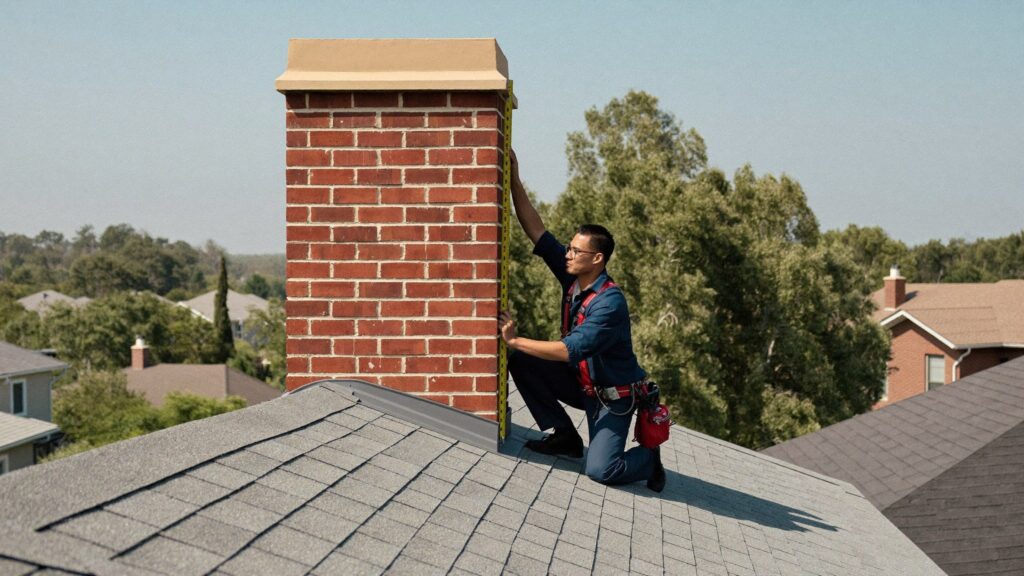
Most outdoor fireplaces and fire pits in North Texas need a sweep and inspection once a year, and a straightforward outdoor unit runs $99.99 to $225 for the sweep plus a Level 1 inspection. Outdoor fireplaces get neglected because they sit in the open and never smell up the living room, but they take far more weather abuse than an indoor system. A backyard chimney in Frisco or Rowlett faces hail in April, a hard freeze in January, and nine months of UV on exposed mortar. Add rain running straight down an uncapped flue and the masonry breaks down two to three times faster than the same brick inside a heated house. Maintenance stays cheap as long as it stays routine. What drives the number up is a cracked crown nobody looked at, a missing spark arrestor during a burn ban, or three winters of unswept creosote.
Typical outdoor fireplace and fire pit maintenance pricing in the Dallas and Fort Worth area:
- Annual sweep plus Level 1 inspection, $99.99 to $225. The entry price covers one standard firebox and flue, and climbs with a tall stone chase, a shared grill stack, or several seasons of unswept creosote.
- Spark arrestor or outdoor chimney cap installed, $150 to $450. A stock stainless cap sits at the bottom, while a wide custom top sized for a decorative stone chase pushes to the high end.
- Crown or chase cover repair, $250 to $850. Sealing hairline cracks in a sound crown is quick work. Cutting out a spalled crown and recasting it with proper overhang costs considerably more.
- Tuckpointing and mortar joint repair, $400 to $1,600. The spread depends on how much of the stack has opened up and whether the mason has to match decorative stone rather than standard brick.
- Water repellent sealing, $350 to $900. Priced by surface area and porosity, with the high end covering a tall chimney or one where failed film-forming sealer has to come off first.
- Firebox refractory or firebrick repair, $300 to $1,200. A few cracked split bricks and fresh refractory mortar is the low end, and rebuilding a firebox floor that has dropped is the high end.
- Gas fire pit or gas log burner service, $150 to $400. A pan cleaning and media replacement is simple, while clogged orifices, a corroded igniter and a sticking valve need parts.
The parts of an outdoor fireplace homeowners ask about most:
- Flue. The vertical passage inside the chimney that carries smoke and combustion gases away from the firebox.
- Spark arrestor. A wire mesh screen over the top of the flue that stops burning embers from landing on a roof, a fence or dry grass.
- Chimney crown. The sloped concrete slab cast across the top of a masonry chimney, which sheds water away from the flue.
- Firebox. The chamber where the fire burns, lined with firebrick and refractory mortar rated for direct flame contact.
- Refractory mortar. High-temperature mortar for firebox interiors. Ordinary masonry mortar fails quickly at those temperatures.
- Creosote. The tar-like residue that condenses on flue walls as wood smoke cools. It is combustible, and it fuels most chimney fires.
- Burn ban. A county order restricting outdoor burning in dry conditions, issued in Texas by county commissioners.
Treat every figure above as a starting point rather than a quote. A stone veneer unit put up by a landscape crew in 2014 behaves nothing like a full masonry fireplace built by a mason, and a CSIA-certified technician needs eyes on the firebox, the flue and the crown before anyone prices the work honestly. One warning worth repeating: a $39 or $49 outdoor chimney sweep is a foot in the door. The crew arrives, finds something alarming, and the real pitch starts. Fair pricing on an outdoor system should include a written inspection report you keep.

Key Takeaways
- NFPA 211 calls for a chimney inspection at least once a year, and that applies to an outdoor fireplace exactly as it does to an indoor one.
- A sweep plus Level 1 inspection on a standard outdoor unit runs $99.99 to $225, with ALC’s $99.99 sweep covering a single chimney and $189.99 a double.
- NFPA 211 calls for spark arrestor mesh with openings no larger than 1/2 inch and no smaller than 3/8 inch, which is why window screen is the wrong material.
- Book the annual service between May and September, because October through December is the busiest stretch of the year across DFW.
- Water is the main enemy of an outdoor chimney, and a cap plus a breathable water repellent costs a few hundred dollars against a rebuild that starts near $3,500.
- Burn bans are set county by county in Texas and are most common in July, August and September, so check your county before lighting a wood fire.
How often does an outdoor fireplace need to be swept and inspected?
Once a year, and the standard behind that is NFPA 211, which calls for chimneys, fireplaces and vents to be inspected annually for soundness, deposits and correct clearances. Nothing in that standard exempts a fireplace because it sits outside. If anything the outdoor unit has the stronger case, since it is the one taking the weather.
Use matters as much as the calendar. A family in Southlake burning a cord of oak on the patio every winter needs the flue swept every season. A unit that sees six fires a year still needs the annual inspection, because what we find on outdoor systems is usually water damage and animal intrusion rather than heavy soot. I have opened plenty of outdoor fireboxes in Plano and Carrollton that were clean inside and had a crown you could put a finger through. Put it on the calendar in late spring, when the burning season is done and masonry work has the whole summer to get finished. Our annual chimney maintenance checklist for North Texas homeowners uses the same timing for indoor systems.
Does an outdoor fireplace burn dirtier than an indoor one?
Often, yes. Outdoor fireboxes run cooler because there is no house around them holding heat, and cool flue walls condense more creosote out of the smoke. People also burn whatever is in the yard, including cedar elm limbs and pine off a Christmas tree, and green or resinous wood produces far more creosote than seasoned oak.
What does a Level 1 inspection cover on an outdoor unit?
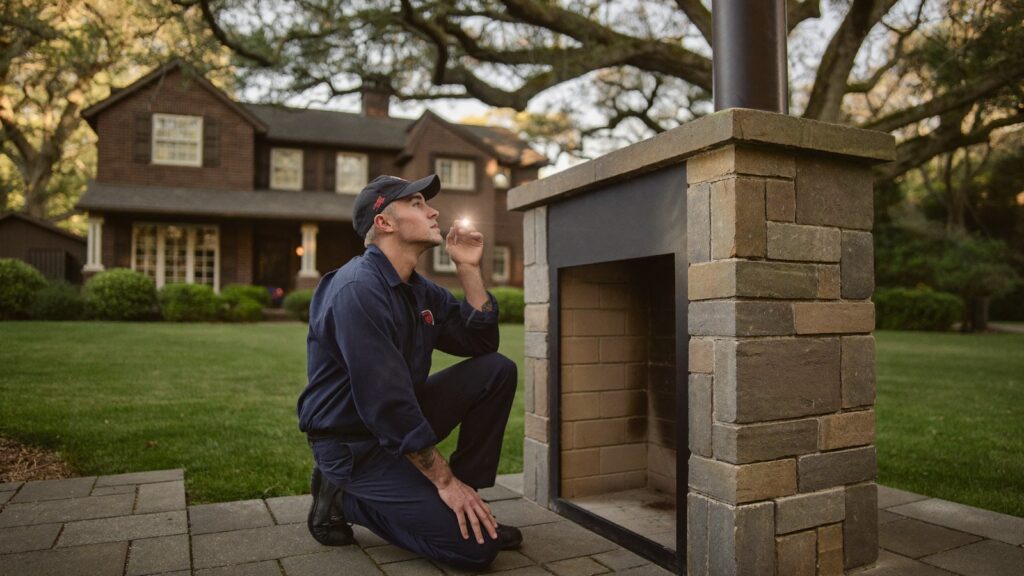
The readily accessible parts: firebox, damper or throat, visible flue, crown or chase cover, cap, and clearances to anything combustible. On outdoor units we pay particular attention to the mortar joints at ground level where splash-back sits, and to whether a pergola or patio cover has been built too close since the fireplace went in. Signs of a hidden problem call for a Level 2 chimney inspection with camera access up the flue.
What does North Texas weather do to an outdoor fireplace?
It works the masonry harder than most homeowners realize. We swing from a 20 degree morning to a 60 degree afternoon in February, which drives freeze-thaw cycling through any joint holding moisture. Spring brings hail that chips crowns and dents chase covers, and the straight-line winds that come with those storms pull loose caps right off a flue. Then summer arrives and a stone chimney facing west sits in 100 degree heat with full afternoon sun for weeks.
The clay soil adds a problem specific to this region. Blackland clay shrinks when it dries and swells when it rains, and an outdoor fireplace on a shallow footing moves with it. That movement is why so many backyard units in Rockwall, Wylie and east Garland develop a stair-step crack running up through the stone from the slab. The fireplace may be built fine. The ground under it is not holding still.
Why does mortar fail faster on an outdoor chimney?
Because it never dries out fully and nothing shields it. An indoor chimney is wrapped in a conditioned house for most of its height, while an outdoor one is exposed on all four sides. Rain soaks the joints, the water freezes overnight and expands, and the joint face pops off a little at a time. Twenty freeze-thaw cycles a winter will open joints that looked fine in October, and once water gets behind the veneer the stone starts coming loose.
Does waterproofing actually help?
It helps a great deal, as long as the product is a breathable vapor-permeable siloxane repellent rather than a film-forming sealer. Masonry has to release moisture from the inside, and a paint-like sealer traps water behind it and accelerates spalling. Done correctly, treatment every five to seven years keeps bulk water out while letting vapor escape. There is more in our guide to chimney waterproofing in North Texas.
Do outdoor fireplaces and fire pits need a spark arrestor in Texas?
Any wood-burning outdoor fireplace with a flue should have one, and in practice most local fire codes and HOA rules in DFW expect it. The reasoning is simple. An outdoor fireplace sits in a yard surrounded by fence boards, patio furniture, dry turf and often a cedar pergola overhead, and an ember leaving an uncapped flue in August has plenty to land on. A proper chimney cap installation with the right mesh also keeps squirrels, raccoons and birds out, and our post on the chimney spark arrestor every DFW home needs covers the hardware in depth.
Open fire pits are different because there is no flue to screen. For those, a removable mesh dome lid is the equivalent protection, and clearance carries most of the safety load. Most North Texas municipalities expect a fire pit to sit at least 10 feet from a structure, a fence line or an overhang, and some HOAs in Prosper and Frisco write a larger distance into their covenants.

What mesh size does NFPA 211 require?
NFPA 211 specifies spark arrestor screening with mesh openings no larger than 1/2 inch and no smaller than 3/8 inch. That window exists for a reason. Coarser than 1/2 inch and real embers pass through. Finer than 3/8 inch and the screen clogs with soot and fly ash, which chokes the draft and pushes smoke back toward the patio. Standard insect screen is far too fine and blinds over within a season.
Who is liable if an ember starts a fire?
The homeowner, in most circumstances, which is worth thinking about during a dry Texas summer. A missing or damaged spark arrestor is the kind of maintenance lapse an insurance adjuster looks for after a fence or roof fire. Keeping an annual inspection report on file costs nothing and documents that the system was maintained. None of this is legal advice, and your carrier and city ordinance are the authorities on your situation.
How do burn bans affect using an outdoor fireplace or fire pit?
In Texas, outdoor burning restrictions are issued at the county level, so your neighbor across a county line can be under different rules than you are. Collin, Denton, Tarrant, Dallas, Rockwall and Ellis counties each set their own, and they go on and come off as drought conditions shift. Late July through September is when bans are most common, though a dry winter can bring one in February. The Texas A&M Forest Service publishes a statewide county burn ban map that is the fastest way to check.
What a ban actually prohibits varies by the order. Many ban open burning of trash and brush while allowing a contained fire in a permanent outdoor fireplace or a manufactured fire pit with a screen, and others are written broadly enough to cover any outdoor flame. When a ban is active your city fire marshal is the right phone call rather than a web summary. Burn ban season is also the ideal time to get maintenance done, since you are not using the fireplace anyway.
Does a burn ban cover a gas fire pit?
Usually not. Most county orders in North Texas exempt gas-fueled appliances because the flame is contained, controllable and shuts off instantly at the valve. That is a real advantage of a gas fire pit or gas log set in an outdoor fireplace here, since you can use it in August. Confirm it against your own county’s order, because the exemption language is not identical everywhere.
What does outdoor fireplace and fire pit maintenance cost in DFW?
An annual sweep and inspection is the cheap part of owning one. The expensive part is deferred masonry work, which is why the pricing list near the top of this guide reads better as a sequence than a menu. A few hundred dollars on a cap and a crown seal keeps you out of the thousands a rebuild costs.
Access moves the price most. A fireplace in the open on a flagstone patio is easy work, while one built into a covered outdoor kitchen takes two technicians and more care. The second variable is what the unit is made of. A full masonry fireplace with firebrick and a clay-lined flue can be repaired in pieces more or less indefinitely, while a stone-veneer unit over a metal firebox has a service life, and once the shell has rusted through there is no repairing it. Knowing which one you own changes the whole conversation about chimney repair versus replacement.
| What we find on an outdoor unit | What it leads to if ignored | Typical repair cost |
|---|---|---|
| Missing or storm-damaged spark arrestor cap | Embers on the roof and fence, rain straight down the flue, animals nesting in the chimney | $150 to $450 installed |
| Cracked chimney crown | Water runs into the masonry below, joints open up, veneer stone starts shedding | $250 to $850 |
| Open mortar joints and spalling stone | Freeze damage spreads through the stack and repointing becomes a partial rebuild | $400 to $1,600 |
| Creosote glazing in the flue | Chimney fire risk, and glazed deposits need chemical treatment rather than brushing | $225 to $600 beyond a sweep |
| Cracked firebox panels or failed refractory mortar | Heat reaches the structural masonry or the metal shell behind the brick | $300 to $1,200 |
| Stair-step cracking from footing movement | Progressive separation, eventual lean, and a chimney unsafe to use | $1,200 to $4,000 |
| Clogged or corroded gas burner and orifices | No ignition, uneven flame, soot on the stone face, gas odor at the valve | $150 to $400 |
What is included in the $99.99 sweep?
A full flue and firebox sweep with drop cloths and a vacuum, plus a Level 1 inspection with a written report. One chimney is $99.99 and a double chimney is $189.99. There are no trip fees inside our service area, and if the inspection turns up repair work, that repair inspection is free. Our service locations page shows where we cover.
When is a rebuild cheaper than repeated repairs?
When the footing is the problem rather than the masonry, or when more than roughly a third of the stack needs repointing at once. Past that point you are paying mason labor twice, first to patch and then to rebuild in a few years. A full outdoor fireplace rebuild in DFW generally lands between $3,500 and $12,000 depending on size, stone selection and whether the slab has to be addressed.
How do I maintain a gas fire pit or gas outdoor fireplace?
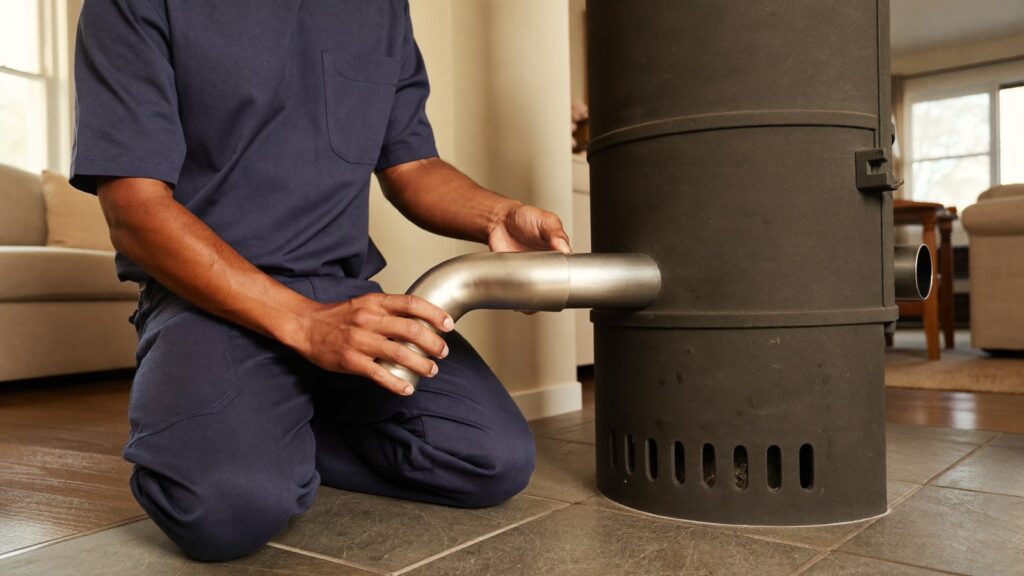
Gas units need less sweeping and more attention to hardware. There is no creosote to remove, but there is a burner, a valve, an igniter and a set of orifices sitting outside through hail season and a humid summer, and those corrode. An annual service checks the burner for blockage, inspects the gas connection for leaks, cleans and reseats the igniter, and replaces lava rock or fire glass that has broken down.
Fire glass and lava rock are what homeowners most often leave too long, since both trap dust, pollen and spider webs, and the pollen load here in April is heavy enough to partially block a burner within a couple of seasons. Gas logs shifted by wind or by someone rearranging them can also sit directly over a burner port and produce soot that stains the stone above the opening. Our fireplace repair team handles valve and igniter work on outdoor gas units as well as indoor ones.
Why won’t my outdoor gas fire pit light?
The three usual causes are a dead or corroded igniter, a spider web or mud dauber nest blocking the burner orifice, and a closed or seized shutoff valve. Insect blockage is extremely common here. Mud daubers are drawn to the gas odorant and build inside burner tubes over the summer, so the pit lights unevenly or not at all when fall comes.
Why Choose ALC Chimney Service for Outdoor Fireplace Maintenance in DFW?
ALC Chimney Service is a family owned company working across Dallas, Fort Worth and the surrounding metroplex. Our technicians are CSIA certified, and we are licensed and insured. Between us we have more than 15 years of combined experience and have completed over 10,000 jobs across DFW, which covers a lot of backyard fireplaces in a lot of different build eras. We hold a 5.0 rating from more than 172 Google reviews.
On pricing we keep it plain. A chimney sweep with a Level 1 inspection is $99.99, a double chimney is $189.99, and a repair inspection is free, with no trip fees inside our service area. If we find something that needs masonry or gas work, you get the finding, the photograph and the range before any work starts. When an outdoor fireplace only needs a cap, a sound crown, clean joints and an annual look, that is what we tell you.
Frequently Asked Questions
How often should an outdoor fireplace be swept?
Once a year for any wood-burning outdoor fireplace, which matches the NFPA 211 requirement for annual chimney inspection. If you burn more than about a cord of wood a season, or you burn softwood and unseasoned limbs, have it swept every season without waiting for visible buildup. Gas units do not need sweeping but still need the annual inspection and burner service.
Do I need a permit to repair my outdoor fireplace?
For routine maintenance, sweeping and cap replacement, no. Structural masonry work, a rebuild, or any new gas line generally does require a permit, and the rules differ between Dallas, Fort Worth and the smaller cities. A licensed contractor pulls that permit as part of the job, and you should be suspicious of anyone who suggests skipping it.
Can I use my outdoor fireplace during a burn ban?
It depends on your county’s order. Many North Texas burn bans allow a fire contained in a permanent outdoor fireplace or a screened manufactured fire pit while prohibiting open brush and trash burning, and most exempt gas appliances entirely. Some are written to cover all outdoor flame. Check the Texas A&M Forest Service burn ban map for current status, then read your county’s actual order.
Why does my outdoor fireplace smoke back into the patio?
Short flues draw weakly, and outdoor fireplaces often have short flues relative to the size of the firebox opening. Wind across the top of the chimney, a partially blocked spark arrestor, a patio cover disrupting airflow, or an opening too large for the flue area will all push smoke out the front. A technician can measure the ratio and tell you whether the fix is a taller flue, a smoke guard or a cleaning.
What is the best time of year to book outdoor fireplace maintenance in Texas?
May through September. The burning season is over, burn bans mean you are not using it anyway, scheduling is open, and any masonry repair has months to cure before the first hard freeze. October through December is the busiest stretch of the year for every chimney company in DFW, and lead times get long.
Should I cover my outdoor fireplace in the off season?
Cover the firebox opening, not the whole chimney. A fitted mesh or canvas screen keeps leaves and animals out while letting air move through, whereas a sealed waterproof wrap traps moisture against the stone and does more harm than the rain would. Shovel the ash out first, because ash is alkaline and holds moisture against the firebrick for months.
Ready to get your outdoor fireplace or fire pit ready for the season? ALC Chimney Service covers Dallas, Fort Worth and the whole metroplex with a $99.99 chimney sweep plus Level 1 inspection, $189.99 for a double chimney, a free repair inspection and no trip fees in our service area. Call (877) 656-0851 or request a visit through our contact page and we will get you on the schedule.
Find our chimney safety tips faster on Google