Skip to content
Chimney liner types come down to three: clay tile, stainless steel and cast-in-place. Clay tile sits inside almost every masonry chimney built in Dallas Fort Worth before the mid 1990s, and it is cheap to build but the first thing to crack. Stainless steel is what most North Texas homeowners end up with when a liner fails, running $2,000 to $5,500 installed for a fireplace flue and carrying a lifetime warranty when it is sized and insulated correctly. Cast-in-place is the heavy repair at $4,500 to $10,000, poured as a seamless cement sleeve that also reinforces a chimney whose masonry has gone soft. The right choice depends on what appliance the flue serves, how far the existing liner has deteriorated, and whether the surrounding brickwork still has structural life in it. ALC Chimney Service scans the flue with a camera before recommending any of the three, at no charge for a repair inspection.
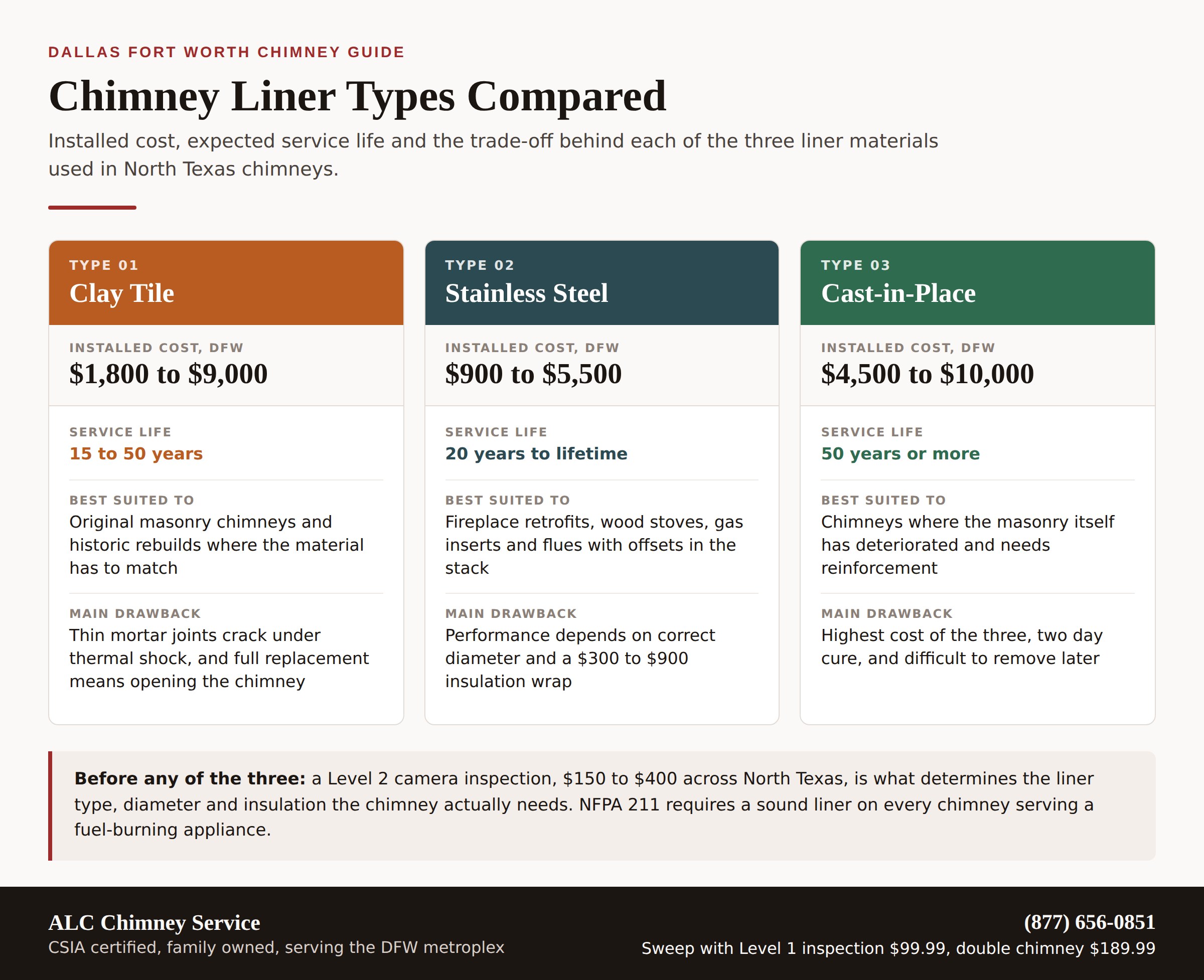
What each chimney liner type costs in the DFW metroplex, and what moves the number:
- Clay tile joint resurfacing, $1,800 to $4,500. A cast ceramic sealant applied from inside to reline cracked mortar joints. Priced by flue height and how many joints have failed, and it only works when the tiles themselves are intact.
- Full clay tile liner replacement, $4,000 to $9,000. The old tiles get broken out and new ones stacked, which usually means opening the chimney from outside. Cost climbs with every story and every offset.
- Flexible stainless steel liner for a fireplace, $2,000 to $5,500. Driven by flue height, the number of bends the liner has to negotiate, and the alloy grade. A straight two-story run is the low end.
- Rigid stainless steel liner for a gas furnace or water heater, $900 to $2,400. Smaller diameter and a straight chase makes it quick. Shared flues serving two appliances need careful sizing and cost more.
- Cast-in-place liner, $4,500 to $10,000. Cement poured around an inflated bladder, priced by flue volume and access. The high end applies to tall stacks and steep two-story rooflines.
- Insulation wrap on a stainless liner, $300 to $900. Required for most wood-burning installations and for any oversized masonry flue. It is what keeps the liner’s safety listing valid.
- Level 2 camera inspection of the flue, $150 to $400. The standard rate across North Texas. ALC includes a Level 1 inspection with the $99.99 sweep and charges nothing for a repair inspection.
The parts a technician will name when he explains your liner options:
- Flue. The open passage running up the inside of the chimney that carries smoke and combustion gases from the firebox to outside air.
- Liner. The inner surface of that passage, which keeps heat and acidic byproducts off the surrounding brick and the wood framing packed against it.
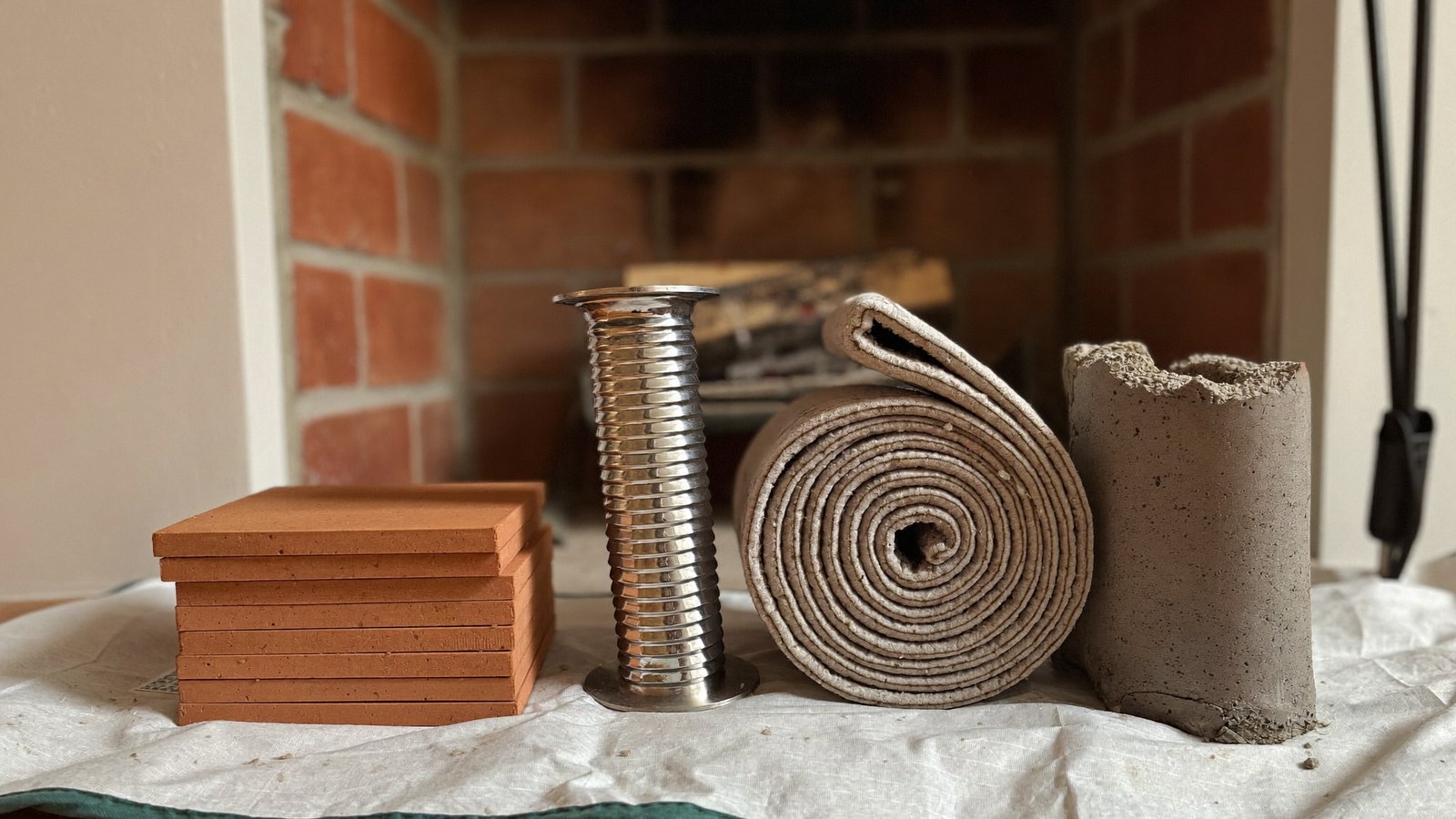
- Clay flue tile. A fired terracotta rectangle about two feet tall, stacked with thin mortar joints, forming the liner in most older masonry chimneys.
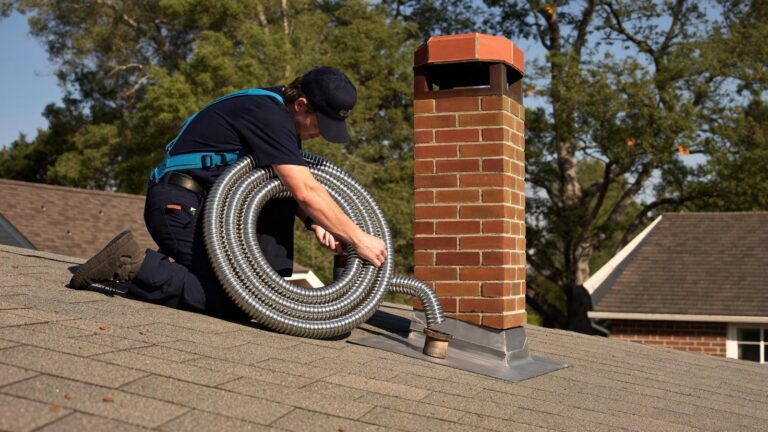
- Stainless steel liner. A flexible corrugated or rigid smooth metal pipe dropped down the existing flue, usually 316Ti or 304 alloy, connected to the appliance below and capped at the top.
- Cast-in-place liner. A cement mixture pumped into the chimney around an inflatable form, curing into one seamless passage with no joints in its length.
- Insulation blanket. A ceramic fiber wrap around a stainless liner that keeps flue gases hot enough to exhaust properly and satisfies clearance requirements.
- UL 1777 listing. The safety standard a relining system is tested to. A liner installed outside its listing, wrong diameter or missing insulation, no longer carries that protection.
These ranges are a starting point rather than a quote. Flue height, offsets, roof pitch and what the camera finds once the flue is swept all move the final number, and a chimney that needs the smoke chamber parged or the crown rebuilt is a different job than a straight liner swap. A CSIA-certified technician should put a camera up the flue before anyone names a liner type, because you cannot judge a flue from the firebox with a flashlight. Be careful with the very low relining prices in the coupon mailers that appear around October. A number well under a thousand dollars for a full fireplace liner is a lead generator, and the crew that arrives either sells a much larger job on the driveway or installs an uninsulated liner that never drafts properly. The governing standards come from the Chimney Safety Institute of America and the National Fire Protection Association.
Key Takeaways
- NFPA 211 requires every chimney serving a fuel-burning appliance to have a sound liner, so a flue with cracked or missing tiles is a failed system no matter how well the fireplace draws.
- Clay tile liners are standard in DFW homes built before roughly 1995 and usually show their first joint failures past the 30 year mark, often after one chimney fire or a hard freeze.
- Stainless steel relining is the most common fix in North Texas at $2,000 to $5,500 for a fireplace flue, with a lifetime warranty on most insulated 316Ti product lines.
- Cast-in-place liners run $4,500 to $10,000 and get chosen when the masonry itself needs reinforcement, not simply when the liner has cracked.
- A Level 2 inspection with a camera is the only reliable way to identify liner damage, and CSIA calls for one after any chimney fire, after storm damage, and before a property sale.
- Sizing matters as much as material, because a liner too large for the appliance cools the exhaust, condenses moisture and builds creosote faster than a correctly sized flue.
What are the three main chimney liner types?
Clay tile is a masonry liner built as part of the chimney. Stainless steel is a metal liner retrofitted inside an existing chimney. Cast-in-place is a poured masonry liner, also a retrofit. What matters is whether the liner came with the original construction, because that determines what has to happen to replace it. Older Dallas neighborhoods such as Lakewood, Munger Place and the M Streets, along with Oak Cliff and Fort Worth’s Fairmount district, almost always have clay tile, and so do the 1980s and early 1990s suburban builds across Plano, Richardson, Garland and Arlington. From about 1995 onward, factory-built fireplaces took over in Frisco, McKinney and Denton County, and those flues are listed metal chimney systems rather than masonry with a liner in them.
What is a clay tile chimney liner?
A column of fired terracotta sections stacked inside the chimney as the brick goes up around them. Tiles handle heat well and cost little to manufacture, which made them the default for most of the twentieth century. Their weakness is the thin unreinforced mortar joint between each tile, the first thing to fail when a tile expands fast during a chimney fire or when water gets in and freezes.
What is a stainless steel chimney liner?
A metal pipe lowered down the existing flue and connected to the appliance below. Most fireplace installations use flexible 316Ti alloy because it negotiates the offsets masonry chimneys almost always contain. It gets wrapped in insulation, secured at the top plate and capped. The job is usually done in a day without opening a course of brick, which is why it dominates the retrofit market.
What is a cast-in-place chimney liner?
A liner that is poured rather than installed. A crew drops an inflatable bladder down the flue, centers it, then pumps a lightweight cement mixture around it. When the mix cures the bladder comes out, leaving a seamless passage bonded to the chimney interior. Because the material fills voids in the surrounding masonry it strengthens a deteriorating chimney, which is both its advantage and the reason it costs what it does.
How do I know which chimney liner type my chimney has?
Looking at the top of the chimney gives a rough answer. Clay tile shows a square terracotta collar sitting an inch or two above the crown. A stainless liner shows a round metal collar with a cap clamped to it. Cast-in-place shows a smooth round cement opening with no visible joint.
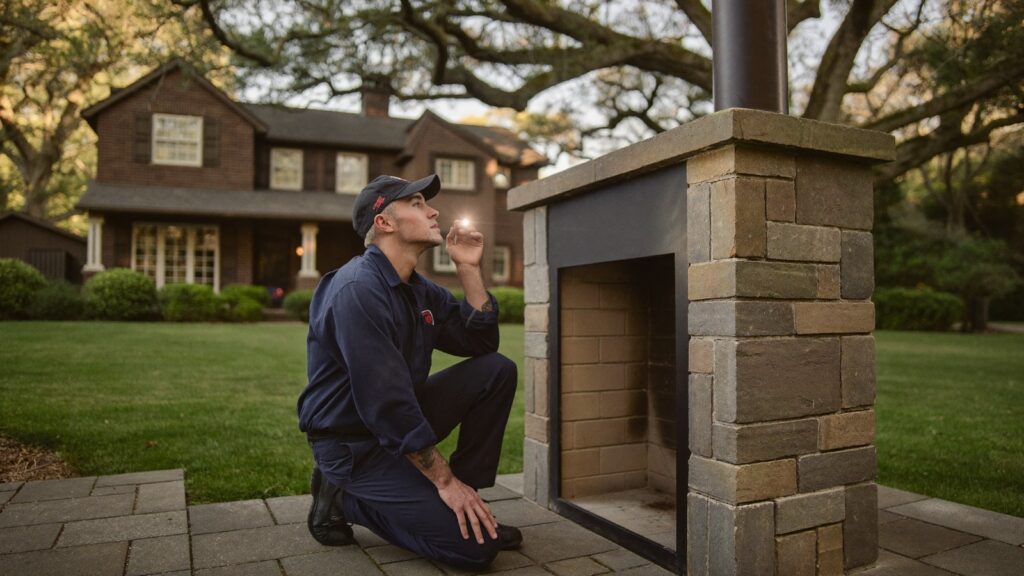
From the firebox, shine a bright light past the damper. Orange or buff rectangular sections with horizontal lines every couple of feet is clay tile, and a continuous ribbed metal surface is stainless. Neither view tells you the condition of the liner twenty feet up, which is where damage almost always sits. A professional chimney inspection with a video scan settles it.
Can I tell if a clay liner is cracked without a camera?
Rarely. The signs show up elsewhere: terracotta fragments on the smoke shelf, a smoky smell in the room when the fireplace is cold, white staining on exterior brick, or a draft that has worsened over a couple of seasons. Any one of those is reason to book a camera scan, and none is proof on its own.
What does a Level 2 inspection show that a sweep does not?
A Level 1 inspection covers the readily accessible parts of the system and comes with a standard sweep. A Level 2 adds a video scan of the full flue interior, and that camera pass reveals hairline joint separation, spalled tile faces and gaps behind the smoke chamber. Our guide to chimney inspection levels 1, 2 and 3 breaks down the differences.
When does a chimney liner need to be replaced?
A liner needs replacing when it can no longer contain heat and combustion byproducts inside the flue, and that is a lower bar than most homeowners expect. A single cracked joint is enough, because a gap of a tenth of an inch passes enough heat to ignite framing lumber during a sustained fire.
Three situations trigger most relining work in DFW. A chimney fire, even a small one nobody reported, thermally shocks clay tile and pops the joints. Water intrusion through a failed crown or bad flashing soaks the mortar and freezes during North Texas cold snaps, and the February 2021 freeze produced a wave of relining work across Collin and Tarrant County that autumn. Appliance changes matter too, since a gas insert or wood stove dropped into a fireplace built for open burning leaves an oversized flue that has to be sized down.
Does a cracked liner mean I cannot use the fireplace?
It means you should not. A chimney with a compromised liner is unsafe to operate under NFPA 211 until it is repaired or replaced. Homeowners keep burning because the fireplace still draws, but drawing well and containing heat safely are two different things, and the risk sits where nobody can see it.
How long can a reline wait?
If the fireplace stays cold, indefinitely. If the household intends to burn this season, it is the job to do before the first cold front. October and November are the busiest weeks of the year for every chimney repair company in Dallas, so scheduling in late summer means a shorter wait and a calmer install.
How much does each chimney liner type cost in Dallas Fort Worth?
Material is only part of the price, and labor, access and flue geometry account for most of the spread. A single-story ranch in Garland with a straight flue and a walkable roof pitch is the cheapest version of any of these jobs. A three-story home in Southlake with a steep roof, two offsets and a shared flue is the expensive version, and the difference runs several thousand dollars for identical materials. Our breakdown of chimney relining cost in Dallas TX walks through what each line item on an estimate represents.
Insulation is the line item homeowners most often try to cut, and it is the wrong one. An uninsulated stainless liner in an oversized masonry flue cools the exhaust, which condenses moisture and accelerates creosote buildup in exactly the place you least want it, and it usually voids the UL 1777 listing. The $300 to $900 for a wrap is cheap next to sweeping a glazed flue every year.
| Liner type | Best suited to | Typical DFW installed cost | Expected service life | Main drawback |
|---|---|---|---|---|
| Clay tile joint resurfacing | Sound tiles with failed joints only | $1,800 to $4,500 | 15 to 25 years | Will not fix broken or missing tiles |
| Full clay tile replacement | Historic chimneys where original material matters | $4,000 to $9,000 | 30 to 50 years | Chimney usually has to be opened up |
| Flexible stainless steel, 316Ti | Wood fireplaces and stoves, offset flues | $2,000 to $5,500 | Lifetime warranty on most lines | Needs correct sizing and insulation |
| Rigid stainless steel, 304 | Gas furnaces, water heaters, straight flues | $900 to $2,400 | 20 years to lifetime by alloy | Cannot negotiate bends in the stack |
| Cast-in-place | Deteriorated masonry needing reinforcement | $4,500 to $10,000 | 50 years or more | Highest cost, and hard to remove later |
Is stainless steel always cheaper than cast-in-place?
For a straightforward reline, yes, usually by several thousand dollars. The comparison changes when the chimney itself is failing. If the camera shows voids behind the tiles and soft brick in the concealed part of the stack, a stainless liner solves the flue problem and leaves the structural problem alone. Cast-in-place can then come in under a stainless liner plus a partial rebuild.
Does homeowners insurance cover relining?
Sometimes, when the damage traces to a covered event such as a chimney fire, a lightning strike or storm damage to the crown and flashing. Ordinary deterioration and age are not covered. A dated Level 2 inspection report with camera stills is what carries a claim, so get the documentation before any work starts.
Which chimney liner is best for a gas insert or a wood stove?
Both need a liner sized to the appliance rather than to the original fireplace opening, and stainless steel is the standard answer for both. A gas insert vents through a smaller diameter liner, often three or four inches, because gas exhaust volume is a fraction of what an open wood fire produces. Running gas exhaust up an unlined eight by twelve masonry flue gets you condensation, rust and eventually a carbon monoxide problem.
Wood stoves are more demanding. The manufacturer specifies a flue diameter, usually six inches, and the liner has to match it and connect directly to the stove’s flue collar rather than terminating above the damper. That connection is what makes the stove burn at its rated efficiency instead of dumping heat into the masonry, and insulation is not optional here.
Can one liner serve two appliances?
Under NFPA 211 the answer is generally no for new work, since each appliance gets its own flue. Older DFW homes sometimes have a furnace and a water heater sharing a masonry flue, which was acceptable when it was built, and relining is the moment to have that venting evaluated rather than reproduced as found.
What size liner do I actually need?
For an open fireplace the general rule is a flue area of roughly one tenth of the fireplace opening area, which a technician calculates on site. For a stove or insert the appliance manual sets the number and it does not get adjusted. Guessing costs money twice, because an incorrectly sized liner has to come back out.
How long do chimney liners last in North Texas weather?
North Texas is harder on chimneys than its mild reputation suggests. The system spends July and August absorbing roof temperatures well over 140 degrees, takes several sharp freeze and thaw cycles between December and February, then meets a spring hail and wind season that works on the crown and cap. That cycling is what opens clay mortar joints, and it is why liner life here runs toward the shorter end of published ranges.
A clay tile liner under a sound crown with good flashing reliably reaches 30 years and often 50. The same liner under a cracked crown that has been letting water in for a decade may be finished at 20. Stainless is far less sensitive because the metal is not porous, though a liner with a missing cap corrodes from rain and from acidic condensate at the bottom. Cast-in-place is the longest lived at 50 years or more, because it has no joints for water to exploit.
What shortens liner life the most?
Water, by a wide margin. The most cost-effective thing a DFW homeowner can do for any liner is keep a proper cap on the flue and keep the crown sealed. After water it is unswept creosote, because a flue fire in a heavily glazed chimney is the event most likely to end a clay liner in one night. Annual sweeping at $99.99 is inexpensive insurance against a $5,000 reline.
What has to happen before a relining job starts?
A Level 2 inspection, always, because the scan determines the liner type, diameter and insulation the chimney actually needs. Most DFW cities also treat relining as work requiring a mechanical permit, which a licensed contractor pulls as part of the job. The chimney relining team at ALC includes camera documentation with every liner evaluation.
Why Choose ALC Chimney Service in Dallas Fort Worth?
ALC Chimney Service is a family owned, CSIA-certified company with more than 15 years of combined experience on North Texas chimneys, over 10,000 jobs completed across the DFW metroplex and a 5.0 rating from more than 172 Google reviews. We are licensed and insured, and every technician here has been trained on masonry chimneys and factory-built systems both, because DFW housing stock contains plenty of each.
On liner work we scan the flue with a camera before recommending anything, and we show the homeowner the footage. A sweep with a Level 1 inspection is $99.99, and $189.99 covers a double chimney. Repair inspections are free and there are no trip fees in our service area, which runs from Fort Worth and Arlington east through Dallas and north through Plano, Frisco and McKinney. The full list is on our service area page. We quote the liner the chimney needs rather than the most expensive option on the shelf, and plenty of chimneys quoted elsewhere for a full reline need a crown rebuild and a cap instead.
Frequently Asked Questions
Which chimney liner type lasts the longest?
Cast-in-place, at 50 years or more, because it is a single seamless pour with no joints for water or heat to exploit. Stainless steel liners in premium 316Ti alloy carry lifetime warranties in most product lines and realistically last as long, provided the flue stays capped and the liner was sized and insulated properly at installation.
Can a stainless steel liner go into a chimney that still has clay tiles?
Yes, and that is the most common installation in DFW. The liner drops down inside the existing tiles as long as the tile interior is large enough for the required diameter plus insulation. When it is not, a technician breaks the tiles out from the top, which adds several hundred dollars to the job.
How much does it cost to reline a chimney in Dallas?
Stainless steel relining for a fireplace flue runs $2,000 to $5,500 installed across the DFW area, with the spread driven by flue height, offsets and whether insulation is required. Gas appliance liners are less at $900 to $2,400, and cast-in-place liners run $4,500 to $10,000.
Is a chimney liner required by code in Texas?
NFPA 211, which Texas jurisdictions adopt through their building and fire codes, requires a liner in any chimney serving a fuel-burning appliance. An unlined chimney, or one with a failed liner, is not code compliant and should not be operated until it is corrected.
Can I install a chimney liner myself?
Liner kits are sold to the public, but the work involves roof access on a steep pitch, correct diameter calculation, insulation clearance, an appliance connection made to the manufacturer’s specification, and in most DFW cities a permit. A liner installed outside the terms of its listing gives up both its warranty and its safety certification.
What happens if I burn wood in a chimney with a cracked liner?
Heat and combustion gases pass through the crack into the concealed space between the flue and the wood framing. Repeated exposure lowers the ignition temperature of that lumber over time, which is how chimney related structure fires start in homes where the fireplace appeared to work fine. Carbon monoxide entering living space is the second risk.
How long does a relining job take?
A stainless steel liner in a typical two-story DFW home is a one day job, usually five to seven hours including the sweep and the camera verification afterward. Cast-in-place runs two days because the pour has to cure before the bladder comes out. Full clay tile replacement generally takes three to five days.
If your chimney liner is cracked, undersized, or you simply do not know what is up there, ALC Chimney Service will put a camera up the flue and show you what it finds. Sweeps with a Level 1 inspection are $99.99, double chimneys are $189.99, repair inspections are free, and there are no trip fees in the DFW service area. Call (877) 656-0851 or book through our contact page and we will get a technician out before the first cold front.
Find our chimney safety tips faster on Google