Skip to content

A fireplace insert installation in the Dallas and Fort Worth area runs $3,500 to $8,500 installed, and most North Texas homeowners land between $4,500 and $6,500 once the appliance, the stainless liner and the labor are all counted. A wood-burning insert typically finishes at $3,500 to $7,500, a direct vent gas insert at $4,000 to $8,500, and a pellet insert at $4,200 to $7,000. The number that moves a quote most is the liner, because every insert sold today has to vent through a continuous stainless liner sized to the appliance, and a two-story chimney in Frisco swallows far more liner than a single-story ranch in Garland. Chimney height, the condition of the existing flue, whether a gas line has to be run, and the size of the firebox opening account for nearly all of the rest. ALC Chimney Service inspects the system free before quoting any insert.
Here is what each piece of a fireplace insert installation costs in the DFW metroplex:
- Wood-burning insert, installed: $3,500 to $7,500. The appliance alone is $1,800 to $4,500, and chimney height does the rest. A full insulated 6 inch liner on a tall two-story flue can add $1,000 over a single-story run.
- Direct vent gas insert, installed: $4,000 to $8,500. Gas units carry the highest appliance cost at $2,200 to $5,500, and the price climbs again when the hearth has no gas line.
- Pellet insert, installed: $4,200 to $7,000. The vent is smaller and cheaper than a wood liner, but every pellet unit needs a dedicated outlet near the firebox for the auger and blower.
- Insulated stainless liner: $900 to $3,200. Diameter, chimney height and the number of offsets drive this line, and an older Dallas chimney with a bend at the smoke chamber sometimes needs a pricier oval liner.
- Gas line run and shutoff valve: $350 to $900. Short crawl space runs sit at the low end. New line in a slab foundation home, which describes most of Plano, Allen and McKinney, pushes toward the top.
- Level 2 inspection before the install: $150 to $350. A camera scan tells you whether the chimney can take an insert at all, and catches cracked tiles before the liner is cut.
- Permit: $75 to $250. Most DFW municipalities treat a solid fuel appliance change as a mechanical permit, and gas work usually requires a licensed plumber to pull a separate one.
The parts of the system a technician will name during the walkthrough:
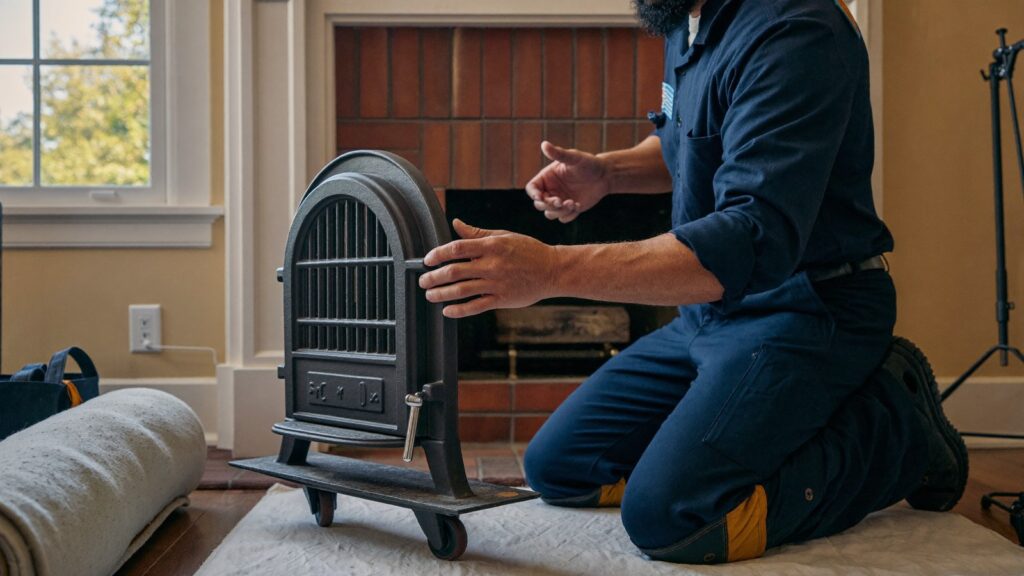
- Fireplace insert. A sealed steel or cast iron firebox that slides into an existing fireplace opening and burns fuel far more efficiently than the open hearth.
- Flue. The vertical passage inside the chimney that carries combustion gases out of the house, lined in most North Texas homes with square clay tiles.
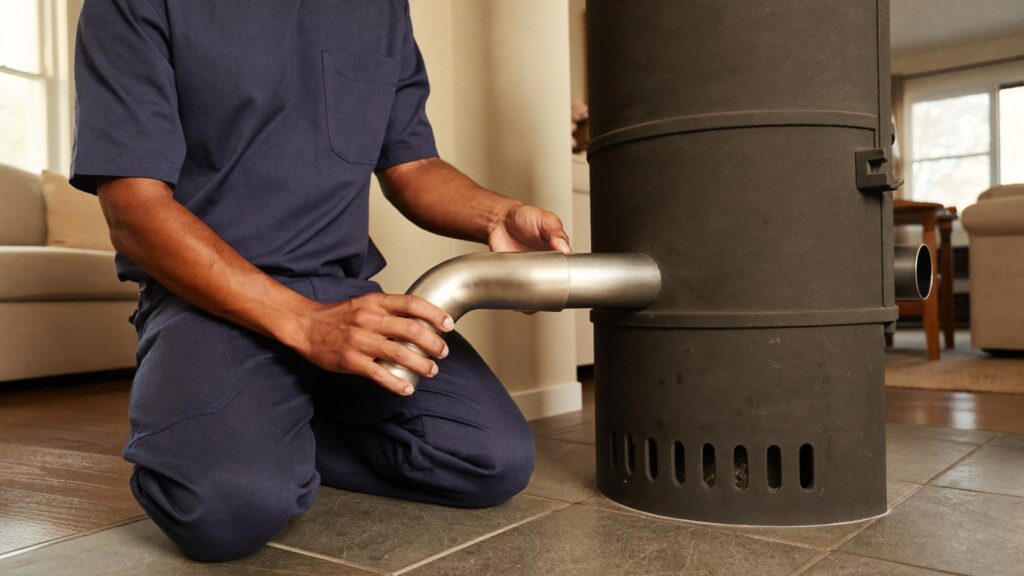
- Chimney liner. The continuous barrier between the fire and the masonry, which for an insert means a stainless pipe run full height to the appliance collar.
- Smoke chamber. The sloped transition above the damper that funnels smoke into the flue. Rough ones are common in pre-1990 homes and often need parging first.
- Damper. The metal plate that opens and closes the flue. Once an insert is in, it is removed or clamped open, because the appliance controls its own air.
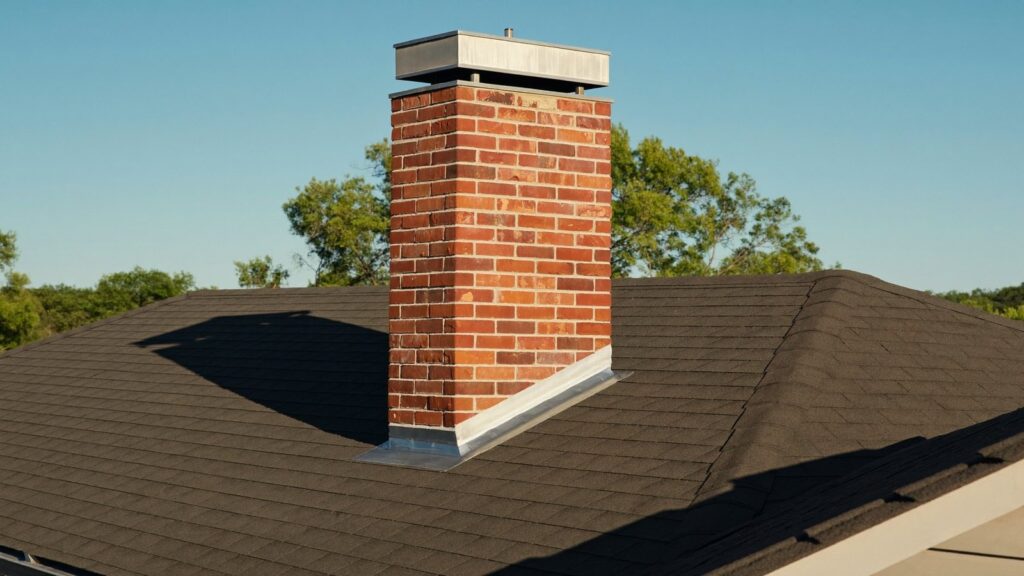
- Chase cover. The metal lid on a framed prefabricated chimney, which is what most post-1990 homes in Frisco, Little Elm and Mansfield have instead of a brick crown.
- Hearth extension. The non-combustible floor area in front of the appliance, which wood and pellet inserts often require to be deeper than the original fireplace.
- Creosote. The tarry residue that condenses out of wood smoke onto the liner. It is the fuel in a chimney fire, and it builds faster behind an insert.
Treat every figure above as a planning range rather than a quote. The real number depends on what a camera finds inside your flue, how tall the chimney is and which appliance you choose, and no honest company prices an insert over the phone. CSIA recommends that a certified professional evaluate the system before any appliance change. Be wary of a very low advertised price that does not name the liner, because that quote will grow by two or three thousand dollars on install day, and an insert vented into a bare clay flue violates NFPA 211 and voids the warranty.

Key Takeaways
- Expect $3,500 to $8,500 installed for a fireplace insert in DFW, with the typical North Texas job landing between $4,500 and $6,500.
- The stainless liner is $900 to $3,200 of that total and is required by NFPA 211 and by every major manufacturer warranty, so a quote without it is incomplete.
- An open masonry fireplace delivers roughly 5 to 15 percent efficiency, while a modern insert runs 65 to 85 percent, which is the entire reason the retrofit exists.
- A Level 2 inspection with a camera scan comes first at $150 to $350, because it decides whether the chimney can take an insert without repairs.
- Book the work between April and August. Lead times stretch from a few days to several weeks once the first cold front arrives in late October.
- Budget a yearly sweep afterward. Flue gases run cooler behind an insert, so creosote accumulates faster than it did in the open fireplace.
What Does a Fireplace Insert Installation Actually Include?
When a crew quotes an insert, they are quoting a system rather than an appliance. The unit is the part homeowners shop for, but the work that makes it legal and safe happens around it. A complete installation starts with a Level 2 inspection, cleans the flue down to bare masonry, runs a new stainless liner from the appliance collar to the top of the chimney, insulates it, terminates it at a new cap or chase cover, sets and connects the insert, seals the surround panel against the fireplace face, and finishes with a test fire and a walkthrough of the controls.
On a typical Dallas job that is six to nine hours for a two-person crew, or two days when a gas line has to be run. Older homes in Lakewood and Oak Cliff run long, because those chimneys were built tall and narrow with offsets a stiff liner does not want to pass. Newer builds in Frisco go faster, though a prefabricated fireplace can only take an insert listed for that exact model, and that list is short.
Is the chimney sweep included in the install price?
Most reputable companies include it, because you cannot run a new liner through a flue coated in creosote and expect an accurate fit. If a quote lists the sweep separately, ask whether it is a full chimney sweep and cleaning or just a quick brush of the smoke shelf. The two are not the same job.
What happens to my old damper?
It gets removed, or the plate is cut out and the frame left in place, so the liner has a clear path through the throat. Some installs add a top-sealing damper at the crown instead, which seals better than the original and saves conditioned air in August.
Why Does an Insert Need a New Chimney Liner?
This is the question that surprises homeowners most, and it is where the budget usually breaks. An open fireplace vents into a wide clay-lined flue sized for a big lazy fire. An insert burns hotter and far more completely, so it produces less exhaust at a lower velocity, and that exhaust needs a correctly sized pipe to draft at all. Dump it into an oversized clay flue and the gases cool on the way up, condense on the tile, and lay down creosote at a rate that makes a chimney fire a question of when rather than whether.

Is a full liner required by code?
Yes for practical purposes. NFPA 211 requires a connector that runs continuously to the flue, and every manufacturer writing a warranty today specifies a full-height liner to the appliance outlet. A few older North Texas installs used a short direct connect at the damper, and inspectors flag those during home sales. Our guide to clay, stainless and cast-in-place chimney liners covers how each type performs over time.
Can the existing clay tiles be reused?
Not for an insert. Even a flue with perfect tiles is the wrong diameter for the appliance, and most DFW chimneys over thirty years old have cracked tiles from freeze and thaw cycles and from ground movement in expansive Blackland Prairie clay. A camera scan during a professional chimney inspection settles it in about twenty minutes.
Wood, Gas or Pellet: Which Insert Fits a North Texas Home?
North Texas has a short heating season with sharp cold snaps, which changes the math compared with a Colorado home. Demand concentrates into a handful of weeks between December and February, plus whatever a Gulf front decides to do in January, and that pattern favors convenience over raw fuel economy.
Gas inserts are the most common choice in the metroplex. There is no wood to store in a climate where a stacked cord grows mold by July, no ash to carry out, and the unit lights from a wall switch during a hard freeze as long as it has a standing pilot or battery backup ignition. Wood inserts win on heat output and on cost per BTU if you have seasoned oak or pecan, which plenty of Collin and Denton County homeowners do. Pellet inserts sit in between, with thermostatic control on a clean compressed fuel whose local supply is seasonal.
Which type heats the most square footage?
A wood insert, generally. Larger units put out 25,000 to 65,000 BTU and will hold a 1,500 to 2,000 square foot open floor plan on their own during a freeze. Gas inserts top out lower at 20,000 to 40,000 BTU and are better understood as zone heating for the room they sit in, which in most DFW homes is exactly what people want.
What if I have a prefabricated fireplace?
Your options narrow considerably. A factory-built metal firebox can only take an insert tested and listed for that make and model, and anything else voids the listing. Many 1990s homes across Lewisville, Carrollton and North Richland Hills have prefabs now past their service life, and replacing the firebox often costs less than forcing an insert to fit. Our fireplace repair team can tell you which category yours falls into on the first visit.
How Much Will an Insert Save on My Heating Bill?
Less than the brochures suggest, and the honest answer depends on how you use it. An open masonry fireplace is a net loser in energy terms. It runs at roughly 5 to 15 percent efficiency, and because it pulls heated room air up the flue to feed the fire, a long evening burn can leave the rest of the house colder than when you started. Replacing that with a 65 to 85 percent efficient sealed appliance is a real improvement.
For a household that leans on the fireplace for supplemental heat through December, January and February, a typical saving lands between $200 and $450 a season across gas and electric. For a household that lights a fire six times a year at Christmas, the saving is close to nothing and the insert is a comfort and safety purchase. Both are legitimate reasons to buy one, so be clear about which you are doing before you spend $6,000.
What about the payback period?
On heavy use, eight to fifteen years on energy alone, which is longer than most sales pitches admit but well inside the lifespan of a good appliance. An insert also stops the year-round air leak an open flue creates, and a home losing conditioned air up an unsealed chimney all summer is paying for that flue twice a year.
Does My Chimney Need Repairs Before an Insert Goes In?
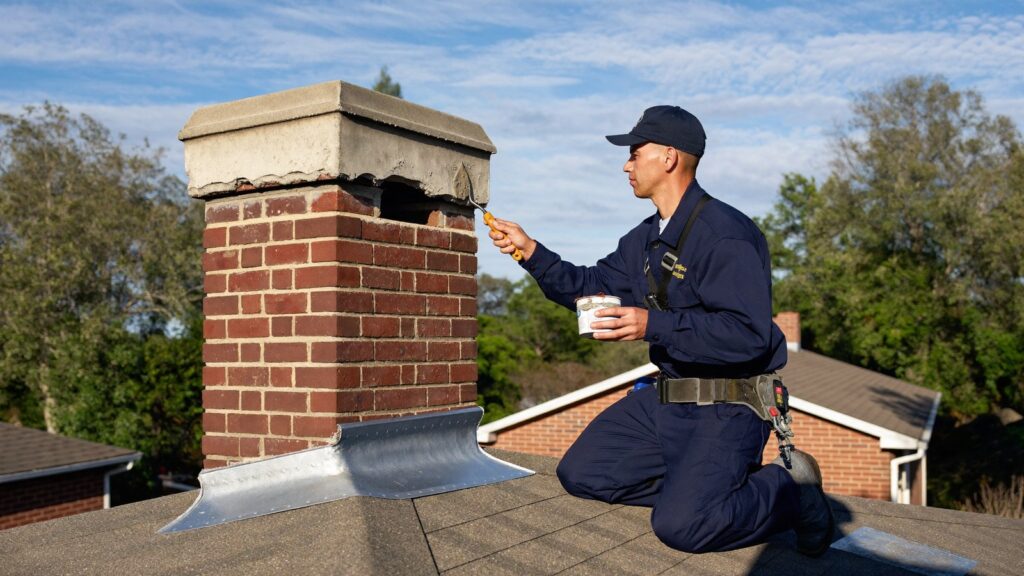
Sometimes, and it is better to find out before the appliance is ordered than after. The common blockers we find in DFW are a cracked crown, a rusted chase cover, failed flashing where the chimney meets the roof, deteriorated mortar joints, and water damage inside the smoke chamber. None of these stops an insert on its own, but a chimney that takes on water will rot the new liner’s insulation and shorten the life of everything inside it, so the repairs come first.
North Texas is hard on masonry in a specific way. We do not get the deep cold that splits brick outright, but we get repeated freeze and thaw swings inside a single week, plus hail and spring wind that works on mortar and flashing. Chimneys here age faster than the walls below them, because a chimney has weather on all four sides.
What does the prep work usually cost?
Crown repair generally runs $400 to $1,200, a new chase cover $500 to $1,400, and flashing repair $350 to $900. A new chimney cap is a few hundred dollars and keeps rain and animals out of the flue you just paid to line. These are real costs, but they are not insert costs, and a good company separates them on the estimate.
Do I Need a Permit, and Does Insurance Care?
Most DFW cities require a mechanical permit for a solid fuel appliance, and gas work triggers a separate plumbing permit pulled by a licensed plumber. Fees are small, typically $75 to $250, and the inspection that follows is worth having on record. Texas insurance carriers increasingly ask whether a wood-burning appliance was professionally installed and permitted, and a claim after a chimney fire is a bad moment to discover it never was.
Keep the paperwork. The permit, the manufacturer documentation and the inspection report make up the file you will want at resale, since a Level 2 inspection is required at every property transfer involving a solid fuel appliance. We covered what buyers and sellers run into in our piece on the Level 2 inspection for a Texas home sale.
Can I install an insert myself?
A homeowner can pull a permit on their own property in most Texas municipalities, but the liner work is the problem. Sizing, insulating and terminating a liner takes training and rooftop experience, the appliance weighs 300 to 600 pounds, and a mistake does not announce itself until the flue is coated in creosote two winters later. Gas connections should never be DIY.
Common Findings That Change the Price
| What the inspection finds | What happens if it is ignored | Typical repair cost in DFW |
|---|---|---|
| Cracked or spalled chimney crown | Water runs into the masonry and freezes, splitting brick and soaking the new liner insulation | $400 to $1,200 |
| Rusted chase cover on a prefab chimney | Rain enters the chase, rusts the firebox and stains the siding below | $500 to $1,400 |
| Failed flashing at the roof line | Persistent ceiling stains near the chimney and rotted decking under the shingles | $350 to $900 |
| Cracked clay flue tiles | Combustion gases reach framing lumber, which is the classic chimney fire path | $1,200 to $3,200 for a full reline |
| Rough or unparged smoke chamber | Poor draft, smoke rollout into the room, and a liner that will not pass cleanly | $600 to $1,800 |
| Heavy glazed creosote in the flue | Ignites at around 1,100 degrees and burns hot enough to crack tile | $300 to $900 beyond a standard sweep |
Why Choose ALC Chimney Service for Your Fireplace Insert Installation?
ALC Chimney Service is a family owned, CSIA certified, licensed and insured company serving Dallas, Fort Worth and the surrounding metroplex. Our technicians bring more than 15 years of combined experience and have completed more than 10,000 jobs across DFW, which is where our 5.0 rating from 172 and more Google reviews comes from. We work on the chimneys in this market every week, so we know what a 1985 Richardson flue looks like inside and what a 1998 Frisco prefab will and will not accept.
Pricing is plain. A chimney sweep with a Level 1 inspection is $99.99, a double chimney is $189.99, and the repair inspection that precedes any insert quote is free, with no trip fees inside our service area. We itemize the appliance, the liner, the insulation, the termination and the labor separately, so you can compare our number honestly against anyone else’s, and if the inspection finds a problem that has to be fixed first we tell you before you order an appliance. You can see every city we cover on our service locations page, and read more in our guide to wood stove installation code and clearances in Texas.
Frequently Asked Questions
How much does a fireplace insert cost installed in Dallas?
Between $3,500 and $8,500 depending on fuel type and chimney height, with most Dallas area jobs finishing between $4,500 and $6,500. That total includes the appliance, a full insulated stainless liner, the termination at the top of the chimney, labor and cleanup. Permits and any chimney repairs found during the inspection are quoted separately.
Can a fireplace insert be installed in any fireplace?
Any sound masonry fireplace with a firebox large enough for the unit can take an insert. Factory-built metal fireplaces can only accept an insert specifically listed for that make and model. If your fireplace was installed after about 1990 in a DFW tract home, there is a good chance it is a prefab and needs that compatibility check first.
Why does a fireplace insert need a stainless liner?
Because an insert vents a smaller volume of cooler exhaust than an open fire, and that exhaust needs a correctly sized continuous path to draft properly. Venting into an oversized clay flue lets the gases cool and condense, which lays down creosote quickly and raises chimney fire risk. NFPA 211 and every major manufacturer warranty call for a full-height liner.
How much does a chimney liner add to the insert cost?
Typically $900 to $3,200. Diameter, chimney height and the number of offsets in the flue are what move it. A single-story ranch with a straight flue sits near the bottom of that range, while a two-story home with an offset above the smoke chamber sits near the top and sometimes needs an oval liner.
Will a fireplace insert really lower my heating bill in Texas?
If you use it regularly through the cold weeks, yes, usually $200 to $450 a season. If you light a handful of fires a year, the energy saving is small and the real benefits are comfort, a sealed flue that stops air loss year round, and a far safer burn. The short North Texas heating season limits how fast an insert pays for itself on fuel alone.
Do I need a permit for a fireplace insert in Fort Worth or Dallas?
Most DFW municipalities require a mechanical permit for a solid fuel appliance, and gas inserts also require a plumbing permit pulled by a licensed plumber. Fees generally fall between $75 and $250. Beyond the legal requirement, the permit and inspection record matter at resale and can matter to your insurance carrier after a fire-related claim.
How often does an insert need to be swept?
Once a year for wood and pellet inserts, and once a year for a service check on gas. Creosote accumulates faster behind an insert than in an open fireplace because flue gases run cooler through a smaller pipe, so the annual sweep is not something to stretch to every other year. CSIA recommends an annual inspection for every chimney regardless of fuel.
If you are weighing a fireplace insert this season, get the inspection done first and let the condition of your chimney tell you what the project actually costs. ALC Chimney Service offers a free repair inspection, a $99.99 chimney sweep with a Level 1 inspection, and $189.99 for a double chimney, with no trip fees anywhere in our DFW service area. Call (877) 656-0851 or reach out through our contact page and we will send a certified technician, give you an itemized number you can compare, and have the work done before the first hard freeze.
Find our chimney safety tips faster on Google