Last updated: May 13, 2026
Chimney cap installation in Dallas typically costs between $400 and $1,600 depending on the material and complexity of the job. Most Dallas homeowners pay somewhere in the $400 to $900 range for a standard stainless steel or colored steel cap installed by a professional. A chimney cap is not optional maintenance — it actively prevents water intrusion, animal entry, and debris accumulation that can cause expensive structural damage over time.
Key Takeaways
- Cost range in Dallas: Flat lid caps average $400–$600; colored steel caps run $650–$900; copper caps reach $1,000–$1,600.
- Labor costs: Professional installation typically adds $150–$350 for standard jobs, and $350–$600 or more for complex or high-access installations.
- Three main material tiers: Galvanized steel (budget), stainless steel or colored steel (mid-range), and copper (premium).
- Primary functions: Keeps out rain, animals, debris, and downdrafts; also reduces spark-related fire hazards.
- Dallas-specific concern: North Texas storms bring heavy rain and strong winds that accelerate chimney deterioration without a cap.
- DIY is possible but risky: Basic caps can be purchased for as little as $25–$120, but improper sizing or installation voids most warranties and can create new problems.
- Lifespan: Stainless steel caps typically last 10–20 years; copper caps can last several decades with minimal maintenance.
- When to replace: Visible rust, missing mesh, bent flashing, or a history of water stains inside the firebox are all signs a replacement is overdue.
What Is a Chimney Cap and What Does It Actually Do?
A chimney cap is a protective cover installed at the top of a chimney flue. It sits over the flue opening and typically includes a mesh screen around the sides. Its job is straightforward: block everything that shouldn’t enter the chimney while still allowing combustion gases and smoke to exit freely.
Beyond that simple description, chimney caps do quite a bit of practical work:
- Water protection: Rain falling directly into an uncapped flue saturates the flue liner, mortar joints, and firebox, leading to spalling, cracking, and eventually structural failure.
- Animal exclusion: Squirrels, raccoons, birds, and other wildlife commonly nest inside open chimneys. If you’ve ever dealt with animals stuck in your chimney, you know how disruptive and costly that situation becomes.
- Debris blockage: Leaves, twigs, and windblown material can accumulate inside a flue, restricting airflow and creating fire hazards.
- Spark arrest: The mesh screen catches embers that rise from the firebox, preventing them from landing on the roof or nearby vegetation.
- Downdraft reduction: A properly designed cap helps prevent wind from pushing back down the flue and forcing smoke into the living space.
Worth noting: A chimney cap does not replace other maintenance. It works alongside routine chimney cleaning and inspections, not instead of them.
How Much Does Chimney Cap Installation in Dallas Cost?
Chimney cap installation in Dallas falls into a fairly predictable cost structure, though the final number depends on material choice, chimney configuration, and site accessibility. Here is a breakdown of what Dallas homeowners are actually paying in 2026.
Dallas Chimney Cap Cost by Material Type
| Cap Type | Material Cost (Estimated) | Installed Cost in Dallas |
|---|---|---|
| Galvanized Steel (basic) | $25–$120 | $175–$350 |
| Flat Lid Cap | Included in service | $400–$600 |
| Stainless Steel (single-flue) | $50–$200 | $300–$600 |
| Colored Steel (gutter/roof match) | Included in service | $650–$900 |
| Copper (standard) | $200–$500+ | $1,000–$1,600 |
| Custom Multi-Flue Cap | Varies significantly | $1,000–$4,000+ |
Labor alone for a standard installation runs $150–$350. For complex jobs, such as steep rooflines, multi-flue systems, or chimneys requiring scaffolding, labor can reach $350–$600 or more.
The Southern U.S. regional average (which includes Texas) sits at $200–$800 for the full installed cost, so Dallas pricing is competitive but trends toward the higher end of that range for anything beyond a basic galvanized cap. That’s partly due to local labor rates and partly because Dallas homes often have taller chimneys or more complex rooflines than the regional average.
What Drives the Final Price Up or Down?
Several factors shift the cost significantly:
- Number of flues: A single-flue cap is simpler and cheaper. Multi-flue systems require a custom-fabricated cap that covers the entire chimney crown.
- Chimney height and roof pitch: Steeper roofs and taller chimneys increase labor time and safety requirements.
- Existing crown condition: If the chimney crown is cracked or deteriorated, it may need repair before a cap can be properly installed. See our guide on how to repair a damaged chimney crown in Dallas for context on what that additional work involves.
- Permits and inspections: Some Dallas-area municipalities require permits for chimney work. Always confirm with your contractor.
- Debris removal and site prep: Minor costs, but worth asking about upfront.
Common mistake: Choosing the cheapest galvanized steel cap to save money. Galvanized steel corrodes relatively quickly in Dallas’s humid summer conditions, often requiring replacement within five to seven years. Stainless steel costs more upfront but typically outlasts galvanized by a decade or more.
What Are the Main Types of Chimney Caps Available in Dallas?
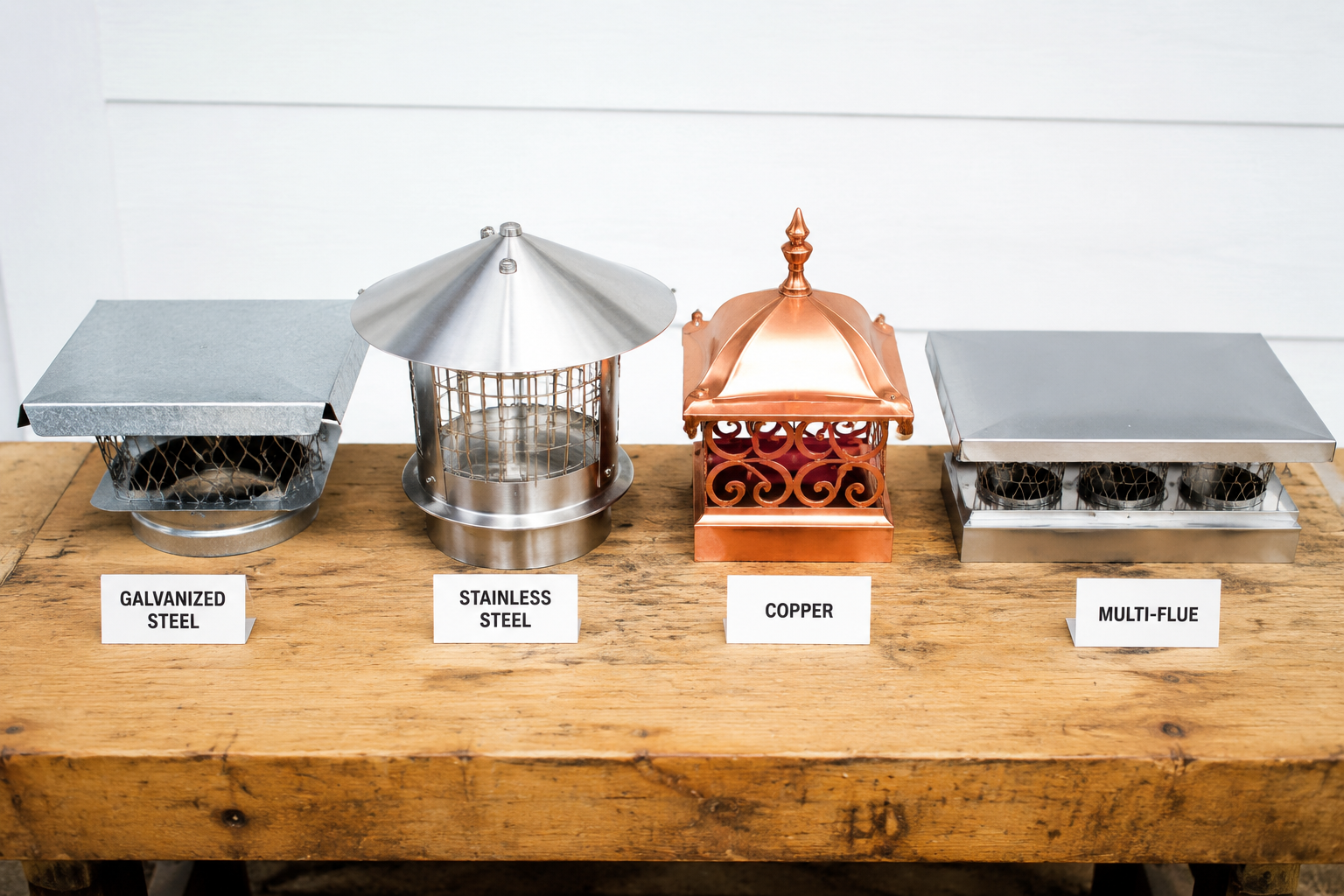
Not all chimney caps are the same, and the type you choose affects both performance and longevity. Dallas installers generally offer four primary categories.
1. Single-Flue Caps
These fit directly over a single flue tile. They’re the most common residential option and are available in galvanized steel, stainless steel, and copper. Stainless steel single-flue caps are probably the most practical choice for most Dallas homeowners: durable, corrosion-resistant, and reasonably priced.
2. Flat Lid Chimney Caps
Flat lid caps are custom-fabricated to cover the entire chimney top rather than just the flue opening. They’re a good choice for chimneys with multiple flues or irregular crown shapes. In Dallas, flat lid caps average $400–$600 installed, making them a mid-range option with broad coverage.
3. Colored Steel Caps
These are essentially stainless or galvanized steel caps finished in colors designed to match gutters, roof shingles, or exterior trim. They serve the same functional purpose as a standard cap but with an aesthetic consideration built in. Expect to pay $650–$900 installed in the Dallas market.
4. Copper Chimney Caps
Copper caps are the premium option. They’re exceptionally durable, naturally resistant to corrosion, and develop a distinctive patina over time that many homeowners find appealing. In Dallas, copper caps run $1,000–$1,600 depending on installation difficulty. For historic homes or high-end properties where curb appeal matters, copper is worth the investment.
5. Decorative and Custom Caps
Some homeowners opt for decorative chimney caps with ornamental details, or fully custom fabrications for unusual chimney configurations. These are specialty installations and pricing varies considerably. They’re generally only worth pursuing for specific architectural contexts.
Choose based on this logic:
- Budget-conscious, short-term: Galvanized steel, but plan to replace sooner.
- Best value for most homeowners: Stainless steel single-flue or flat lid cap.
- Aesthetic priority or long-term investment: Copper.
- Multiple flues or unusual crown shape: Custom flat lid or multi-flue cap.
Why Is Chimney Cap Installation in Dallas Especially Important?
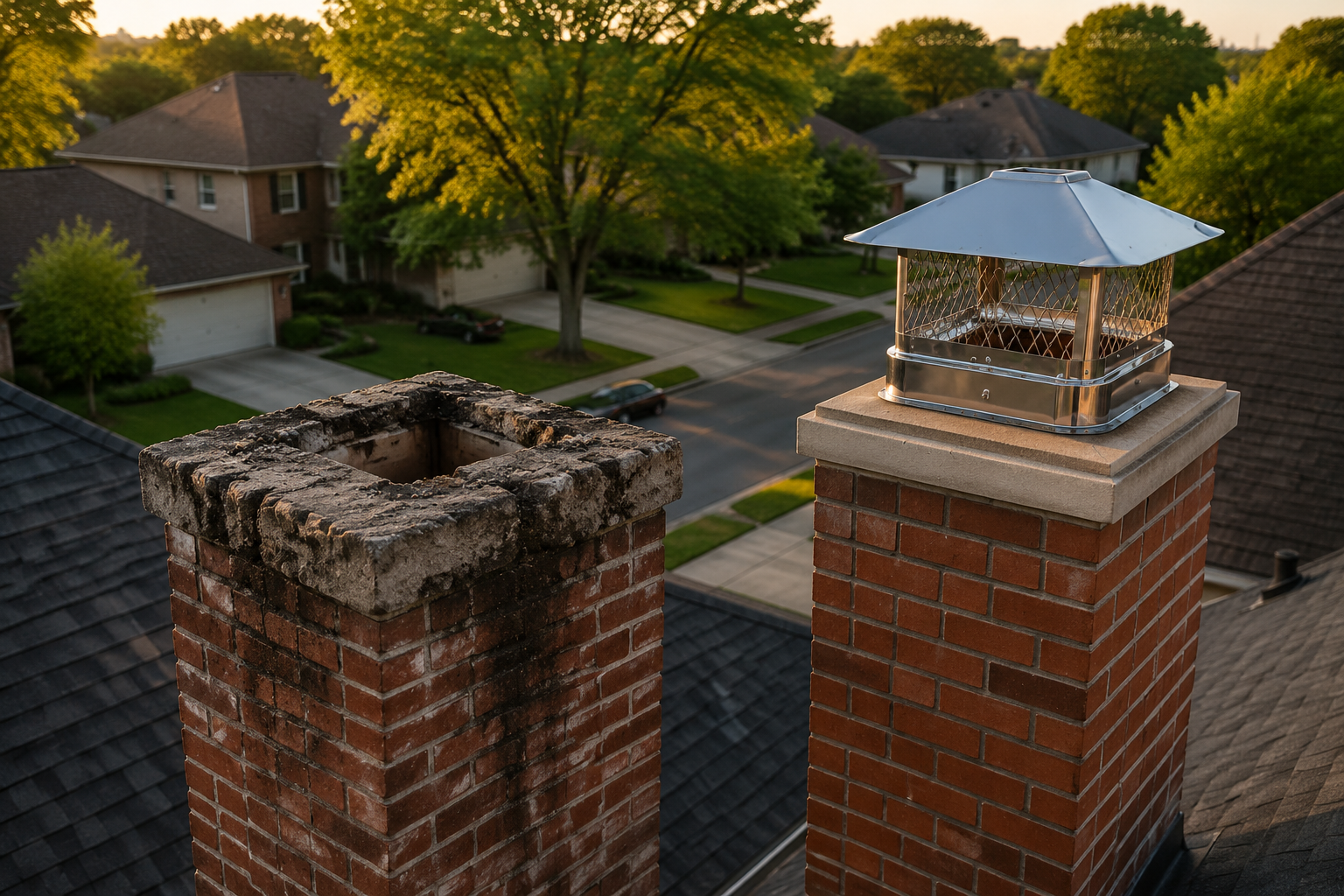
Dallas homeowners face a specific set of environmental conditions that make chimney caps more than just a good idea. North Texas weather is genuinely hard on chimneys, and an uncapped flue accelerates deterioration faster than many people expect.
The North Texas Weather Factor
Dallas gets an average of roughly 37 inches of rain annually, with significant storm activity concentrated in spring and fall. Thunderstorms here can be intense and fast-moving, driving rain horizontally as well as vertically. An uncapped chimney during a spring storm essentially becomes a funnel, directing water straight into the flue and firebox. Over time, that moisture:
- Erodes mortar joints between flue tiles
- Causes the flue liner to crack or spall
- Rusts the damper assembly
- Stains and damages the firebox interior
- Can migrate into the surrounding masonry and eventually into the home’s structure
Water damage to a chimney is not cheap to fix. A chimney relining alone can run several thousand dollars, and full chimney repair costs in Dallas can reach well beyond that depending on the extent of the damage. A chimney cap, by comparison, is a modest investment.
Wildlife Is a Real Problem in Dallas
Perhaps less obvious but equally significant: Dallas has an active wildlife population, and chimneys are prime nesting territory. Chimney swifts, in particular, are a protected migratory species that commonly nest in open flues. Once a nest is established, removal options become legally restricted. Raccoons and squirrels are also frequent intruders, and they can cause considerable damage to the flue interior. A properly installed cap with mesh screening eliminates this entry point entirely.
For homeowners who have already experienced this problem, professional animal removal from chimneys is available, but prevention is considerably less disruptive.
Downdrafts and Smoke Intrusion
Dallas sits on relatively flat terrain with open exposure to prevailing winds, particularly from the south and southwest. Wind-driven downdrafts can push smoke back into the living space through an uncapped or poorly designed chimney. If you’ve noticed smoke coming into your home during certain wind conditions, a chimney cap with an appropriate design for downdraft prevention may resolve the issue. There’s more detail on this in our article on why smoke from the fireplace comes into the house.
How Is a Chimney Cap Installed? What to Expect from the Process
A professional chimney cap installation in Dallas is generally a straightforward job, though the specifics depend on the chimney’s configuration.
Typical installation steps:
- Inspection of the chimney crown and flue: The technician checks for existing damage, measures the flue dimensions, and assesses the crown condition before selecting or fabricating the cap.
- Crown repair (if needed): Any cracks or deterioration in the crown are addressed before installation. Skipping this step is a common mistake that leads to premature cap failure.
- Cap sizing and selection: For standard single-flue caps, the technician selects the appropriate size. For flat lid or multi-flue caps, custom fabrication may be required.
- Installation and sealing: The cap is secured to the flue tile or chimney crown using appropriate fasteners and, in many cases, a high-temperature sealant or mortar.
- Final inspection: The technician confirms the cap is level, secure, and properly sealed around all edges.
The entire process typically takes one to three hours for a standard installation. More complex jobs, particularly those involving custom fabrication or significant crown repair, may take longer or require a return visit.
What homeowners should ask before the job:
- Is a chimney inspection included, or is it a separate charge?
- What warranty does the cap carry, and does installation affect it?
- Is the crown in condition to support the cap, or does it need repair first?
- Will the mesh screen size comply with local fire codes?
A professional chimney inspection before or during cap installation is worth the additional cost, particularly for older chimneys or homes that haven’t had recent chimney maintenance.
DIY vs. Professional Chimney Cap Installation: Which Makes Sense?
DIY chimney cap installation is technically possible for a homeowner who is comfortable working at height and can accurately measure the flue opening. Basic galvanized steel caps are available at home improvement stores for $25–$120 and can be installed without specialized tools.
That said, there are several reasons why most Dallas homeowners are better served by professional installation:
- Accurate sizing matters: A cap that doesn’t fit correctly allows water and animals to enter around the edges, defeating its purpose entirely.
- Crown assessment: A professional will identify crown damage or other issues that a DIY installer might miss, preventing more expensive problems later.
- Roof safety: Working on a Dallas rooftop in summer heat carries real risk. Professional crews have appropriate safety equipment and experience.
- Warranty validity: Many chimney cap manufacturers require professional installation for the warranty to remain valid.
The cost difference between DIY and professional installation is real, but so is the risk of an improperly installed cap creating new problems. For most homeowners, the professional route is the more cost-effective choice over the long term.
Signs Your Chimney Needs a New Cap (or a Cap for the First Time)
Some of these are obvious; others are easy to miss until the damage is already done.
- Visible rust or corrosion on the existing cap
- Bent, broken, or missing mesh screening
- Water stains inside the firebox or on the ceiling near the chimney
- Animal sounds or evidence of nesting inside the flue
- Debris accumulation visible inside the flue during an inspection
- Smoke entering the living space during use
- Efflorescence (white staining) on the exterior chimney masonry, indicating moisture penetration
- No cap present on a chimney that’s been in use
If you’re seeing any of these signs, it’s worth reviewing our list of top signs your chimney needs repair to assess whether additional work beyond the cap is needed.
Frequently Asked Questions About Chimney Cap Installation in Dallas
Q: How long does a chimney cap last in Dallas?
Stainless steel caps typically last 10–20 years. Galvanized steel caps may last 5–10 years in Dallas’s climate before showing significant corrosion. Copper caps can last 30 years or more with minimal maintenance.
Q: Can I install a chimney cap myself?
Yes, but it’s only advisable if you’re comfortable on a roof and can accurately measure your flue. Improper sizing is the most common DIY failure point, and it can void manufacturer warranties. For most homeowners, professional installation is the safer and more reliable choice.
Q: Does a chimney cap affect fireplace draft?
A properly sized and designed cap should not negatively affect draft. In fact, certain cap designs actively improve draft by reducing downdraft. A cap that is too small or poorly positioned can restrict airflow, so correct sizing is essential.
Q: Is a chimney cap required by code in Dallas?
Dallas and most North Texas municipalities do not universally mandate chimney caps by code, but local fire codes may require spark-arresting mesh screens on wood-burning chimneys. Check with your local building department or ask your chimney professional.
Q: How often should a chimney cap be inspected?
Annually, ideally as part of a routine chimney inspection before the heating season. This is especially important after severe storms, which are common in North Texas.
Q: What happens if I don’t have a chimney cap?
Without a cap, the flue is exposed to rain, animals, debris, and downdrafts. Over time, this leads to water damage in the flue liner, firebox, and surrounding masonry, which can cost significantly more to repair than the cap would have cost to install.
Q: Can a chimney cap stop a chimney leak?
A chimney cap addresses one major source of water entry: the open flue. However, chimney leaks can also originate from cracked crowns, deteriorated flashing, or damaged masonry. If you’re experiencing a leak, see our guide on why chimneys leak to identify all potential sources.
Q: How do I choose the right size chimney cap?
Measure the outer dimensions of the flue tile at the top of the chimney. For round flues, measure the diameter. For rectangular or square flues, measure both dimensions. Standard caps are sized to fit over the flue tile; flat lid caps are measured to fit the full chimney crown.
Q: Are copper chimney caps worth the extra cost?
For most homeowners, stainless steel offers the best value. Copper is worth the premium if longevity, aesthetics, or a historic property’s character are priorities. Copper’s natural patina also provides a degree of self-protection against corrosion that other metals don’t match.
Q: What’s the difference between a chimney cap and a chimney crown?
The chimney crown is the concrete or mortar slab that covers the top of the chimney structure, with an opening for the flue. The chimney cap is the cover installed over the flue opening itself. Both need to be in good condition; a damaged crown undermines even a well-installed cap.
Expert Insights: What Dallas Chimney Professionals Recommend
Experienced chimney technicians working in the Dallas market consistently emphasize a few points that homeowners tend to overlook.
Material selection should account for local climate. Dallas summers are hot and humid, and the temperature swings between seasons are significant. Galvanized steel expands and contracts with temperature changes and corrodes faster in humid conditions than it would in a drier climate. Stainless steel handles this better and is the professional recommendation for most Dallas installations.
Don’t defer crown repairs. A chimney cap installed over a cracked or deteriorating crown will not perform as intended. Water will still find its way in through crown cracks, and the cap may not seat properly. Addressing the crown first is not upselling; it’s the correct sequence of work.
Inspect after major storms. North Texas hailstorms can dent or damage mesh screens and dislodge caps. After a significant storm, a visual inspection from the ground (using binoculars if needed) can catch obvious damage before it becomes a more serious problem.
Pair cap installation with a sweep. If the chimney hasn’t been cleaned recently, combining cap installation with a professional chimney sweep is efficient and ensures the flue is clear before the new cap is installed.
Conclusion: Actionable Next Steps for Dallas Homeowners
A chimney cap is one of the most cost-effective protective investments a Dallas homeowner can make. For $400 to $900 in most cases, it prevents water damage, animal intrusion, and debris accumulation that can collectively cost thousands of dollars to remediate. The Dallas climate, with its heavy spring storms and active wildlife, makes the case even more compelling than in milder regions.
Here’s what to do next:
- Inspect your chimney from the ground. Look for a visible cap. If you can’t see one, or if the existing cap looks rusted, bent, or damaged, schedule a professional assessment.
- Get a professional inspection. Before installing a new cap, confirm the crown and flue are in good condition. A chimney inspection in Dallas will identify any issues that need to be addressed first.
- Choose the right material. For most Dallas homeowners, stainless steel offers the best balance of durability and cost. Copper is worth considering for long-term or aesthetic priorities.
- Schedule installation before storm season. North Texas spring storms are the most damaging period for uncapped chimneys. Getting ahead of that window is worth the effort.
- Ask about bundling services. Many Dallas chimney companies offer combined pricing for cap installation, cleaning, and inspection, which can reduce the overall cost.
The chimney cap is a small component with an outsized protective role. Treating it as optional maintenance is a common and expensive mistake. Getting it right, with the correct material and proper installation, protects the entire chimney system and the home around it.