Skip to content
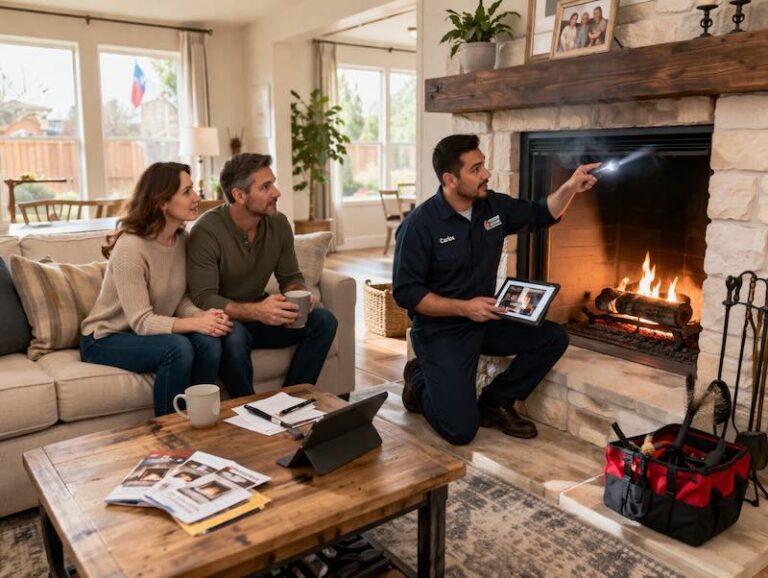
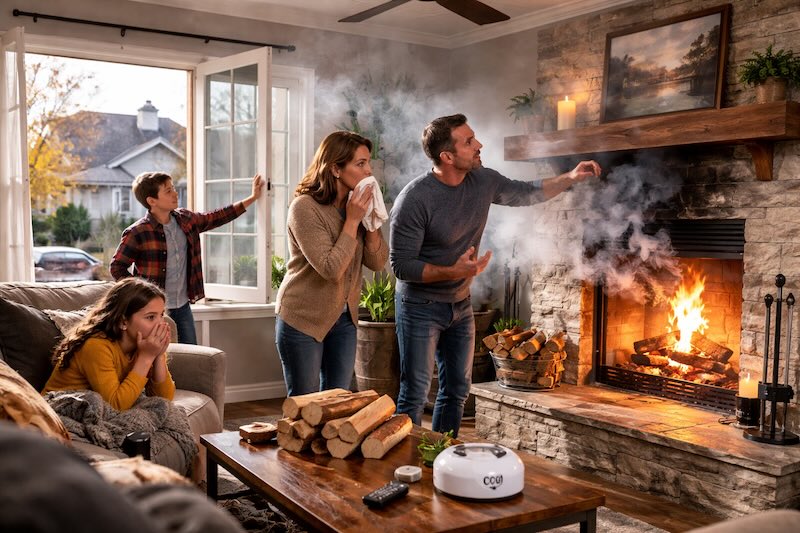
Smoke returning into the house is usually caused by a weak chimney draft, negative air pressure, or some kind of blockage, but honestly, it rarely feels that simple when you’re standing in your living room wondering why everything suddenly smells like a campfire gone wrong. In many Texas homes, especially newer airtight builds or older properties with aging chimneys, this issue tends to show up at the worst possible time, like the first cold evening when you finally decide to light a fire.
Common culprits include a closed damper, a cold flue, wet or unseasoned firewood, or even something less obvious like running a kitchen exhaust fan. Sometimes it’s just one issue, but more often, it’s a mix of small factors stacking up. The fix can be straightforward, or… not. It depends.
Before you panic or assume something major is wrong, there are a few immediate things you can try. Some work almost instantly. Others are more like temporary relief.
Immediate Troubleshooting Steps (Try These First)
Open a Window, Yes, Really
It sounds too simple, but it works surprisingly often.
Crack open a nearby window or door, especially if your home is well insulated. Modern Texas homes, particularly in Dallas and surrounding areas, tend to be tightly sealed for energy efficiency. That’s great for your AC bill, but not so great for airflow.
When your home lacks “makeup air,” it creates negative pressure, which literally pulls smoke back down the chimney.
I’ve seen cases where opening a window just an inch completely solved the problem. Not always, but enough times to make it worth trying first.
Check the Damper Position
This might feel obvious, but it gets overlooked more than you’d think.
Make sure the damper is fully open, not halfway, not “I think it’s open,” but fully open. Even a slightly closed damper can restrict airflow enough to cause smoke to spill back inside.
And sometimes, dampers get stuck. Or warped. Or just don’t open properly anymore.
Warm the Flue Before Lighting
A cold chimney is kind of like a blocked highway.
Cold air inside the flue is dense and heavy, and it can prevent smoke from rising. Instead, the smoke just… lingers. Or worse, reverses direction.
A quick trick is to light a piece of newspaper and hold it near the top of the firebox for 30 to 60 seconds before starting your fire. This helps establish an upward draft.
It feels a bit old-school, but it works.
Use Proper Firewood, Not Just “Dry Enough”
This one’s big.
If your wood isn’t properly seasoned, meaning below about 20 percent moisture, it produces more smoke and less heat. That weakens the draft and increases the chance of smoke entering your home.
In Texas, where humidity can fluctuate, wood that seems dry might not actually be ready to burn.
If it hisses, smokes excessively, or struggles to catch, it’s probably too wet.
Check for Obvious Blockages
You don’t always need a full inspection to spot an issue.
Look up into the flue with a flashlight. If you see debris, nesting material, or heavy soot buildup, that’s likely restricting airflow.
Bird nests are especially common in Texas chimneys, particularly in the off-season.
Why Smoke Comes Back Into the House (The Real Causes)
Once you’ve ruled out the quick fixes, it helps to understand what’s actually going on behind the scenes. Chimney behavior isn’t random. It follows airflow physics, even if it feels unpredictable.
1. Negative Air Pressure Inside the Home
This is probably the most common issue in newer homes.
When appliances like bathroom fans, kitchen hoods, or even dryers are running, they pull air out of the house. If there’s no fresh air coming in, the house pulls air from wherever it can, including the chimney.
And that means smoke comes with it.
This tends to be worse in winter, when everything is sealed tight.
2. Cold Flue Downdraft
A cold chimney can actually reverse airflow.
Instead of smoke rising, cold air pushes downward, creating a downdraft. You’ll notice this more when lighting the first fire of the season, or on particularly cold mornings.
It’s one of those issues that feels random, but it’s actually very predictable once you’ve experienced it a few times.
3. Blocked or Restricted Chimney
Even a partial blockage can disrupt airflow enough to cause smoke problems.
Common obstructions include:
-
Creosote buildup
-
Bird or animal nests
-
Leaves and debris
-
Damaged flue liners
And sometimes, it’s not fully blocked, just restricted enough to weaken the draft.
4. Poor Fire-Building Technique
This one surprises people.
If your fire isn’t hot enough, or if logs are placed too close to the front of the firebox, smoke can spill into the room before it has a chance to rise.
A strong, hot fire creates a stronger draft. A weak fire struggles.
It’s not just about lighting a fire, it’s about building it correctly.
5. Chimney Height or Design Issues
Some chimneys are just… not ideal.
If the chimney is too short, or poorly positioned relative to the roofline, wind patterns can push smoke back down. This is more common in certain Texas home designs where rooflines are complex or additions were made later.
Quick Comparison of Common Causes and Fixes
| Problem | What It Means | Quick Fix |
|---|---|---|
| Negative Pressure | Air is being pulled into the house from the chimney | Open a window, reduce exhaust fan use |
| Cold Flue | Cold air blocks upward smoke flow | Preheat flue with newspaper |
| Wet Wood | Produces excess smoke and weak heat | Use seasoned firewood |
| Blocked Chimney | Restricted airflow due to debris or buildup | Schedule chimney cleaning |
| Closed Damper | Smoke cannot escape properly | Fully open damper |
Texas-Specific Factors That Make This Worse
This part gets overlooked in a lot of generic blogs.
In Texas, especially in areas like Dallas, Plano, and surrounding neighborhoods, you have a mix of climate conditions that can actually make smoke issues more common.
-
Sudden temperature drops, which affect draft stability
-
High humidity at times, impacting wood dryness
-
Strong winds that interfere with chimney airflow
-
Energy-efficient homes with tight seals
So even if your fireplace worked fine last year, conditions might be slightly different this season. And that’s enough to cause problems.
When to Stop Using the Fireplace
This part is important, and often ignored.
If smoke continues entering your home despite trying the basic fixes, stop using the fireplace.
It might feel excessive, but persistent smoke can indicate a more serious issue, like heavy creosote buildup or structural problems inside the chimney.
At that point, it’s less about comfort and more about safety.
Long-Term Solutions to Fix Smoke Problems (And Actually Prevent Them)
At some point, quick fixes stop being enough. You open a window, adjust the fire, maybe even switch wood, and still, smoke finds its way back inside. That’s usually when the issue runs deeper than just airflow timing or technique.
And honestly, this is where most homeowners either ignore the problem for too long, or overreact and assume the entire chimney needs rebuilding. In reality, it’s often somewhere in between.
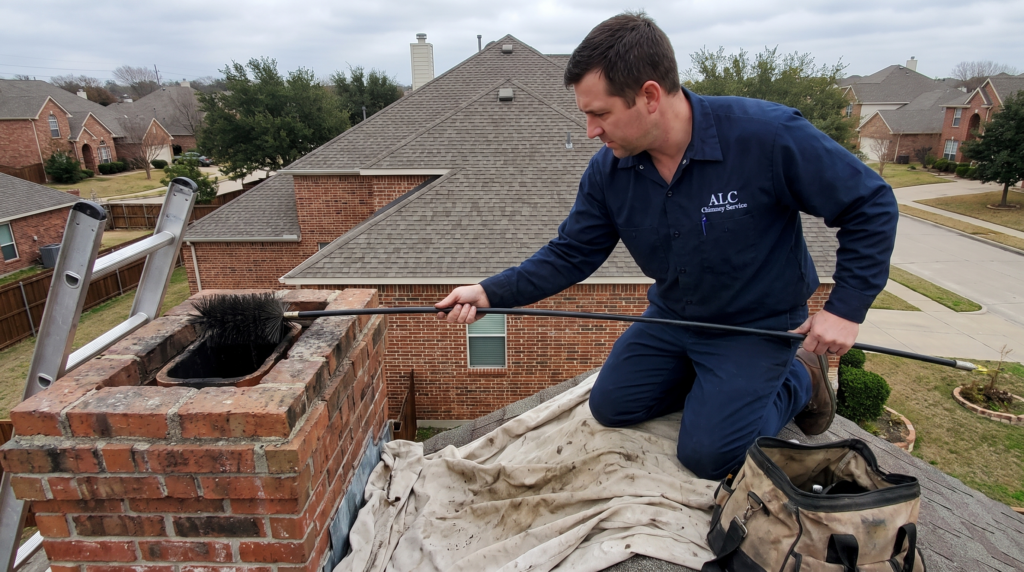
Professional Chimney Cleaning, Not Just a Recommendation
If it’s been more than a year since your last chimney cleaning, that alone could explain everything.
Creosote buildup doesn’t just increase fire risk, it narrows the flue. Even a thin layer can disrupt airflow enough to weaken the draft. And once the draft weakens, smoke starts behaving unpredictably.
In Texas, especially with occasional use fireplaces, creosote tends to build unevenly. You might think, “I barely use it,” but that can actually make it worse, since low-temperature fires produce more residue.
A proper cleaning restores airflow. Sometimes immediately noticeable.
Chimney Inspection, The Part Most People Skip
Cleaning removes buildup, but inspection identifies structural issues.
Cracked flue liners, damaged smoke chambers, or even slight misalignments can interfere with airflow. These aren’t always visible from below, and they don’t always cause obvious symptoms, until they do.
A Level 2 inspection, especially if you’ve had recurring smoke issues, is usually the safest bet.
And yes, it might feel like overkill, but if smoke is consistently entering your home, something isn’t functioning as designed.
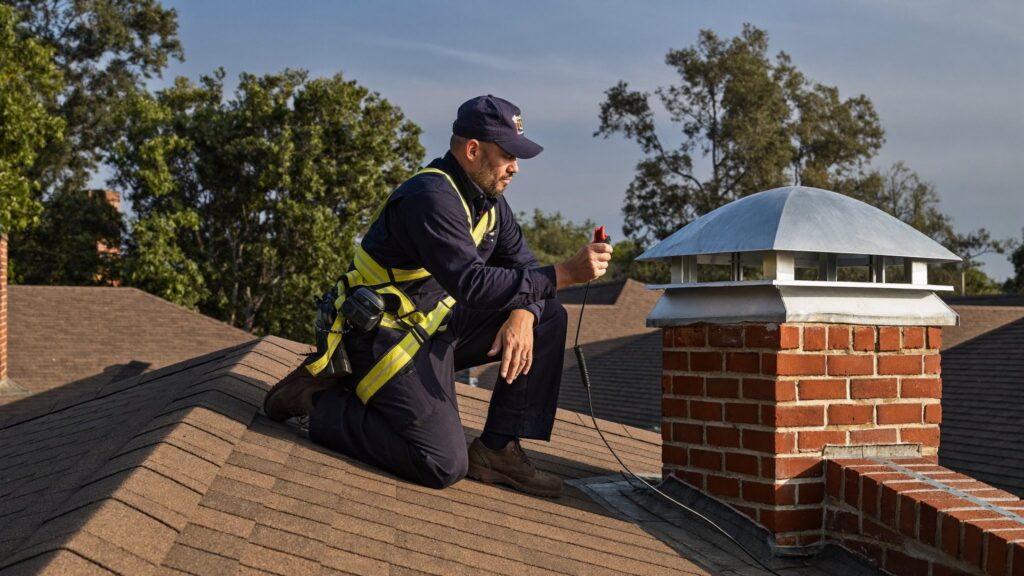
Install a Chimney Cap (If You Don’t Already Have One)
This is one of those upgrades that seems minor, but makes a big difference.
A chimney cap prevents:
-
Rain from entering the flue
-
Animals from nesting inside
-
Debris buildup
-
Wind-related downdrafts
In Texas, where birds and small animals are… persistent, caps are almost essential.
But here’s the catch. Not all caps are equal.
A poorly sized cap can actually restrict airflow, making the problem worse. So sizing and installation matter more than people think.
Top-Mounted Damper, A More Modern Solution
Traditional throat dampers, the ones just above the firebox, don’t always seal properly. Over time, they warp or fail to close completely.
A top-mounted damper sits at the chimney crown and creates a tight seal when closed. It also helps regulate airflow more effectively when open.
Some homeowners notice immediate improvements in draft performance after installation. Others notice it more during colder months.
Either way, it’s one of those upgrades that quietly solves multiple problems at once.
Understanding Draft, Because This Is Really What It Comes Down To
Everything circles back to draft.
If your chimney draft is strong, smoke goes up and out. If it’s weak, inconsistent, or reversed, smoke enters your home.
That’s the whole system, simplified.
But draft itself depends on several factors working together:
-
Temperature difference between inside and outside air
-
Chimney height and diameter
-
Air supply inside the home
-
Fire intensity
-
External wind conditions
Even one weak link can disrupt the entire system.
Strong Draft vs Weak Draft
| Factor | Strong Draft | Weak Draft |
|---|---|---|
| Airflow Direction | Upward, consistent | Reversed or unstable |
| Fire Behavior | Burns hot and clean | Smoky, slow burn |
| Smoke Movement | Exits chimney efficiently | Spills into room |
| Chimney Condition | Clean, unobstructed | Blocked or restricted |
| Indoor Air Pressure | Balanced | Negative pressure present |
Competing Appliances (Your Fireplace Isn’t Alone)
Your fireplace is part of a larger airflow system in your home.
When you turn on:
-
Kitchen range hoods
-
Bathroom exhaust fans
-
HVAC systems
-
Clothes dryers
They all pull air out of the house.
If they pull more air out than is coming in, your chimney becomes the easiest replacement source. Which means, again, smoke gets pulled inside.
This is especially common during gatherings or holidays, when everything is running at once.
Chimney Location and Wind Patterns
Not all chimneys are exposed equally.
If your chimney is located on the outside wall of your home, it tends to stay colder. That affects draft. Interior chimneys perform better in most cases.
Also, wind hitting certain parts of your roof can create pressure zones that push air down the chimney.
It’s not always intuitive. Two houses next door to each other can behave completely differently.
Oversized or Undersized Flue
This one is more technical, but worth mentioning.
If the flue is too large, smoke cools too quickly and loses upward momentum. If it’s too small, it restricts airflow.
Either way, draft suffers.
This is more common in older homes or after fireplace modifications that weren’t properly matched to the chimney system.
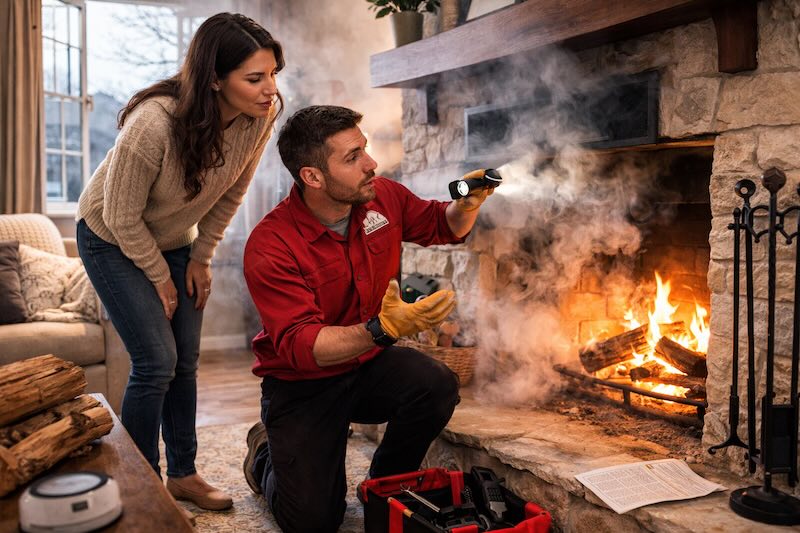
Preventing Smoke Problems Before They Start
Prevention isn’t complicated, but it does require consistency.
1. Annual Maintenance
Even if you rarely use your fireplace.
Schedule a yearly inspection and cleaning. It’s not just about soot, it’s about catching issues early.
2. Burn the Right Way
-
Use dry, seasoned wood
-
Start fires hot, not slow
-
Keep logs toward the back of the firebox
-
Avoid overloading the fireplace
Small adjustments, but they matter.
3. Pay Attention to Airflow in Your Home
If you notice smoke issues only when certain appliances are running, that’s a clue.
Try balancing airflow by:
-
Opening a window slightly
-
Reducing simultaneous exhaust usage
-
Installing a dedicated air supply vent if needed
4. Upgrade When Necessary
Sometimes, maintenance isn’t enough.
If your chimney system is outdated or poorly designed, upgrades like:
-
Chimney caps
-
Top dampers
-
Draft-inducing caps
can make a noticeable difference.
A Quick Reality Check
Not every smoke issue has a clean, single cause.
Sometimes it’s the wood. Sometimes it’s the weather. Sometimes it’s something structural. And occasionally, it’s all of them combined in just the right way to cause problems.
That’s why DIY fixes work sometimes, and other times they don’t.
When You Should Call a Professional Immediately
There are a few situations where it’s better not to guess:
-
Smoke enters the home consistently
-
Strong odor even when not in use
-
Visible soot or debris falling into the fireplace
-
Poor fire performance no matter what you try
At that point, continuing to use the fireplace isn’t just inconvenient, it can become unsafe.
Final Thoughts
If your fireplace is pushing smoke into your house, it’s not random. It’s telling you something about airflow, pressure, or blockage.
The challenge is figuring out which one.
And sometimes, it’s tempting to keep trying small fixes, hoping one sticks. That works, occasionally. But if the issue keeps coming back, it’s usually a sign that the system needs proper attention.
Not necessarily a full rebuild. But something more than just opening a window.
Frequently Asked Questions
Why does smoke come into my house when I light a fire?
Is it dangerous if smoke comes back into the house?
Why does my fireplace work sometimes and not others?
Can weather really affect chimney performance?
How do I know if my chimney is blocked?
What kind of wood should I use to prevent smoke?
Does opening a window really help with fireplace smoke?
How often should I clean my chimney?
Can a chimney cap stop smoke from coming inside?
Should I try to fix chimney draft issues myself?
Find our chimney safety tips faster on Google