Last updated: May 8, 2026
Chimney relining cost in Dallas typically ranges from $2,500 to $6,500 for a standard stainless steel liner installation, though the full national spectrum runs from roughly $625 to $15,000 depending on materials, chimney height, and project complexity. Most Dallas homeowners with a single-story or two-story home and a straightforward flue configuration land somewhere between $3,000 and $5,500. The investment is worth it when an inspection reveals a cracked, deteriorated, or missing liner, because using a fireplace without a sound liner creates genuine fire and carbon monoxide hazards.
Key Takeaways
Average Dallas range: $2,500 to $6,500 for stainless steel relining; cast-in-place and specialty systems can push costs higher
Labor rates in the Dallas-Fort Worth area run approximately $65 to $85 per hour, which meaningfully affects total project cost
Three main liner materials: clay tile (most affordable at roughly $10/sq ft), stainless steel (most common at ~$65/sq ft), and cast-in-place cement (most durable for damaged masonry)
Relining is not optional when a Level 2 inspection reveals liner damage; the NFPA 211 standard requires a sound liner for safe appliance operation
Signs you need relining include white staining on exterior brick, smoke entering the living space, a sulfur or burning smell, and visible cracks found during inspection
Partial relining (for a specific flue section) costs less but is not always structurally appropriate
Combining services such as a chimney sweep and cap installation alongside relining can reduce total mobilization costs
Dallas climate factors matter: extreme summer heat followed by cold snaps accelerates liner deterioration faster than in more temperate climates
Always verify CSIA certification before hiring; it’s the clearest credential for chimney liner work in Texas
What Does Chimney Relining Actually Mean?
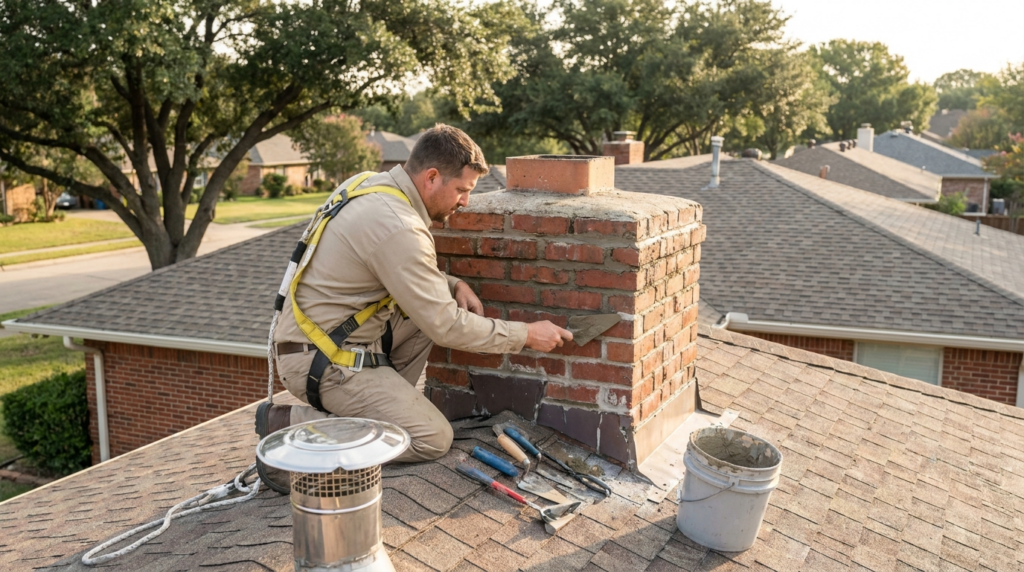
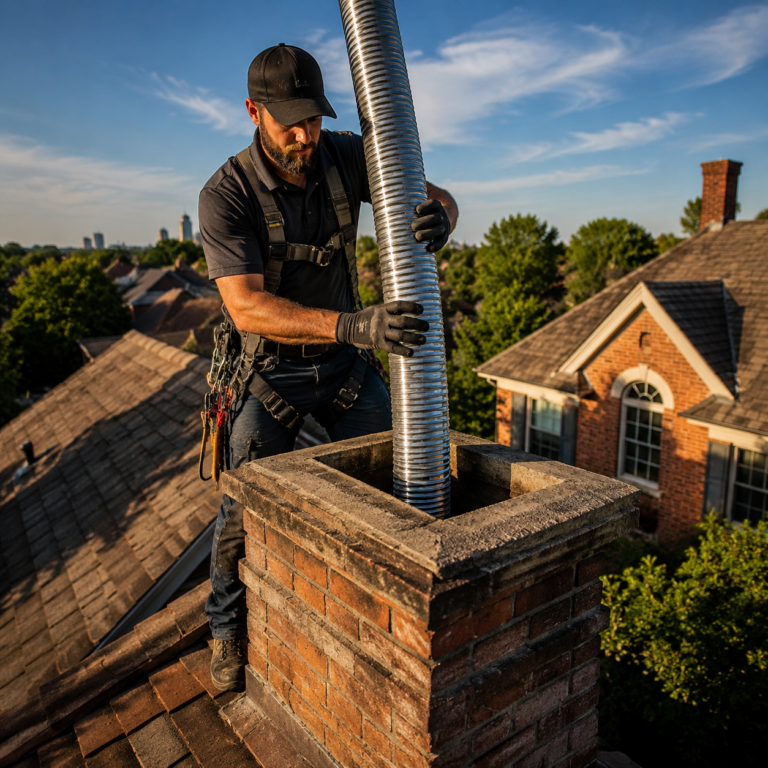
Chimney relining is the process of installing a new flue liner inside an existing chimney structure. The liner is the inner channel that contains combustion gases, directs them safely out of the home, and protects the surrounding masonry from heat and corrosive byproducts.
Most older Dallas homes were built with clay tile liners. Over time, those tiles crack from thermal cycling, deteriorate from acidic condensate, or simply crumble from age. When that happens, the liner no longer performs its protective function. Relining installs a new liner, typically stainless steel or cast-in-place cement, inside the existing flue without necessarily tearing out the old chimney structure.
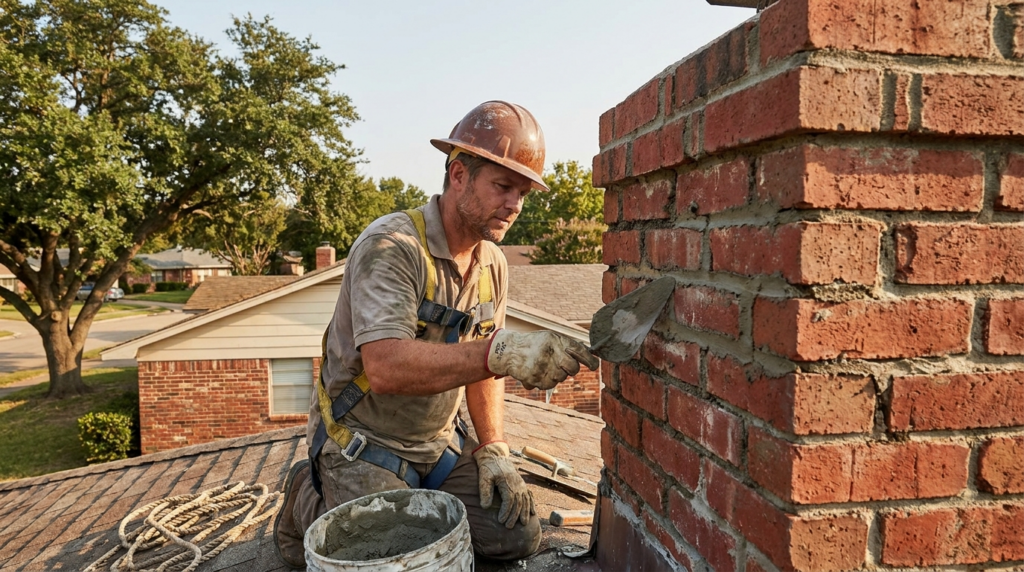
It is worth distinguishing relining from a full chimney rebuild in Dallas, which involves removing and reconstructing the masonry itself. Relining is generally less invasive and less expensive, though the two are sometimes done together when structural damage is severe.
What Factors Drive Chimney Relining Cost in Dallas?
The chimney relining cost in Dallas is not a flat number. Several variables interact to determine what a homeowner will actually pay.
Liner material is the single largest cost driver:
MaterialApproximate Cost per Sq FtBest ForDurabilityClay tile~$10/sq ftNew construction, budget rebuilds50+ years (if undamaged)Stainless steel (flexible)~$65/sq ftGas, oil, wood appliances; most relining jobs15-25 yearsStainless steel (rigid)~$65/sq ftStraight flues, high-efficiency appliances20-30 yearsCast-in-place cementHigher; varies by projectSeverely damaged masonry, irregular flues50+ years
Chimney height and flue diameter directly affect material quantity and labor hours. A taller chimney requires more liner material and more time to install. Flue diameter must match the connected appliance’s BTU output, and upsizing or downsizing adds complexity.
Accessibility matters more than many homeowners expect. A chimney on a steep roofline, or one that requires scaffolding rather than a simple ladder setup, adds labor time. Dallas labor rates of $65 to $85 per hour mean that an extra two or three hours of rigging work adds $130 to $255 to the bill before any materials are counted.
Condition of the existing liner also plays a role. If old clay tiles need to be removed before the new liner goes in, that demolition and debris removal adds cost. Some installers leave the old tile in place and insert a flexible liner around it, which works in certain configurations but not all.
Permit requirements in Dallas vary by project scope. Some relining projects require a permit from the City of Dallas Building Inspection department; others do not. A reputable contractor will clarify this upfront. Permit fees, if required, typically add $75 to $200.
How Much Does Chimney Relining Cost in Dallas Compared to National Averages?
Dallas homeowners generally pay in line with, or slightly above, national midpoints because of the region’s labor market. The national average for chimney liner installation sits around $2,500, with most projects falling between $1,500 and $5,000. Dallas-specific stainless steel relining projects tend to run $2,500 to $6,500, which is consistent with the Southern US regional benchmark of $1,000 to $6,000 per job.
The full national cost spectrum, from basic to premium, looks like this:
Basic relining: $625 to $2,000 (short flues, minimal liner damage, aluminum or basic stainless)
Mid-range: $2,000 to $7,000 (standard stainless steel, typical two-story home, most Dallas projects)
Premium: $7,000 to $15,000 (cast-in-place systems, complex flue configurations, combined structural repairs)
Most Dallas homeowners with a standard wood-burning fireplace and a two-story chimney should budget $3,500 to $5,500 as a realistic planning figure. That said, getting two or three written estimates from CSIA-certified contractors is the only reliable way to pin down a specific number for a specific chimney.
For context, a chimney inspection in Dallas typically costs $150 to $300 and is the essential first step before any relining quote can be accurate.
When Do You Actually Need to Reline a Chimney?
Not every chimney needs relining. The decision should be based on a Level 2 inspection finding, not on age alone or a contractor’s unsupported recommendation.
Clear indicators that relining is necessary:
A Level 2 inspection (required when changing fuel types, selling a home, or after a chimney fire) reveals cracked, spalled, or missing clay tile sections
Visible white efflorescence (salt staining) on exterior brick, which suggests moisture is migrating through a compromised liner
Smoke or combustion gases entering the living space despite a properly functioning damper (see our guide on why smoke from the fireplace comes into the house)
A sulfur or “rotten egg” smell near the fireplace, which can indicate gas appliance exhaust is not venting properly
Converting from a wood-burning appliance to a gas insert, which requires a properly sized and rated liner
Installing a new high-efficiency gas appliance, which produces cooler, wetter exhaust that clay tile handles poorly
Situations where relining may not be immediately necessary:
A minor Level 1 inspection finds hairline cracks in clay tile with no structural compromise
The chimney is used infrequently and the existing liner is intact
Perhaps the most common mistake Dallas homeowners make is assuming that because the fireplace “works fine,” the liner must be okay. A liner can be significantly deteriorated while the fireplace still draws and operates. The danger is not always visible from the firebox. For a broader look at warning signs, the top 10 signs your chimney needs repair is worth reviewing before scheduling an inspection.
What Are the Different Types of Chimney Liners and Which Is Best for Dallas Homes?
Each liner type has a distinct profile of cost, durability, and application suitability. The “best” choice depends on the appliance type, the condition of the existing masonry, and budget.
Clay tile liners are the original standard in most Dallas homes built before 1990. They’re inexpensive in new construction but expensive to replace because removing broken tiles requires significant labor. They perform well with wood-burning fireplaces in stable thermal conditions but crack readily when exposed to the sharp temperature swings that gas appliances produce.
Flexible stainless steel liners are the most common relining solution in Dallas today. They thread down through the existing flue, accommodating minor bends and offsets. Grade 316L stainless is recommended for gas appliances due to its resistance to acidic condensate; Grade 304 is typically sufficient for wood-burning systems. At roughly $65 per square foot for materials, a standard installation is cost-effective relative to the alternatives.
Rigid stainless steel liners work well in straight, unobstructed flues. They’re slightly more durable than flexible liners but cannot navigate offsets, so they’re not universally applicable.
Cast-in-place liners involve pumping a lightweight cement mixture around a form inside the flue, creating a seamless, custom-fit liner. This is the most durable option and the best choice when the surrounding masonry is structurally compromised. It’s also the most expensive, and it’s worth noting that not every Dallas contractor has the equipment and training to do it properly.
How Does Dallas’s Climate Affect Chimney Liner Deterioration?
Dallas’s climate is genuinely hard on chimney liners. The city experiences summer temperatures regularly exceeding 100°F, followed by winter cold snaps that can drop below freezing, sometimes within the same week in transitional seasons. This thermal cycling is a primary cause of clay tile cracking.
Beyond temperature swings, Dallas’s humidity patterns create condensation issues inside flues, particularly for gas appliances. Modern high-efficiency gas appliances burn so efficiently that exhaust gases are cooler when they reach the liner. Cooler gases condense more readily, and that condensate is acidic. Clay tile absorbs this moisture and acid; over years, it erodes the tile surface and mortar joints from the inside.
Stainless steel, particularly 316L grade, resists this acidic condensate far better than clay. This is one reason why the industry has largely shifted toward stainless steel for gas appliance relining, even when the existing clay liner appears superficially intact.
It’s also worth mentioning that Dallas’s occasional severe weather, including hail and high winds, can damage chimney crowns and caps in ways that allow water intrusion. Water inside the flue accelerates liner deterioration considerably. If there’s any question about water entry, a chimney cap inspection and repair should accompany or precede any relining project.
Is Chimney Relining Worth the Cost?
For most Dallas homeowners, yes. The value calculation is straightforward when framed correctly.
A house fire caused by a deteriorated chimney liner can result in losses that dwarf the cost of relining by orders of magnitude. Carbon monoxide poisoning from improperly vented gas appliances is a serious health risk that is entirely preventable with a sound liner. These are not hypothetical concerns; they are documented causes of residential fires and fatalities.
Beyond safety, a properly relined chimney:
Improves draft efficiency, which means the fireplace or stove performs better
Reduces creosote accumulation in wood-burning systems, which lowers the frequency and cost of chimney cleaning in Dallas
Protects the surrounding masonry from heat damage, potentially avoiding a far more expensive chimney repair in Dallas down the road
Adds a documentable safety feature that can be relevant in a real estate transaction
The counterargument, which is fair to acknowledge, is that if a homeowner plans to sell within a year or two and the chimney is rarely used, the urgency calculus shifts. In that scenario, a proper inspection with documented findings is still necessary, but the timing of the relining work might be negotiated differently.
For homeowners who use their fireplace regularly, or who have a gas appliance connected to the flue, delaying relining after a confirmed liner failure is genuinely risky. The cost of relining is predictable; the cost of the alternative is not.
How to Get an Accurate Chimney Relining Quote in Dallas
Getting a reliable estimate requires more than calling one contractor and accepting the number. Here is a practical process:
Schedule a Level 2 chimney inspection first. This provides an objective assessment of liner condition and gives any contractor a defined scope of work. Without it, quotes are based on assumptions.
Get at least two or three written estimates. Verbal quotes are not useful for comparison. Written estimates should specify liner material, liner grade (for stainless steel), length, diameter, and what happens to the existing liner.
Verify CSIA certification. The Chimney Safety Institute of America credential is the clearest indicator of technical competence for this work in the U.S. Ask for the technician’s CSIA number and verify it at the CSIA website.
Ask about permits. A contractor who dismisses the permit question is a red flag. Permitted work is inspected, which protects the homeowner.
Clarify the warranty. Stainless steel liners typically carry manufacturer warranties of 15 to 25 years. Workmanship warranties vary; ask what’s covered and for how long.
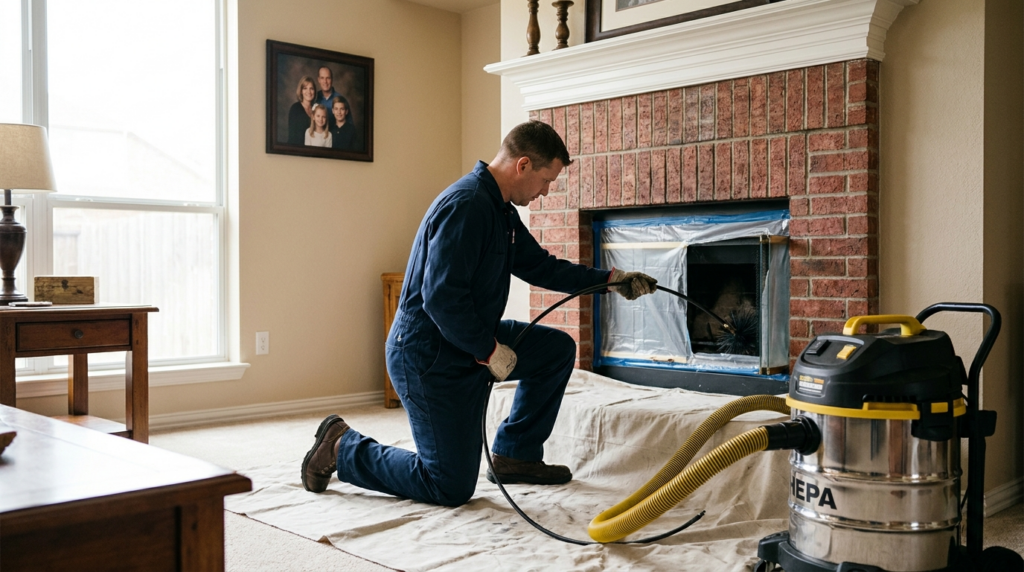
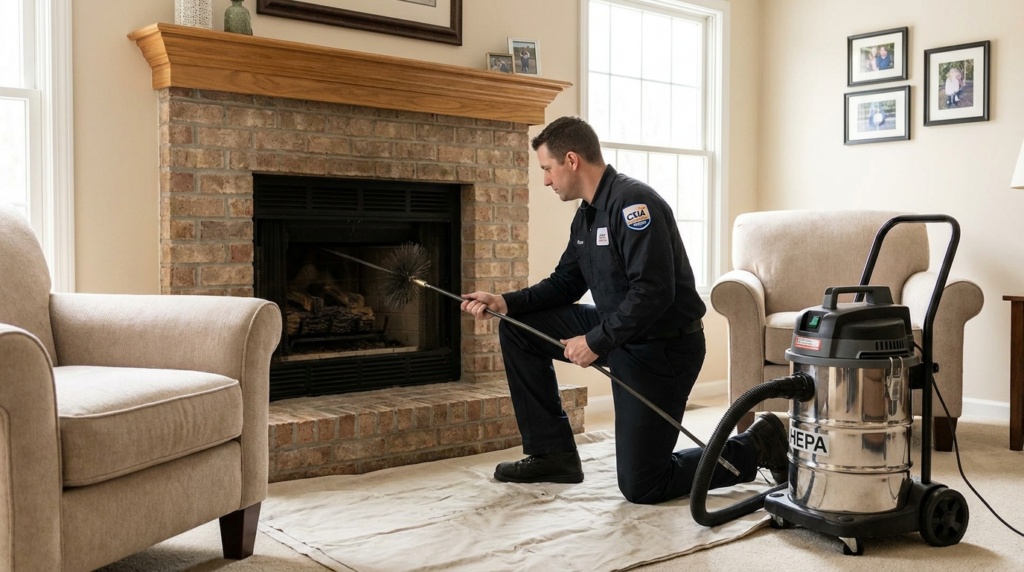
Combine services where practical. If the chimney also needs a sweep, a cap replacement, or a crown repair, bundling these with the relining project often reduces total cost because the contractor is already mobilized. See our chimney cleaning tips for Dallas homeowners for more on maintaining the system after relining.
Frequently Asked Questions About Chimney Relining Cost in Dallas
Q: Can I reline a chimney myself to save money?
A: Technically, some flexible liner kits are sold to consumers, but chimney relining in Dallas requires sizing calculations, proper termination height compliance, and often a permit. Errors create fire hazards. Professional installation is strongly recommended.
Q: How long does chimney relining take?
A: Most standard stainless steel relining projects are completed in one day. Cast-in-place systems require multiple visits for the form insertion, material pumping, and curing period, which can extend the timeline to two to three days.
Q: Does homeowner’s insurance cover chimney relining?
A: Typically, no. Insurance may cover damage caused by a chimney fire, but routine deterioration and relining are considered maintenance expenses. Check your specific policy, as coverage varies.
Q: What is the lifespan of a stainless steel chimney liner?
A: With proper maintenance and annual sweeping, a quality stainless steel liner can last 15 to 25 years. Cast-in-place liners can last 50 years or more.
Q: Do I need to reline if I’m switching from wood to gas?
A: Almost certainly yes. Gas appliances require a smaller, properly rated liner than most wood-burning flues. An oversized or incorrectly rated liner causes condensation and draft problems with gas appliances.
Q: Is partial relining an option?
A: In some cases, yes. If damage is confined to a specific section of the flue, a partial liner insert may be appropriate. However, a full inspection is needed to confirm that the rest of the liner is sound before a partial solution is considered.
Q: How does chimney height affect relining cost?
A: Directly. More height means more liner material and more labor time. A one-story home with an 8-foot flue costs less to reline than a two-story home with a 20-foot flue, even with identical materials.
Q: What happens if I don’t reline a damaged chimney?
A: Using a fireplace or gas appliance with a failed liner creates risk of chimney fire, carbon monoxide intrusion, and accelerated structural damage to the surrounding masonry. It also voids most appliance warranties and may affect homeowner’s insurance coverage in the event of a claim.
Q: Are there financing options for chimney relining in Dallas?
A: Some contractors offer payment plans or work with third-party financing providers. It’s worth asking, particularly for larger cast-in-place projects.
Q: How do I know if a contractor’s quote is fair?
A: Compare it against the ranges in this guide and get multiple estimates. A quote significantly below $2,000 for a standard two-story Dallas chimney warrants scrutiny about liner grade and scope. A quote above $7,000 for a straightforward stainless steel job also deserves explanation.
Expert Insight: What Dallas Chimney Professionals Emphasize
Experienced chimney technicians in the Dallas area consistently point to a few patterns that homeowners should understand.
First, the combination of Dallas’s clay-heavy soil and its temperature extremes creates foundation movement that, over decades, can shift a chimney structure slightly. That movement stresses clay tile liner joints in ways that are not always visible from the firebox. This is one reason why a camera-based Level 2 inspection is genuinely necessary rather than optional, particularly for homes built before 1985.
Second, the transition to high-efficiency gas appliances has created a relining wave in Dallas neighborhoods built in the 1970s and 1980s. Homeowners replace old furnaces or water heaters with modern units, not realizing the existing clay-lined flue is now incompatible with the new appliance’s exhaust characteristics. The chimney inspection for winter safety is particularly relevant here.
Third, professionals note that the cheapest quote is rarely the best value in this category. Liner grade matters. A contractor using 304 stainless on a gas appliance installation when 316L is specified is cutting a corner that will shorten liner life and potentially create warranty issues.
Recommendations for Dallas Homeowners
If you haven’t had a Level 2 inspection in the past three years, schedule one before this heating season. It’s the foundation of any informed decision about relining.
If your home was built before 1990 and has a wood-burning fireplace, assume the clay liner has some degree of deterioration and budget accordingly.
If you’ve recently installed a new gas appliance, confirm with a certified technician that the existing liner is compatible. This is not a question to skip.
Bundle services when possible. Combining relining with a sweep, cap inspection, and crown check in a single visit saves mobilization costs and gives you a comprehensive picture of the chimney’s condition. For homeowners in the broader metro area, chimney services in Fort Worth and surrounding communities follow similar pricing patterns.
Document everything. Keep the inspection report, the liner warranty, and the installation receipt. These documents matter in a real estate transaction and in any insurance claim scenario.
Conclusion: What Chimney Relining Cost in Dallas Is Really About
The chimney relining cost in Dallas is ultimately a safety investment with a predictable price range and an unpredictable alternative. Spending $3,000 to $5,500 on a properly installed stainless steel liner is a defined, manageable expense. The consequences of skipping it, whether a chimney fire, carbon monoxide exposure, or accelerated structural damage, are neither defined nor manageable.
The practical next steps are straightforward: schedule a Level 2 inspection from a CSIA-certified contractor, get written estimates that specify liner material and grade, verify permits are addressed, and don’t let the upfront cost push a necessary safety repair into indefinite delay. For most Dallas homeowners, the math is clear.
If you’re ready to move forward or want a professional assessment of your chimney’s liner condition, contact ALC Chimney Service to schedule an inspection or request a relining quote.
About the Author
Jonathan is a CSIA-certified chimney specialist at ALC Chimney Service with more than 15 years of hands-on experience sweeping, inspecting, and repairing fireplaces and chimneys across Dallas and the DFW metroplex. He has worked on thousands of residential chimney systems and writes to help North Texas homeowners keep their fireplaces safe, efficient, and up to NFPA and CSIA standards. Have a question about your chimney? Call ALC Chimney Service at (877) 656-0851 for a free inspection.