Skip to content
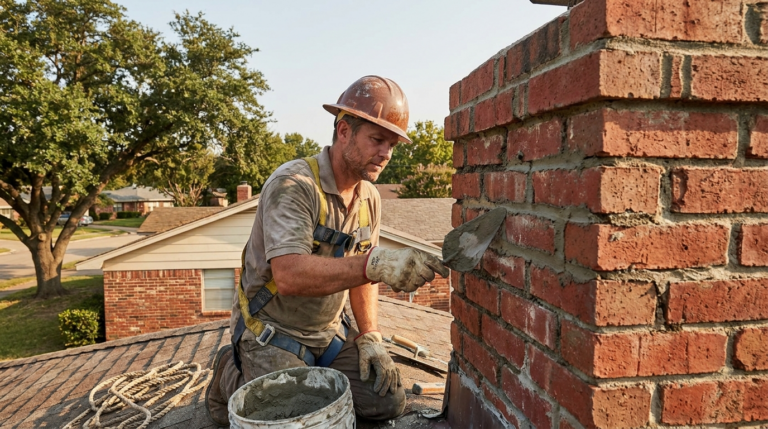
Chimney repair in Irving, TX usually costs between $200 and $3,500, depending on whether you need minor mortar work or a partial rebuild. Older Irving homes most often need repairs for water damage, spalling brick, cracked crowns, and shifting masonry tied to the area’s clay soil. A yearly inspection catches most of these problems while they are still small and affordable to fix.
That is the short answer. The longer one is where it actually helps you, because “chimney repair” covers everything from a $250 flashing reseal to a several-thousand-dollar rebuild, and knowing which camp your chimney falls into is most of the battle. I have worked on plenty of Irving chimneys, from the older brick stacks in South Irving to the prefab systems out in Las Colinas, and the problems tend to repeat in patterns. Let me walk through what I see most, what it costs, and how to tell repair from rebuild.
What are the most common chimney problems in Irving homes?
Most chimney trouble here traces back to one thing: water. Not the dramatic stuff, just ordinary rain and humidity working into masonry over years. Irving adds a second factor, the clay soil, which shifts with our wet-dry cycles and can tug at a chimney’s footing. Put those together and you get a fairly predictable set of issues.
Water damage and failed flashing
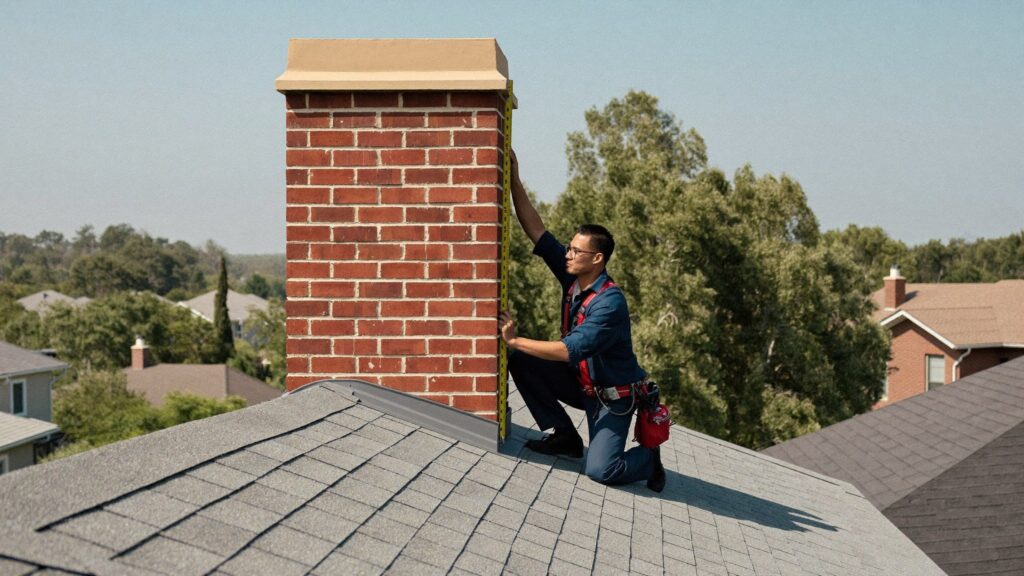
Flashing is the metal seal where the chimney meets the roofline, and it is the single most common leak point I find. When flashing lifts, corrodes, or was installed poorly to begin with, water slips in behind it and shows up later as a stain on the ceiling or a musty smell near the fireplace. By the time you notice the stain, water has usually been getting in for a while. Resealing or replacing flashing is one of the cheaper fixes, which is a good reason to catch it early before it rots framing.
Spalling brick and crumbling mortar
Spalling is when the face of a brick flakes, pops, or crumbles off. It happens when water soaks into the brick, then freezes and expands during one of our cold snaps. North Texas is harder on masonry than people expect, and it is not the cold itself, it is the swing. A warm afternoon, a hard freeze overnight, then warm again. That freeze-thaw cycle slowly breaks brick and softens the mortar joints. Once mortar starts washing out, the whole stack loses strength, and that is when tuckpointing comes into the picture.
Cracked chimney crown
The crown is the concrete or mortar slab at the very top that sheds water away from the flue. When it cracks, and older crowns almost always do eventually, water runs straight down into the chimney interior. A small crack can be sealed. A crown that is crumbling or missing chunks may need to be rebuilt, which costs more but stops a lot of downstream damage.
Damaged or missing chimney cap
The cap sits over the flue opening and keeps out rain, debris, and animals. Irving has plenty of squirrels and birds, and a missing cap is an open invitation. I have pulled nests out of uncapped Irving flues more than once. A new cap is an inexpensive part, and honestly one of the better small investments a homeowner can make. If you are dealing with a critter already inside, that is an animal removal job first, before any repair.
Liner and flue problems
The flue liner protects the chimney walls from heat and directs combustion gases safely up and out. Older Irving homes sometimes have deteriorating clay tile liners, cracked or spalled from years of use. A damaged liner is a genuine safety concern, not a cosmetic one, because it can let heat or carbon monoxide reach places it should never go. When a liner has actually failed, the fix is usually a chimney relining rather than a patch.
Why do older Irving homes have more chimney issues?
Irving is not one kind of housing stock, and the chimney problems split along those lines. South Irving and the older established neighborhoods have homes from the 1950s and 1960s with original masonry chimneys. Sixty-some years of Texas weather is a long time for brick and mortar, and many of those chimneys have never been properly restored. They tend to show their age at the crown, the mortar joints, and the flashing.
Then there is the clay soil, which runs under most of Irving and does something northern homeowners rarely deal with. Our clay expands when it is wet and contracts when it dries out, and across a long summer drought followed by heavy fall rain, that movement is significant. It shifts foundations, and a chimney riding on a moving footing develops cracked mortar joints and, in worse cases, a slight lean. If you have noticed cracks appear elsewhere in the house during a dry spell, your chimney is probably feeling the same soil.
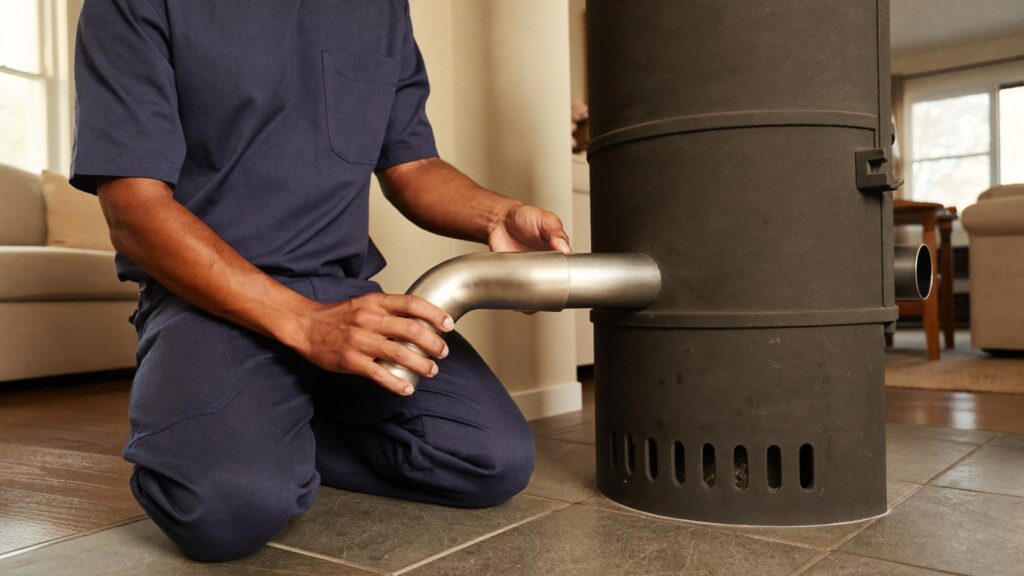
The newer side of Irving, places like Valley Ranch and the Las Colinas developments, leans toward factory-built prefab fireplaces. People assume a prefab is low-maintenance, and it mostly is, but its metal parts wear differently than brick. The chase cover, the metal top on a prefab chase, rusts and leaks. Panels crack. So even a newer Irving home is not exempt, it just fails in metal instead of masonry. Both need the same yearly look.
Common Irving chimney problems and their fixes
Here is the way I usually lay it out for homeowners, matching the problem to the likely fix and a rough cost. Treat the prices as Irving-area ranges, not a quote, since the real number depends on access and how far the damage has spread.
| Problem | Typical fix | Irving cost range |
|---|---|---|
| Leaking flashing | Reseal or replace flashing | $250 to $800 |
| Crumbling mortar joints | Tuckpointing / repointing | $500 to $2,500 |
| Cracked chimney crown | Seal or rebuild crown | $200 to $3,000 |
| Missing or rusted cap | New stainless or steel cap | $150 to $600 |
| Spalling brick | Brick replacement / restoration | $400 to $2,500 |
| Damaged flue liner | Relining or liner repair | $2,500 to $6,500 |
| Leaning or bulging stack | Partial or full rebuild | $1,000 to $5,000+ |
You will notice the ranges overlap, and that is deliberate. Two chimneys with the “same” problem can need very different work depending on how long it went unaddressed. A crown you seal this year for a couple hundred dollars is a crown you might have to rebuild for ten times that in three years. This is the practical argument for annual inspections, boring as that advice sounds.
How much does chimney repair cost in Irving, TX?
Most minor chimney repairs in Irving fall in the $200 to $700 range, covering things like small repointing, a crown seal, a cap replacement, or a flashing fix. Mid-level structural work, more extensive tuckpointing, brick restoration, a full crown rebuild, generally runs $1,000 to $3,500. A partial or full rebuild is the top tier, from around $1,000 for a small section up to $5,000 or more for a major stack, and severe cases can climb higher.
| Repair tier | What it covers | Typical cost |
|---|---|---|
| Minor repair | Flashing, cap, crown seal, small repointing | $200 to $700 |
| Moderate repair | Tuckpointing, brick restoration, crown rebuild | $1,000 to $3,500 |
| Major / rebuild | Partial or full chimney rebuild | $1,000 to $5,000+ |
| Relining | Stainless steel liner installation | $2,500 to $6,500 |
A few things move the final figure. Roof access is a big one, a tall or steep two-story chimney sometimes needs a lift, which adds cost. The material matters too, matching old brick on a 1960s South Irving home takes more care than a straightforward mortar patch. And condition counts most of all, since a problem left for years is rarely just one problem by the time someone looks. ALC runs a free repair inspection, which is the honest way to get a real number instead of guessing from a table. For the full scope of what repair work involves, the Dallas chimney repair service page has more detail.
Chimney repair or rebuild: which one do you need?
This is the question that decides whether you are spending a few hundred dollars or a few thousand, so it is worth getting right. The rule of thumb techs use: if the bricks are still sound and only the mortar, crown, cap, or flashing has failed, you repair. If the chimney is leaning or bulging, if spalling and mortar loss are widespread, or if the flue is fractured and cannot be brought up to code, you rebuild the affected section.
| Situation | Repair | Rebuild |
|---|---|---|
| Isolated flashing or crown leak | Yes | No |
| Mortar joints failing, brick sound | Yes (tuckpointing) | No |
| Widespread spalling and mortar loss | Rarely worth it | Yes |
| Chimney leaning or bulging | No | Yes |
| Repeated repairs, leaks keep returning | No | Yes |
There is a cost logic to it as well. Once repair estimates start creeping past roughly half the price of a rebuild, the rebuild is usually the smarter long-term call. A repaired chimney with proper crown, flashing, and waterproofing can last decades, and a full rebuild done right can go 50 years or more. So the more expensive option is sometimes the cheaper one over time, which is not intuitive but true. If your chimney is genuinely past saving, a chimney rebuild gives you a fresh, code-compliant structure rather than another patch that fails next winter. When the damage is inside the firebox rather than the stack, a firebox repair may be the more targeted fix.
What are the warning signs your Irving chimney needs repair?
Some of these are obvious, some are easy to shrug off until they are not. I would treat any of the following as a reason to get an inspection sooner rather than later.
- White staining on the exterior brick, called efflorescence, which signals water moving through the masonry.
- Flaking, popping, or crumbling brick faces, the classic sign of spalling.
- Gaps, cracks, or missing mortar between the bricks.
- Rust on the damper or firebox, which almost always means water is getting in.
- A ceiling or wall stain near the fireplace, or a damp, musty smell.
- Bits of brick, mortar, or tile showing up in the firebox.
- A chimney that looks even slightly tilted or separated from the house.
- Smoke pushing back into the room, which can point to a blockage or liner problem.
That last one, the lean, is the one I never want a homeowner to ignore. A leaning chimney is a structural issue, and it does not fix itself. If you can see daylight between the chimney and the wall of the house, or the gap has been growing, call someone before you use the fireplace again. Most of the other signs give you time. A lean does not always.
Why older Irving homes should schedule repairs in summer
Timing matters more than people think. The whole metroplex calls their chimney company at the same moment, the first cold week of the year, usually late October into December. Schedules jam up, and repairs that need dry weather and a few days to cure get squeezed against a cold front you wanted the fireplace for.
Summer is the better window, even though it feels backwards to think about the fireplace in July. Masonry work and waterproofing want warm, dry conditions to cure properly, and North Texas summer delivers that in abundance. Book the inspection now, and if it turns up a cracked crown or failing flashing, you have weeks to handle it calmly instead of scrambling in January. I have watched Irving homeowners wait two or three weeks in November for a slot that would have been next-day in July. The off-season is just easier on everyone, and it protects the masonry from taking on more freeze-thaw damage over the coming winter.
Should you repair the chimney yourself?
Small things, sure. Buying a cap and setting it, or sealing a hairline crack, is within reach for a handy homeowner. But most Irving chimney repair involves either height, structural judgment, or both, and that is where it stops being a weekend project. Tuckpointing that does not match the original mortar can trap moisture and make spalling worse. A crown sealed with the wrong product cracks again in a season. And climbing a two-story roof to assess a lean is not something I would ask anyone to do casually.
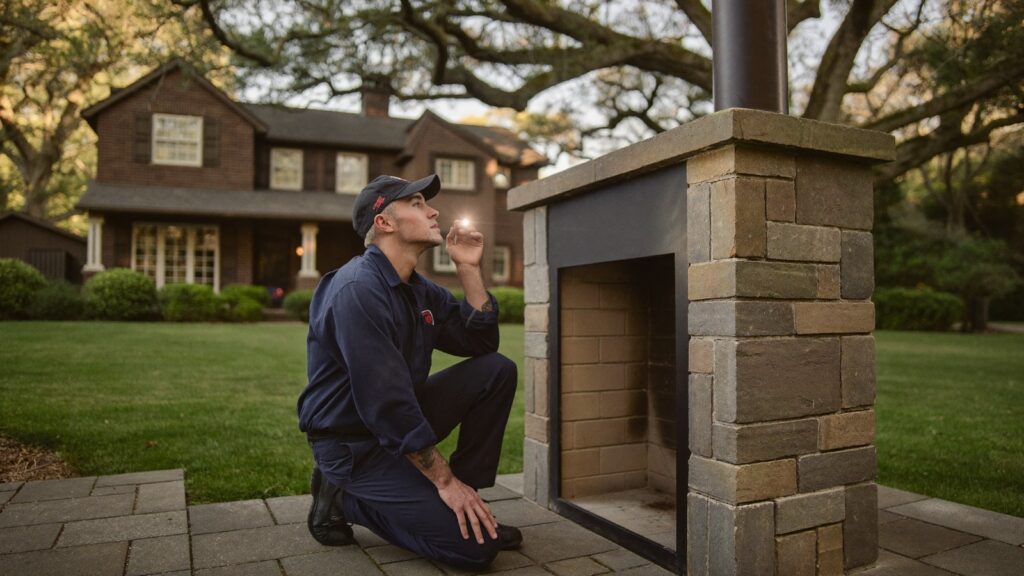
The bigger issue is diagnosis. A lot of chimney damage hides where you cannot see it, inside the flue, behind the smoke chamber, under the flashing. A proper chimney inspection uses a camera to look inside and catches the problems a ground-level glance misses. Pairing the inspection with a chimney sweep is a common combination, since a clean flue is easier to inspect accurately.
CSIA certification means the technician has been trained and tested against national chimney and venting standards, not just picked up a brush. ALC Chimney Service is family-owned, licensed and insured, with more than 15 years of combined experience and over 10,000 jobs completed across Dallas and DFW. The company holds a 5.0 rating across 172 Google reviews, which for a trade business tells you something about consistency. You can read more about the team if you want the background.
Homeowner checklist before your Irving repair visit
You do not need to do much to get ready, but a little prep makes the visit faster and the estimate more accurate.
- Note when you first saw the problem and whether it has gotten worse.
- Take a couple of photos of any stains, cracks, or crumbling brick.
- Do not light a fire for at least 24 hours before the appointment so the system is cool.
- Clear a path to the fireplace and move fragile items back a few feet.
- Mention whether your fireplace burns wood or gas and how often you use it.
- Make sure the technician can safely reach the roof for an exterior look.
- Have any past inspection or repair paperwork handy, especially if you are selling.
ALC covers Irving along with the rest of the metroplex, so if you are near a neighboring city the same crew handles chimney services in Irving and nearby towns like Garland and Richardson. You can check the full service area map to confirm your neighborhood. When you are ready for a real assessment, contact ALC Chimney Service or call (877) 656-0851 for a free repair inspection.
Frequently Asked Questions
How much does chimney repair cost in Irving, TX?
Minor repairs like flashing, cap replacement, or a crown seal typically run $200 to $700. Moderate work such as tuckpointing or brick restoration runs $1,000 to $3,500. A partial or full rebuild ranges from $1,000 to $5,000 or more, and relining a flue costs $2,500 to $6,500. The final price depends on damage extent, roof access, and materials.
What is the most common chimney problem in older Irving homes?
Water intrusion is the most common issue, usually through failed flashing or a cracked crown. Combined with Irving’s clay soil, which shifts and stresses masonry, older homes frequently develop crumbling mortar, spalling brick, and cracked joints. Most of these trace back to moisture getting into the masonry over years.
How do I know if I need chimney repair or a full rebuild?
If the bricks are sound and only the mortar, crown, cap, or flashing has failed, a repair is usually enough. A rebuild is the safer choice when the chimney is leaning or bulging, spalling and mortar loss are widespread, or the flue is fractured. When repair estimates approach half the cost of a rebuild, rebuilding is often the better long-term value.
Why does Irving’s clay soil affect my chimney?
Irving sits on expansive clay soil that swells when wet and shrinks when dry. Across seasonal wet-dry cycles that movement shifts foundations, and a chimney on a moving footing can develop cracked mortar joints or a lean. If you see cracks appear elsewhere in the house during dry spells, your chimney is likely experiencing the same soil movement.
How often should an Irving chimney be inspected?
At least once a year, following NFPA Standard 211, which recommends annual inspection for soundness, deposits, and clearances. Older masonry chimneys and prefab systems both benefit from a yearly look, since catching a small crack or failing flashing early prevents far more expensive damage later.
Can a leaning chimney be repaired without rebuilding?
Sometimes, if the lean is minor and caught early, though it depends on the cause. A lean from foundation or footing movement usually requires structural work and often a partial rebuild. A leaning chimney is a safety issue and should be inspected right away rather than used, since it will not correct on its own.
Is it safe to use my fireplace if the mortar is crumbling?
It is risky. Crumbling mortar weakens the whole structure and often signals water damage that may extend to the liner. A damaged liner can let heat or carbon monoxide reach areas it should not. Have the chimney inspected before burning, since what looks like a cosmetic problem can be a safety one.
Do newer prefab fireplaces in Irving need repairs too?
Yes. Factory-built prefab fireplaces common in Las Colinas and Valley Ranch have metal chase covers, panels, and liners that rust, crack, and wear over time. A rusted chase cover leaks water into the system just like a failed masonry crown. Newer construction does not mean maintenance-free.
About the Author
Jonathan is a CSIA-certified chimney specialist at ALC Chimney Service with more than 15 years of hands-on experience sweeping, inspecting, and repairing fireplaces and chimneys across Dallas and the DFW metroplex. He has worked on thousands of residential chimney systems and writes to help North Texas homeowners keep their fireplaces safe, efficient, and up to NFPA and CSIA standards. Have a question about your chimney? Call ALC Chimney Service at (877) 656-0851 for a free inspection.
Find our chimney safety tips faster on Google