Skip to content
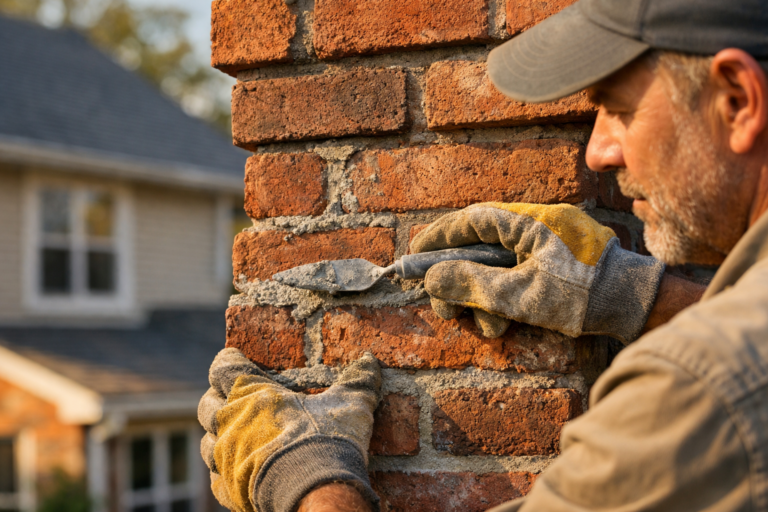
Masonry chimneys deteriorate over time due to moisture infiltration, freeze-thaw cycles, and normal wear on mortar joints and brick. Homeowners searching for masonry chimney repair near me should prioritize getting a professional inspection at least once per year, because catching small cracks early can prevent repairs that cost several times more than a basic tuckpointing job. Most standard repairs, such as repointing mortar or sealing a cracked crown, run between $300 and $2,500 depending on the scope and your local market.
Key Takeaways
Cracked or missing mortar joints are the most common and earliest sign of chimney deterioration, and they should never be ignored.
Water is the primary enemy of masonry chimneys; even minor leaks can cause structural damage inside walls and ceilings over time.
Annual chimney inspections are the single most cost-effective step a homeowner can take to avoid major repair bills.
Repair costs vary widely by region, scope, and chimney height, but most moderate repairs fall in the $500 to $3,000 range in 2026.
Tuckpointing, crown repair, and flashing replacement are the three most frequently needed masonry chimney repairs.
Always hire a certified chimney professional (look for CSIA or NCSG credentials) rather than a general handyman for structural masonry work.
Spalling bricks, white staining (efflorescence), and interior water stains near the fireplace are all red flags requiring prompt attention.
Delaying repairs rarely saves money; a $400 tuckpointing job today can prevent a $6,000 partial rebuild in two or three years.
What Are the Signs That My Brick Chimney Needs Professional Repair?
Several warning signs indicate a chimney needs professional attention, and most of them are visible to a careful homeowner without any special equipment. The key is knowing what to look for, because some symptoms appear inside the home while others only show up on the exterior masonry.
Exterior Warning Signs
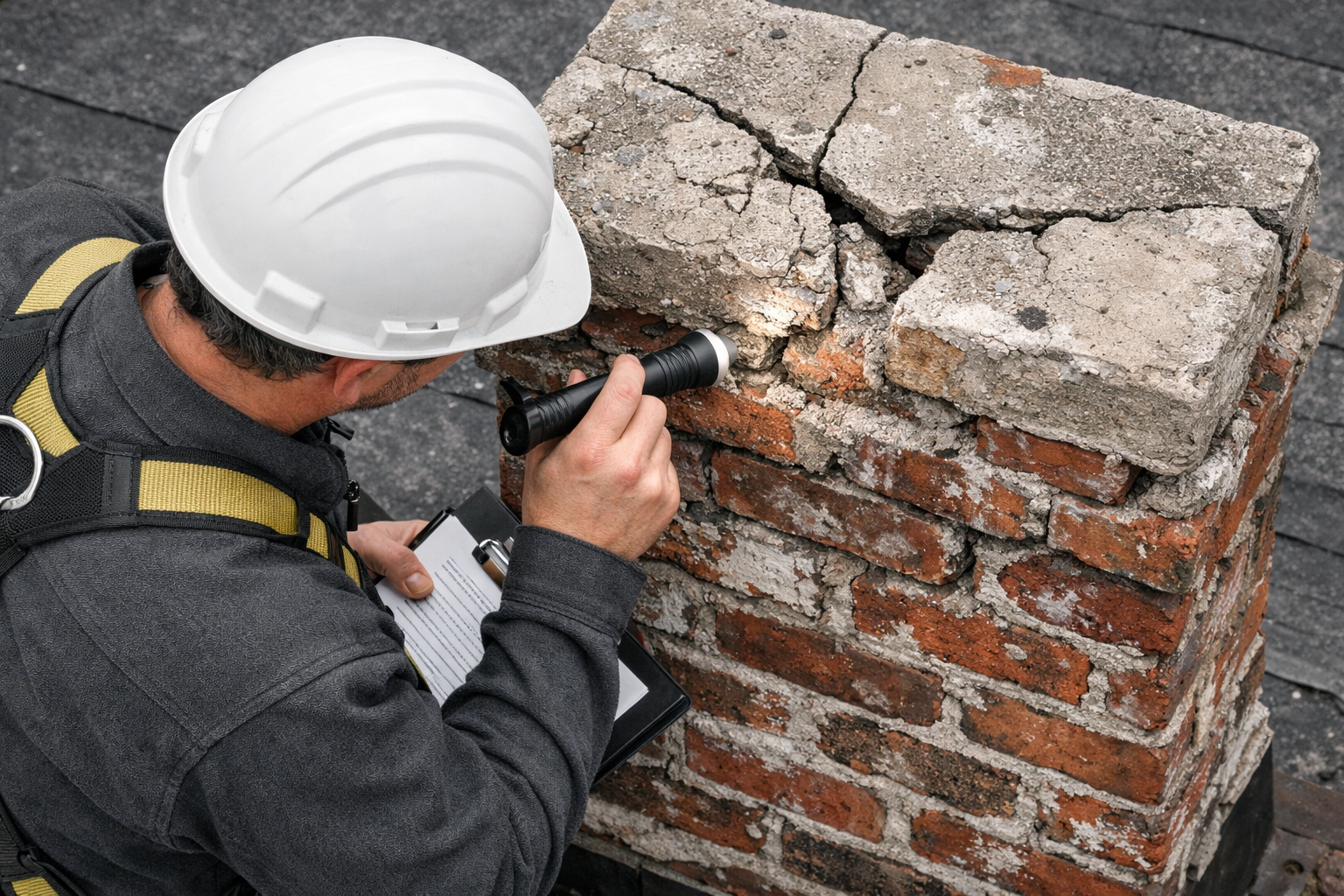
Spalling bricks are perhaps the most obvious indicator. When the face of a brick begins to flake, chip, or pop off entirely, it means moisture has penetrated the brick and is expanding during freeze-thaw cycles. Left unaddressed, spalling accelerates rapidly and can compromise the structural integrity of the entire chimney stack.
Deteriorating mortar joints are equally serious. Mortar is softer than brick by design, so it weathers faster. When mortar recedes more than about a quarter inch below the brick face, water begins pooling in those voids. That pooling leads to deeper infiltration, and the cycle of damage compounds season after season.
Other exterior signs worth noting:
Efflorescence (white chalky staining on the brick surface): indicates water is moving through the masonry and depositing mineral salts on the surface
Cracks in the chimney crown: the concrete or mortar cap at the very top of the chimney is often the first structural component to crack
Damaged or missing chimney cap: without a cap, rain, debris, and animals enter the flue directly
Leaning or separating chimney: a chimney that appears to be pulling away from the house requires immediate structural evaluation
For a detailed breakdown of what to look for, the top 10 signs your chimney needs repair covers each indicator with practical guidance.
Interior Warning Signs
Inside the home, the following symptoms often trace back to chimney problems:
Water stains on the ceiling or walls adjacent to the chimney
A musty or damp odor near the fireplace, especially after rain
Rust stains on the firebox or damper
Peeling wallpaper or paint near the chimney chase
Visible daylight when looking up the flue (can indicate a damaged liner or missing cap)
If smoke is entering the living space rather than drafting up the flue, that is a separate but related concern covered in detail at why smoke from the fireplace is coming into the house.
Common mistake: Many homeowners assume interior water stains near the fireplace mean a roof leak. In reality, chimney flashing failure or a cracked crown is the culprit far more often than the surrounding roof membrane.
Can Cracked Chimney Mortar Lead to Serious Home Damage?
Yes, absolutely. Cracked or eroded mortar joints are not a cosmetic issue. When mortar fails, it creates a direct pathway for water to enter the chimney structure, the surrounding framing, and eventually the interior of the home.
Here is how the damage typically progresses if mortar cracks are ignored:
Water enters the mortar voids during rain or snowmelt.
Freeze-thaw expansion (in colder climates) widens the cracks each winter.
Bricks begin to shift as their mortar bed erodes, reducing structural stability.
Water migrates inward, soaking the surrounding wood framing, insulation, and drywall.
Mold growth begins in wet framing cavities, which can be expensive to remediate.
Structural failure becomes a risk if the chimney leans, separates, or partially collapses.
The connection between chimney leaks and interior home damage is something many homeowners underestimate. If you are in Texas and dealing with moisture issues, the Texas homeowner’s guide to chimney leaks offers region-specific insight on how climate affects masonry deterioration.
Beyond water damage, failed mortar joints in the firebox itself create a fire hazard. Gaps in the firebox lining allow heat and combustion gases to reach combustible framing materials. This is why chimney professionals treat mortar repair as a safety issue, not just a maintenance task.
How Much Does Masonry Chimney Repair Cost in My Local Area?
Repair costs depend on the type of repair needed, the chimney’s height and accessibility, local labor rates, and the extent of the damage. The following table provides general 2026 cost estimates for the most common masonry chimney repairs. These are ranges based on typical residential projects and will vary by region.
Repair TypeTypical Cost Range (2026)NotesTuckpointing (repointing mortar)$300 to $2,500Cost increases with chimney height and surface areaChimney crown repair or replacement$200 to $1,500Full replacement costs more than patchingChimney cap installation$150 to $600Material (stainless vs. galvanized) affects priceFlashing repair or replacement$300 to $1,500Often combined with other repairsSpalling brick replacement$700 to $3,500Depends on how many bricks need replacingPartial chimney rebuild$2,000 to $8,000+Above-roofline rebuilds are most commonFull chimney rebuild$10,000 to $25,000+Rare; usually only for severely damaged structuresChimney relining$2,500 to $7,000Stainless steel liner installation
For a more detailed breakdown specific to the Dallas-Fort Worth area, the chimney repair cost guide for 2026 provides current pricing with additional context on what drives costs up or down.
Factors That Affect Your Local Repair Quote
Chimney height: Taller chimneys require more scaffolding or ladder work, which adds labor cost.
Access difficulty: Steep roof pitches or chimneys on second-story additions cost more to service.
Extent of damage: A chimney that has gone 10 years without maintenance will almost always cost more to repair than one inspected annually.
Material choices: Stainless steel chimney caps and liners cost more upfront but last significantly longer than galvanized alternatives.
Regional labor rates: Labor costs in urban markets tend to run 20 to 40 percent higher than in rural areas.
Decision rule: If a contractor’s quote for tuckpointing a standard single-flue chimney exceeds $3,500 without a clear explanation of scope, get at least two additional quotes before proceeding.
What Steps Do Professional Masons Take to Repair a Deteriorating Chimney?
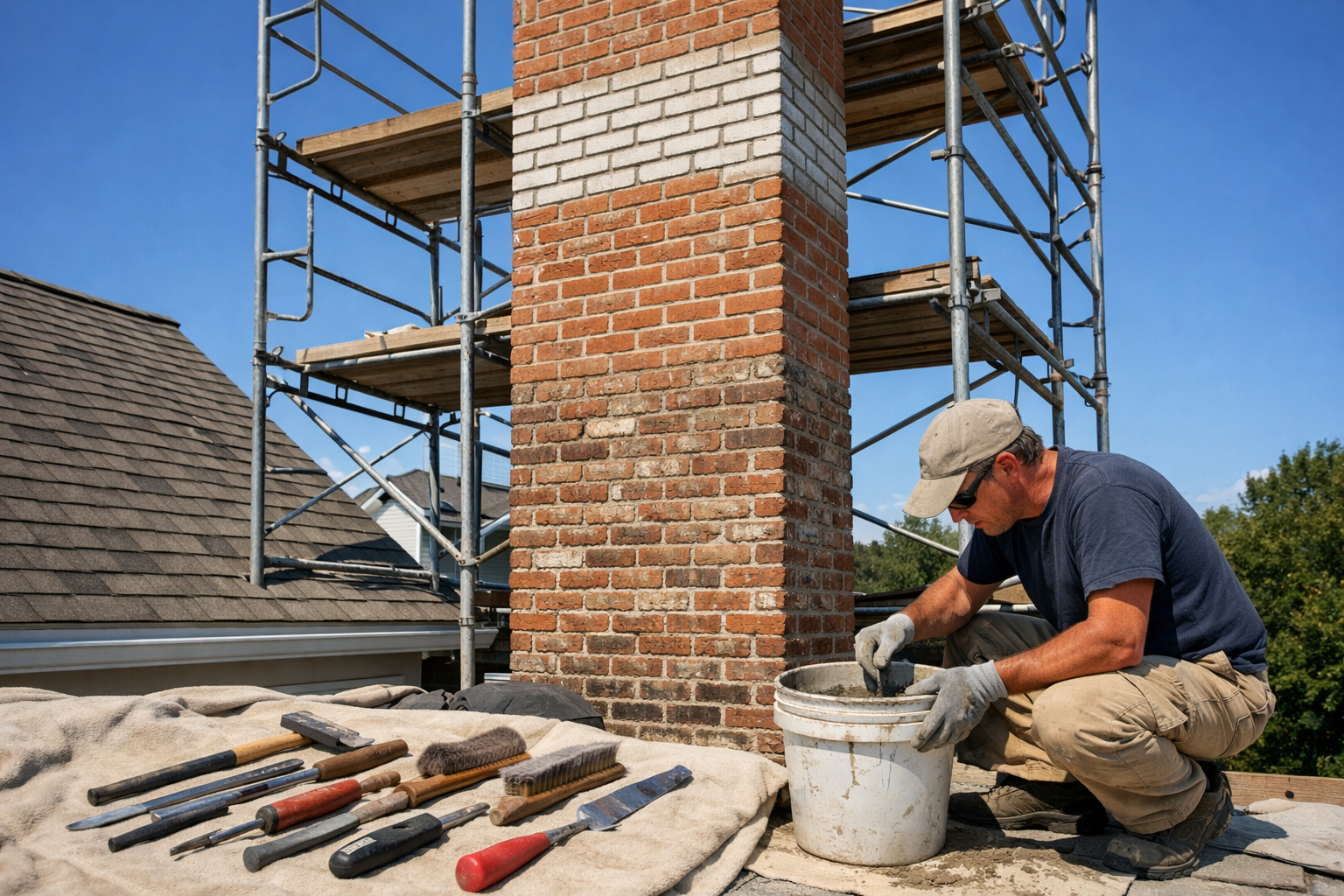
Professional masonry chimney repair follows a structured process. The specific steps vary by repair type, but a qualified contractor will generally follow this sequence for a comprehensive restoration project.
Step 1: Inspection and Damage Assessment
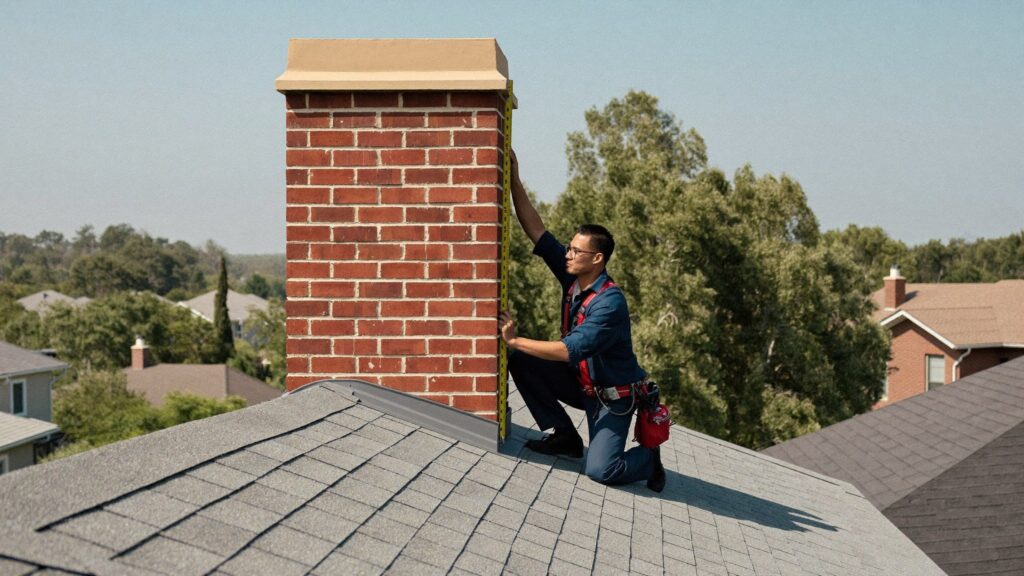
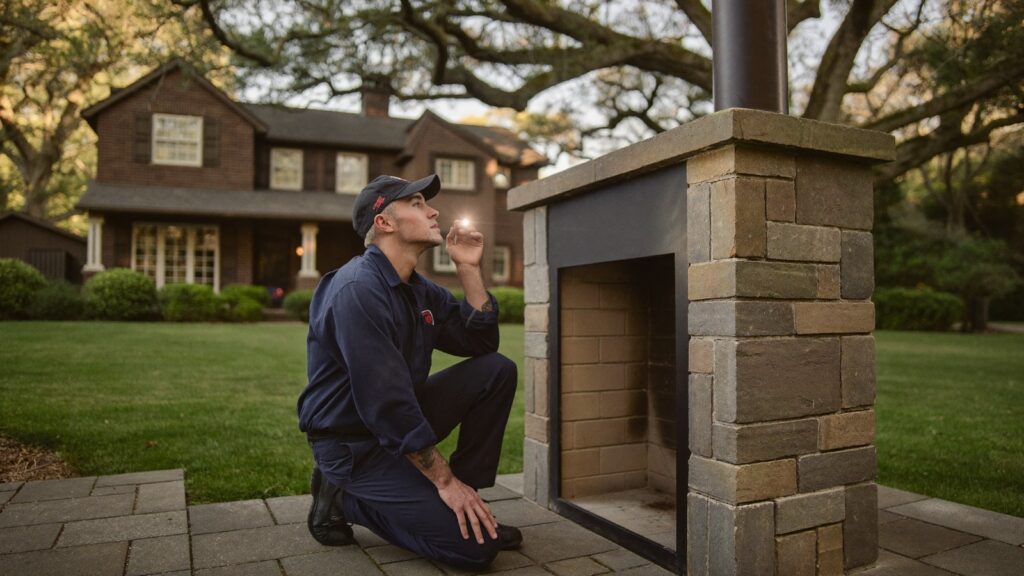
Before any work begins, a thorough inspection is essential. This includes a visual examination of the exterior masonry, a close look at the crown and cap, an assessment of the flashing, and often a camera inspection of the flue liner. The chimney inspection process in Dallas illustrates what a professional-grade assessment involves.
Step 2: Removing Deteriorated Mortar
For tuckpointing work, the contractor uses an angle grinder or oscillating tool to remove old, crumbling mortar to a depth of roughly three-quarters of an inch. This step requires care because cutting too deep or using the wrong tool can damage the brick faces.
Step 3: Mixing and Applying New Mortar
Mortar mix selection matters more than most homeowners realize. The replacement mortar must match the original in composition and hardness. Using a mortar that is too hard (high Portland cement content) in an older chimney with softer bricks can actually cause the bricks themselves to crack over time. A skilled mason will assess the existing mortar and match it appropriately.
Step 4: Crown Repair or Replacement
If the chimney crown is cracked, the mason will either apply a flexible crown sealant (for minor cracks) or remove and recast the crown entirely. A properly formed crown overhangs the brick on all sides and slopes away from the flue to direct water off the chimney. For more detail on this specific repair, see how to repair a damaged chimney crown in Dallas.
Step 5: Flashing Inspection and Repair
The flashing is the metal seal between the chimney and the roof. It is one of the most common sources of chimney-related water intrusion. A professional will check for gaps, corrosion, and improper overlap, then reseal or replace sections as needed.
Step 6: Waterproofing Application
After structural repairs are complete, many contractors apply a breathable masonry waterproofing sealant. This allows moisture vapor to escape from within the brick while preventing liquid water from entering. Note that standard paint or non-breathable sealers should not be used on chimneys, as they trap moisture and accelerate deterioration.
Step 7: Final Inspection and Documentation
A reputable contractor will walk the homeowner through the completed work, explain what was done and why, and provide documentation of the repairs. This documentation matters for homeowner’s insurance purposes and for future buyers if the home is ever sold.
How Often Should I Have My Brick Chimney Inspected for Potential Issues?
The answer is straightforward: once per year, at minimum. This recommendation comes from the Chimney Safety Institute of America (CSIA) and is widely accepted across the industry as the baseline standard for residential chimneys that are used regularly.
Annual inspections serve several purposes:
They catch small mortar cracks before they become structural problems.
They identify animal intrusions (birds, squirrels, and raccoons commonly nest in uncapped flues).
They verify that the flue liner is intact and free of blockages.
They confirm the firebox and damper are functioning safely.
For chimneys that see heavy use (burning wood multiple times per week during winter), some professionals recommend inspections every six months. Conversely, if a fireplace is purely decorative and rarely used, annual inspections are still important because dormant chimneys can develop moisture problems and animal intrusions just as readily as active ones.
When to Schedule an Inspection Outside the Annual Cycle
Certain events should trigger an inspection regardless of when the last one occurred:
After a significant weather event (hail, high winds, or an earthquake)
After a chimney fire (even a small one)
When purchasing a home with an existing fireplace
If water stains appear near the fireplace or on adjacent ceilings
If the chimney cap or crown is visibly damaged from the ground
Scheduling an inspection before winter is generally the smartest timing, since it allows any needed repairs to be completed before the heating season begins. For homeowners in the Dallas area, chimney inspection services are available year-round, though fall appointments tend to book up quickly.
How Do I Find Reliable Masonry Chimney Repair Near Me?
Finding a qualified contractor for masonry chimney repair near me requires more than a quick search. The chimney industry has its share of unqualified operators, so knowing how to evaluate contractors before hiring is worth the time.
Credentials to Look For
CSIA Certified Chimney Sweep (CCS): The Chimney Safety Institute of America credential indicates training and testing in chimney safety and repair.
NCSG Member: The National Chimney Sweep Guild maintains a directory of professional members.
State contractor licensing: Requirements vary by state, but a licensed masonry contractor carries more accountability than an unlicensed one.
Liability insurance and workers’ compensation: Always verify these before allowing anyone on your roof.
Questions to Ask Before Hiring
How long have you been doing masonry chimney repair specifically (not just general masonry)?
Can you provide references from chimney repair projects in the last 12 months?
Do you carry liability insurance and workers’ comp? Can you provide certificates?
Will you provide a written, itemized estimate before starting work?
What warranty do you offer on your repair work?
For homeowners in the Dallas-Fort Worth area, the guide on how to choose the best chimney repair in Dallas offers additional vetting criteria specific to that market.
Red Flags to Avoid
Contractors who demand full payment upfront before any work is done
Unusually low bids without a clear explanation of what is included (or excluded)
Pressure to approve additional work during the job without written documentation
No physical business address or verifiable online presence
Unwillingness to provide proof of insurance
Edge case: After major storm events, some markets see an influx of out-of-area contractors offering quick chimney repairs at discount prices. These “storm chasers” often lack local licensing and may use inferior materials. Verifying local credentials is especially important in the weeks following severe weather.
What Are the Most Common Masonry Chimney Repairs and How Long Do They Last?
Understanding the lifespan of different repairs helps homeowners plan and budget realistically. Not every repair is a permanent fix, and some components need periodic attention regardless of how well the initial work was done.
Repair TypeExpected LifespanKey Longevity FactorsTuckpointing (repointing)20 to 30 yearsMortar mix quality, climate severityCrown repair (sealant)5 to 15 yearsProduct quality, crown designCrown replacement (concrete)20 to 50 yearsProper overhang and slopeChimney cap (stainless steel)20+ yearsMaterial grade, proper sizingFlashing repair10 to 20 yearsInstallation quality, materialWaterproofing sealant5 to 10 yearsProduct type, application methodStainless steel liner20 to 30 yearsGauge thickness, usage intensity
The chimney relining services page offers more context on liner options and their respective lifespans for homeowners weighing that particular repair.
One thing worth noting: the lifespan ranges above assume quality materials and proper installation. A tuckpointing job done with the wrong mortar mix or insufficient depth may fail within five years. This is why contractor selection matters as much as the repair itself.
Should I Attempt DIY Chimney Repairs or Always Hire a Professional?
Some minor chimney maintenance tasks are genuinely within reach for a capable homeowner. Others are not, and attempting them without proper training can create safety hazards or make the underlying problem worse.
Tasks a Homeowner Can Reasonably Handle
Applying a chimney cap (if the chimney is safely accessible and the cap is a direct replacement)
Cleaning the firebox interior of ash and debris
Applying a small amount of chimney crown sealant to hairline cracks (not structural cracks)
Installing a basic chimney balloon (draft blocker) for an unused fireplace
Tasks That Require a Professional
Any structural mortar repointing beyond superficial surface patching
Chimney crown replacement
Flashing repair or replacement
Brick replacement or spalling repair
Flue liner inspection and relining
Any repair requiring roof access on a steep or high pitch
The honest answer is that most meaningful masonry chimney repairs fall into the professional category. The risk of using the wrong mortar, cutting too deep during mortar removal, or improperly sealing the crown can result in damage that costs significantly more to fix than the original problem. For firebox-specific concerns, firebox repair services address the interior components that are particularly sensitive to improper DIY attempts.
Frequently Asked Questions
Q: How long does a typical masonry chimney repair take?
A: Most standard repairs, including tuckpointing or crown replacement on a single-flue chimney, are completed in one to two days. Larger projects involving scaffolding, partial rebuilds, or relining can take three to five days or more.
Q: Will homeowner’s insurance cover chimney repairs?
A: It depends on the cause. Damage from a sudden event (such as a lightning strike or windstorm) is typically covered. Gradual deterioration from age and deferred maintenance is almost never covered. Always document the damage and check your specific policy before filing a claim.
Q: Is it safe to use my fireplace if the mortar is cracked?
A: Minor surface cracks in exterior mortar joints are not an immediate safety hazard for fireplace use, but firebox mortar cracks are a different matter. Gaps in the firebox lining can allow heat to reach combustible framing. If you see cracks inside the firebox, stop using the fireplace until a professional has assessed them.
Q: What is efflorescence and is it serious?
A: Efflorescence is the white chalky residue that appears on brick surfaces when water moves through the masonry and deposits mineral salts as it evaporates. It is a symptom of water infiltration, not a cause. The staining itself is not structurally dangerous, but the underlying moisture problem that causes it is.
Q: How do I know if my chimney needs relining?
A: A camera inspection of the flue is the only reliable way to assess liner condition. Signs that suggest relining may be needed include visible cracks or gaps in the liner during inspection, evidence of carbon monoxide issues, or a chimney that consistently produces poor draft.
Q: Can I seal my chimney myself to stop leaks?
A: Applying a breathable masonry waterproofing product to the exterior brick is a task some homeowners handle themselves, provided the chimney is safely accessible. However, if the leak source is the crown, flashing, or mortar joints, sealing the brick surface will not solve the problem. Identifying the actual leak source first is essential.
Q: What is the difference between tuckpointing and repointing?
A: Technically, repointing refers to removing old mortar and replacing it with new mortar of the same color. Tuckpointing is a specific technique where two different colors of mortar are used to create the appearance of very fine joints. In practice, most contractors and homeowners use the terms interchangeably to mean mortar joint restoration.
Q: How do I find masonry chimney repair near me quickly?
A: Search for CSIA-certified contractors in your area through the CSIA’s online directory, or ask for referrals from neighbors who have had chimney work done recently. Check Google reviews specifically for chimney or masonry repair (not general contractors), and always request proof of insurance before scheduling an inspection.
Q: Does a gas fireplace chimney need masonry repair too?
A: Yes. Gas fireplaces still produce moisture and combustion byproducts that affect the chimney structure over time. The exterior masonry is subject to the same weather-related deterioration as a wood-burning chimney, and the flue liner still needs periodic inspection.
Q: What happens if I ignore a leaning chimney?
A: A leaning chimney indicates foundation settlement, deteriorated mortar throughout the structure, or both. Left unaddressed, it can eventually collapse, which poses a serious safety risk and can cause significant damage to the roof and surrounding structure. This situation requires immediate professional evaluation.
Conclusion: Protecting Your Home Starts With Your Chimney
A masonry chimney is one of the more durable components of a home, but durability is not the same as invincibility. Mortar erodes, crowns crack, flashing fails, and bricks absorb water year after year. The homeowners who avoid large, expensive repair bills are almost always the ones who scheduled annual inspections and addressed small problems before they compounded.
Actionable Next Steps
Schedule an inspection now if it has been more than a year since your last one, or if you have never had the chimney professionally evaluated.
Walk the perimeter of your home and look at the chimney from ground level. Note any visible spalling, white staining, or crown damage.
Check inside the firebox for visible cracks in the mortar or liner.
Verify your contractor’s credentials before agreeing to any work. Ask for CSIA certification and proof of insurance.
Get the repair documented in writing, including materials used and warranty terms.
Plan for waterproofing after structural repairs are complete to extend the life of the masonry.
For homeowners in the Dallas-Fort Worth area, professional chimney repair services in Dallas are available from certified technicians who can assess, repair, and document your chimney’s condition. Whether the issue is a minor tuckpointing job or a more involved crown replacement, addressing it in 2026 is almost certainly less expensive than addressing it in 2027 or 2028.
The chimney is not the most glamorous part of homeownership to think about. But it is one of the parts where neglect tends to announce itself in the most expensive and inconvenient ways possible.
Meta Title: Masonry Chimney Repair Near Me: Homeowner’s Guide 2026
Meta Description: Learn the signs of chimney damage, repair costs, and how to find masonry chimney repair near me. Expert guidance for homeowners in 2026.
Tags: masonry chimney repair, chimney repair near me, brick chimney repair, chimney tuckpointing, chimney inspection, chimney mortar repair, chimney crown repair, chimney leak repair, chimney maintenance, fireplace chimney repair, chimney restoration, home masonry repair
Find our chimney safety tips faster on Google