Skip to content
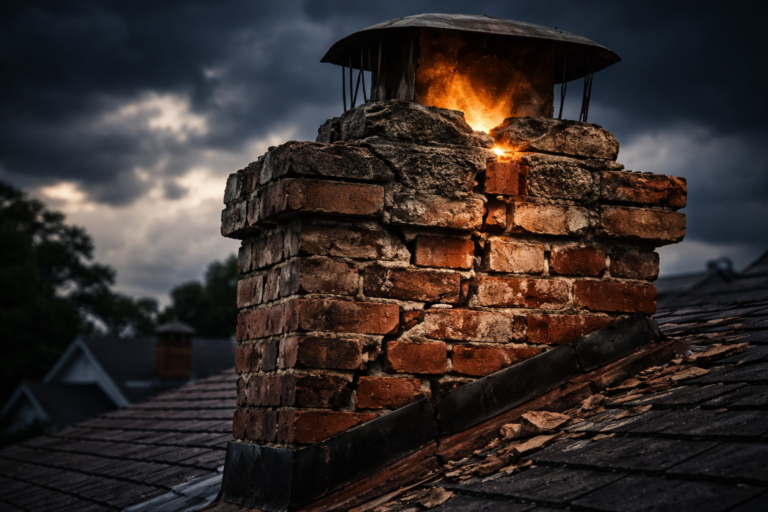
A chimney showing structural cracks, spalling brick, water intrusion, smoke backdraft, or a leaning stack is signaling an emergency that requires immediate professional attention. Searching for emergency chimney repair near me is the right first step because these conditions can escalate to house fires, carbon monoxide poisoning, or full structural collapse within days or weeks if left unaddressed. A qualified chimney technician can typically respond within 24 to 48 hours for urgent assessments.
Key Takeaways
- Visible cracks in the chimney crown or flue liner are among the most dangerous warning signs and should never be treated as cosmetic issues.
- White staining (efflorescence) on brick indicates active water infiltration that weakens masonry from the inside out.
- Smoke entering your living space during a fire is a ventilation failure that poses immediate carbon monoxide risk.
- A leaning or separating chimney stack is a structural emergency; do not use the fireplace until a professional has assessed it.
- Damaged or missing chimney caps accelerate deterioration and allow animal intrusion, debris buildup, and moisture damage.
- Delaying emergency repairs typically multiplies the final repair cost significantly, as minor cracks become full rebuilds.
- Certified chimney professionals (look for CSIA-certified technicians) can often respond to urgent calls within one to two business days.
- Annual chimney inspections are the single most effective way to catch problems before they become emergencies.
- Homeowners in Texas and similar climates face unique risks from freeze-thaw cycles and heavy rain that accelerate chimney deterioration.
- Never attempt to use a fireplace when any of the five warning signs below are present.
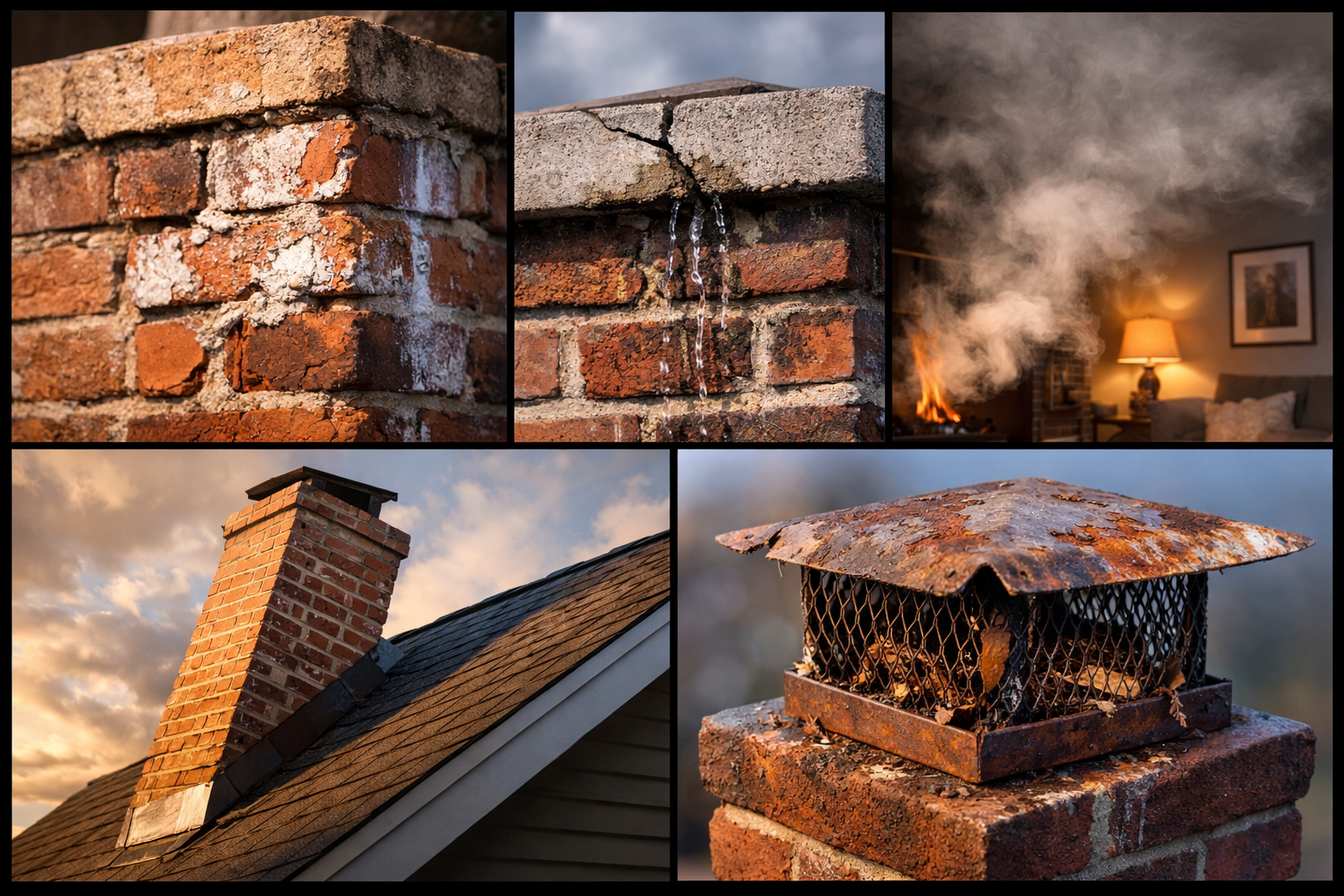
What Are the 5 Critical Warning Signs That Demand Emergency Chimney Repair?
These five conditions indicate that a chimney has moved beyond routine maintenance territory and into genuine emergency status. Each one carries real safety implications, not just cosmetic concerns.
Warning Sign 1: Cracked or Collapsed Chimney Crown
The chimney crown is the concrete or mortar cap that seals the top of the chimney structure, protecting the masonry below from rain, ice, and debris. When it cracks, water enters the flue system directly. Over time, this water freezes and expands inside the masonry, accelerating deterioration at a rate that surprises most homeowners.
A cracked crown is not a “fix it next season” problem. Water infiltration from a damaged crown can compromise the flue liner, the firebox, and even the structural framing of the chimney within a single wet season. If you notice chunks of concrete or mortar on your roof or around the chimney base, the crown has likely already begun to fail.
For homeowners in the Dallas area, our detailed guide on how to repair a damaged chimney crown in Dallas explains what the repair process looks like and what to expect from a professional assessment.
Decision rule: If the crown shows visible cracks wider than a hairline, or if sections are visibly missing, treat it as an emergency and stop using the fireplace immediately.
Warning Sign 2: Spalling Brick and Efflorescence
Spalling occurs when the face of a brick pops off, flakes, or crumbles. It happens because moisture has penetrated the brick and is expanding and contracting with temperature changes. Efflorescence, the white chalky staining that appears on brick surfaces, is a visible indicator that water is actively moving through the masonry and depositing mineral salts on the exterior.
Both conditions signal that the chimney’s structural integrity is being compromised from within. Left unaddressed, spalling progresses from surface deterioration to deep structural damage that may require partial or full chimney rebuilding.
Common mistake: Many homeowners assume efflorescence is just a staining issue and attempt to clean it off. The stain is a symptom, not the problem. Cleaning the surface without addressing the water source accomplishes nothing.
Warning Sign 3: Smoke Backdraft Into the Living Space
If smoke is entering your home during fireplace use, something has gone wrong with the ventilation system. The causes range from a blocked flue (animal nests, debris, creosote buildup) to a damaged or deteriorated flue liner that is no longer directing gases upward effectively.
This is perhaps the most immediately dangerous warning sign on this list. Smoke backdraft means carbon monoxide, a colorless and odorless gas, is also potentially entering your living space. The National Fire Protection Association consistently identifies chimney-related carbon monoxide incidents as a significant source of home CO exposure.
If you’ve been experiencing smoke problems, our article on why smoke from the fireplace comes into the house covers the most common causes and what a technician will look for during an inspection.
Edge case: Occasional smoke puffing on windy days may be a draft issue rather than a structural emergency, but persistent backdraft under normal conditions is always a cause for urgent inspection.
Warning Sign 4: Visible Structural Separation or Leaning
A chimney that is visibly tilting, pulling away from the house, or showing large gaps between the chimney structure and the exterior wall is in structural failure. This is not a gradual problem that can wait. A leaning chimney is at risk of partial or complete collapse, which can cause catastrophic damage to the roof, walls, and anyone nearby.
This condition is most often caused by foundation settling, deteriorated mortar joints, or water damage that has undermined the structural base of the chimney. In some cases, it develops slowly over years; in others, a single severe storm or freeze event accelerates the process dramatically.
If you’re seeing this in the Dallas-Fort Worth area, our chimney rebuild service in Dallas covers what a full structural restoration involves and what timeline homeowners should expect.
Warning Sign 5: Damaged, Missing, or Rusted Chimney Cap
The chimney cap sits at the very top of the flue opening and serves multiple protective functions: it keeps rain out, blocks animals from entering, and prevents sparks from escaping onto the roof. A missing or severely damaged cap is an open invitation for water damage, animal intrusion, and fire hazard.
This one is worth mentioning because homeowners often underestimate it. A missing cap can lead to a raccoon or bird nest inside the flue within weeks, which then creates a blockage that causes smoke backdraft (warning sign 3) or, worse, a chimney fire when nesting material ignites. For a full overview of cap-related services, see our chimney cap installation and repair guide for Dallas.
What Risks Do You Face If You Delay Emergency Chimney Repairs?
Delaying emergency chimney repairs creates compounding risks across three categories: safety, structural, and financial. Each category worsens the longer the repair is postponed.
Safety risks:
- Carbon monoxide poisoning from compromised flue ventilation
- Chimney fires from creosote buildup in cracked or deteriorated liners
- Structural collapse causing roof and wall damage
- Animal infestations that introduce debris and biological hazards into the flue
Structural risks:
- Minor crown cracks become full crown replacements
- Spalling brick requires tuckpointing, then partial rebuilds, then full chimney reconstruction
- Water-damaged flue liners require relining rather than simple patching
Financial risks:
- A chimney inspection and minor repair in 2026 might cost a few hundred dollars. A full chimney rebuild, which becomes necessary when structural damage is ignored, can run into the thousands. The cost difference between early and late intervention is rarely small.
For a detailed breakdown of what repairs cost in the current market, our chimney repair cost guide for Dallas in 2026 provides current pricing benchmarks for common repair scenarios.
How Quickly Can a Professional Chimney Repair Service Respond to an Emergency?
Most established chimney repair companies can schedule an urgent inspection within 24 to 48 hours for genuine emergencies. Some larger operations in metro areas offer same-day assessments for situations involving active structural failure or suspected carbon monoxide risk.
That said, response times vary based on:
| Factor | Impact on Response Time |
|---|---|
| Geographic location (urban vs. rural) | Urban areas typically have faster availability |
| Time of year | Fall and winter are peak seasons; expect longer waits |
| Severity of the situation | Structural emergencies often get priority scheduling |
| Company size and staffing | Larger companies have more flexibility |
| Whether you’re an existing customer | Repeat customers often get faster callbacks |
What to do while waiting for a technician:
- Stop using the fireplace immediately.
- If you suspect carbon monoxide exposure, evacuate the home and call emergency services.
- Document visible damage with photos from a safe distance.
- Keep the area around the chimney base clear of people and pets if structural collapse is a concern.
- Check whether your homeowner’s insurance policy covers emergency chimney repairs (some do, particularly for storm-related damage).
How Do You Find a Reliable Emergency Chimney Repair Near Me?
Finding a trustworthy emergency chimney repair near me requires more than a quick Google search. The chimney repair industry includes a wide range of operators, from highly certified professionals to unlicensed contractors who may cause more damage than they fix.
What to look for in a chimney repair company:
- CSIA Certification: The Chimney Safety Institute of America certifies chimney sweeps and inspectors. CSIA-certified technicians have passed standardized testing and are required to maintain continuing education.
- Verifiable local reviews: Look for companies with a substantial review history on Google, not just a handful of five-star ratings.
- Clear written estimates: Any reputable company will provide a written assessment before beginning work.
- Insurance and licensing: Ask directly whether the company carries liability insurance and whether they are licensed in your state.
- No high-pressure upselling: A trustworthy technician will show you documentation (photos, video inspection footage) of any problems they identify.
For homeowners in the Dallas-Fort Worth area, our guide to choosing the best chimney repair in Dallas walks through the vetting process in detail, including what questions to ask before hiring.
Search strategies that work:
- Search specifically for “CSIA certified chimney sweep [your city]” rather than generic terms.
- Check the CSIA’s online directory at csia.org to verify certifications.
- Ask neighbors or local home improvement groups for referrals, particularly for companies that have handled emergency situations.
- If you’re in the Dallas metro, our service areas cover Plano, Frisco, McKinney, Garland, and surrounding communities.
What Should You Do If Your Chimney Is Showing Signs of Structural Damage?
Structural chimney damage requires an immediate, methodical response. The instinct to keep using the fireplace “just until the repair appointment” is one of the more common and dangerous mistakes homeowners make.
Step-by-step response protocol:
- Stop all fireplace use immediately. This is non-negotiable regardless of how minor the damage appears.
- Assess from a safe distance. Do not climb onto the roof to inspect damage yourself unless you are a trained professional with appropriate safety equipment.
- Document everything. Take photos and video of visible damage from ground level and from inside the firebox if it’s safe to do so.
- Call a certified chimney professional. Describe the specific symptoms you’re seeing, not just “it looks damaged.” The more detail you provide, the better the technician can prepare for the visit.
- Contact your insurance company. If the damage appears to be storm-related or sudden in onset, your homeowner’s policy may cover some or all of the repair costs.
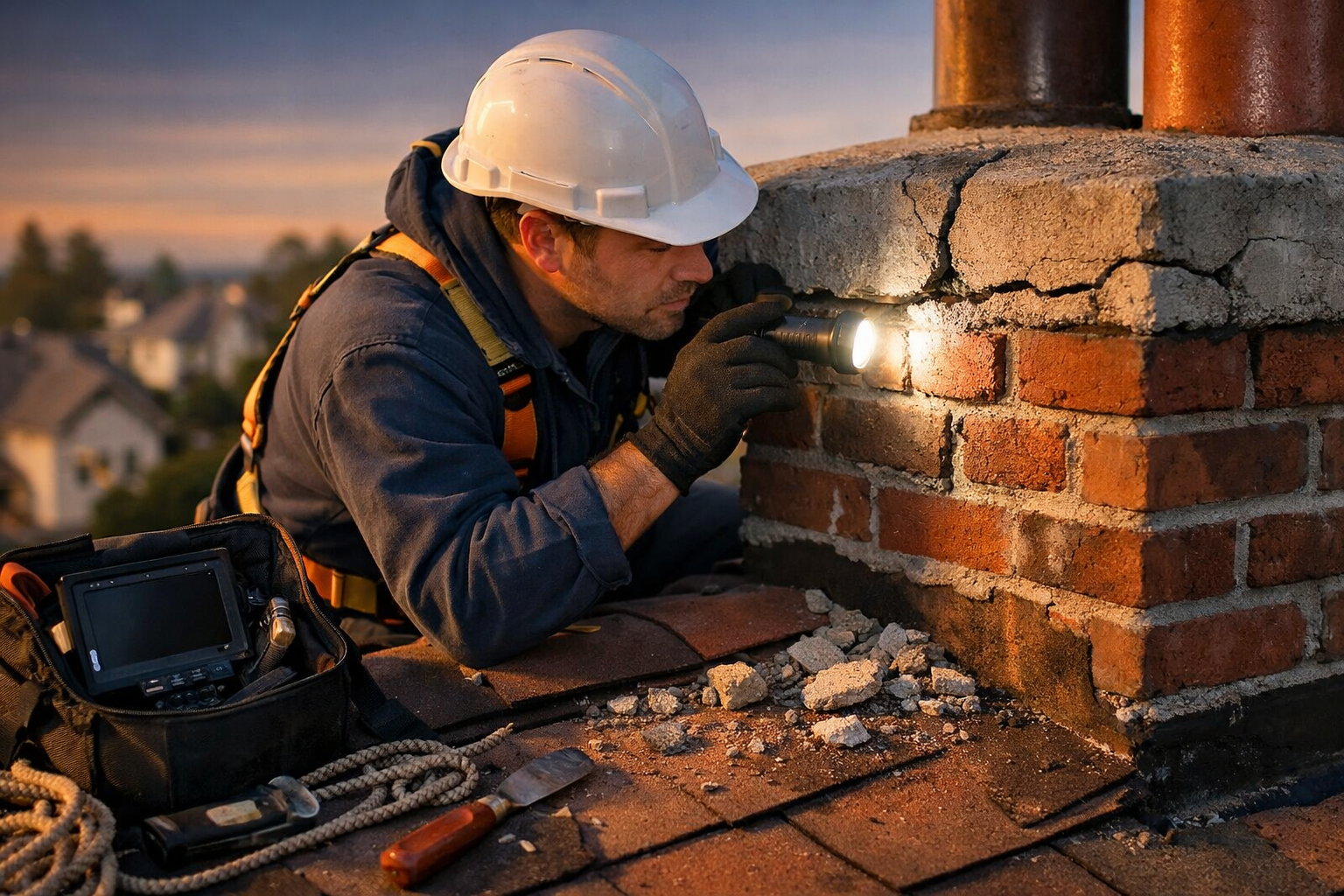
- Get a Level 2 inspection. For any situation involving visible structural damage, a Level 2 inspection (which includes video scanning of the flue interior) is the appropriate standard of assessment.
“The most dangerous chimney is the one a homeowner thinks is fine because it looks okay from the outside. Structural failure often begins in the flue liner or the mortar joints, well out of sight from the ground.”
A professional chimney inspection in Dallas that includes video scanning gives technicians a complete picture of what’s happening inside the system, not just what’s visible from the exterior.
How Do Emergency Chimney Repairs Differ From Routine Maintenance?
Emergency chimney repair and routine maintenance are different in scope, urgency, and cost, though the line between them is sometimes thinner than homeowners expect.
Routine maintenance includes annual sweeping, minor tuckpointing, damper adjustments, and cap cleaning. These are scheduled services that keep a functioning chimney in good condition.
Emergency repair addresses active safety hazards: structural failure, severe water intrusion, flue liner damage, or any condition that makes the chimney unsafe to use. Emergency repairs are typically unscheduled, more extensive, and more costly.
The key distinction is this: routine maintenance prevents emergencies. When maintenance is deferred for multiple seasons, what would have been a $200 tuckpointing job can become a $2,000 partial rebuild.
| Service Type | Typical Trigger | Urgency Level | Cost Range (Estimate) |
|---|---|---|---|
| Annual sweep and inspection | Scheduled annually | Low | $150 – $350 |
| Minor tuckpointing | Hairline cracks, minor spalling | Moderate | $200 – $800 |
| Crown repair or replacement | Visible cracking, water intrusion | High | $300 – $1,500 |
| Flue relining | Damaged liner, smoke issues | Very High | $1,500 – $5,000+ |
| Partial or full rebuild | Structural failure, severe damage | Emergency | $3,000 – $15,000+ |
Cost estimates are approximate and vary significantly by region, chimney height, and extent of damage. Get a written estimate before authorizing any work.
Are There Chimney Warning Signs Specific to Certain Climates or Home Types?
Yes, and this is a point that often gets overlooked in general chimney advice. Climate plays a significant role in which warning signs appear first and how quickly they escalate.
In Texas and the broader South:
- Heavy rain and humidity accelerate mortar deterioration and efflorescence.
- Occasional hard freezes (particularly in North Texas) cause rapid freeze-thaw spalling that can appear suddenly after a single cold event.
- High heat in summer can dry out mortar joints, making them brittle and susceptible to cracking.
- Homes with infrequently used fireplaces often accumulate animal nests in the flue because the chimney sits idle for months at a time.
In colder northern climates:
- Freeze-thaw cycles are the dominant driver of brick and mortar deterioration.
- Ice dams on the roof can force water into chimney flashing seams.
- Heavy snow loads can stress chimney caps and crowns.
In older homes (pre-1980):
- Many older chimneys were built without flue liners or with clay tile liners that have aged past their functional lifespan.
- Older mortar formulations are often softer and deteriorate faster than modern mixes.
- Original chimney caps may be absent entirely, having never been installed.
For Texas homeowners specifically, our guide on why chimneys leak in Texas addresses the regional factors that make water intrusion a particularly common problem in this market.
Frequently Asked Questions
Q: How do I know if my chimney damage is a true emergency or just routine wear? A: If any of the following are present, treat it as an emergency: smoke entering the living space, visible structural leaning or separation, large chunks of masonry falling from the chimney, or a cracked flue liner confirmed by inspection. Routine wear includes minor efflorescence, small hairline cracks in mortar, or a slightly rusted cap.
Q: Can I use my fireplace if I see small cracks in the chimney exterior? A: Not without a professional assessment first. Small exterior cracks can indicate deeper flue liner damage that isn’t visible from outside. A Level 1 or Level 2 inspection will determine whether it’s safe to operate the fireplace.
Q: How long does an emergency chimney repair typically take? A: Minor repairs such as crown patching or cap replacement can often be completed in a few hours during a single visit. More extensive work like flue relining or partial rebuilds typically requires one to three days, depending on the scope and material availability.
Q: Does homeowner’s insurance cover emergency chimney repairs? A: It depends on the cause. Sudden, accidental damage (such as storm damage or a falling tree) is often covered. Gradual deterioration from lack of maintenance is typically not. Review your policy and document the damage thoroughly before filing a claim.
Q: What is a Level 2 chimney inspection and when is it required? A: A Level 2 inspection includes a visual examination of all accessible portions of the chimney plus video scanning of the flue interior. It is required when buying or selling a home, after any chimney fire, after any event that may have damaged the chimney (such as a severe storm), and whenever structural damage is suspected.
Q: How often should a chimney be inspected to avoid emergencies? A: The National Fire Protection Association (NFPA 211) recommends annual inspections for all chimneys, fireplaces, and venting systems. Annual inspections catch developing problems before they reach emergency status.
Q: Is it safe to stay in my home if my chimney has structural damage? A: In most cases, yes, provided you are not using the fireplace and the structural damage is limited to the chimney itself. If there is any risk of collapse that could affect the roof or wall structure, consult a professional immediately about whether temporary evacuation is warranted.
Q: What is creosote and why does it matter in an emergency context? A: Creosote is a highly flammable byproduct of wood combustion that accumulates on the interior walls of the flue. Heavy creosote buildup combined with a cracked flue liner creates conditions for a chimney fire. This is why a damaged liner is treated as an emergency rather than a cosmetic issue.
Q: Can animals in a chimney cause an emergency situation? A: Yes. Animal nests block airflow, cause smoke backdraft, and can ignite when the fireplace is used. If you hear scratching or chirping from your chimney, stop using the fireplace and call a professional for animal removal from your chimney before the next use.
Q: What’s the difference between a chimney sweep and a chimney repair technician? A: A chimney sweep primarily cleans the flue and performs basic inspections. A chimney repair technician handles structural work, masonry repairs, relining, and more complex restoration. Many companies offer both services, but it’s worth confirming that the person doing your repair work has the appropriate qualifications for structural or masonry work.
Conclusion: Don’t Wait on Warning Signs
Chimneys are one of those home systems that tend to be ignored until something goes visibly wrong. The problem is that by the time a warning sign is obvious from the ground, the underlying damage has often been progressing for months or years.
The five warning signs covered here, cracked crowns, spalling brick, smoke backdraft, structural separation, and damaged caps, are not abstract risks. Each one represents a real and documented pathway to chimney fires, carbon monoxide exposure, or structural collapse. None of them improve on their own.
Actionable next steps:
- Do a visual inspection today. Walk around your home and look at the chimney from ground level. Check for visible cracks, leaning, missing cap, or white staining on the brick.
- Schedule an annual inspection if you haven’t had one this year. A professional chimney inspection in Dallas is the most cost-effective way to catch problems early.
- If you see any of the five warning signs, stop using the fireplace and call a certified chimney professional. Searching for emergency chimney repair near me with a focus on CSIA-certified technicians will help you find qualified help quickly.
- Get a written estimate before authorizing repairs. Understand what is being fixed, why, and what the expected outcome is.
- Consider the long-term maintenance schedule. Annual sweeping and inspection, combined with prompt attention to minor repairs, is far less expensive than emergency restoration.
A chimney that is properly maintained is a safe, functional, and valuable part of a home. One that is ignored becomes a liability. The five warning signs in this article are the chimney’s way of communicating that it needs attention. The question is simply whether that message gets answered before or after something goes seriously wrong.
Find our chimney safety tips faster on Google