Skip to content
Last updated: April 4, 2026
More than 20,000 chimney fires ignite in U.S. homes every year, and the vast majority are preventable with routine professional cleaning. Hiring a certified chimney sweep near me at least once annually removes dangerous creosote buildup, identifies structural problems early, and keeps your fireplace system operating safely throughout the heating season.
Key Takeaways
- Chimney fires are largely preventable through annual professional cleaning and inspection.
- Creosote, a highly flammable byproduct of wood combustion, is the leading cause of chimney fires and must be removed by a trained sweep.
- Signs that demand immediate attention include a strong tar-like odor, visible soot around the firebox, smoke backing into the room, and unusual sounds inside the flue.
- A standard professional chimney cleaning typically costs between $150 and $350, though prices vary by region, chimney type, and level of buildup.
- CSIA (Chimney Safety Institute of America) certification is the most reliable credential to look for when hiring a local chimney professional.
- Skipping annual maintenance doesn’t just risk fire; it can lead to carbon monoxide exposure, structural deterioration, and costly repairs.
- Professional sweeps do far more than clean: they inspect, diagnose, and often catch problems that homeowners would never notice on their own.
Why Chimney Fires Are More Common Than Most Homeowners Realize
Over 20,000 chimney fires occur in the United States each year, and most of them start the same way: a homeowner runs a fireplace for a season or two without scheduling a professional cleaning, creosote accumulates inside the flue, and eventually that buildup ignites. The fire may be a slow, smoldering event that damages the flue liner quietly, or it can be a fast, explosive burn that spreads to the surrounding structure within minutes.
What makes this particularly frustrating is that chimney fires are almost entirely preventable. Regular maintenance by a qualified chimney sweep near me is not a luxury or an optional upgrade. For homes with active wood-burning fireplaces or stoves, it’s a basic safety requirement.
Many homeowners underestimate the risk because chimneys look solid and permanent. Brick and mortar give the impression of something that simply doesn’t need attention. But the interior of a chimney, especially the flue liner, is exposed to intense heat cycles, moisture, acidic combustion gases, and biological growth. Without annual inspection and cleaning, small problems compound quickly into serious ones.
How Often Should a Chimney Be Professionally Cleaned?
The standard recommendation, supported by the Chimney Safety Institute of America, is once per year for any chimney that sees regular use. This applies to wood-burning fireplaces, gas fireplaces, wood stoves, and oil furnace flues. The frequency can increase if the chimney is used heavily or if the wood being burned has a high moisture content.
Here’s a practical breakdown:
| Chimney Type | Recommended Cleaning Frequency |
|---|---|
| Wood-burning fireplace (regular use) | Once per year, ideally before heating season |
| Wood stove (primary heat source) | Once per year, sometimes twice |
| Gas fireplace | Once per year (inspection focus, less soot) |
| Oil furnace flue | Once per year |
| Rarely used decorative fireplace | Every 2-3 years, with annual inspection |
The timing matters too. Scheduling a professional chimney sweep before the fall heating season, rather than in the middle of winter when demand spikes, typically means better availability and sometimes lower pricing. That said, if a chimney hasn’t been cleaned in several years, there’s no reason to wait. The sooner a sweep assesses the situation, the better.
One common mistake homeowners make is assuming that a gas fireplace doesn’t need cleaning. Gas burns cleaner than wood, but the flue can still accumulate debris, moisture damage, bird nests, and blockages that affect both efficiency and safety.
What Are the Warning Signs That a Chimney Needs Immediate Attention?
A chimney rarely fails without warning. The signals are usually there; they just require knowing what to look for. Any of the following signs warrant a call to a local chimney sweep near me before the fireplace is used again.
Signs that should not be ignored:
- A strong, unpleasant odor coming from the fireplace, particularly a tar or campfire smell even when the fireplace isn’t in use. This typically indicates significant creosote buildup.
- Smoke entering the room instead of drawing up the flue. This can point to a blockage, a damaged damper, or a draft problem.
- Black, oily residue visible around the firebox opening or on the damper.
- Visible damage to the firebox walls, such as crumbling mortar, cracked firebrick, or white staining (efflorescence) on the exterior masonry.
- Sounds from inside the chimney, including scratching or chirping, which may indicate an animal has taken up residence. For homeowners dealing with this issue, professional animal removal from chimneys is a specialized service that should be handled before any cleaning or use.
- A fireplace that’s harder to light or that produces more smoke than usual when burning.
- Rust on the damper or firebox, which often signals moisture intrusion that may be affecting the flue liner as well.
For a more comprehensive list of structural red flags, the top 10 signs your chimney needs repair is worth reviewing before scheduling service.
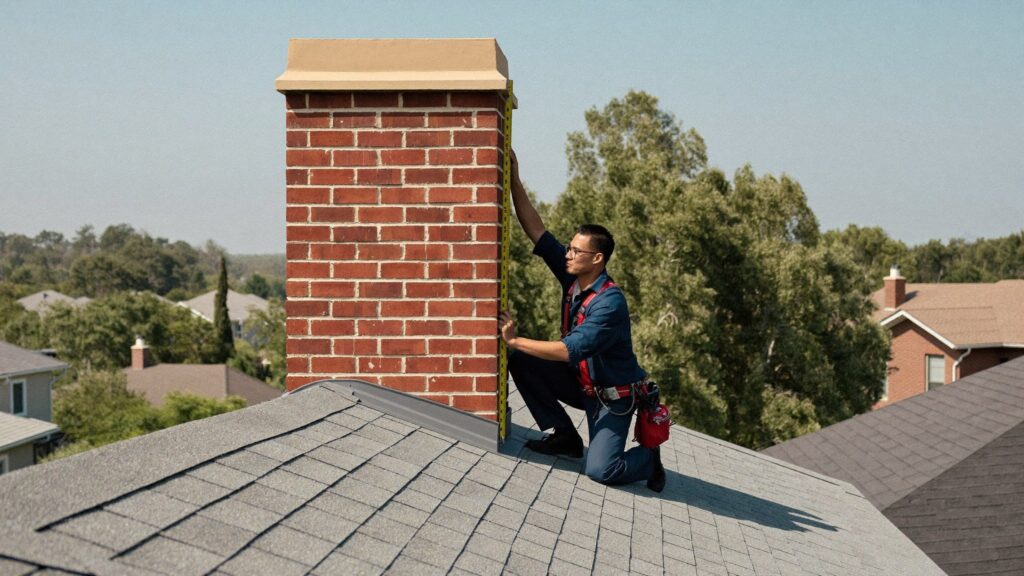
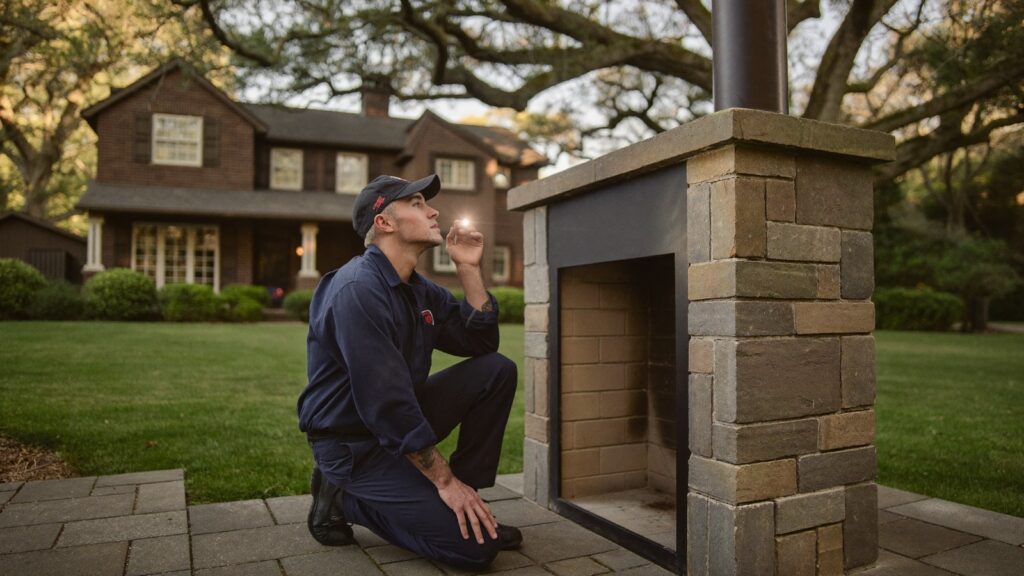
Edge case worth noting: A chimney that passes a visual inspection from the firebox opening can still have serious problems higher up in the flue or at the crown. This is precisely why professional inspections using cameras and specialized lighting matter so much. What looks fine from the living room floor often isn’t.
How Do Professional Chimney Sweeps Prevent Fire Hazards?
Professional chimney sweeps prevent fire hazards primarily by removing creosote, identifying structural vulnerabilities, and ensuring the entire venting system is functioning as designed. This is not work that a homeowner can replicate with a chimney cleaning log or a hardware store brush kit.
Here’s what a thorough professional cleaning actually involves:
- Pre-inspection of the firebox and accessible flue sections to assess the level of buildup and identify any visible damage before work begins.
- Setup of containment equipment inside the home, including drop cloths and high-powered vacuums with HEPA filtration, to prevent soot from spreading through the living space.
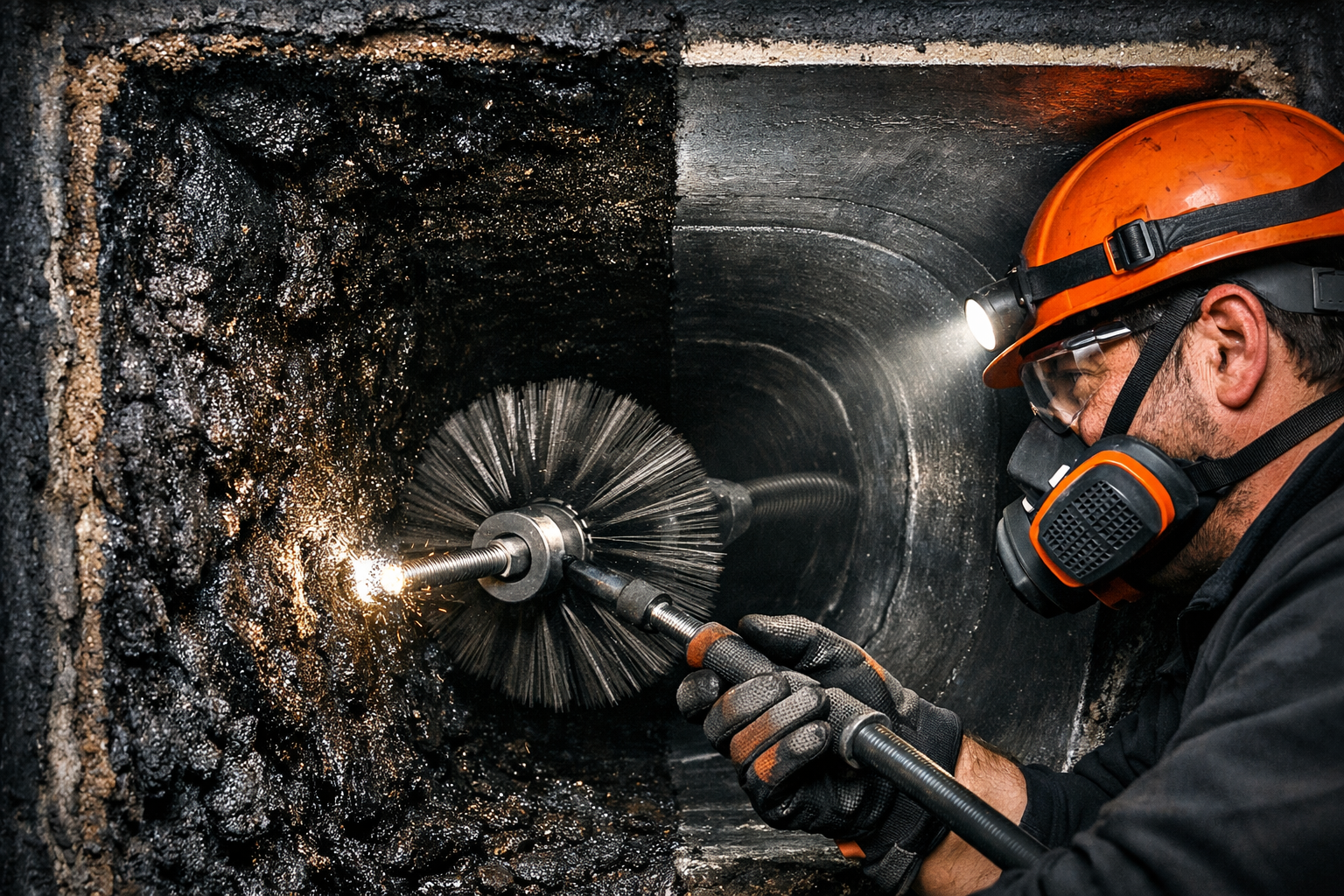
- Mechanical brushing of the flue using rotary or hand brushes sized to the specific flue dimensions, working from the top down or bottom up depending on the chimney configuration.
- Removal of creosote deposits, which are classified in three stages: first-degree (light, dusty soot), second-degree (flaky or tar-like), and third-degree (hardened, glazed deposits that require chemical treatment or specialized tools).
- Inspection of the flue liner, damper, smoke chamber, firebox, and chimney crown for cracks, deterioration, or blockages.
- Written report from a certified sweep detailing findings and any recommended repairs.
The distinction between a Level 1, Level 2, and Level 3 inspection also matters here. A Level 1 is a basic visual inspection appropriate for chimneys in regular use with no known problems. A Level 2, which includes camera inspection of the flue interior, is recommended when buying or selling a home, after a chimney fire, or following any significant weather event. A Level 3 involves partial demolition to access hidden areas and is reserved for serious structural concerns.
For homeowners in the Dallas-Fort Worth area, scheduling a chimney inspection in Dallas, TX before the heating season is a practical first step.
What Does a Professional Chimney Cleaning Actually Cost?
A standard professional chimney cleaning in 2026 typically ranges from $150 to $350 for a single fireplace system, though the final price depends on several variables. Heavily sooted chimneys, those requiring chemical treatment for third-degree creosote, or systems with multiple flues will cost more.
For a detailed breakdown of what to expect, the chimney sweep cost guide covers pricing by service type and region.
Factors that affect chimney cleaning cost:
- Level of creosote buildup: Light cleaning costs less; heavy or glazed deposits require more labor and sometimes chemical treatments.
- Chimney height and accessibility: Taller chimneys or those with difficult roof access take longer and carry more risk for the technician.
- Geographic location: Labor costs vary significantly by region. Urban markets tend to run higher than rural areas.
- Add-on services: If the sweep identifies a damaged chimney cap, cracked crown, or deteriorating liner during the visit, repair costs add to the total. See the chimney repair cost guide for Dallas in 2026 for current local pricing.
- Inspection level: A Level 2 camera inspection typically adds $100 to $250 to the base cleaning fee.
A note on pricing that’s worth saying plainly: the cheapest quote is rarely the best value. Some low-cost operators skip the inspection component entirely, use undersized equipment, or lack proper certification. A $99 chimney cleaning that misses a cracked flue liner is not a bargain.
What Are the Real Risks of Skipping Regular Chimney Maintenance?
Neglecting chimney maintenance creates three distinct categories of risk: fire, health, and structural deterioration. Each one is serious on its own; together, they represent a significant threat to both property and occupants.
Fire risk is the most immediate concern. Creosote is extremely combustible. Even a small ignition source, such as a stray ember, can cause a chimney fire that reaches temperatures exceeding 2,000 degrees Fahrenheit. At that temperature, the flue liner can crack, the surrounding framing can ignite, and what started as a contained chimney event becomes a house fire.
Health risk is less dramatic but equally serious. A blocked or deteriorating flue can allow carbon monoxide, a colorless and odorless gas, to back-draft into the living space. Carbon monoxide poisoning is responsible for hundreds of deaths annually in the U.S. A properly maintained chimney vents combustion gases safely out of the home. A compromised one does not.
Structural risk compounds over time. Moisture that enters through a cracked crown or missing chimney cap deteriorates mortar joints, spalls brick, and can eventually compromise the structural integrity of the chimney itself. What might have been a $200 cleaning and a $150 cap replacement becomes a full chimney rebuild costing several thousand dollars. The math on deferred maintenance is rarely favorable.
For homeowners who have noticed water stains or moisture-related issues, the guide to chimney leaks for Texas homeowners offers useful diagnostic information.
How to Find and Evaluate a Chimney Sweep Near Me
Finding a qualified chimney sweep near me comes down to three things: verifiable credentials, transparent pricing, and documented service history. The market includes highly skilled professionals and, unfortunately, some operators who offer little more than a brush and a vacuum.
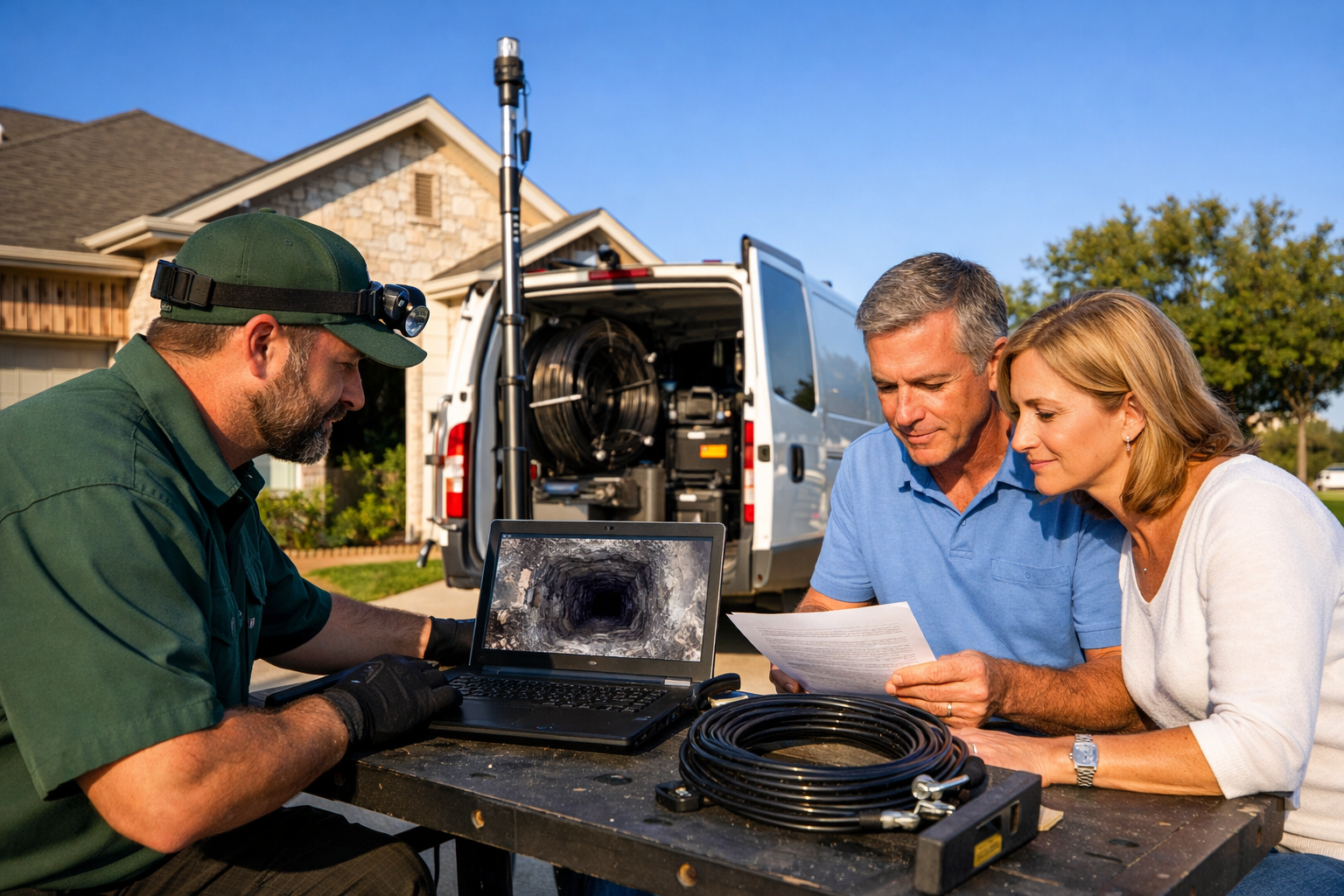
What to look for when hiring:
- CSIA Certification: The Chimney Safety Institute of America certifies sweeps who have passed rigorous exams covering chimney systems, fire hazards, and current industry standards. CSIA-certified sweeps also undergo background verification. This credential is the clearest indicator of professional competence.
- NFI Certification: The National Fireplace Institute credential is relevant for sweeps who also install or service gas and pellet appliances.
- Verifiable reviews: Look for consistent, detailed reviews across multiple platforms. A pattern of complaints about incomplete work or upselling should be taken seriously.
- Written estimates: Any reputable sweep will provide a written estimate before work begins. Verbal-only quotes are a yellow flag.
- Proof of insurance: General liability and workers’ compensation coverage protect the homeowner if something goes wrong during the service.
- What they include: Ask specifically whether the cleaning includes a written inspection report. Many low-cost operators clean without inspecting, which defeats much of the purpose.
For homeowners in the Dallas-Fort Worth region, professional chimney cleaning services in Dallas and Fort Worth are available from certified technicians who cover the full range of inspection and maintenance needs.
A practical decision rule: If a company can’t tell you the name of the certified sweep who will be performing the work, or if they can’t produce proof of CSIA certification on request, keep looking.
What Services Do Professional Chimney Companies Offer Beyond Cleaning?
Professional chimney companies offer a much broader range of services than most homeowners realize, and many of those services directly affect safety and long-term cost. Cleaning is the entry point, but a full-service chimney company can handle nearly every aspect of chimney maintenance and repair.
Common services offered by reputable chimney professionals include:
- Chimney inspections (Level 1, 2, and 3)
- Flue liner relining, which is necessary when the original liner is cracked or deteriorated. Chimney relining in Dallas is a service that significantly extends the life and safety of an older chimney system.
- Chimney cap installation and repair, which prevents moisture, animals, and debris from entering the flue. Chimney cap installation and repair is one of the most cost-effective preventive measures available.
- Chimney crown repair, addressing the concrete or mortar cap at the top of the chimney structure that protects the masonry below.
- Masonry repair, including tuckpointing deteriorated mortar joints and replacing damaged brick.
- Firebox repair, addressing the interior combustion chamber where fire actually burns.
- Damper repair and replacement
- Animal removal and exclusion
- Smoke problem diagnosis, which is particularly useful for homeowners dealing with smoke coming into the house from the fireplace.
The value of working with a full-service company rather than a cleaning-only operator is that the same visit that cleans the flue can also identify and address the cap that’s letting in water, the crown that’s beginning to crack, or the liner section that’s separating. Catching those issues early is almost always cheaper than addressing them after they’ve caused secondary damage.
Seasonal Timing: When Is the Best Time to Schedule a Chimney Sweep?
The best time to schedule a professional chimney sweep is late summer or early fall, before the heating season begins. This timing ensures the chimney is clean and inspected before it’s needed, and it typically means better appointment availability than mid-winter.
That said, there are situations where scheduling can’t wait:
- After a chimney fire, even a minor one, a Level 2 inspection should happen before the fireplace is used again.
- After a major storm, particularly one involving high winds, hail, or a nearby lightning strike.
- When moving into a home where the chimney service history is unknown. In this case, a Level 2 inspection is the appropriate starting point, not just a basic cleaning.
- When a gas appliance is being connected to an existing flue for the first time.
Spring cleaning, while less common for chimneys, has one practical advantage: soot and creosote from the winter season are removed before the warm months, which eliminates the unpleasant odor that humid summer air can pull from a sooty flue into the living space.
FAQ: Chimney Safety and Professional Sweeping
Q: How do I know if my chimney has had a fire? A: Signs of a past chimney fire include a cracked or collapsed flue liner, warped or discolored metal components, honeycomb-textured creosote deposits, and a puffy or expanded appearance of the flue tile joints. A Level 2 camera inspection is the definitive way to assess this.
Q: Can I clean my chimney myself? A: Basic sweeping with proper brushes is technically possible for homeowners, but it carries real risks: inadequate equipment, no inspection capability, and exposure to soot and creosote. Professional sweeps also identify problems that aren’t visible from the firebox. DIY cleaning is not a substitute for professional service.
Q: How long does a professional chimney cleaning take? A: A standard cleaning for a single fireplace typically takes between 45 minutes and 2 hours, depending on the level of buildup and whether an inspection is included.
Q: Does homeowner’s insurance cover chimney fires? A: Most standard homeowner’s policies cover damage from chimney fires, but coverage can be denied if the insurer determines the fire resulted from a lack of maintenance. Keeping records of annual professional cleanings is good practice.
Q: What is creosote, exactly? A: Creosote is a byproduct of wood combustion that condenses on the interior walls of the flue as smoke cools. It ranges from light, dusty soot (first-degree) to thick, tar-like deposits (second-degree) to hard, glazed accumulations (third-degree). Third-degree creosote is the most dangerous and the hardest to remove.
Q: Is a chimney sweep the same as a chimney inspector? A: Often, yes. Most certified chimney sweeps are trained to inspect as well as clean. However, some companies separate the two services. When scheduling, confirm that the visit includes both cleaning and a written inspection report.
Q: How do I verify a sweep’s CSIA certification? A: The CSIA maintains a searchable online directory of certified sweeps at csia.org. A legitimate sweep should be able to provide their certification number for verification.
Q: What happens if I use my fireplace with a blocked flue? A: A blocked flue prevents combustion gases, including carbon monoxide, from exiting the home. This creates an immediate health hazard and significantly increases the risk of a chimney fire. A fireplace should never be used if there is any reason to suspect a blockage.
Q: Do gas fireplaces really need annual service? A: Yes. While gas fireplaces produce far less soot than wood-burning units, the flue can still accumulate debris and moisture damage, and the gas components themselves benefit from annual inspection to ensure safe operation.
Q: What’s the difference between a chimney cleaning and a chimney inspection? A: Cleaning removes soot, creosote, and debris from the flue. An inspection assesses the structural condition of the entire chimney system. They’re related but distinct services. Both should be part of annual maintenance.
Q: How do I find a reputable chimney sweep near me? A: Start with the CSIA’s online directory, check reviews on multiple platforms, ask for proof of certification and insurance, and request a written estimate before any work begins.
Q: What is a chimney cap, and do I really need one? A: A chimney cap is a metal cover installed at the top of the flue that prevents rain, animals, and debris from entering. It’s one of the most cost-effective protective measures for a chimney. Most professionals recommend them as standard equipment.
Conclusion: Don’t Wait for a Problem to Find You
Chimney maintenance is one of those home tasks that’s easy to defer because the consequences aren’t always immediately visible. The flue looks fine from the living room. The fireplace lights without trouble. Everything seems okay, so it probably is, right?
Perhaps. But “probably fine” isn’t a standard that holds up well when the alternative is a structure fire or a carbon monoxide event. The cost of an annual professional cleaning is modest. The cost of the problems it prevents can be catastrophic.
Actionable next steps for homeowners in 2026:
- Check when the chimney was last professionally cleaned. If it’s been more than a year, or if the answer is “I’m not sure,” schedule a cleaning and inspection before the next use.
- Look for the warning signs described earlier in this article. Any of them warrant a call before lighting another fire.
- Verify credentials before hiring. Ask for CSIA certification and proof of insurance. Use the CSIA directory if needed.
- Get a written inspection report from every professional visit and keep it with the home’s maintenance records.
- Consider a Level 2 inspection if buying a home, if the chimney has been unused for several years, or if there’s any history of chimney problems.
For homeowners in the Dallas-Fort Worth area, ALC Chimney Service provides certified professional cleaning, inspection, and repair services across the region. Whether the need is a routine annual sweep, a structural repair, or a full system assessment, working with a qualified local professional is the single most effective step toward a safer home.
Find our chimney safety tips faster on Google