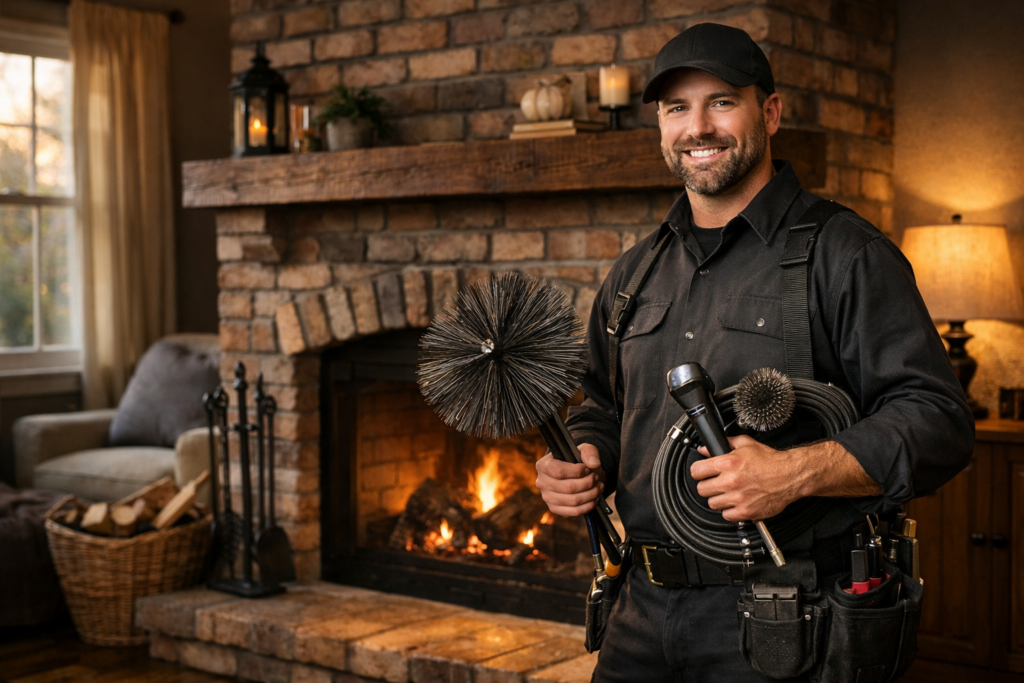
A chimney sweep in Flower Mound, TX costs about $130 to $350 for a standard cleaning with a basic inspection, and most homes need one every year. A CSIA-certified technician brushes creosote and soot out of the flue, clears blockages, and checks the damper, firebox, liner, and cap so the fireplace is safe to light when the first North Texas cold front rolls through.
That covers the short version. What follows is the longer one: what you are actually paying for, why chimneys in Flower Mound wear differently than you might guess, and why booking in July beats booking in November. I have spent a fair number of seasons around Denton County fireplaces, and some of what I have learned runs against what homeowners assume.
What does a chimney sweep in Flower Mound include?
Say the word sweep and most people picture a brush and a guy in a top hat. The brush part is accurate. Everything around it is more methodical than homeowners expect, because a proper cleaning covers the whole system rather than just the section of firebox you can see from the sofa.
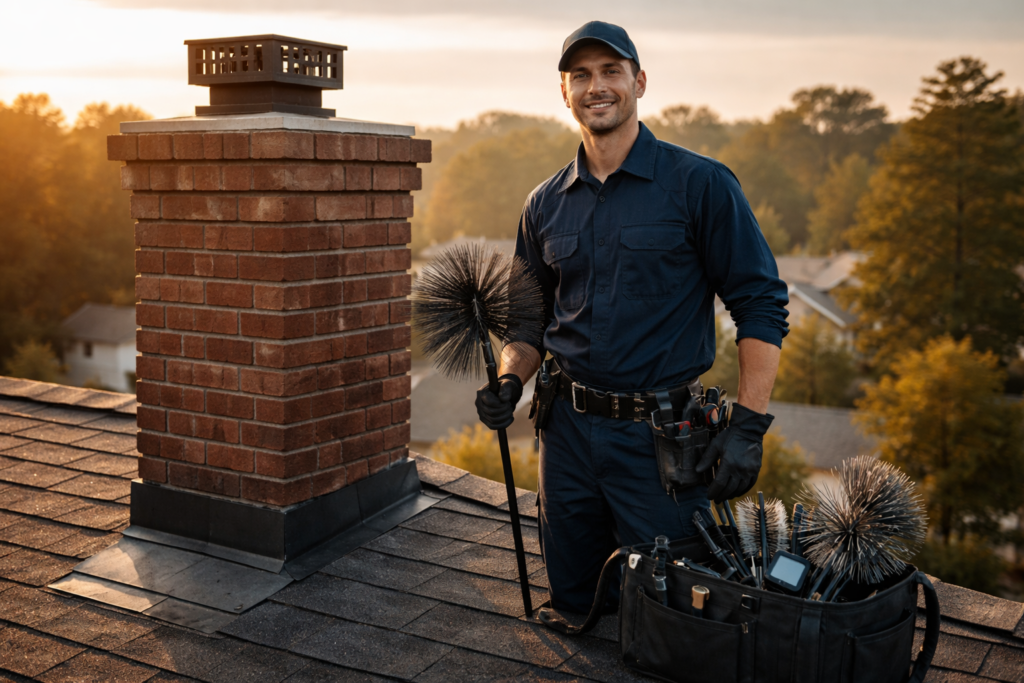
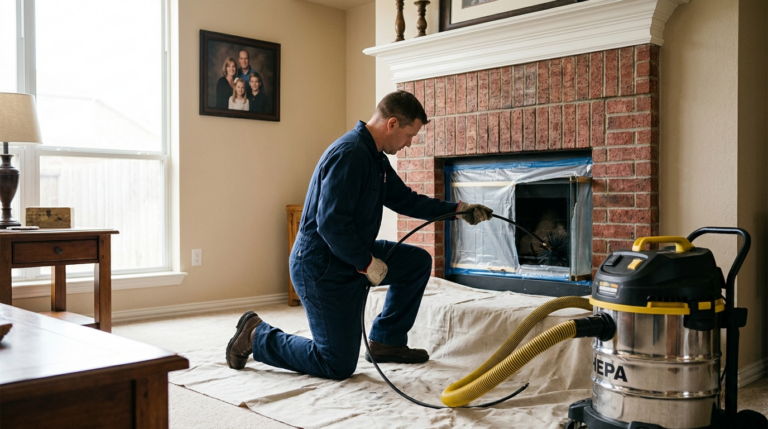
A typical visit starts with containment. Drop cloths go down, the fireplace opening gets sealed, and a HEPA vacuum runs the entire time so soot does not drift across your rug. From there the technician works the flue and liner, the smoke chamber and smoke shelf, the firebox, and the damper. While up top they also look over the chimney cap and its spark screen, since a rusted or missing cap sits behind an outsized share of water and animal problems.
Creosote is the main thing coming out of a wood-burning flue. It is the tarry residue that wood smoke leaves as it cools against the flue walls, sometimes flaky, sometimes hard and shiny. Left alone it narrows the flue and turns into fuel. The NFPA counts thousands of chimney fires in U.S. homes each year, and creosote nobody removed in time is the usual culprit. So the sweep is not housekeeping. It is the thing standing between an ordinary fire and a flue fire.
Most Flower Mound sweeps bundle a basic visual inspection into the same appointment. That is a Level 1 inspection, covering the readily accessible parts of the system. If the tech spots something questionable, a hairline crack in the crown, soft mortar, a liner that does not look right, they may recommend a deeper Level 2 chimney inspection with a camera. I think of the two as halves of one job. One cleans, the other confirms it is safe to use.
Wood-burning versus gas fireplaces
Not every fireplace gets the same service, and this is where people get tangled up. Wood systems produce creosote and need genuine brushing. Gas fireplaces and gas log sets make no creosote at all, but they still need an annual service. Debris, corrosion, spider webs in the burner ports, and blocked venting all cause trouble, and a gas system with bad venting carries a carbon monoxide risk that a wood system does not. Here is the rough comparison.
| Factor | Wood-burning fireplace | Gas fireplace or gas logs |
|---|---|---|
| Main buildup | Creosote and soot | Soot, debris, corrosion |
| Service frequency | Yearly, more with heavy use | Yearly service and vent check |
| Typical Flower Mound cost | $150 to $350 | $100 to $200 |
| Primary risk | Flue fire from creosote | Carbon monoxide from bad venting |
| Inspection focus | Flue, liner, creosote stage | Vent, connections, pilot, valve |
If you are not certain which type you have, do not lose sleep over it. It comes up constantly, and a technician can usually tell within half a minute on site. Book the visit and let them sort it out.
The chimney sweep process, step by step
Homeowners often ask what actually happens during the appointment, mostly because they want to know how much of a mess to brace for. The honest answer is less than you fear, assuming the tech does it properly. The general order:
- Setup and protection. Drop cloths down, fireplace opening sealed, vacuum running before any brush touches the flue.
- Look before cleaning. A quick Level 1 pass tells the tech what they are working with, how much buildup, any visible damage, whether the cap is intact.
- Flue and liner. Rods and brushes take the creosote and soot off the flue walls, working either top down or bottom up depending on the setup.
- Smoke chamber and smoke shelf. This awkward pocket above the damper collects a lot and is the part DIY jobs almost always miss.
- Firebox and damper. Visible surfaces get cleaned and the damper is tested so it opens fully and seals when closed.
- Findings and photos. The tech notes anything worth watching and, ideally, shows you pictures so you are not just taking their word for it.
Start to finish it usually runs forty-five minutes to about two hours. A flue that has gone years without service takes longer. One cleaned last spring goes quickly. Roof access matters too, which I will come back to.
How much does a chimney sweep cost in Flower Mound, TX?
Direct answer: a standard single chimney in Flower Mound generally lands between $130 and $350, with most homeowners paying $150 to $300 once a basic inspection is included. Gas systems sit toward the bottom of that band. Wood systems with heavy creosote, or a Level 2 camera inspection, push toward the top and occasionally past it.
A few things move the number. Height and access matter more than people expect. Flower Mound has a lot of two-story homes with steep roof pitches, and a flue that cannot be reached safely from a ladder sometimes needs a lift, which adds cost. Multiple chimneys in one house stack up. Condition counts too. A flue neglected for five seasons simply takes longer than one serviced last year.
| Service | Typical Flower Mound range | Notes |
|---|---|---|
| Standard sweep plus Level 1 inspection | $130 to $350 | Most common single-chimney job |
| Gas fireplace service | $100 to $200 | No creosote, vent and connection check |
| Level 2 camera inspection | $200 to $500 | Home sales, after a chimney fire, suspected damage |
| Second chimney, same visit | Add $90 to $150 | Cheaper than booking two appointments |
| Heavy or glazed creosote removal | $250 to $600 and up | Stage 3 creosote is slow and stubborn |
ALC Chimney Service runs promotional pricing worth knowing about: $99.99 for a sweep plus inspection, $189.99 for a double chimney package, and free repair inspections. The ranges above are general Flower Mound figures rather than a formal quote, since your actual price depends on your specific system. A phone call settles it quickly.
Homes with more than one chimney
Plenty of larger Flower Mound homes, particularly out in Bridlewood and Wellington, have two fireplaces, or a fireplace plus a separate flue serving a furnace or water heater. Doing them on one visit costs less than two separate trips, since the crew is already set up and on the roof. Figure roughly $90 to $150 for a second chimney, scaling from there for additional flues. Mention it when you book so the tech blocks enough time.
The three stages of creosote and why they change the price
Creosote is not one uniform substance. It appears in three stages, and the stage in your flue explains why two apparently identical sweeps can be priced very differently.
| Stage | Appearance | Removal difficulty |
|---|---|---|
| Stage 1 | Light, flaky, sooty dust | Easy, standard brushing |
| Stage 2 | Crunchy, tar-like flakes | Moderate, more tooling required |
| Stage 3 | Hard, shiny glazed tar | Difficult, needs special treatment |
The CSIA recommends cleaning once buildup reaches roughly 1/8 inch. There is one exception I repeat to everybody: if you see glazed creosote at all, even a thin film, handle it immediately, because glaze is extremely flammable. That stage is the one that most often becomes a chimney fire, and it is why I push people not to stretch the interval.
How fast it accumulates comes down mostly to burning habits. Green or unseasoned wood holds moisture, smolders, and coats the flue fast. A damped-down fire that never gets properly hot does the same. Dry seasoned hardwood burned at a decent temperature keeps things cleaner, though it never eliminates buildup entirely. Two Flower Mound homes with identical fireplaces can end up on completely different schedules because of this, and I think that surprises people more than the pricing does.
When is the best time to book a chimney sweep in Flower Mound?
Summer and early fall. It feels backward to schedule fireplace work in August heat, I know. The reason is scheduling math. Everyone in Denton County calls during the same three-week window, late October into December, when the first real cold arrives. Calendars jam. You wait, sometimes past the point where you wanted your first fire.
Book in June, July, or August and you get your choice of dates, short lead times, and an unhurried visit. There is also a repair angle. If the inspection turns up a cracked crown or a failing liner, you want that found in summer with weeks to schedule the fix, not during a January cold snap when you were hoping to use the fireplace that evening.
One more point for the off-season. Pricing tends to hold steadier in summer, and you are not queued behind a stack of emergency calls. I have watched homeowners wait two or three weeks in November for an appointment that would have been next-day in July. Not life-altering, sure. But if you have ever stood in front of a cold fireplace during a hard freeze wishing you had called earlier, the timing makes sense.
Why Flower Mound weather is hard on chimneys
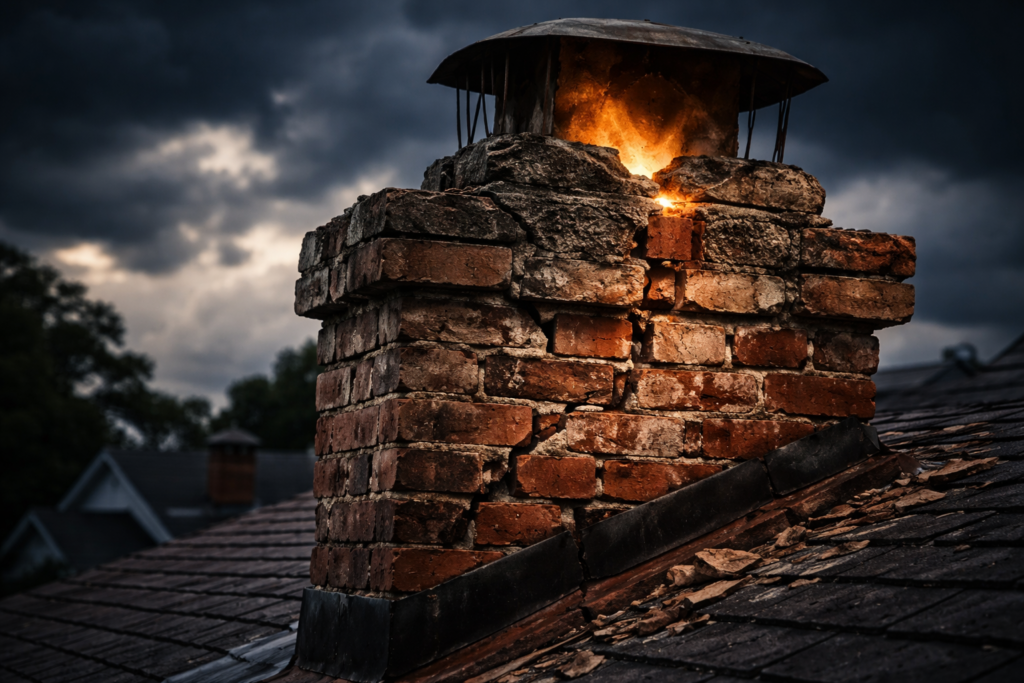
Flower Mound sits in the same climate band as the rest of the metroplex, and that climate treats masonry worse than it gets credit for. Freeze-thaw cycling is the main offender. Water finds a hairline crack in the crown in November, freezes during a cold snap, expands, and by spring you have a leak above the firebox. Then there is the expansive clay soil North Texas is known for, which swells when wet and shrinks when dry. That constant movement can pull on a chimney column over years, opening cracks in the masonry or the crown. Hail contributes too, denting caps and chipping mortar joints.
Homes near Lake Grapevine and along the Cross Timbers area deal with a bit more humidity, which tends to make chimney odors more noticeable in summer. All of that is why a warm-weather sweep and inspection is the natural moment to catch damage before winter compounds it. If the masonry is already showing wear, spalling brick, gaps in the mortar joints, staining across the crown, that becomes a chimney repair conversation, and occasionally a relining one if the flue liner has failed. Older properties on the west side of town tend to need more of this attention than the newer builds in Canyon Falls. Though I have seen ten-year-old houses with real problems too, usually traced to a cap that was never installed correctly.
How often should Flower Mound homes clean the chimney?
Once a year is the baseline, and it comes from NFPA Standard 211, which calls for chimneys to be inspected annually for soundness, deposits, and correct clearances. If you burn wood regularly, a couple of fires a week through the season, you may reach that 1/8 inch of creosote before an annual visit would catch it. Occasional users can generally stay on the yearly schedule. Gas fireplace owners still need the annual check even without creosote, because venting faults and corrosion do not announce themselves.
Signs your Flower Mound chimney is overdue
Sometimes the calendar tells you. Other times the fireplace does. A few things I would not ignore:
- A strong smoky or campfire smell from the fireplace, often worse on humid days.
- Smoke pushing back into the room rather than drawing up the flue, which can point to a blockage or heavy buildup.
- Black, oily soot flaking into the firebox or coating the damper.
- Fires that are hard to start or burn sluggishly, a common sign of weak draft.
- Scratching or nesting sounds, or debris dropping down the chimney, which usually means a damaged or missing cap.
- A dark tar-like ring visible up the flue when you shine a flashlight into it.
If something has actually moved in rather than just leaving soot behind, that becomes an animal removal job that has to happen before any cleaning. And if you are getting odors without using the fireplace much, a thorough fireplace cleaning usually resolves it. Cracked panels or a crumbling floor inside the firebox itself are a separate matter and point toward firebox repair.
Homeowner checklist before your appointment
There is not much prep required, but a little makes the visit faster and cleaner.
- Skip fires for at least 24 hours beforehand so the system is completely cool.
- Clear a path to the fireplace and move fragile items back a few feet.
- Write down anything you have noticed: odd smells, smoke coming into the room, animal sounds, water stains near the ceiling.
- Know roughly how often you use the fireplace and whether it burns wood or gas.
- Make sure the technician can safely reach the roof if an exterior look is needed.
- Keep pets in another room during the appointment.
- Have any past inspection paperwork handy, which helps a lot if you are prepping for a home sale.
Chimney sweep versus chimney inspection: what is the difference?
The terms get used interchangeably. They are related but not the same job. A sweep is the cleaning, removing creosote, soot, and blockages. An inspection is the evaluation, assessing condition and safety. Most standard sweeps include a Level 1 visual inspection, which is exactly why the two blur together in conversation.
| Inspection level | What it covers | When you need it |
|---|---|---|
| Level 1 | Readily accessible components, visual check | Routine annual visit, normal use |
| Level 2 | Camera scan of the flue plus accessible attic and crawl spaces | Home sale, after a chimney fire, after a system change |
| Level 3 | Concealed areas, may require removing masonry or components | Serious hidden damage suspected |
For most Flower Mound homeowners burning a normal amount, a sweep with a Level 1 inspection is the annual routine. Level 2 has its specific moments, and a straight-shooting tech will tell you when one is genuinely warranted instead of upselling you into it.
Why hire a certified sweep instead of doing it yourself?
You can buy a brush kit and knock soot loose from below. Plenty of people do, and it beats doing nothing. The trouble is that a DIY pass rarely reaches the smoke chamber and shelf, almost never catches early masonry cracks, and tells you nothing reliable about creosote stage or liner condition. Cleaning is only half of what a professional visit provides. The other half is a trained set of eyes confirming the system is safe to light.
CSIA certification means the technician has been trained and tested against chimney and venting standards, well past brushing technique. ALC Chimney Service is family-owned, licensed and insured, with more than 15 years of combined experience and over 10,000 jobs completed across Dallas and the DFW metroplex. The company holds a 5.0 rating across 172 Google reviews, which for a trade business is not a small thing. There is more background about the team if you want it.
Flower Mound is inside ALC’s regular service area, along with Denton County and the surrounding suburbs. Crews also cover Irving and Fort Worth, and you can check the full service area map to confirm your neighborhood is on it. The main Dallas chimney sweep service page has more detail on the cleaning itself. Ready to get on the summer schedule? Contact ALC Chimney Service or call (877) 656-0851 to book your Flower Mound sweep and inspection.
Frequently Asked Questions
How much does a chimney sweep cost in Flower Mound, TX?
A standard single-chimney sweep in Flower Mound typically costs $130 to $350, with most homeowners paying $150 to $300 when a basic inspection is included. Gas fireplaces run lower, around $100 to $200. Heavy creosote or a Level 2 camera inspection pushes the price higher.
How often should I have my chimney swept?
At least once a year, per NFPA Standard 211. Homes that burn wood frequently may need service sooner, since the CSIA recommends cleaning once creosote reaches about 1/8 inch. Gas fireplaces still need an annual service and vent check even though they produce no creosote.
When is the best time of year to book in Flower Mound?
Summer and early fall. Booking between June and August means shorter waits, more date options, and time to handle any repairs the inspection uncovers before you need the fireplace. Schedules fill fast once October arrives.
Does a gas fireplace need to be swept?
Gas fireplaces do not build creosote, so they do not need brushing the way wood systems do. They still require annual service to check venting, connections, the pilot, and for corrosion or debris, since faulty venting can create a carbon monoxide risk.
What is the difference between a sweep and an inspection?
A sweep removes creosote, soot, and blockages. An inspection evaluates the condition and safety of the system. Most standard sweeps include a Level 1 visual inspection. A Level 2 inspection uses a camera and is recommended before a home sale, after a chimney fire, or when damage is suspected.
How long does a chimney sweep take?
A straightforward single-chimney cleaning usually takes 45 minutes to about an hour and a half. Heavy creosote, difficult roof access, or added repairs stretch it out. Most Flower Mound appointments finish within a couple of hours.
Is a dirty chimney actually a fire hazard?
Yes. Creosote is highly flammable, and glazed creosote especially so. The NFPA ties thousands of home chimney fires each year to buildup that was never cleaned out. Annual sweeping is the simplest way to reduce that risk.
Do newer Flower Mound homes still need chimney sweeps?
Yes. Newer builds in areas like Canyon Falls often have prefab or wood-burning fireplaces that still collect creosote and debris. Even a lightly used fireplace needs the annual check, since caps, dampers, and venting can develop problems regardless of how old the house is.
About the Author
Jonathan is a CSIA-certified chimney specialist at ALC Chimney Service with more than 15 years of hands-on experience sweeping, inspecting, and repairing fireplaces and chimneys across Dallas and the DFW metroplex. He has worked on thousands of residential chimney systems and writes to help North Texas homeowners keep their fireplaces safe, efficient, and up to NFPA and CSIA standards. Have a question about your chimney? Call ALC Chimney Service at (877) 656-0851 for a free inspection.