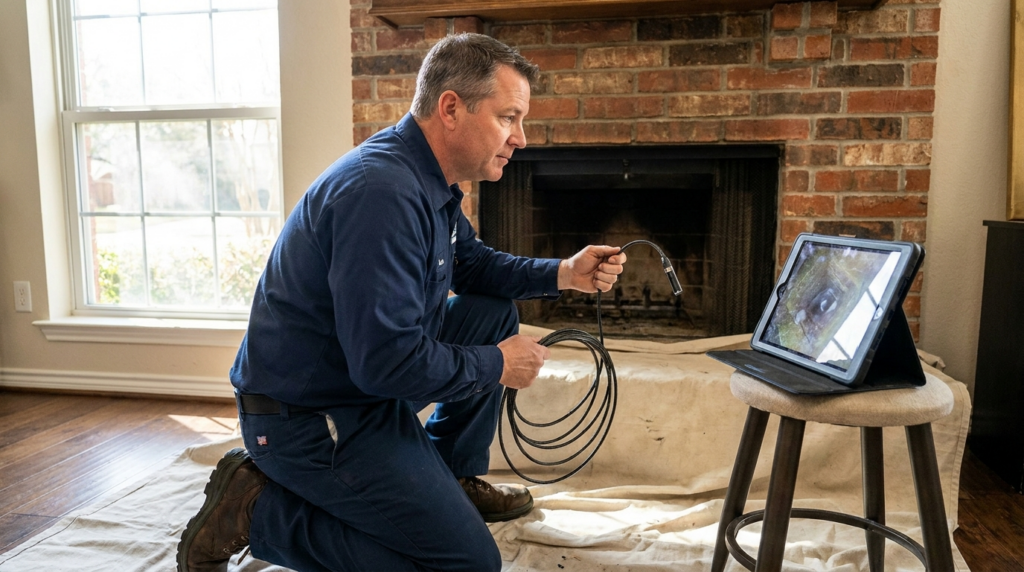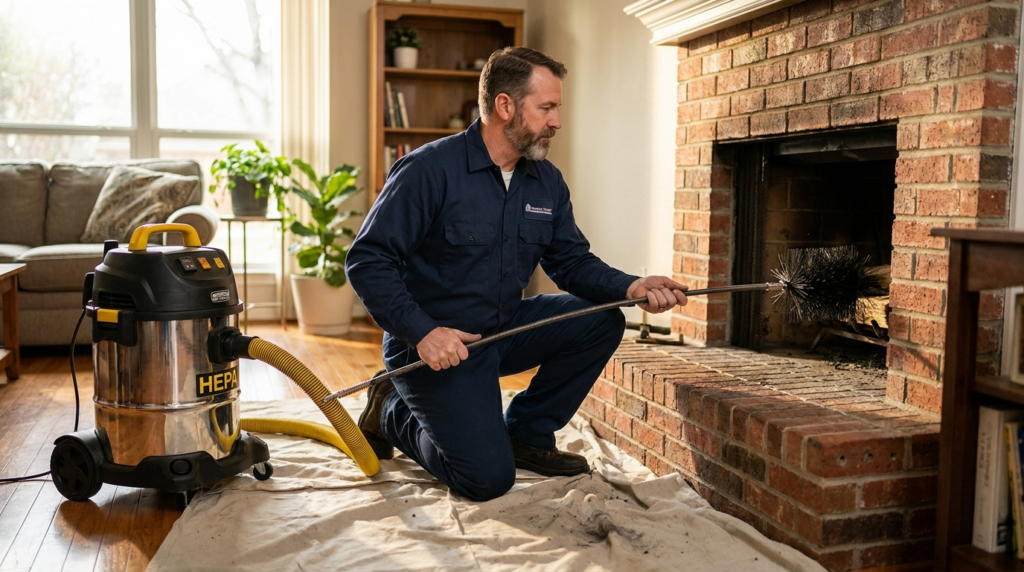
A chimney inspection in Fort Worth, TX is a certified evaluation of your chimney and fireplace to confirm the whole system is safe to use. A standard Level 1 inspection checks the readily accessible parts of the flue, firebox, damper, crown, cap, and flashing for creosote, cracks, blockages, and wear. The NFPA recommends one at least once a year. In Fort Worth a Level 1 inspection typically runs $100 to $250 and is often bundled with an annual sweep.
Here is the thing most people get backwards. They will happily book a cleaning, then skip the inspection, when the inspection is the part that actually keeps them safe. A sweep removes buildup. An inspection tells you whether the system that carries fire and smoke out of your house is still sound. After thousands of these across North Texas, I can tell you the problems that cause chimney fires, leaks, and carbon monoxide are almost always invisible until someone goes looking. That is uncomfortable to sit with, I know, but it is also the whole reason the service exists. This guide walks through what an inspection covers, the three levels the industry uses, and how to tell when yours is overdue.
What Does a Chimney Inspection Include?
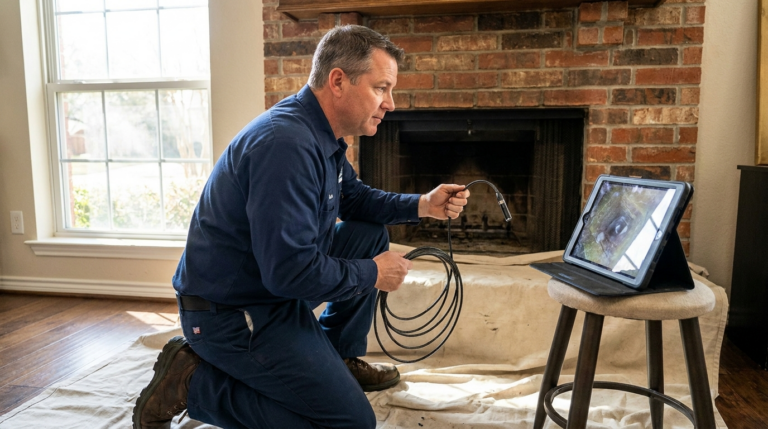
A professional inspection is a methodical look at the entire chimney and fireplace, inside and out. When ALC runs a chimney inspection, the technician documents the condition of each component and explains, in plain terms, anything that needs attention.
A thorough Fort Worth inspection covers:
- Flue liner: Checking for cracks, gaps, or deterioration that could let heat or gases reach nearby framing.
- Creosote level: Measuring how much has built up and whether it has glazed into the hard, flammable stage.
- Masonry and mortar joints: Looking for spalling brick, crumbling mortar, and signs of movement.
- Chimney crown: Inspecting the concrete top for the cracks that let water in.
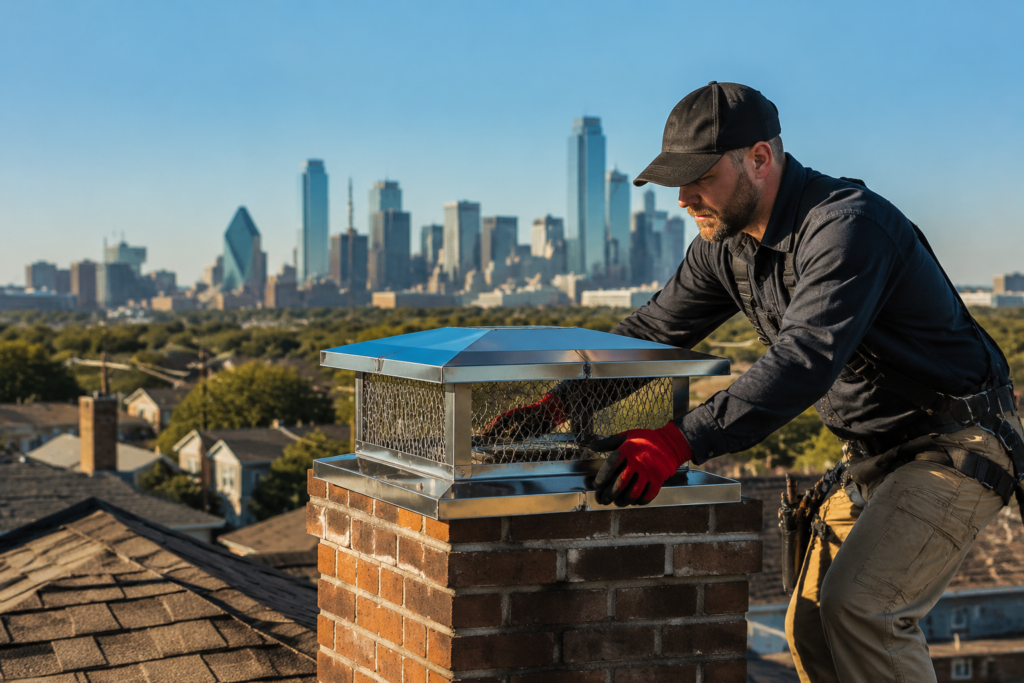
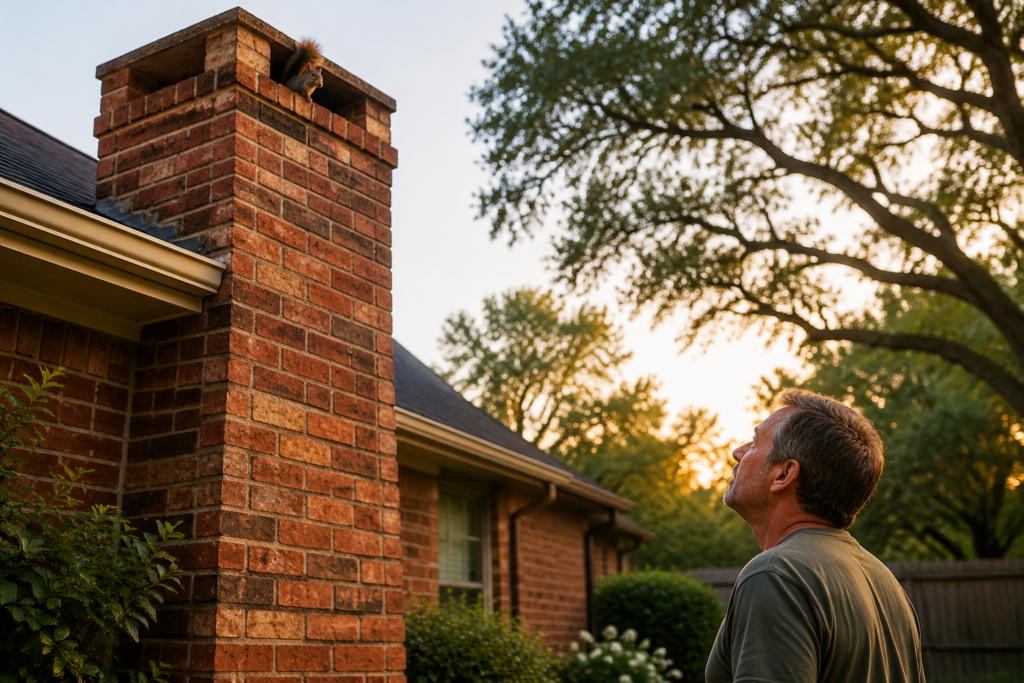
- Chimney cap: Confirming a cap is present and intact to keep out rain, debris, and animals.
- Flashing: Checking the seal where the chimney meets the roof, which is one of the most common leak points we find.
- Damper: Verifying it opens, closes, and seals.
- Firebox and smoke chamber: Examining for cracks, heat damage, and buildup.
- Draft performance: Confirming the chimney draws so smoke exits the home instead of backing up.
You should walk away with a written report and clear recommendations. If someone glances at the firebox and calls it done, that is not an inspection, that is a peek.
The 3 Chimney Inspection Levels Explained
The Chimney Safety Institute of America and NFPA 211 define three inspection levels. Knowing which one you need saves money and, just as important, keeps you from under-inspecting a system that has a hidden problem.
| Level | What It Covers | When You Need It |
|---|---|---|
| Level 1 | Visual check of readily accessible interior and exterior parts of the chimney and its connections | Annual maintenance when the system is unchanged and in regular use |
| Level 2 | Everything in Level 1 plus a video or camera scan of the full flue and accessible attics, crawl spaces, and basements | Buying or selling a home, after a chimney fire or major storm, or when changing fuel or appliance |
| Level 3 | Everything above plus inspection of concealed areas, which may require removing masonry or components | When a serious hazard is suspected and hidden areas must be accessed |
Most Fort Worth homeowners need a Level 1 each year. A Level 2 is the standard when a house changes hands, which comes up a lot here because DFW real estate moves fast. A Level 3 is rare and reserved for confirmed or strongly suspected structural hazards. If you are not sure which you need, tell us what is going on and we will point you to the right one rather than upselling you.
Signs You Need a Chimney Inspection Right Now
Do not wait for the annual appointment if you notice any of these:
- White staining, called efflorescence, or dark water stains on the chimney exterior or nearby walls.
- Crumbling mortar, flaking brick, or visible cracks in the masonry.
- A damp or musty smell near the fireplace, especially after rain.
- Smoke backing into the room or a fireplace that just will not draft.
- A rusted damper or firebox components, which usually points to moisture getting in.
- Pieces of tile or masonry showing up in the firebox, which can mean a failing flue liner.
- A recent chimney fire, a strong storm, or noticeable settling of the structure.
Water is the single biggest enemy of a Fort Worth chimney, and I do not say that lightly. Our freeze-thaw cycles, where days climb above freezing and nights drop below, drive water into tiny cracks where it freezes, expands, and widens the damage a little more each time. Small issues caught in an inspection are cheap. The same issues found after a winter of freeze-thaw usually are not. If your inspection turns up masonry problems, our chimney repair team can take care of them before they spread.
Why Annual Inspections Matter in Fort Worth
The NFPA recommends chimneys be inspected at least once a year regardless of how often they get used. Three reasons this hits especially hard here:
- Fire safety. Creosote is highly flammable and the leading cause of chimney fires. An inspection catches dangerous buildup before it ignites.
- Carbon monoxide. A cracked flue or a blocked chimney can let carbon monoxide, which you cannot see or smell, drift back into living space. An inspection confirms the venting path is intact.
- Moisture and structure. North Texas storms and freeze-thaw quietly wear down crowns, flashing, and mortar. A yearly check finds leaks before they reach framing and cause rot.
Even a fireplace that sits unused all year still needs the annual look, because animals, moisture, and settling do not wait for you to light a fire. A gas fireplace is no exception either. The venting still needs verifying, and people forget that constantly.
Fort Worth Code and Safety Notes
Texas follows the International Residential Code, and local jurisdictions around Fort Worth enforce provisions covering chimney construction, clearance to combustibles, and venting. When we inspect, we evaluate against those code-compliant standards along with NFPA 211 and, for factory-built units, the manufacturer specifications. If you have changed something, say you added a wood stove insert or converted from wood to gas, that change usually calls for a Level 2 inspection to confirm the system still meets code and vents safely. For fuel conversions and new units, our fireplace installation and insert installation teams handle the work to spec.
What Does a Chimney Inspection Cost in Fort Worth?
| Inspection Type | Typical Fort Worth Cost | Best For |
|---|---|---|
| Level 1 (visual) | $100 – $250 | Routine annual maintenance |
| Level 2 (camera scan) | $250 – $500 | Home sales, post-fire, fuel or appliance changes |
| Level 3 (concealed areas) | $500 – $1,000+ | Suspected serious structural hazards |
| Sweep + Level 1 (bundled) | Often discounted together | Annual clean and safety check in one visit |
ALC’s $99.99 sweep-and-inspection promo pairs a cleaning with an inspection for standard single-fireplace systems, our $189.99 double-chimney package covers two fireplaces, and our repair inspection is free when you are dealing with a specific issue. Ask for an itemized estimate up front so you know exactly what is included and what is not.
Chimney Inspection vs. Chimney Sweep
These two get mixed up constantly. They are related but they are not the same job:
| Feature | Chimney Inspection | Chimney Sweep |
|---|---|---|
| Main goal | Evaluate condition and safety | Remove creosote, soot, and blockages |
| Type of service | Diagnosis | Maintenance |
| Produces a report? | Yes, written findings | Usually a short summary |
| When it stands alone | Home sale, safety check, after an event | Routine seasonal cleaning |
You generally want both once a year, which is why most companies bundle them. If you only need to know whether your system is safe, or you are buying or selling, an inspection on its own is fine. To compare the two in more depth, see our guide to a professional chimney sweep.
What Happens After the Inspection?
You get a written report describing the condition of each component, photos or video where it helps, and prioritized recommendations. Good recommendations separate fix now for safety from monitor this and optional upgrade. From there you can:
- Do nothing if the system is sound, which is a common and genuinely welcome outcome.
- Schedule a sweep if creosote levels call for it.
- Address masonry, crown, flashing, or flue liner issues before they worsen.
- Install or replace a chimney cap to keep water and animals out.
Your Pre-Inspection Homeowner Checklist
- Do not use the fireplace for at least 24 hours before the appointment so it is cool.
- Clear the area around the hearth so the technician has room to work.
- Jot down any symptoms you have noticed: odor, smoke, stains, or hard-to-start fires.
- Have records handy if you recently changed fuel type or added an insert.
- Keep pets out of the work area.
- Ask for the written report and photos before the tech leaves.
The Most Common Problems We Catch in Fort Worth Inspections
After enough inspections you start seeing the same short list of issues again and again. None of them are exotic. They are the predictable result of North Texas weather meeting masonry that was built to last but not built to be ignored. Here are the ones that come up most, and what usually fixes them.
| Problem We Find | What Usually Causes It | Typical Fix |
|---|---|---|
| Cracked chimney crown | Freeze-thaw, sun exposure, thin original pour | Crown seal or rebuild |
| Worn or missing flashing | Roof movement and aged sealant | Reseal or replace flashing |
| Spalling or flaking brick | Water soaking in, then freezing | Tuckpointing or brick replacement |
| Damaged flue liner | Age, heat cycling, moisture | Relining |
| Missing or rusted cap | No cap installed, or storm damage | Cap installation |
| Heavy creosote | Burning habits and skipped sweeps | Professional sweep |
Most of these are cheap to handle when we catch them early and expensive when we do not. A hairline crown crack sealed in summer is a minor line item. That same crack after a winter of water intrusion and freeze-thaw can mean a full crown rebuild plus interior water damage. If your inspection surfaces masonry or liner problems, our relining and repair crews take it from there.
How Home Age Changes What We Look For
Fort Worth has a bit of everything, from century-old brick homes in Fairmount and Ryan Place to new construction out toward the edges of the metro. The age of the house shifts what we pay closest attention to. On older masonry chimneys, the usual suspects are mortar that has weathered out of the joints, a crown that was never sealed, and a clay flue liner that has cracked over decades of heat cycling. Those homes were often built before chimney caps were standard, so a missing cap is common, and that alone lets in the water and animals that cause most of the other trouble.
Newer homes tend to have factory-built, prefabricated fireplaces with metal chimneys. Those come with their own manufacturer requirements, and we check the refractory panels, the metal chimney sections, and the clearances rather than mortar joints. It is a different checklist, but the goal is the same: confirm the system can carry heat and combustion gases out of the house safely. Whichever kind you have, the annual inspection is what keeps small, age-appropriate wear from turning into a hazard.
Why Fort Worth Homeowners Trust ALC Chimney Service
ALC Chimney Service is a family-owned, CSIA-certified company serving Fort Worth and the greater DFW metroplex, with more than 15 years of combined experience, over 10,000 completed jobs, and a 5.0 rating across 172 Google reviews. Our licensed and insured technicians follow NFPA and CSIA standards and give straight answers. More than one Fort Worth customer has told us we confirmed their chimney did not need the work another company had recommended, and being able to say that is honestly the whole point of an inspection.
Ready to book? Schedule a free inspection or call (877) 656-0851. You can see everywhere we work on our service areas page, and Fort Worth residents can read more on our Fort Worth chimney services page.
Frequently Asked Questions
What is included in a chimney inspection?
A chimney inspection evaluates the flue liner, masonry, mortar joints, chimney crown, cap, flashing, damper, firebox, smoke chamber, and draft performance. A certified technician documents the condition of each part and provides a written report with recommendations.
How often should a chimney be inspected in Fort Worth?
At least once a year, following NFPA guidance, even if the fireplace is used rarely. Annual inspections catch creosote buildup, masonry cracks, and moisture damage before they become fire, carbon monoxide, or structural hazards.
What is the difference between a Level 1 and Level 2 inspection?
A Level 1 inspection is a visual check of readily accessible parts for routine annual maintenance. A Level 2 adds a camera scan of the full flue and accessible attics, crawl spaces, and basements, and is required for home sales, after a chimney fire, or when changing fuel or appliance.
How much does a chimney inspection cost in Fort Worth, TX?
A Level 1 inspection typically costs $100 to $250, a Level 2 runs $250 to $500, and a Level 3 can exceed $500. ALC bundles an inspection with a sweep in its $99.99 promo and offers a free repair inspection when addressing a specific issue.
Do I need a chimney inspection when buying a house?
Yes. A Level 2 inspection is the industry standard when a property changes hands, because it includes a camera scan of the full flue that a standard home inspection does not cover. It protects you from inheriting hidden chimney problems.
How long does a chimney inspection take?
A Level 1 inspection usually takes 30 to 60 minutes. A Level 2 with a camera scan takes longer, often an hour or more, depending on the system.
Does a gas fireplace need an inspection?
Yes. Gas fireplaces produce little creosote, but the venting, connections, and firebox still need an annual inspection to confirm safe operation and check for blockages or animal intrusion.
Can an inspection detect a carbon monoxide risk?
An inspection checks for the conditions that cause carbon monoxide to back up, such as a cracked flue, a blockage, or poor draft. It is not a substitute for a CO detector, so keep working detectors near sleeping areas as well.
About the Author
Jonathan is a CSIA-certified chimney specialist at ALC Chimney Service with more than 15 years of hands-on experience sweeping, inspecting, and repairing fireplaces and chimneys across Dallas and the DFW metroplex. He has worked on thousands of residential chimney systems and writes to help North Texas homeowners keep their fireplaces safe, efficient, and up to NFPA and CSIA standards. Have a question about your chimney? Call ALC Chimney Service at (877) 656-0851 for a free inspection.