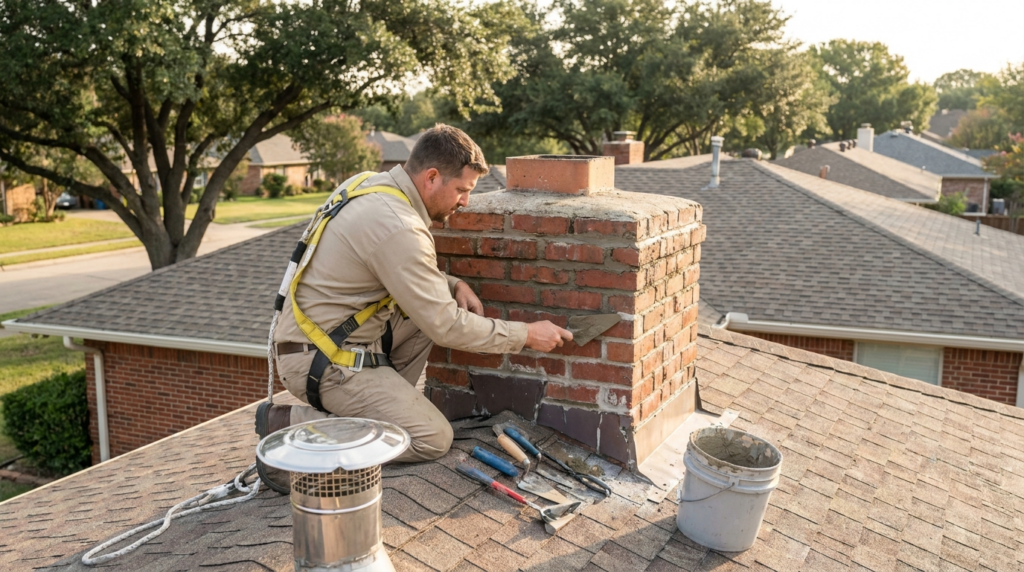
A chimney sweep in Fort Worth, TX usually costs between $150 and $350 for a standard cleaning with a basic safety inspection, and most homeowners land around $200 to $250. The job removes creosote and soot from the flue, clears the smoke chamber and firebox, checks the damper and draft, and ends with a written safety review. Wood-burning homes in Fort Worth should be swept once a year, and late summer is the smartest time to book it.
I have lost count of how many first cold nights I have spent talking a Fort Worth homeowner off the ledge over the phone. The pattern is always the same. A warm week, then a cold front barrels down from the panhandle, the temperature drops thirty degrees by morning, and suddenly everyone remembers they have a fireplace they have not touched since last winter. The trouble is that a chimney nobody looked at in twelve months is the last thing you want to light in a hurry. Our CSIA-certified crew has cleaned thousands of chimneys across North Texas, and this guide is basically the conversation I wish I could have with every homeowner before that cold front, not after. We will cover what a real sweep involves, what it should cost here in Fort Worth, and the signs that yours is overdue.
What Is a Chimney Sweep, Really?
Forget the old movie image of a guy on the roof with a long brush and a cloud of soot. A modern chimney sweep is a full-system cleaning and it is far tidier than people expect. When ALC does a professional chimney sweep and cleaning, we are working through the whole assembly, not just the part you can see from the living room.
A complete Fort Worth sweep includes the following:
- Flue cleaning: Scrubbing creosote and soot from the full length of the flue liner with rotary or manual brushes sized to your specific flue.
- Smoke chamber and smoke shelf: Clearing the transition area right above the firebox, which is where creosote quietly piles up the heaviest.
- Firebox cleanup: Vacuuming ash, fallen mortar, and debris off the firebox floor.
- Damper service: Confirming the damper opens, closes, and actually seals when shut.
- Draft check: Making sure the chimney pulls air the right way so smoke goes up and out instead of into your room.
- Level 1 visual inspection: A look at the readily accessible interior and exterior for cracks, blockages, or obvious wear.
- Written safety review: A plain summary of what we found, with honest recommendations.
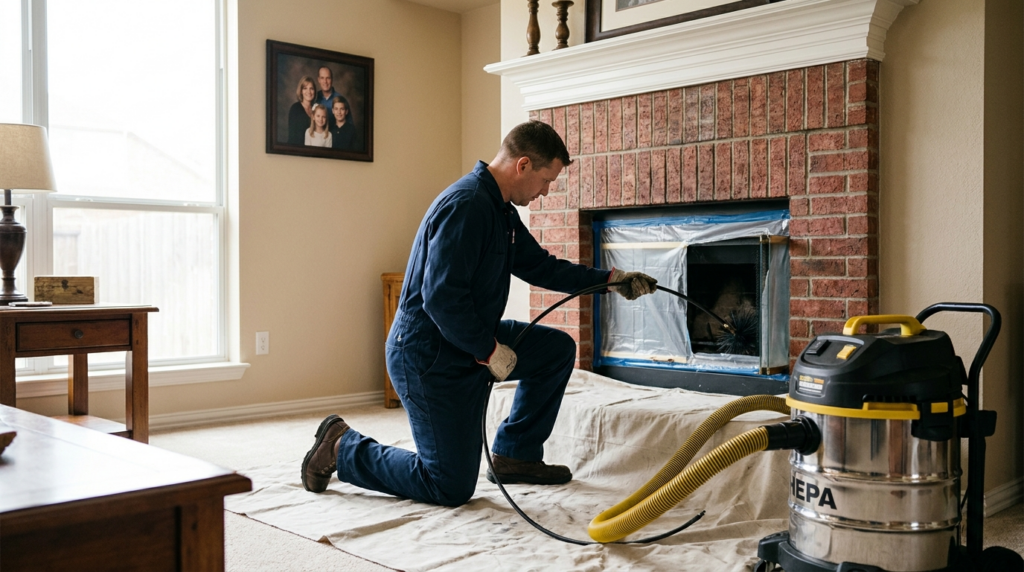
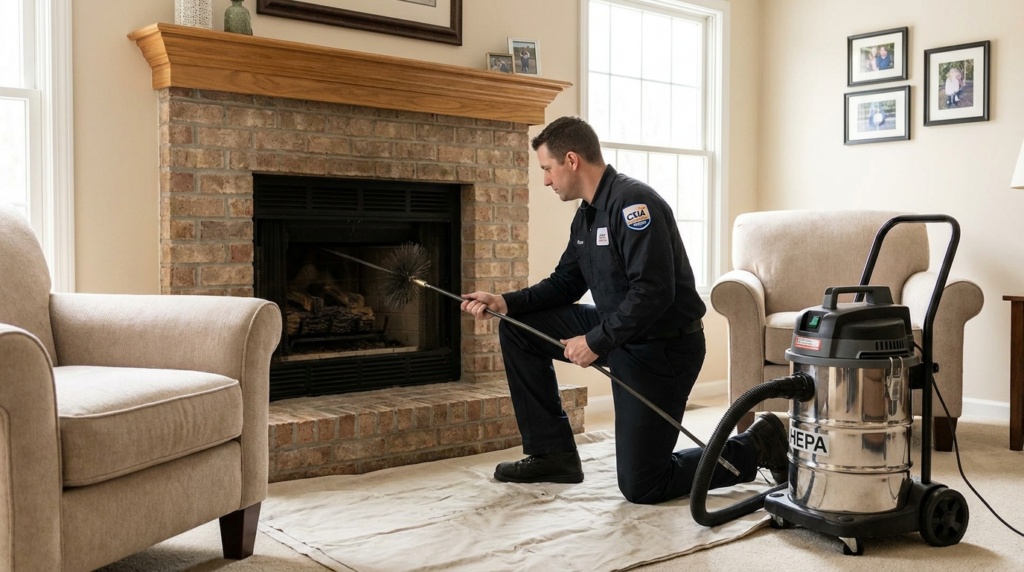
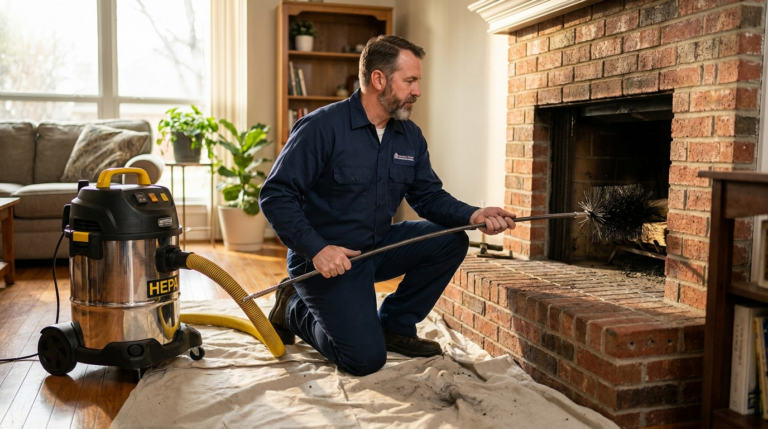
We use HEPA vacuums and drop cloths, so a proper cleaning leaves your hearth as clean as we found it. Honestly, if a company tracks soot across your floor, I would take that as a hint about how they handle the parts you cannot see.
Why Creosote Is the Whole Point
Most of what a sweep removes is creosote, and it helps to understand what that actually is. When wood burns, it releases smoke, water vapor, and unburned particles. As those gases cool on the way up a relatively cold flue, they condense and stick to the walls as creosote. It shows up in three rough stages: a light, dusty soot that brushes off easily, a crunchy flaky layer, and finally a hard, shiny glaze that is stubborn and very flammable. That third stage is the one that starts chimney fires.
The Chimney Safety Institute of America and the U.S. Fire Administration both tie the tens of thousands of chimney fires reported each year in the United States largely to creosote buildup and skipped maintenance. You do not need to memorize a statistic to get the point. Thick creosote plus a hot fire is how a routine winter evening turns into an emergency. A yearly sweep keeps the buildup from ever reaching that glazed stage.
The Step-by-Step Chimney Sweep Process
Knowing the sequence helps you tell whether a technician is doing the full job or cutting corners. Here is how a typical Fort Worth appointment runs.
- Setup and protection. Drop cloths go down around the hearth and the HEPA vacuum gets connected before any brush touches the flue. This part takes five or ten minutes and it matters more than it looks.
- Initial inspection. With a flashlight and often a camera, the tech sizes up the firebox, damper, smoke chamber, and flue to judge creosote levels and spot damage.
- Brushing the flue. Brushes matched to your flue dimensions work the liner top-down, bottom-up, or both, knocking loose the creosote and soot.
- Smoke chamber and shelf. These hidden spots get cleared next, since they trap the worst of the buildup.
- Firebox cleanup. Everything that was loosened gets vacuumed out of the firebox and hearth.
- Draft and damper test. The tech confirms the damper seals and the flue drafts the way it should.
- Final walkthrough. You get a written summary, any photos, and a straight answer, whether that is you are good for another year or here is something worth watching.
A straightforward wood-burning system usually runs 45 to 90 minutes. A two-story roofline, heavy glazed creosote, or a system nobody has touched in years can stretch it out.
How Much Does a Chimney Sweep Cost in Fort Worth?
Price comes down to the type of system, how much buildup has accumulated, and whether the tech finds something that needs attention. The table below reflects typical 2026 Fort Worth ranges.
| Service | Typical Fort Worth Cost | What It Covers |
|---|---|---|
| Standard sweep + Level 1 inspection | $150 – $350 | Full cleaning and basic safety check for a wood-burning fireplace |
| Gas fireplace cleaning | $100 – $200 | Cleaning and inspection of a gas system and its venting |
| Heavy creosote / neglected system | $300 – $500+ | Extra passes or chemical treatment for thick, glazed creosote |
| Sweep + Level 2 inspection (real estate / after an issue) | $300 – $600 | Cleaning plus a camera scan of the full flue |
ALC runs a $99.99 chimney sweep and inspection promo for standard single-fireplace systems, which covers the inspection, the fireplace cleaning, a creosote buildup check, and a written report. Two fireplaces? Our $189.99 double-chimney package handles both, and a repair inspection is free when you are chasing a specific problem. Whatever the number, ask for an itemized estimate before work starts. A reputable Fort Worth company gives you the figure up front and does not tack on surprises afterward.
One thing worth saying plainly: the cheapest quote is not always the real price. A $79 special that turns into a long list of add-ons the moment the tech arrives is a common bait tactic in this trade. I would rather you pay a fair flat rate and know exactly what you are getting.
How Often Do Fort Worth Homes Need a Sweep?
The National Fire Protection Association, in NFPA 211, recommends chimneys be inspected at least once a year and cleaned as needed. For most Fort Worth households that means an annual sweep. A few local factors shift the timing:
- How much you burn. Burn wood several nights a week all winter and you may need cleaning more than once a season. An occasional-use fireplace might stretch to every year or two on cleaning, but the annual inspection still applies.
- What you burn. Green or unseasoned wood throws off far more creosote than dry, seasoned hardwood. Our humidity swings can leave firewood damper than it looks, which surprises a lot of people.
- Fuel type. Gas fireplaces make almost no creosote but still need yearly service for venting, glass, and the occasional bird nest.
- Age and history. Older homes in established neighborhoods like Fairmount or Ryan Place often have systems that have been running for decades, and those benefit from a closer look.
How Fort Worth Weather Works Against Your Chimney
North Texas is rough on masonry in a way people from milder climates do not always expect. We get freeze-thaw cycles where an afternoon climbs above freezing and the night drops below it. Water that seeped into a hairline crack during the day freezes overnight, expands, and pries the crack a little wider. Repeat that a few dozen times over a winter and a small flaw becomes a real one. Add our humidity and the occasional hard storm, and moisture becomes the quiet enemy of every crown, cap, and mortar joint in the city. A sweep is the moment we usually catch that early damage, which is a big reason the visit is worth more than just the cleaning.
Warning Signs Your Chimney Needs a Sweep Now
Do not wait for the calendar if any of these show up:
- A strong tar-like or campfire smell from the fireplace, worse in humid weather.
- Smoke drifting back into the room instead of drawing up the flue.
- A black, oily, or flaky layer on the firebox walls or the damper.
- Fires that are hard to start or that just sit there and smolder.
- Soot or debris falling into the firebox for no obvious reason.
- Scratching, chirping, or nesting sounds that suggest an animal moved in.
Several of these overlap with draft or masonry issues, which is exactly why the inspection half of a sweep matters. If your problem is smoke or odor rather than plain dirt, a chimney inspection is the better way to pin down the cause.
Why Booking in Summer Beats Waiting for Fall
Every chimney company in North Texas gets buried the week that first front hits. Call in late October and you might wait two or three weeks and pay peak-season demand. Booking your Fort Worth sweep in July or August gets you:
- Faster scheduling and your pick of appointment windows.
- Time to fix anything the sweep turns up before you actually need a fire.
- No scramble on the first cold night, which, again, is when everyone else calls.
Summer is also when we catch the small stuff, a hairline crack in the crown or a loose cap, before the fall rains turn it into a leak. Handling it in the off-season is cheaper and a lot less stressful.
Wood vs. Gas: Does the Cleaning Differ?
| Factor | Wood-Burning | Gas |
|---|---|---|
| Creosote buildup | High; the main reason for the sweep | Minimal |
| Cleaning focus | Flue, smoke chamber, firebox | Glass, logs, venting, pilot assembly |
| Annual service needed? | Yes | Yes |
| Main risks if skipped | Chimney fire, smoke, carbon monoxide | Blockage, animal nests, faulty ignition |
Wood systems are the classic creosote sweep. Gas fireplaces burn clean, but the venting still needs a yearly check for blockages and safe operation, and it is easy to forget that. If a gas unit will not light or drafts poorly, our fireplace repair team handles the ignition and venting side of things.
Common Homeowner Mistakes to Avoid
- Waiting years between cleanings. “We barely use it” is precisely how glazed creosote and hidden moisture damage sneak up on people.
- Burning green or wet wood. More creosote, more smoke, less heat. Season your firewood at least six months.
- Skipping the cap. A missing or damaged chimney cap invites rain, debris, and animals, and blockages from all three are something we clear constantly.
- DIY brushing with no inspection. A store brush might pull some soot, but it will not warn you about a cracked flue liner or a failing crown, which is where relining or repair comes in.
- Ignoring the smell. Odor usually means creosote or moisture, and both get worse the longer you leave them.
Chimney Sweep vs. Chimney Inspection: What Is the Difference?
| Feature | Chimney Sweep | Chimney Inspection |
|---|---|---|
| Main goal | Remove creosote, soot, and blockages | Evaluate condition and safety |
| Includes cleaning? | Yes | No, evaluation only |
| How often | As needed, typically yearly for wood | At least annually per NFPA |
| Best for | Routine seasonal maintenance | Buying or selling, after a fire, or diagnosing a problem |
Most annual visits pair a sweep with a Level 1 inspection, which is why we bundle them. If you are buying or selling a Fort Worth home, or you have had a chimney fire or a stubborn draft problem, a Level 2 inspection with a camera scan is the right call.
Your Fort Worth Chimney Maintenance Checklist
- Schedule a professional sweep and inspection once a year, ideally in summer.
- Burn only seasoned hardwood dried at least six months.
- Keep a working chimney cap installed to block rain and animals.
- Watch for smoke, odor, or soot between cleanings.
- Test smoke and carbon monoxide detectors before burning season.
- Address small masonry or crown cracks before winter rain arrives.
- Keep anything flammable well clear of the hearth.
Why Fort Worth Homeowners Choose ALC Chimney Service
ALC Chimney Service is a family-owned, CSIA-certified team serving Fort Worth, Dallas, and the wider DFW metroplex. We bring more than 15 years of combined experience, over 10,000 completed jobs, and a 5.0 rating across 172 Google reviews. Our technicians are licensed and insured, they work to NFPA and CSIA standards, and they will give you a straight assessment. If your chimney does not need work, we say so, and honestly that is the thing our repeat customers mention most.
When you are ready, schedule a free inspection online or call (877) 656-0851 to book your sweep. We cover communities across North Texas, so if you are outside the city check our service areas, and Fort Worth residents can read more on our Fort Worth chimney services page.
Frequently Asked Questions
How much does a chimney sweep cost in Fort Worth, TX?
A standard chimney sweep in Fort Worth usually costs $150 to $350, with most homeowners paying around $200 to $250. Heavy creosote or a Level 2 camera inspection raises the price. ALC offers a $99.99 sweep-and-inspection promo for standard single-fireplace systems.
How often should I have my chimney swept?
For wood-burning fireplaces, once a year is standard, following NFPA guidance to inspect annually and clean as needed. Homes that burn frequently may need more than one cleaning per season, while gas fireplaces need annual servicing even though they make little creosote.
How long does a chimney sweep take?
Most Fort Worth chimney sweeps take 45 to 90 minutes. Heavy buildup, tall or complex chimneys, or years of neglect can take longer.
Is a chimney sweep messy?
It should not be. Professional sweeps use HEPA vacuums and drop cloths to contain dust, so a proper cleaning leaves your home as clean as it was found.
Can I sweep my own chimney?
You can remove some soot with a store-bought brush, but DIY cleaning misses hidden creosote in the smoke chamber and cannot evaluate flue cracks, crown damage, or draft problems. A certified sweep both cleans and inspects, which is what keeps the system safe.
When is the best time to book a chimney sweep in Fort Worth?
Late summer to early fall, before the burning season. Booking in July or August means faster scheduling, off-season availability, and time to fix anything the sweep uncovers before the first cold night.
Do gas fireplaces need to be swept?
Gas fireplaces produce little creosote, but they still need an annual service to clean the glass and logs, inspect the venting, and check for blockages or animal nests. It is a cleaning-plus-inspection rather than a heavy creosote sweep.
What happens if I never sweep my chimney?
Creosote keeps building until it can glaze and ignite, and blockages from nests or debris can push smoke and carbon monoxide back into the home. Skipping sweeps is one of the most common causes of preventable chimney fires, so an annual visit is cheap insurance.
About the Author
Jonathan is a CSIA-certified chimney specialist at ALC Chimney Service with more than 15 years of hands-on experience sweeping, inspecting, and repairing fireplaces and chimneys across Dallas and the DFW metroplex. He has worked on thousands of residential chimney systems and writes to help North Texas homeowners keep their fireplaces safe, efficient, and up to NFPA and CSIA standards. Have a question about your chimney? Call ALC Chimney Service at (877) 656-0851 for a free inspection.