Skip to content
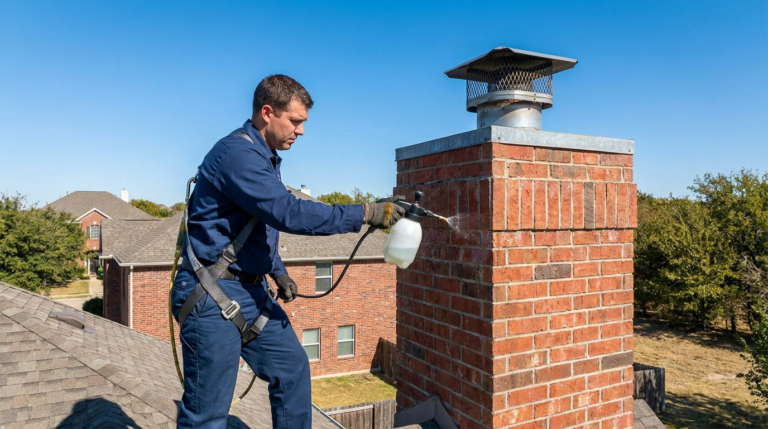
Chimney waterproofing in North Texas means applying a breathable, vapor-permeable water repellent to the exterior masonry so rain, storm runoff, and freeze-thaw moisture stay out of the brick and mortar. Done right, it keeps a Dallas-Fort Worth chimney from spalling, cracking, and leaking, and it usually costs far less than the repairs it prevents.
Why waterproof a chimney in North Texas?
Brick looks tough, but masonry is porous. It drinks water. Every chimney around Dallas, Fort Worth, and the surrounding suburbs spends its life exposed on all four sides, with no roof over it and no shade, and that constant exposure adds up faster than most homeowners expect.
Our weather here does not help. North Texas gets sudden spring and summer storms, wind-driven rain, the occasional hailstorm, and then those swings into a hard freeze in December or January. That last part is the real problem. When brick absorbs water and the temperature drops below freezing, the trapped moisture expands as it turns to ice. It pushes outward from inside the masonry. Thaw it, soak it, freeze it again, and you get the slow-motion damage sweeps call spalling, where the face of the brick flakes or pops off entirely.
People sometimes assume freeze-thaw is only a northern, snowy-climate issue. I used to think that too, honestly. But it is arguably worse in a place like DFW, because we bounce above and below freezing so many times each winter instead of staying frozen through. More cycles, more damage. Add our humidity and the heavy summer downpours, and a chimney that never gets sealed is basically soaking and drying on repeat for years.
Waterproofing is the cheap insurance policy against all of that. A quality water repellent lets the brick shed water instead of absorbing it, which slows spalling, protects the mortar joints, and keeps moisture from working its way into the flue and firebox.
What does water actually do to a masonry chimney?
Water damage rarely shows up all at once. It creeps. By the time you notice a stain on the ceiling near the fireplace, the moisture has usually been getting in for a while. Here is what it tends to attack, roughly in the order it becomes expensive.
First the brick face and the mortar. Spalling brick and eroded mortar joints are the classic signs, and once mortar starts washing out, water has an easier path deeper into the structure. Then the chimney crown, the concrete or mortar slab on top, which cracks and lets water pour straight down into the chimney. Water also loves the flashing, the metal seal where the chimney meets the roof, which is one of the most common leak points on the whole house. From there it reaches the flue liner, the damper (which rusts and can seize open or shut), and eventually the firebox and adjacent framing and drywall.
There is a safety angle too. A rusted damper that will not close tight wastes energy, and a damper stuck open on a gas appliance, combined with a compromised flue, can affect how combustion gases like carbon monoxide vent. Both the NFPA and CSIA push annual inspection partly for reasons like this. Waterproofing does not replace an inspection, but it removes the moisture that starts the chain reaction. If you already see interior leaks, a professional chimney repair in Dallas should come before any sealer goes on.
Signs your North Texas chimney needs waterproofing
- White, chalky staining on the brick (efflorescence), which means water is moving through the masonry and carrying salts to the surface.
- Brick faces that look flaky, pitted, or are popping off, which is active spalling.
- Crumbling or missing mortar between the bricks.
- A damp smell, water stains, or discoloration on the ceiling or wall near the fireplace.
- Rust on the damper or firebox.
- Hairline cracks in the chimney crown.
- The chimney is more than a few years old and has never been sealed.
If a few of those sound familiar, waterproofing is worth pricing out. If you are seeing active leaks inside, get an inspection first so you are not sealing water in behind a fresh coat.
How does chimney waterproofing work?
This is where product choice matters more than anything else, and it is where a lot of DIY jobs go wrong. Masonry needs to breathe. Brick naturally holds some vapor, and that vapor has to be able to escape. The right chimney waterproofing product repels liquid water from the outside while still letting interior vapor pass out through the surface. The industry term is vapor-permeable, and the common chemistry is a siloxane or silane-based repellent, the kind of formula sold specifically for chimneys.
The wrong products are the film-forming ones: standard silicone, acrylic sealers, paint, or a generic exterior “waterproofer.” They coat the surface and trap vapor inside the brick. In our freeze-thaw climate that trapped moisture has nowhere to go, so it freezes, expands, and actually accelerates the spalling you were trying to prevent. It is one of those cases where the cheaper hardware-store can makes the problem worse.
A good repellent soaks in and bonds with the masonry to create a hydrophobic surface without plugging the pores. Water beads and runs off. Vapor still escapes. That balance is the whole point.
| Feature | Vapor-permeable repellent (recommended) | Film-forming sealer (avoid) |
|---|---|---|
| Common types | Siloxane, silane | Silicone, acrylic, paint |
| How it works | Penetrates and bonds; brick still breathes | Coats the surface; seals pores |
| Vapor escape | Yes | No, traps moisture inside |
| Freeze-thaw effect | Reduces spalling | Can worsen spalling |
| Appearance | Clear, natural, no shine | Often glossy or plasticky |
| Typical lifespan | 7 to 10 years, often warrantied | Shorter, and it can peel |
What is the chimney waterproofing process, step by step?
A proper job is more than spraying a can and leaving. The prep is most of the work, and skipping it is why some sealer jobs fail in a season or two. Here is how our crews at ALC generally approach it, and how any careful contractor should.
The chimney has to be structurally sound and dry first. Sealing water into damaged masonry just locks the damage in. So we look at the crown, the flashing, and the mortar before anything else. If the flashing leaks or the crown is cracked, those get repaired first. A chimney cap installation or repair in Dallas often pairs well with waterproofing, since a good cap keeps rain out of the flue while the repellent handles the exterior walls.
| Step | What happens | Why it matters |
|---|---|---|
| 1. Inspection | Tech checks crown, flashing, mortar, brick, and cap | Confirms the chimney is sound before sealing |
| 2. Repairs | Fix cracked crown, failing flashing, missing mortar (tuckpointing) | You never want to seal water in behind damage |
| 3. Cleaning | Surface is cleaned of dirt, efflorescence, and debris | Repellent bonds to clean brick, not grime |
| 4. Drying | Masonry is allowed to dry out | Applying to wet brick traps moisture |
| 5. Crown coat | A flexible, waterproof crown sealant bridges hairline cracks | The crown is the number one water entry point up top |
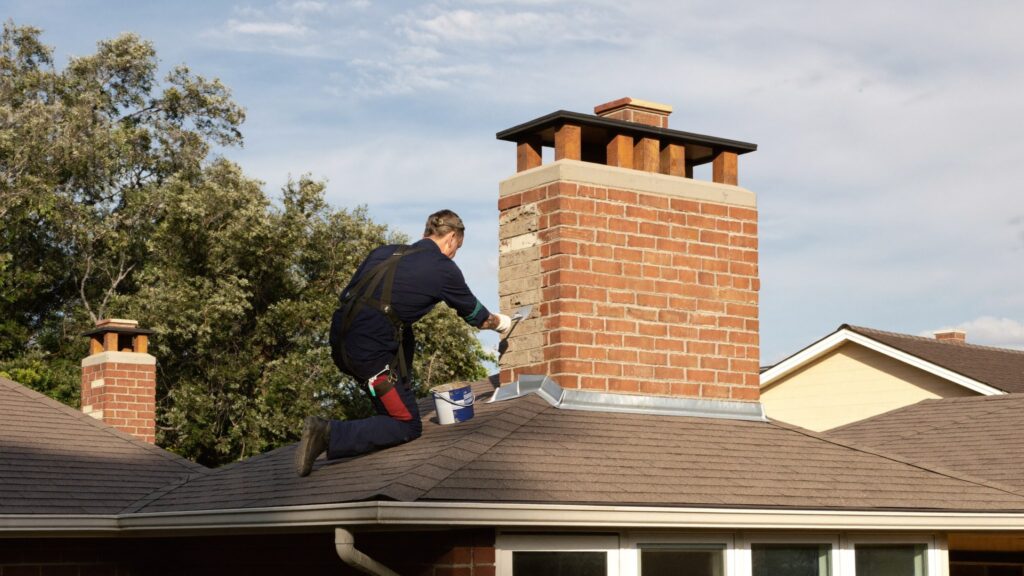
| 6. Repellent | Vapor-permeable water repellent applied in even coats, top to bottom | Creates the breathable, water-shedding barrier |
| 7. Cure | Product cures per manufacturer spec | Full water resistance takes time to set |
Most single-flue chimneys are a same-day job once any repairs are done. Weather matters, though. You want a dry stretch with no rain in the forecast for a day or so, which in North Texas usually means booking around, not during, storm season.
How much does chimney waterproofing cost in North Texas?
For a straightforward waterproofing treatment on a typical DFW chimney, most homeowners land somewhere in the low hundreds of dollars. The range widens quickly once repairs enter the picture, because a cracked crown or bad flashing is its own line item. The numbers below are typical ranges, and your exact price depends on chimney height, access, roof pitch, and condition.
| Service | Typical cost range | Notes |
|---|---|---|
| Water repellent application only | $150 to $450 | Sound chimney, standard single flue |
| Whole-chimney waterproofing (larger or tall chimney) | $500 to $1,200+ | Bigger surface area, harder roof access |
| Crown repair or crown coat | $150 to $600 | Often bundled with waterproofing |
| Flashing repair or replacement | $300 to $1,500 | Depends on complexity and roof type |
| Chimney cleaning (if needed first) | $130 to $380 | Sometimes required before sealing |
Two things worth knowing. First, waterproofing is one of the cheapest preventive services you can buy for a chimney, and it protects against repairs that run into the thousands, like partial rebuilds from years of spalling. A chimney rebuild in Dallas is exactly the kind of bill you are trying to avoid. Second, at ALC we offer a free repair inspection, so you can find out whether your chimney is even a good candidate before spending anything. Our $99.99 sweep and inspection special is also a convenient time to have the masonry looked at.
When is the best time to waterproof a chimney?
Late spring through summer, before the fall and winter, is the sweet spot in North Texas. A couple of reasons. The repellent needs dry masonry and a dry curing window, which is easier to get in the warmer, drier stretches between storms. And you want the protection in place before winter, when the freeze-thaw cycles do their worst. Sealing in, say, July means the chimney heads into December already shedding water.
There is also a scheduling reason. Fall is the busy season for every chimney company in DFW, because everyone remembers their fireplace the week it turns cold. Booking waterproofing in the off-season usually means shorter waits and easier appointments. If you are also due for a cleaning, bundling a chimney sweep in Dallas with the waterproofing visit saves a trip.
Can I waterproof my chimney myself, or should I hire a pro?
You can buy a chimney water repellent and do it yourself. Plenty of homeowners do. Whether you should depends on your comfort on a roof and your confidence in judging masonry. The product itself is not the hard part. The hard part is the ladder work at height, spotting whether the crown or flashing needs repair first, and getting even coverage without missing spots or over-applying.
The most common DIY mistake is not the application. It is grabbing the wrong product, a film-forming sealer, and trapping moisture in the brick. The second most common is sealing a chimney that had a hidden crown crack or a bad flashing joint, which just hides the leak for a while. A pro inspection catches both before the repellent goes on.
| DIY | Professional | |
|---|---|---|
| Upfront cost | Lower (product only) | Higher (product plus labor) |
| Product selection | Easy to pick the wrong one | Correct vapor-permeable repellent |
| Roof and height safety | Your risk | Trained, insured crew |
| Catches hidden damage | Usually not | Yes, inspection first |
| Warranty | None | Often 7 to 10 years |
| Best for | Newer, ground-accessible, sound chimneys | Most homes, especially older or tall chimneys |
If your chimney is older, tall, or showing any of the warning signs above, hiring out is the safer call. If you have older masonry across the DFW suburbs, from Plano to Fort Worth, a quick look by a certified tech is worth it. You can see the areas we cover on our locations page, and homeowners in cities like Fort Worth and Plano can book directly.
Before-you-waterproof homeowner checklist
- Walk the chimney (from the ground, with binoculars if needed) and note spalling, cracks, or missing mortar.
- Check the crown for cracks and the flashing line for gaps or rust.
- Look inside near the fireplace for stains, damp smells, or a rusty damper.
- Confirm the chimney is dry and rain is not in the forecast for the next day or two.
- Make sure any needed repairs happen first, before sealing.
- Choose a vapor-permeable siloxane or silane repellent, never a film-forming silicone or paint.
- Schedule a professional chimney inspection in Dallas if you are unsure about the condition.
How does waterproofing fit with the rest of your chimney system?
Waterproofing protects the exterior masonry, but a chimney is a system, and moisture that gets past a failing part shows up somewhere else. A cracked crown or a missing cap lets rain into the flue, which over time can damage the liner and lead to a chimney relining in Dallas. Water that reaches the firebox and the framing behind it can eventually turn into a fireplace repair in Dallas. So the exterior repellent is one layer of defense, and it works best when the crown, cap, and flashing are all doing their jobs. That is why a good waterproofing visit starts with an inspection of the whole system rather than just the walls. Think of it less as a single product and more as sealing off the last easy path water has into the brick, once everything else is sound.
Does homeowners insurance cover chimney water damage?
Usually not the kind caused by slow wear and lack of maintenance, which is how most masonry water damage happens. Insurers tend to treat gradual deterioration as a homeowner responsibility rather than a covered event. That is part of why preventive waterproofing makes sense: it is a small, predictable cost that helps you avoid the larger, often-uncovered repair bills down the line. Check your own policy for the specifics, since coverage varies.
Frequently Asked Questions
Is waterproofing a chimney really worth it?
For most North Texas homes, yes. Masonry absorbs water, and our freeze-thaw winters turn that absorbed water into spalling and mortar loss. Waterproofing costs a few hundred dollars and can push off repairs that run into the thousands. If your chimney is sound and unsealed, it is one of the better-value preventive services out there.
How long does chimney waterproofing last?
A quality vapor-permeable repellent typically lasts about 7 to 10 years, and many products carry a warranty in that range. Harsh sun, heavy storm exposure, and the age of the masonry can shorten it a little. Having it checked during your annual inspection is an easy way to know when it is time to reapply.
Will waterproofing stop an existing chimney leak?
Not on its own. If water is already getting in, the cause is usually a cracked crown, failed flashing, a missing cap, or open mortar joints. Those need to be repaired first. Waterproofing protects sound masonry from future absorption; it is not a patch for an active leak. Get an inspection and fix the source, then seal.
Does waterproofing change how the brick looks?
A proper repellent is clear and does not leave a shine, so the brick keeps its natural look. If a chimney ends up glossy or plastic-looking, that is a sign a film-forming sealer was used, which is exactly the product you want to avoid in a freeze-thaw climate.
Can you waterproof a chimney in winter?
It is not ideal. The masonry needs to be dry and the product needs a dry curing window, both harder to get in cold, damp conditions. That is why we recommend late spring through summer in DFW, so the protection is in place before the hard freezes arrive.
Do you need to clean the chimney before waterproofing?
The exterior surface always gets cleaned so the repellent can bond. Whether the flue needs a full sweep is separate and depends on use. If there is heavy creosote buildup or you are due anyway, it is convenient to combine a sweep with the waterproofing visit. A sweep handles the inside; waterproofing handles the outside.
How do I know if I have the freeze-thaw damage you keep mentioning?
Look for brick faces that are flaking, pitting, or popping off, and for mortar that is crumbling out of the joints. White chalky staining is another clue that water is moving through the masonry. Any of those, especially on an unsealed chimney, is a strong reason to have it evaluated.
Who does chimney waterproofing near me in Dallas-Fort Worth?
ALC Chimney Service handles waterproofing across Dallas, Fort Worth, and the DFW metroplex. We are family-owned, CSIA-certified, licensed and insured, with more than 15 years of combined experience, over 10,000 jobs completed, and a 5.0 rating from 172 Google reviews. Call (877) 656-0851 for a free repair inspection, or reach us through our contact page.
About the Author
Jonathan is a CSIA-certified chimney specialist at ALC Chimney Service with more than 15 years of hands-on experience sweeping, inspecting, and repairing fireplaces and chimneys across Dallas and the DFW metroplex. He has worked on thousands of residential chimney systems and writes to help North Texas homeowners keep their fireplaces safe, efficient, and up to NFPA and CSIA standards. Have a question about your chimney? Call ALC Chimney Service at (877) 656-0851 for a free inspection.
Find our chimney safety tips faster on Google