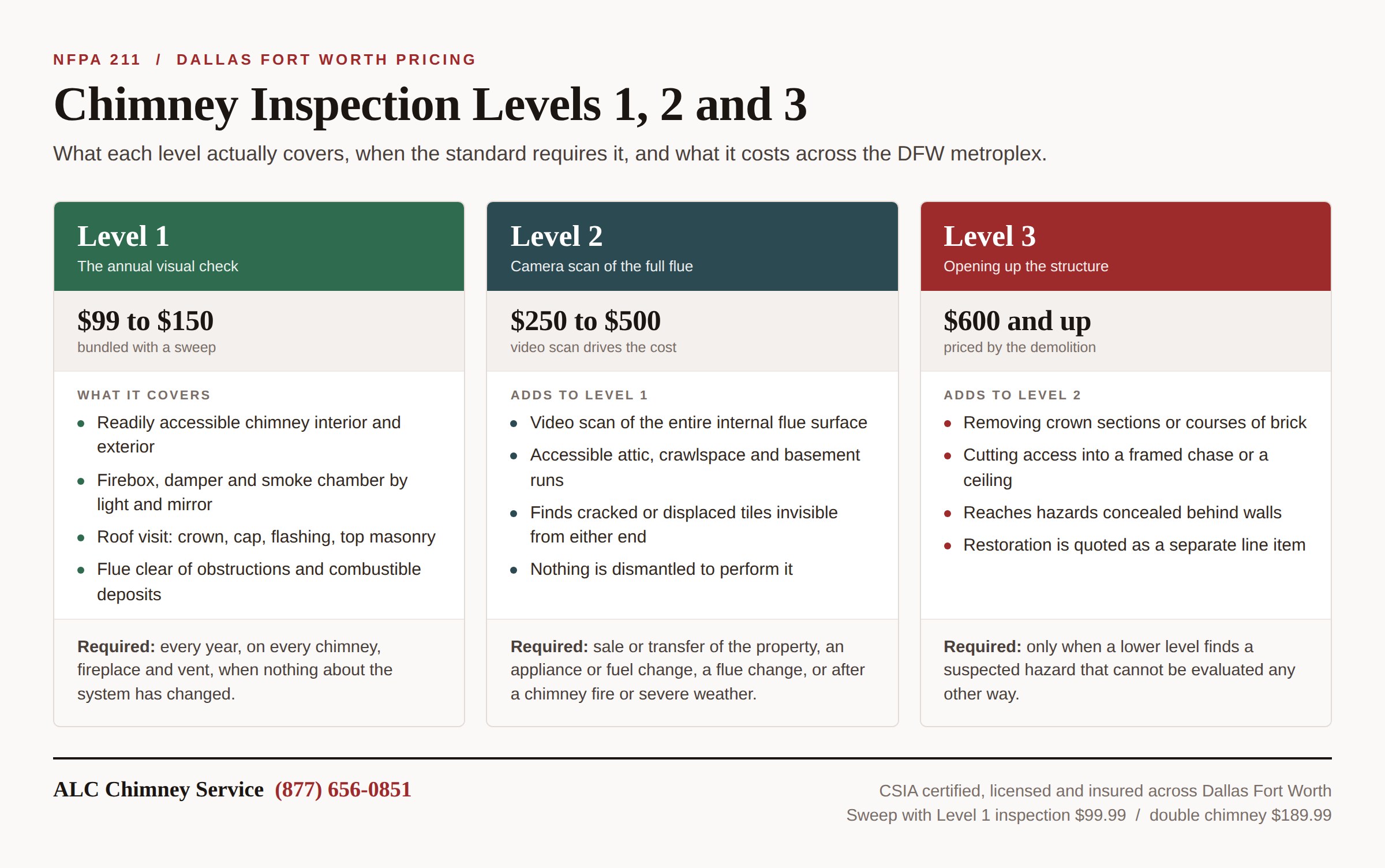
A Level 1 chimney inspection is the basic annual visual check, and across the Dallas Fort Worth area it runs about $99 to $150 when bundled with a sweep. A Level 2 adds a video scan of the entire flue interior plus a look at the attic, crawlspace and accessible exterior, and it typically runs $250 to $500. A Level 3 is the rare one, where a technician has to remove masonry, open a framed chase or cut into a ceiling to reach a hazard that cannot be seen any other way, and it starts near $600. ALC Chimney Service includes a Level 1 inspection with the $99.99 chimney sweep. Which level you need comes down to whether the system has changed, whether the property has changed hands, and whether a technician has already found something he cannot fully see.
What each chimney inspection level costs in North Texas, and what moves the number:
- Level 1 inspection, $99 to $150. Almost always sold with a sweep. The range moves with chimney height, roof pitch and whether the crown is reachable from a ladder or needs a walk on a steep two story roofline.
- Level 2 inspection, $250 to $500. The camera scan drives the cost. A straight flue on a single story ranch in Garland sits at the low end, while a tall offset flue in an older Preston Hollow home, or a house with three separate flues, pushes toward the top.
- Level 3 inspection, $600 to $2,500 and up. Priced by the demolition rather than by the looking. Pulling a few courses of brick off a crown is one number, and opening a framed chase or a finished ceiling is another. Restoration is quoted separately.
- Second flue on the same visit, $60 to $190. Plenty of larger Frisco and Southlake builds have a second hearth or a gas appliance sharing the stack. ALC charges $189.99 for a double chimney sweep with inspection.
- Repair inspection, free at ALC. If you already know something is wrong and want a repair quote, a technician comes out at no charge and no trip fee inside the service area.
The components a technician is grading, in plain language:
- Flue. The open passage inside the chimney that carries smoke and combustion gases out of the house.
- Liner. The clay tile, metal or cast in place surface forming the inside wall of the flue, keeping heat and acidic byproducts off the brick and framing.
- Smoke chamber. The sloped transition above the damper that funnels smoke from the wide firebox into the narrow flue. It collects creosote faster than anything else.
- Damper. The metal plate that opens and closes the flue. Stuck open it bleeds conditioned air year round, stuck closed it fills the room with smoke.
- Chimney crown. The sloped concrete slab on top of a masonry chimney that sheds water away from the brick. Not the same thing as the cap.
- Chimney cap. The metal lid and mesh screen over the flue opening that keeps rain, leaves and animals out and stops embers landing on the roof.
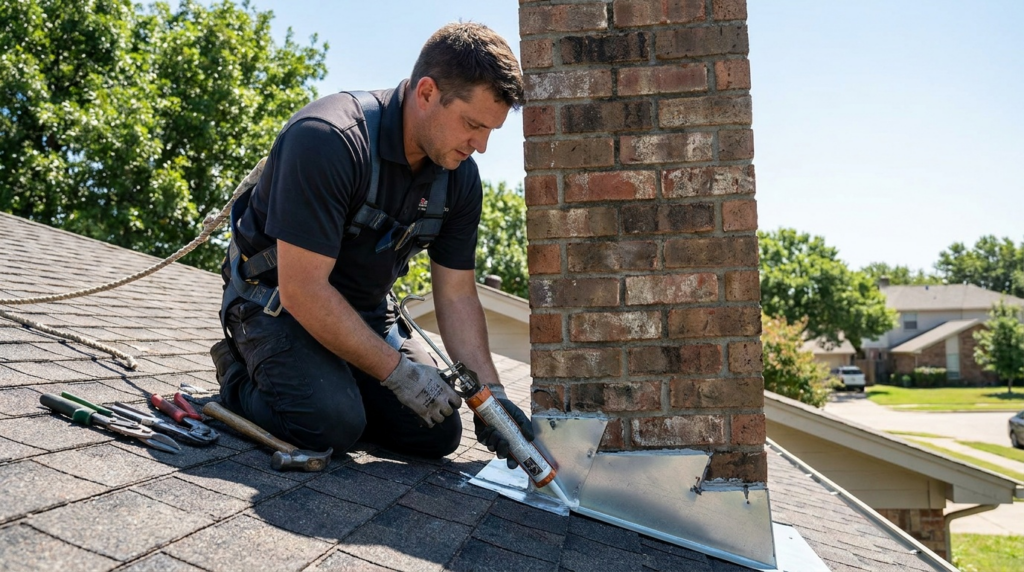
- Flashing. The layered metal seal where the chimney passes through the roof, and the most common source of a chimney leak in North Texas.
- Creosote. The tar like residue that condenses on the flue wall when wood smoke cools. It is the fuel in almost every chimney fire.
Treat every figure above as a starting point rather than a quote. Pricing swings with access, height, the age of the masonry and what shows up once the smoke chamber is clean enough to see, so a CSIA-certified professional needs to put eyes on the system before anyone commits to a number. Be careful with the $39 and $49 sweep coupons that fill DFW mailboxes every September, because that price does not cover a technician’s drive time and an hour on a roof, which means the visit has to produce a sale to be worth running.
Key Takeaways
- NFPA 211 defines three chimney inspection levels and calls for at least an annual Level 1 inspection on every chimney, fireplace and vent in the home.
- A Level 1 covers readily accessible components only, and in DFW it runs $99 to $150 bundled with a sweep.
- A Level 2 is required whenever the system changes, the property is sold or transferred, or the chimney survives a chimney fire or a severe weather event.
- A Level 2 always includes video scanning of the full flue interior plus accessible attic and crawlspace areas, and runs $250 to $500 in North Texas.
- A Level 3 happens only when a lower level finds a hazard that cannot be evaluated without removing part of the chimney, and it starts around $600 before restoration.
- June through September is the right booking window, because the first cold front in October fills every chimney calendar in DFW for six weeks.
What does a Level 1 chimney inspection actually cover?
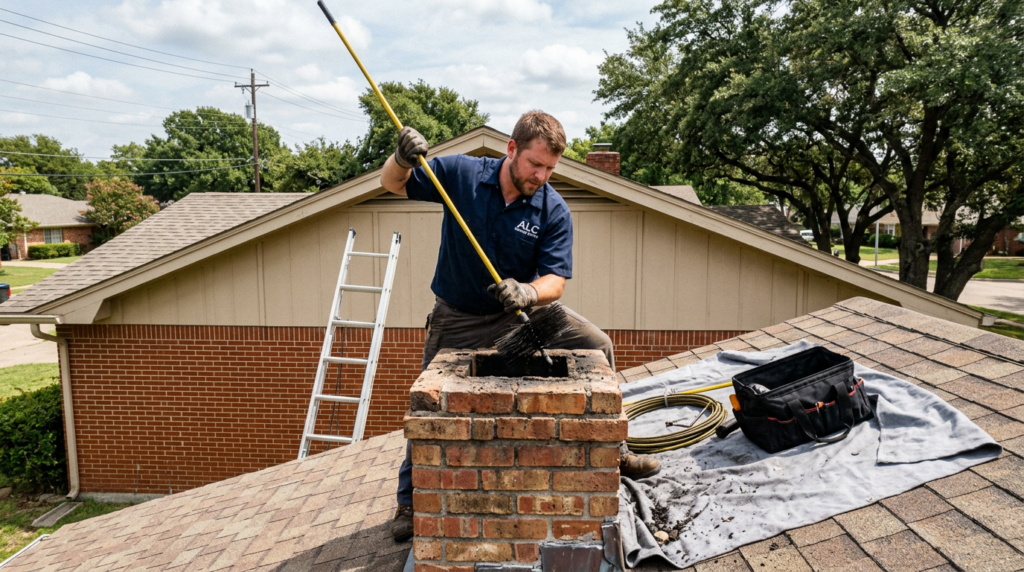
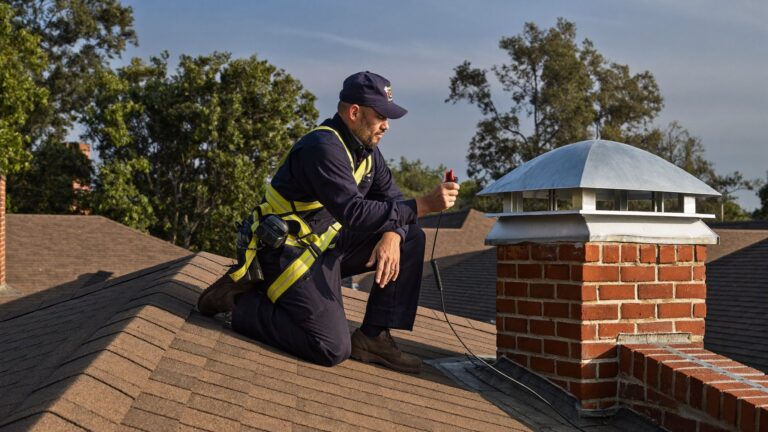
A Level 1 covers the readily accessible portions of the chimney exterior and interior, the accessible parts of the appliance, and the connection between them. The technician examines the firebox and damper from inside the room, checks the smoke chamber and visible flue with a light and a mirror, then goes up on the roof for the crown, the cap, the flashing and the top courses of masonry. He is verifying that the structure is sound, that the flue is clear of obstructions and deposits, and that clearances are correct.
What a Level 1 does not do is look into parts of the system hidden behind walls or above ceilings, and nothing gets opened up. That is deliberate, because the standard is built so the least invasive inspection is enough for a chimney that has not changed since the last visit. For most North Texas homeowners burning ten or fifteen fires between Thanksgiving and the last February cold snap, it is sufficient, and it catches what actually goes wrong here: a cracked crown, a rusted cap, failing flashing and a smoke chamber loading up with glazed creosote.
Does a Level 1 include getting on the roof?
It should. What you see from the ground on a two story Frisco or Flower Mound home is a fraction of the system, and the crown, cap and flashing are where North Texas weather does its damage. A technician who never leaves the living room has not inspected the chimney.
When is a Level 2 chimney inspection required?
NFPA 211 is specific here, and knowing it protects you in a transaction. A Level 2 is required upon the addition or removal of a connected appliance, upon a change in fuel type or in the shape or material of the flue, before the sale or transfer of the property, and after any event that could have damaged the chimney. That last clause carries real weight in Texas, since it covers chimney fires, lightning, hail, straight line winds and the kind of multi day freeze that split masonry across the metroplex in February 2021.
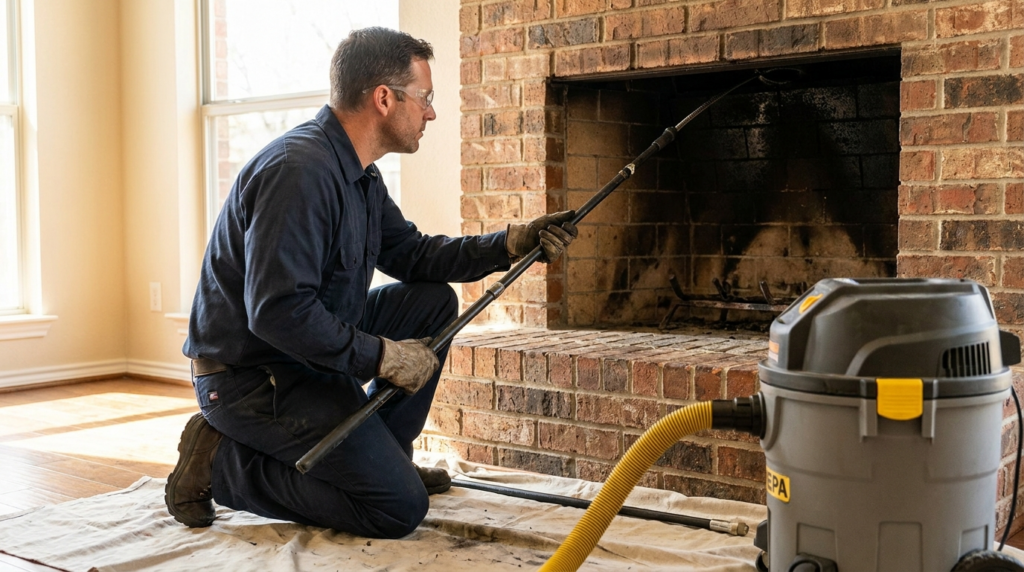
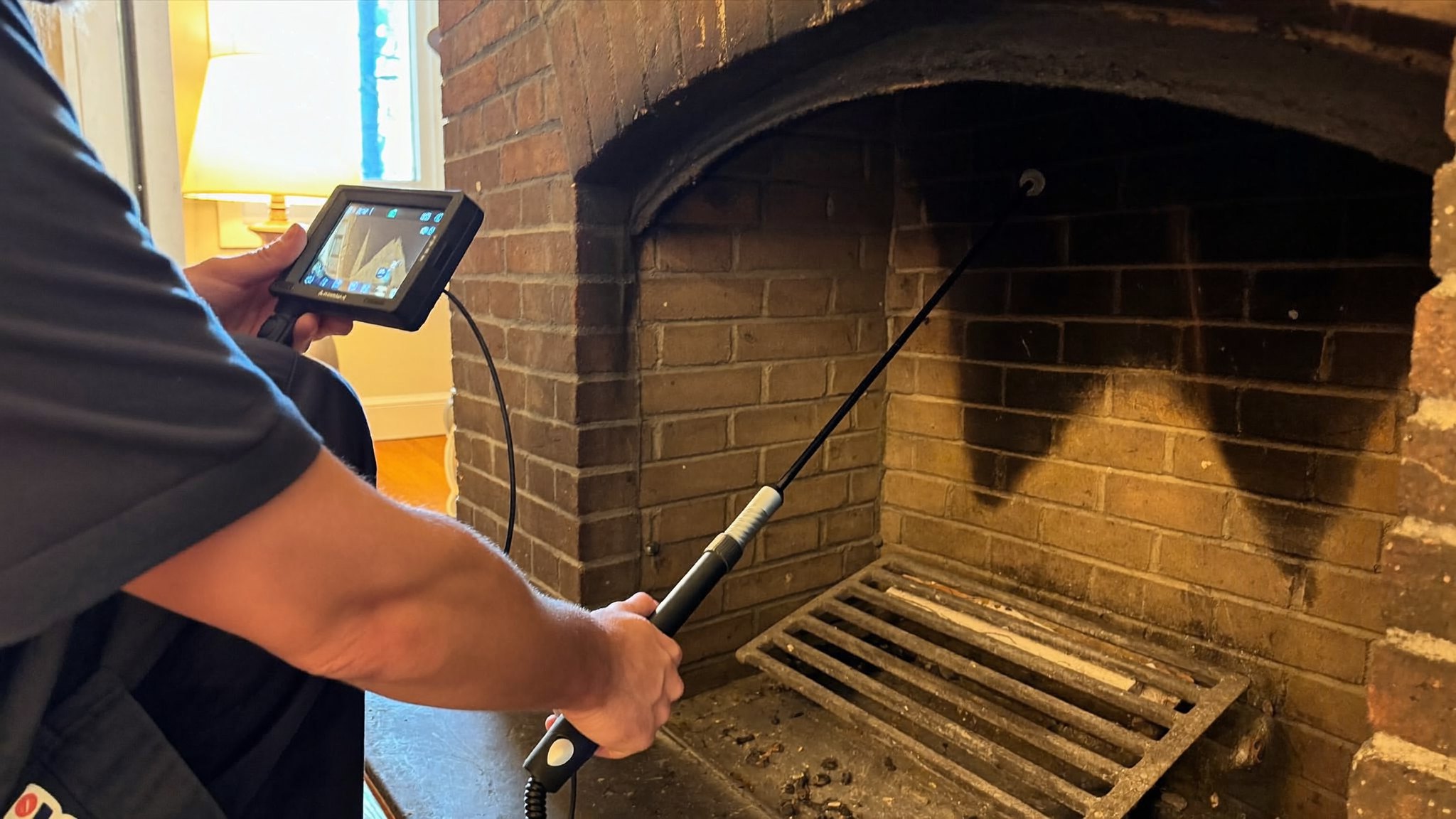
A Level 2 includes everything in a Level 1, plus accessible attic and crawlspace areas where the chimney passes through, plus a video scan of the entire internal flue surface. The camera is the whole point, because flue tiles crack in ways that are invisible from either end of the chimney and a hairline gap behind a wall is how a chimney fire reaches framing lumber. ALC handles these through our chimney inspection service in Dallas TX, and the report includes camera stills so you are not taking anyone’s word for it.
Do I need a Level 2 inspection to sell my house in Texas?
Texas has no statewide law forcing one at closing, but NFPA 211 calls for a Level 2 on sale or transfer, and most general home inspectors flag the fireplace as beyond their scope. Buyers in Collin and Denton County have gotten more insistent about it, and a clean report before you list is far cheaper than a repair credit negotiated in the last week of an option period.
What does the camera find that a flashlight misses?
Cracked and displaced flue tiles, washed out mortar joints, gaps where two flues share a wall, offsets packed with glazed creosote, and separation between a metal liner and the connector. In Dallas homes built before 1950 with unlined brick flues, the camera routinely shows joints open enough to see attic insulation through the flue wall, and that is the finding that turns into a chimney relining job.
What happens during a Level 3 chimney inspection?
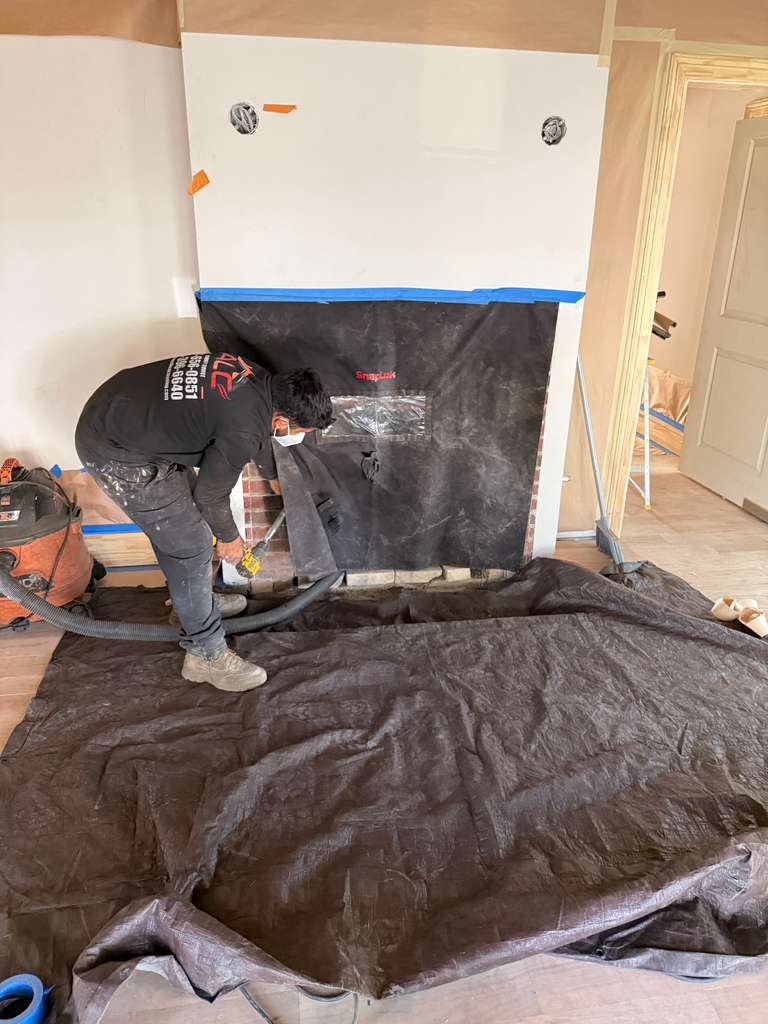
A Level 3 follows when a lower level has already found something worrying and there is no way to see the rest of it without taking part of the structure apart. That might mean removing a section of crown, pulling brick to expose a suspected breach, cutting an access opening in a framed chase, or removing drywall where a concealed flue passes through the house. Getting to the thing being inspected is what makes it expensive.
These stay uncommon, and across a normal year the overwhelming majority of our work is Level 1 and Level 2. A Level 3 usually follows a chimney fire where the camera shows a breach running behind a wall, a leak or smoke odor nothing else has explained, or a chimney that has visibly moved because the expansive clay soil under it has shifted, which is common through Dallas, Rockwall and eastern Collin County. Any honest company treats it as a two step conversation: first you agree on what gets opened and what opening it costs, then you get a separate quote for the chimney repair work in Dallas once the technician can see the actual condition.
Who pays to put the chimney back together?
The homeowner does, unless an insurance claim covers it. Restoration is its own line item, and rebuilding an opened section of masonry commonly lands between $800 and $3,000 depending on how much came off and whether the brick can be matched. If a storm or a chimney fire triggered the Level 3, get your carrier involved before work starts, because the documented report is what makes the claim.
How much do chimney inspection levels cost in Dallas Fort Worth?
The inspection itself is rarely the expensive part. A Level 1 bundled with a sweep sits between $99 and $150 across most of the metroplex, a Level 2 with camera work runs $250 to $500, and a Level 3 starts near $600 for the access work alone. What varies far more is what gets found, which is the argument for the annual cadence: catching a hairline crack in a crown at $99 beats replacing water damaged framing three winters later.
The house matters more than the zip code. A 1970s single story in Richardson with a straight masonry flue and a shallow roof is a faster job than a 2004 two story in Prosper with a tall framed chase and a prefab firebox. Height, pitch and access drive labor, and so does the number of flues, since many larger DFW builds vent a fireplace, a furnace and a water heater through one stack. Our Dallas chimney sweep pricing breakdown goes service by service if you want the wider view.
Why are the coupon prices so much lower?
Because they are not selling an inspection. The pattern is consistent: a quick look, an alarming photo of something that may or may not be from your chimney, and a five figure rebuild quote with a discount that expires today. Ask for the level designation and the camera footage, then get a second opinion. A legitimate Level 2 report should be portable to any other CSIA-certified company.
How often does NFPA 211 say a chimney should be inspected?
Annually. The standard calls for chimneys, fireplaces and vents to be inspected at least once a year for soundness, freedom from deposits and correct clearances, with cleaning and repairs as needed. That holds whether you burned forty fires or four, and it applies to gas appliances as well as wood.
The annual cadence holds for light users because most of what goes wrong on a North Texas chimney has nothing to do with burning. Water is the real enemy. Spring hail perforates chase covers across Tarrant County every year, and the freeze thaw cycles we now get several times a winter drive water into brick and pop the faces off. None of that is visible from your living room and all of it is cheap to fix early.
What if I only burn a few fires a winter?
You still need the annual inspection, but you may not need a sweep every year. Sweeping is driven by deposit thickness, and CSIA guidance points to cleaning when creosote reaches roughly one eighth of an inch, so a light burner might go two seasons between sweeps. Our guide to creosote buildup in Texas chimneys covers the three stages and why glazing changes the answer.
Do gas fireplaces and gas logs need inspections?
Yes, and they get skipped constantly. Gas appliances make no creosote, but they produce moisture and mild acids that eat clay tile and corrode metal liners, and a blocked or deteriorated flue on a gas appliance is a carbon monoxide problem rather than a fire problem.
What do North Texas conditions do to a chimney between inspections?
DFW is unusually hard on masonry for a climate that barely gets winter, and the damage comes from swing rather than cold. A crown that bakes at 105 degrees in August and then takes a 25 degree night in January expands and contracts far more than one in a steady climate, and every cycle widens the cracks already there. Water sitting in those cracks expands about nine percent when it freezes and pops the faces off the brick, which is the spalling we saw across the whole metroplex after February 2021.
Housing stock matters too. Collin and Denton County homes built after 1990 mostly have prefabricated fireboxes inside framed chases with sheet metal chase covers, and those covers rust through from the inside and dump water down the flue exterior for years before a ceiling stain appears. Older Dallas neighborhoods like Lakewood and the M Streets have the opposite problem, with 1920s masonry flues never built for the way people burn today.
How does hail season affect the cap and chase cover?
Hail through March, April and May dents galvanized chase covers into a shape that ponds water instead of shedding it, and ponding rusts them through. Caps get knocked askew or lose their mesh, which opens the flue to rain and to the birds and squirrels that nest in DFW chimneys every spring. Both are inexpensive next to what they prevent, and our page on chimney cap installation and repair covers the options.
| What the inspection finds | What it leads to if ignored | Typical DFW repair cost |
|---|---|---|
| Cracked chimney crown | Water into the brick and down the flue, spalling, ceiling stains | $300 to $1,200 |
| Missing or damaged chimney cap | Rain in the flue, animal nesting, embers on the roof, rusted damper | $150 to $600 |
| Failed flashing at the roofline | Leaks into the attic and wall cavity, rotted framing, drywall damage | $300 to $900 |
| Stage three glazed creosote | Chimney fire, cracked flue tile, damage to adjacent framing | $400 to $1,500 to remove |
| Cracked or displaced flue tiles | Heat and gases reaching framing, carbon monoxide entering the house | $2,500 to $5,000 to reline |
| Rusted through chase cover | Years of concealed water damage inside a framed chase | $400 to $1,200 |
| Deteriorated mortar joints | Progressive spalling, a leaning stack, eventual partial rebuild | $500 to $2,000 tuckpointing |
Why Choose ALC Chimney Service for Your Inspection in DFW?
ALC Chimney Service is a family owned company working across Dallas, Fort Worth and the surrounding metroplex, and our technicians are CSIA certified, licensed and insured. We bring more than 15 years of combined experience and more than 10,000 jobs across DFW, which is why we can tell the difference between a chimney that needs a $200 cap and one that genuinely needs a rebuild. We hold a 5.0 rating from more than 172 Google reviews.
The pricing is deliberately plain. A sweep with a Level 1 inspection is $99.99, a double chimney is $189.99, and if you already know something is wrong the repair inspection is free, with no trip fees anywhere in our service area. When a job needs to escalate to a Level 2 or a Level 3, we tell you why and what it costs before we do it. We work to NFPA 211 and CSIA standards because those are the documents an insurance adjuster and a real estate inspector will reference.
Frequently Asked Questions
What is the difference between a chimney sweep and a chimney inspection?
A sweep is the physical cleaning that removes creosote, soot and debris from the flue and smoke chamber. An inspection is the assessment of whether the system is safe and sound. They are sold together because the chimney has to be clean before anyone can see the liner underneath, but they are separate services, and a company that only cleans has not inspected anything.
How much is a chimney inspection in Dallas?
A Level 1 inspection bundled with a sweep runs $99 to $150 across the Dallas Fort Worth area, with ALC at $99.99 for a single chimney and $189.99 for a double. A Level 2 with a full video scan of the flue runs $250 to $500, and a Level 3 that requires opening part of the structure starts near $600 before any restoration work.
Is a Level 2 chimney inspection worth it?
If you are buying or selling, if you have had a chimney fire, if you changed the appliance or the fuel, or if the chimney has been through a significant storm, then yes, and NFPA 211 requires it. If nothing has changed and the system was inspected last year, a Level 1 is appropriate and a Level 2 is optional.
How long does a chimney inspection take?
A Level 1 with a sweep takes roughly 45 to 90 minutes on a single flue. A Level 2 usually runs 90 minutes to two and a half hours because of the camera work and the attic and crawlspace access. A Level 3 depends on what has to be opened, and it often becomes a multi day job once repairs are added.
Can I inspect my own chimney?
You can do a useful visual check from the ground and from inside the firebox. Look for a leaning stack, missing mortar, a rusted or missing cap, ceiling staining near the chimney, a damper that will not move freely, and a strong odor in summer. What you cannot do from there is grade the flue interior or verify clearances to combustibles.
Will my homeowners insurance cover chimney damage?
It depends on the cause. Sudden events such as a storm, hail, lightning or a chimney fire are commonly covered, while gradual deterioration and deferred maintenance generally are not. That distinction is why a dated inspection report matters. Get the inspection documented before you file, and talk to your adjuster before any repair work begins.
If more than a year has passed since anyone looked at your chimney, or you are buying, selling or changing your fireplace, get it on the schedule while the summer window is open. ALC Chimney Service does a full sweep with a Level 1 inspection for $99.99, $189.99 for a double chimney, with a free inspection if you already know you need a repair and no trip fees in the DFW service area. Call (877) 656-0851 or reach us through the ALC contact page to book, and you get a written report with photos whether or not anything needs fixing. Standards referenced here come from NFPA 211 and the Chimney Safety Institute of America.
Find our chimney safety tips faster on Google