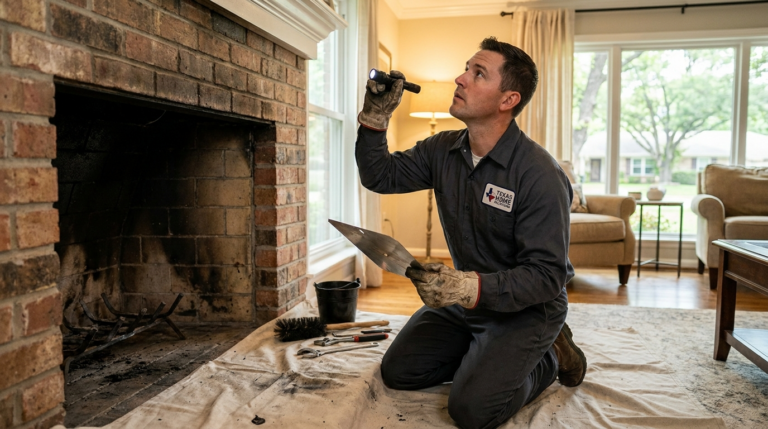
Chimney damper replacement is the job of removing a worn, rusted, or stuck damper and fitting a new one so your fireplace seals tight and vents safely. In the Dallas and DFW area, most North Texas homeowners pay somewhere between $250 and $700 installed, depending on whether you choose a throat damper or a top-mount unit. If yours will not open, will not close, or leaks air year round, it is time.
What a chimney damper actually does
The damper is a metal door inside your chimney. When you open it, smoke and combustion gases have a clear path up and out. When you close it, it seals the flue so warm household air does not escape up the chimney and cold outside air does not pour back down. That is the whole job, and it sounds simple, but a damper that no longer seats properly quietly costs you money every single month.
Here in North Texas the seasons are hard on this one small part. Summers are humid, winters bring sudden hard freezes, and the freeze-thaw swings work moisture into any gap in the masonry. Water is the enemy of a cast-iron damper. It rusts the plate, it corrodes the hinge, and after enough cycles the thing warps just enough that it will not close flush anymore. I have seen dampers in ten-year-old Frisco homes look worse than dampers in fifty-year-old Dallas bungalows, mostly because of where the rain was getting in.
A damper that will not seal is also a comfort and safety issue, not only an energy one. An open flue can let a downdraft push smoke, soot, and in the worst case carbon monoxide back into the room. It can also invite rain, debris, and the occasional squirrel. If you have ever dealt with animals getting into the flue, a failed damper is often part of the reason they got a foothold.
The main types of chimney dampers
There are two families of damper, and knowing which one you have (or want) changes the price, the install, and how well your chimney seals. Perhaps the most useful thing to understand up front is that they sit in completely different places on the chimney.
Throat dampers
A throat damper is the traditional design. It is a cast-iron plate mounted just above the firebox, right where the opening narrows into the flue. You work it with a handle, a lever, or a small chain you reach up and pull. Most older DFW homes have one of these. They are inexpensive and they do the basic job, but the metal-on-metal seat never seals perfectly, and after years of heat and moisture it seals even less. When a throat damper fails, it usually fails by rusting, sticking, or losing a piece of the operating mechanism.
Top-mount (top-sealing) dampers
A top-mount damper sits at the very top of the chimney instead of down at the throat. It combines two jobs in one: it works as a damper and it caps the flue like a chimney cap. A cable runs down the flue to a mounting bracket in the firebox, and you pull it to open or close. The big advantage is the seal. A silicone or rubber gasket presses closed and gives you an airtight fit, far tighter than any throat plate can manage. That means less lost heat in winter, less lost cool air in summer, and a built-in barrier against rain and animals. They cost more, but for a lot of homeowners the tighter seal pays for itself.
| Feature | Throat damper | Top-mount damper |
|---|---|---|
| Location | Just above the firebox | Top of the chimney |
| Seal quality | Metal on metal, moderate | Rubber or silicone gasket, airtight |
| Doubles as a cap | No | Yes |
| Keeps out rain and animals | No | Yes |
| Typical installed cost | $250 to $450 | $400 to $700 |
| Typical lifespan | 15 to 20 years with care | 20 plus years |
| Best for | Budget repairs, keeping the original design | Better sealing, homes that also need a cap |
Which type is right for your home?
If your throat damper is basically sound and you just need it working again, replacing like for like is the cheaper path and it keeps the fireplace the way it was built. If you are already fighting drafts, moisture, or missing a cap, moving to a top-mount is often the smarter money. It solves three problems at once. I usually tell people this: if you were going to buy a chimney cap anyway, a top-sealing damper is not that much more, and you get the better seal for free, more or less.
How do I know if my chimney damper is failing?
Some damper problems announce themselves. Others are subtle and you only notice the effect on your energy bill. Here is a homeowner checklist of the warning signs worth paying attention to:
- The damper will not open, or will not close, or is stuck partway.
- You feel a cold draft coming down the chimney when the fireplace is not in use.
- The room smells of soot or smoke even when nothing is burning.
- Smoke pushes back into the house when you light a fire.
- You hear rattling, whistling, or metallic clanking from inside the flue.
- Heating and cooling bills have crept up with no other explanation.
- You can see rust flakes, corrosion, or a warped plate when you look up past the firebox with a flashlight.
- The handle or chain feels loose, gritty, or comes away in your hand.
Any one of these on its own might just mean the damper needs cleaning and a little hardware attention. Two or three together usually points to replacement. A stuck damper in particular is a fairly clear signal, because once the plate or hinge has seized, cleaning rarely brings it back for long.
What causes a damper to fail in the first place?
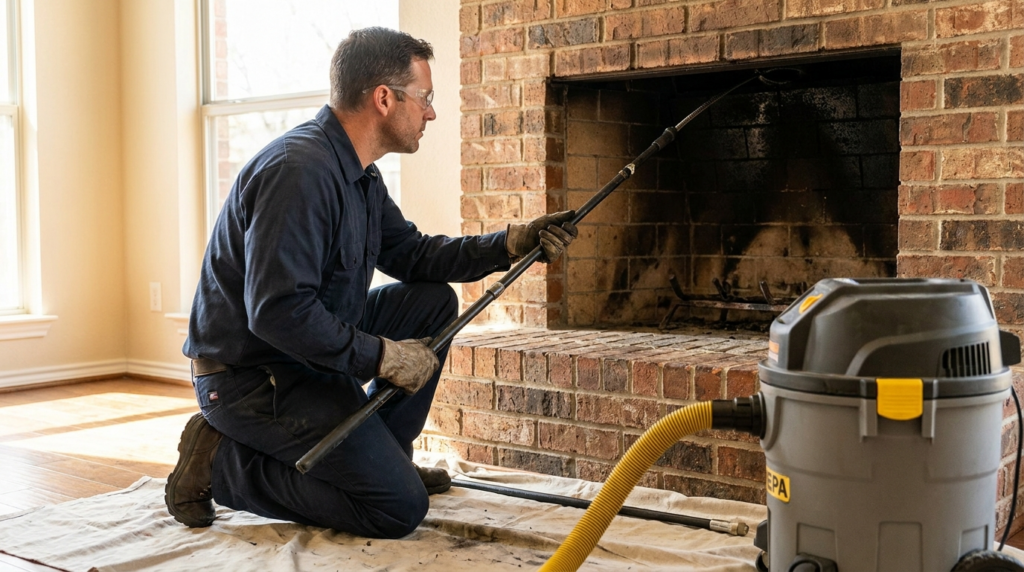
Rust and corrosion do most of the damage. A damper is metal sitting in a damp, sooty environment, and the moment water gets past the crown or the cap, the clock starts. Creosote is a factor too. That sticky, tar-like residue from burning wood builds up on the plate and the seat, and eventually it gums the mechanism so the damper cannot seat cleanly. This is one more reason an annual professional chimney sweep matters, since removing creosote keeps the damper moving freely.
Then there is the freeze-thaw cycle, which North Texas gets more of than people expect. Water works into tiny cracks, freezes overnight, expands, and thaws by afternoon. Do that a few dozen times a winter and metal warps and masonry spalls. A cracked chimney crown or failed flashing lets even more water reach the damper, which is why damper trouble and water trouble so often show up together. If your flue liner is also compromised, the whole system needs a look, and that can lead into chimney relining rather than a simple damper swap.
Repair or replace? How to decide
Not every damper problem means a full replacement. Sometimes a good cleaning frees a sticky plate. Sometimes the hinge pin or the operating handle is the only thing that has failed, and swapping that part restores the damper for years. The deciding factor is the condition of the plate and the frame. If those are sound, repair. If they are rusted through, warped, or cracked, replace.
| What you are seeing | Likely fix |
|---|---|
| Damper sticks but the plate looks solid | Cleaning and lubrication, minor hardware repair |
| Handle, chain, or hinge broken, plate intact | Replace the failed part, keep the damper |
| Plate rusted through or warped | Full damper replacement |
| Poor seal plus you also lack a cap | Upgrade to a top-mount damper |
| Damage from long-term water intrusion | Replace damper and address the crown, cap, or flashing |
An honest inspection settles it quickly. This is the kind of thing our techs check as part of a standard annual chimney inspection, and ALC offers a free repair inspection, so you are not paying just to find out what you are dealing with.
How much does chimney damper replacement cost in DFW?
Price depends mostly on the damper type and how hard the old one is to remove. A throat damper is the cheaper route. A top-mount costs more up front but seals better and includes the cap function. Labor in the DFW market is reasonable compared with the coasts, though a chimney that needs scaffolding or a difficult roof access will add to it. The ranges below are typical, not a quote, and I would treat them as a starting point rather than a promise.
| Service | Part cost | Typical installed cost (DFW) |
|---|---|---|
| Throat damper replacement | $150 to $250 | $250 to $450 |
| Top-mount damper replacement | $250 to $500 | $400 to $700 |
| Damper hardware repair (handle, hinge) | $30 to $90 | $120 to $250 |
| Damper cleaning and adjustment only | Minimal | Often folded into a sweep |
One practical tip: if your chimney is due for a cleaning anyway, bundling the damper work with a sweep and inspection usually saves you a trip charge. ALC runs a $99.99 sweep and inspection special, and a lot of damper issues get spotted and quoted during that visit.
What does the replacement process look like?
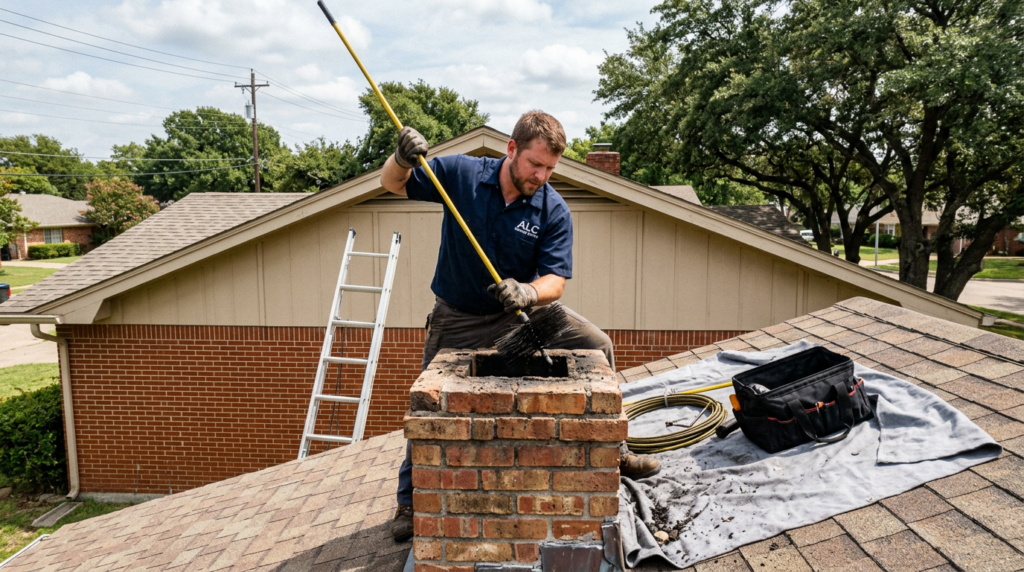
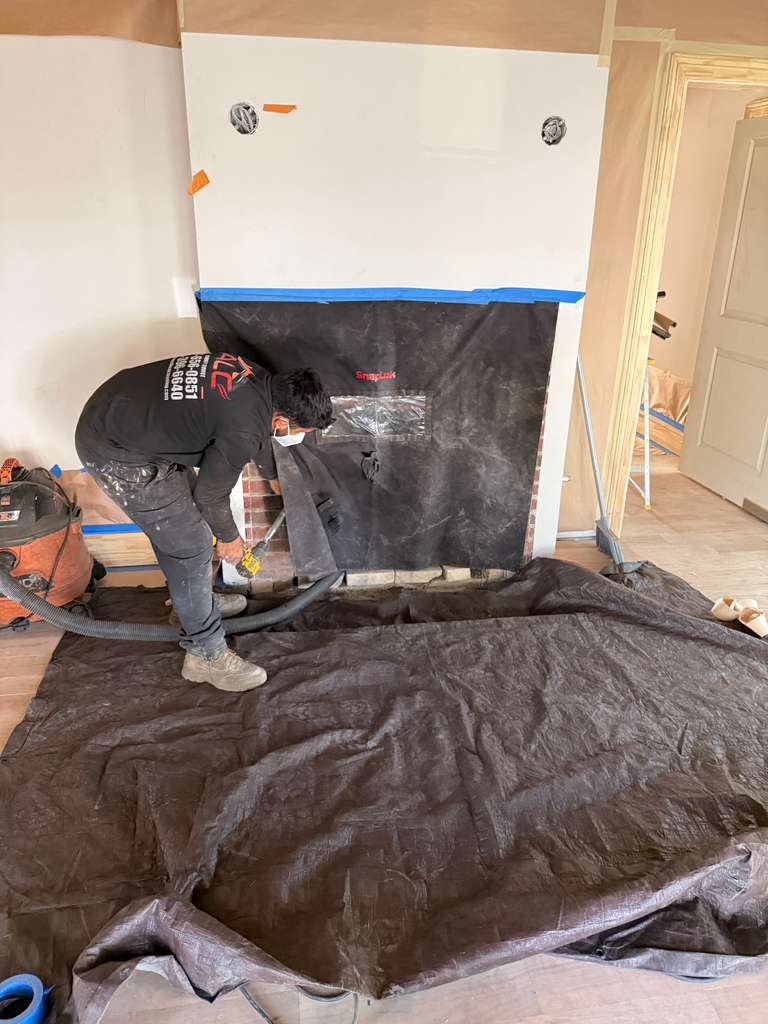
For a throat damper, the tech removes the old plate and frame, cleans the seat, and fits the new assembly so it seats flush and the handle operates smoothly. It is usually a same-day job. For a top-mount, the work happens up on the roof: the old cap or damper comes off, the new top-sealing unit is bolted and sealed to the flue tile, and the control cable is run down and anchored in the firebox. Either way a good installer will test the open-and-close action a few times and check the seal before packing up.
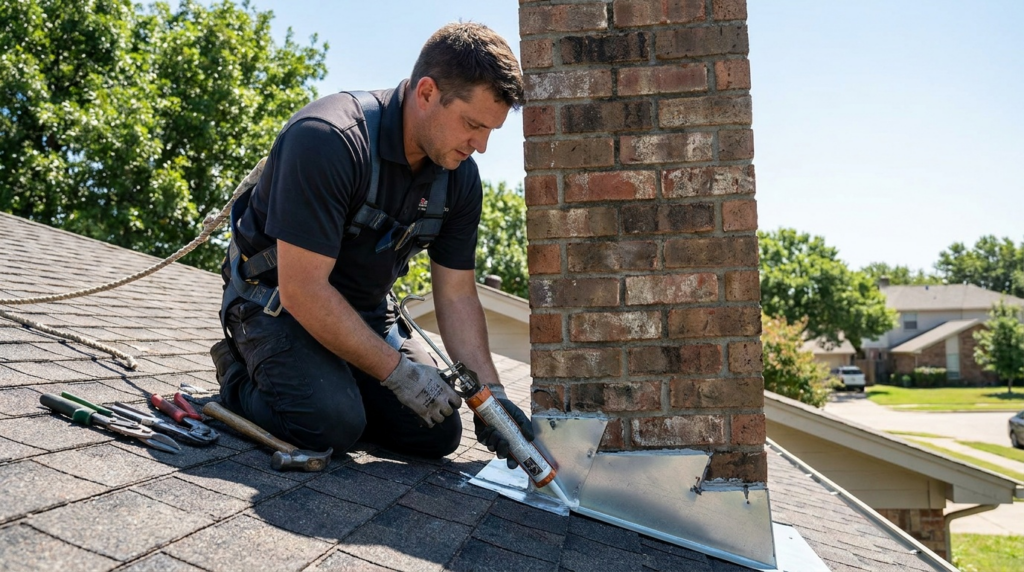
While they are in there, most techs will glance at the surrounding parts, the crown, the cap, the flashing, the top of the flue liner, because a damper rarely fails in isolation. If smoke has been backing up, they may also look at whether the real problem is draft rather than the damper itself, which sometimes ties into fireplace repair instead.
Can you replace a chimney damper yourself?
You can, technically. Replacement dampers are sold at home centers, and a handy person with a sound throat frame can sometimes swap a plate. But I would be cautious recommending it. Getting a proper seal matters, an improperly seated damper can leak worse than the one you removed, and top-mount installs mean roof work with a cable run that most homeowners are not set up to do safely. There is also the safety angle: a damper that does not close fully can let carbon monoxide drift back into the room, and that is not a place to guess.
The NFPA recommends a professional inspection of the chimney and its parts every year, and the CSIA certification exists precisely because this work has real safety stakes. If you are comparing DIY savings against a pro install, factor in that a certified tech will also catch the crown crack or liner gap that caused the damper to fail, so you are not back up there next winter.
Keeping a new damper working longer
A new damper lasts longest when you keep water and creosote away from it. Burn seasoned wood, not green, so you generate less creosote. Have the chimney swept and inspected once a year. Keep a sound cap or a top-mount seal on the flue so rain is not dripping onto the plate. And if you notice the handle getting stiff, deal with it early rather than forcing it, because forcing a sticky damper is how the mechanism snaps. Small habits, but they add years.
ALC serves homeowners across the metroplex, from Fort Worth to Plano to our home base in Addison. You can see the full list of service areas across DFW or reach out through our contact page if you want a set of eyes on a damper that is acting up.
How a failing damper fits into the bigger picture
A damper almost never fails in a vacuum. By the time the plate is rusted or the seal is gone, water has usually been finding its way in from somewhere higher up, a cracked crown, a worn cap, or flashing that has pulled away where the chimney meets the roof. That same water is what corrodes the flue liner and, over enough winters, leads to spalling brick on the exterior. So when a tech quotes a damper, a good one is really looking at the whole system and asking what let the moisture in.
This is also why the safety piece matters so much. A flue that does not seal, paired with a compromised liner, is exactly the setup that can push carbon monoxide back into living space. It is not meant to scare anyone off using their fireplace, only to explain why we treat the damper as one part of a connected system rather than a standalone gadget. Family-owned and CSIA-certified, ALC has handled well over 10,000 jobs across North Texas, and you can read more about our team or check coverage for chimney services in Fort Worth and the rest of the metroplex.
Frequently Asked Questions
How long does a chimney damper last?
A cast-iron throat damper in good conditions can last 15 to 20 years, though noticeable deterioration often shows up within about 10 years if moisture has been getting in. Top-mount dampers with a gasket seal tend to last 20 years or more. Annual inspection and keeping water off the metal are what stretch that lifespan.
Can a stuck chimney damper be repaired instead of replaced?
Sometimes, yes. If the plate and frame are still solid and the damper is only stuck from creosote or light rust, cleaning and lubrication often free it. If the metal is rusted through or warped, or the hinge has seized, replacement is the reliable fix. An inspection tells you which situation you are in.
Is a top-mount damper worth the extra cost?
For many DFW homes, it is. A top-sealing damper gives you a much tighter seal, which cuts the heated or cooled air you lose through the flue, and it doubles as a cap that keeps out rain, debris, and animals. If you were going to add a cap anyway, the upgrade cost is modest for what you get.
What happens if I keep using a fireplace with a broken damper?
A damper stuck open wastes energy year round and lets drafts, moisture, and pests in. A damper stuck closed, or one that will not open fully, is more serious, because smoke and carbon monoxide can back up into the room when you light a fire. Either way it is worth fixing before burning season.
Does a damper affect my energy bill?
It does. An open or poorly sealing damper is like leaving a window cracked all year. Warm air escapes up the chimney in winter and conditioned air escapes in summer, so your heating and cooling system works harder. A tight-sealing damper is one of the cheaper ways to stop that loss.
How often should the damper be checked?
Once a year, as part of a standard chimney inspection. The NFPA recommends an annual inspection of the whole chimney system by a qualified professional, and the damper is a natural part of that check along with the flue liner, crown, cap, and flashing.
Do you offer damper replacement across the DFW area?
Yes. ALC Chimney Service is based in Addison and works throughout Dallas, Fort Worth, and the surrounding suburbs. We can inspect the damper, tell you whether repair or replacement makes sense, and handle the work. Call (877) 656-0851 to set up a free repair inspection.
About the Author
Jonathan is a CSIA-certified chimney specialist at ALC Chimney Service with more than 15 years of hands-on experience sweeping, inspecting, and repairing fireplaces and chimneys across Dallas and the DFW metroplex. He has worked on thousands of residential chimney systems and writes to help North Texas homeowners keep their fireplaces safe, efficient, and up to NFPA and CSIA standards. Have a question about your chimney? Call ALC Chimney Service at (877) 656-0851 for a free inspection.
Find our chimney safety tips faster on Google