Skip to content
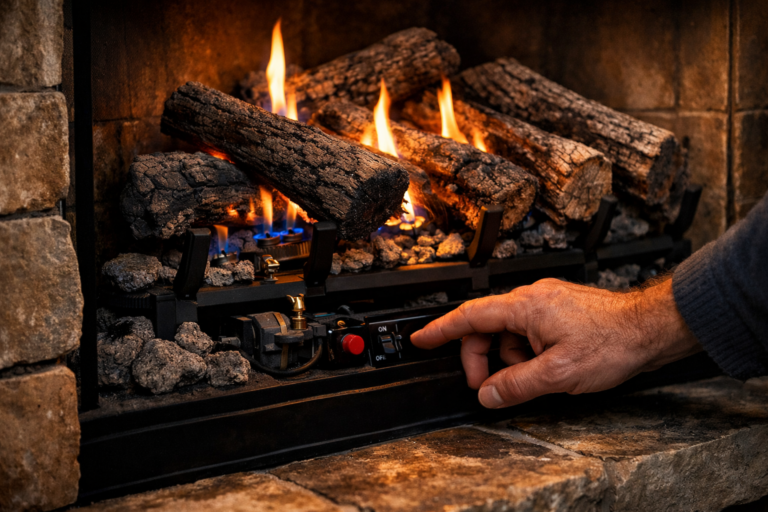
A gas fireplace that won’t turn on in Dallas is most commonly caused by a failed pilot light, a closed gas shut-off valve, a depleted thermocouple, or a dead remote control battery. Most of these issues are diagnosable in under ten minutes. A handful, however, involve gas supply problems, wiring faults, or internal component failures that require a certified technician to resolve safely.
Key Takeaways
The pilot light is the single most frequent culprit when a gas fireplace stops working, and relighting it is often a straightforward DIY fix.
Always verify the gas shut-off valve is fully open before assuming a mechanical failure.
A thermocouple or thermopile that won’t hold the pilot flame is a very common and inexpensive repair, but it does require a professional in most cases.
Thermostat settings are easy to overlook: if a wall thermostat controls your fireplace, it must be set above the current room temperature to trigger ignition.
Clogged burner ports and pilot light orifices cause weak or yellow flames and can prevent ignition entirely.
Remote controls and wall switches can fail independently of the fireplace itself; always test the manual ignition switch first.
Visible wiring damage, a persistent gas smell, or a fireplace that repeatedly shuts itself off are non-negotiable reasons to call a pro immediately.
Annual inspections by a certified technician prevent most of these failures before they happen, especially heading into Dallas’s unpredictable winter cold snaps.
Dallas homeowners should never attempt to repair gas valves, gas lines, or internal wiring without proper certification.
Why Is My Gas Fireplace Not Turning On? Start Here
Before working through the full list of causes, check three things first: the gas valve position, the pilot light status, and the power source (batteries or circuit breaker). These three account for the majority of gas fireplace not working Dallas calls that turn out to be simple fixes.
Gas fireplaces are more reliable than wood-burning units, but they have more components that can fail quietly. A fireplace that worked fine last February may sit dormant for eight months and then refuse to start when Dallas temperatures drop in December. That extended idle period is often the real culprit, because dust, moisture, and minor corrosion accumulate in ways that aren’t obvious from the outside.
12 Common Reasons Your Gas Fireplace Won’t Turn On in Dallas
1. The Pilot Light Has Gone Out
A pilot light that has gone out is the most frequent cause of a gas fireplace not working in Dallas homes. When the pilot is out, the fireplace has no ignition source, so pressing the ignition button or flipping the wall switch produces nothing.
To relight it, locate the control knob near the burner assembly (usually labeled “Pilot,” “On,” and “Off”), turn it to “Pilot,” press and hold it down while pressing the igniter button repeatedly. Hold the knob down for 30 to 60 seconds after the flame appears to allow the thermocouple to heat up. If the flame stays lit when you release the knob, turn the control to “On.”
Common mistake: Releasing the control knob too quickly. The thermocouple needs time to reach operating temperature before it will hold the gas valve open on its own.
2. The Thermocouple or Thermopile Is Faulty
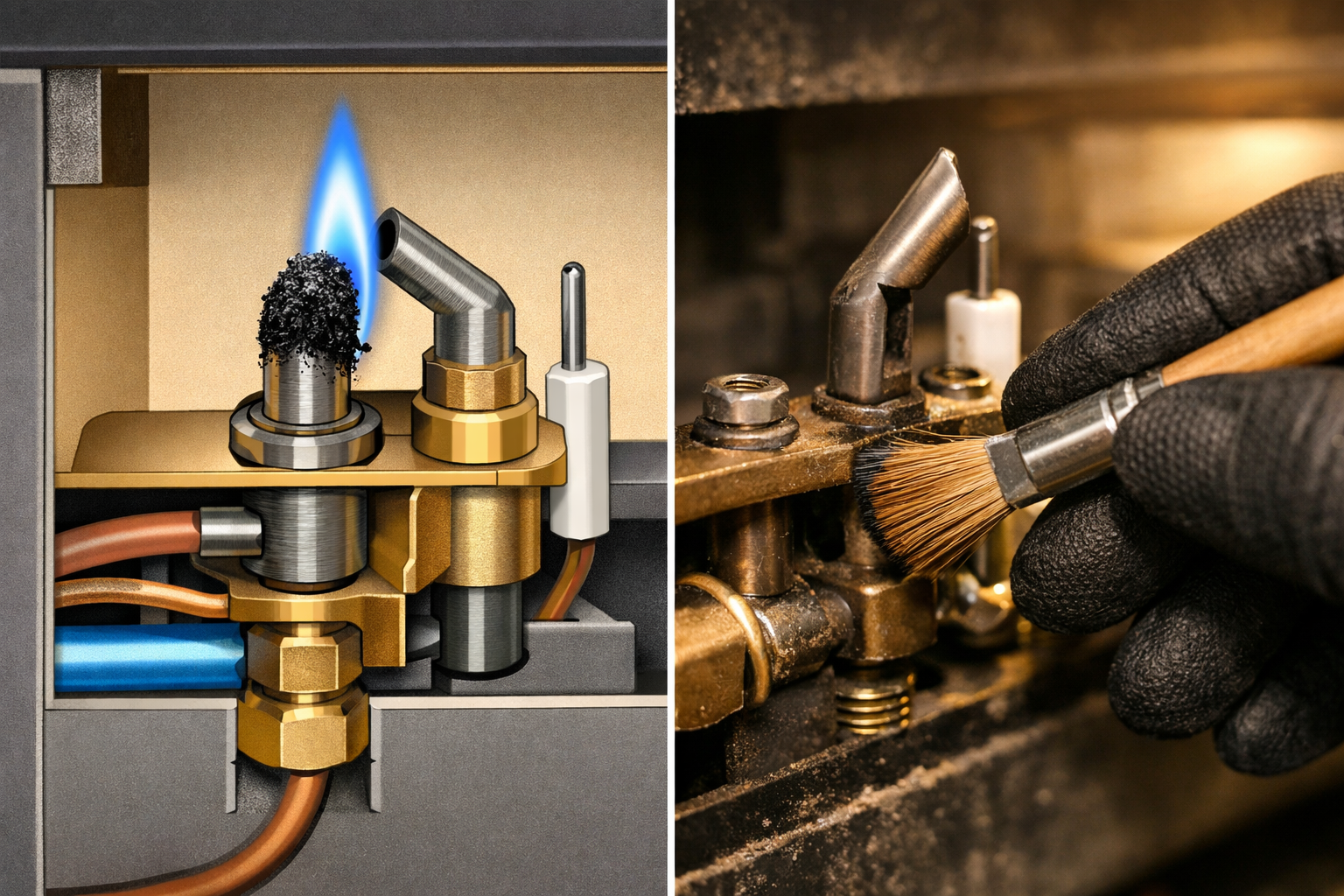
If the pilot light ignites but won’t stay lit after you release the control knob, the thermocouple or thermopile is almost certainly the problem. These are small sensors that generate a tiny electrical current when heated by the pilot flame. That current signals the gas valve to stay open. When the sensor degrades or its tip is coated with soot, the signal weakens and the valve closes, extinguishing the flame.
Cleaning the thermocouple tip with fine steel wool sometimes resolves the issue. Replacement, however, is the more reliable fix and costs relatively little in parts. Because this repair involves the gas valve assembly, most Dallas homeowners are better off having a technician handle it.
3. The Gas Shut-Off Valve Is Closed
This sounds almost too simple, but a closed gas valve is a surprisingly common reason for a gas fireplace not working in Dallas, particularly after a home renovation, a gas line inspection, or a utility service call. The valve may have been closed intentionally and never reopened.
Find the shut-off valve on the gas supply line leading to the fireplace. It should be parallel to the pipe (open) rather than perpendicular (closed). Turn it to the open position and attempt ignition again.
Quick rule: If the valve handle aligns with the pipe, gas is flowing. If it’s turned 90 degrees across the pipe, it’s closed.
4. The Thermostat Is Set Too Low
If your gas fireplace is connected to a wall thermostat, the thermostat must be set above the current room temperature to create a heat demand. A thermostat set at 68°F in a room that’s already 70°F will not trigger the fireplace to turn on, even if everything else is functioning perfectly.
Raise the thermostat setting by at least five degrees above the current room temperature and wait a moment. If the fireplace still doesn’t respond, the thermostat itself may need new batteries or recalibration.
5. Dead Batteries in the Remote Control or Thermostat
Remote controls and wireless thermostats rely on batteries that drain over time, especially after months of disuse. A dead remote is one of the easiest problems to fix and one of the most frequently overlooked.
Replace the batteries in the remote control first, then test. If the fireplace responds to the manual wall switch but not the remote, the remote receiver module inside the fireplace may also need attention. That component replacement is a job for a technician.
6. Clogged Pilot Light Orifice or Burner Ports
Dust, spider webs, and soot accumulate inside the pilot light orifice and burner ports during periods when the fireplace isn’t in use. A partially blocked orifice produces a weak, inconsistent flame that can’t reliably heat the thermocouple. Fully blocked ports prevent ignition entirely.
Use a soft brush (never compressed air directly into the gas ports) to gently clear visible debris from around the pilot assembly and burner. For deeper cleaning of the burner ports, a professional fireplace cleaning in Dallas is the appropriate approach, since improper cleaning can damage the components or push debris further into the gas path.
7. A Tripped Circuit Breaker or Blown Fuse
Many gas fireplaces use electricity to power the igniter, blower, remote receiver, and control board, even though the heat itself comes from gas. A tripped breaker or blown fuse cuts power to these components, making the fireplace appear completely dead.
Check your home’s electrical panel for a tripped breaker associated with the fireplace or the room it’s in. Reset it and test the fireplace. If the breaker trips again immediately, there’s an underlying electrical fault that needs professional diagnosis.
8. A Faulty Wall Switch or Wiring Issue
Wall switches that control gas fireplaces can fail mechanically or develop loose wiring connections over time. If the fireplace responds to the manual control knob at the unit but not to the wall switch, the switch itself is likely the problem. A simple switch replacement is a minor repair.
Visible wiring damage is a different matter entirely. Stripped insulation, melted wire jackets, or burn marks around the wiring connections are signs of a larger electrical problem. Do not attempt to operate the fireplace if you see this kind of damage. A certified technician should inspect and repair the wiring before the unit is used again.
9. The Gas Valve Itself Has Failed
The gas valve is the component that controls fuel flow to the burner. When it fails, the fireplace either won’t receive gas at all or receives it inconsistently. Valve failure is less common than pilot light or thermocouple issues, but it does happen, particularly in older units.
Signs of a failing gas valve include a pilot light that stays lit but the main burner won’t ignite, or a burner that lights briefly and then shuts off. Gas valve replacement is not a DIY repair. This is a job for a licensed professional, and in Dallas, it should be handled by a technician certified to work on gas appliances.
10. Low Gas Pressure from the Utility
Occasionally, the problem isn’t inside the fireplace at all. Low gas pressure from the utility provider can prevent the burner from receiving enough fuel to ignite or sustain a flame. This is more likely to affect multiple gas appliances simultaneously. If your gas stove, water heater, and fireplace are all behaving strangely at the same time, contact Atmos Energy (the primary natural gas provider for the Dallas area) to check for service pressure issues or outages in your neighborhood.
11. The Thermopile Voltage Is Too Low
The thermopile is similar to the thermocouple but generates more voltage, typically enough to power the gas valve and sometimes the control board. A healthy thermopile produces around 300 to 750 millivolts. When output drops below roughly 300 millivolts, the fireplace may refuse to operate even if the pilot flame looks normal.
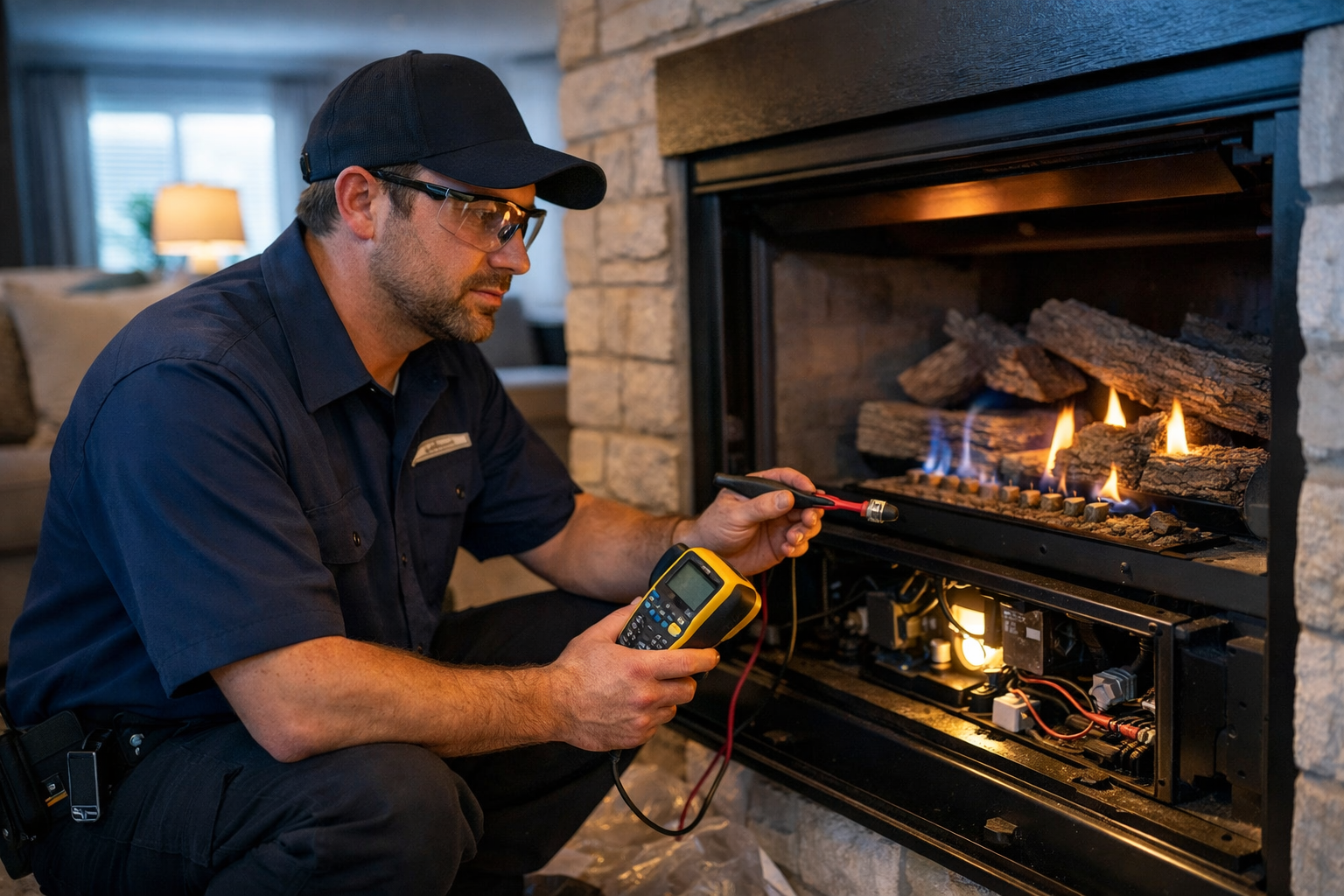
A technician can test thermopile voltage with a multimeter in about five minutes. If the reading is low, cleaning the thermopile tip sometimes restores output. Replacement is necessary when the component is genuinely worn out.
12. An ODS (Oxygen Depletion Sensor) Shutoff
Vent-free gas fireplaces are equipped with an Oxygen Depletion Sensor that automatically shuts the unit off when oxygen levels in the room drop below a safe threshold. If your vent-free fireplace keeps shutting off shortly after ignition, the ODS may be triggering a safety shutoff due to poor room ventilation.
Open a window slightly to introduce fresh air and attempt to restart the fireplace. If the ODS continues to trip, have a technician inspect the sensor and the room’s ventilation. Persistent ODS shutoffs in a properly ventilated room suggest the sensor itself may be faulty.
DIY vs. Professional Repair: How to Decide
Not every gas fireplace problem requires a service call, but some absolutely do. Here’s a practical breakdown:
ProblemDIY-Appropriate?Call a Pro?Pilot light won’t stay lit (thermocouple)Attempt relight; cleaning possibleYes, for replacementGas shut-off valve closedYesNoDead remote batteriesYesNoTripped circuit breakerYes (reset only)Yes, if it trips againClogged pilot orifice (surface debris)Light cleaning onlyYes, for deep cleaningFaulty wall switchPossiblyRecommendedGas valve failureNoYesVisible wiring damageNoYesGas smell presentNo, evacuateYes, immediatelyODS shutoff (vent-free unit)Ventilate room, retryYes, if persistentLow utility gas pressureNoContact utility + techThermopile voltage lowNoYes
When Gas Fireplace Not Working in Dallas Means Call a Pro Immediately
Some situations go beyond troubleshooting. A gas fireplace not working in Dallas becomes an urgent safety matter under specific conditions, and these aren’t situations where waiting a few days for a convenient appointment is acceptable.
Call a professional immediately if:
You smell gas near the fireplace or anywhere in the home. Leave the house, avoid using light switches or phones inside, and call your gas utility and a technician from outside.
The fireplace repeatedly turns itself off after igniting, especially if accompanied by any unusual odor.
You see soot or carbon buildup on the fireplace glass or surrounding surfaces that wasn’t there before.
Any wiring appears damaged, discolored, or melted.
The fireplace makes unusual sounds during operation, such as popping, hissing, or rumbling.
For homeowners who want a reliable local resource, fireplace repair in Dallas covers both gas and wood-burning systems and can address most of the issues described above.
How Annual Inspections Prevent Most of These Problems
The majority of gas fireplace failures that prompt a “gas fireplace not working Dallas” search in December could have been caught during a routine inspection in October. Annual inspections allow a technician to clean the pilot assembly, test thermocouple and thermopile output, check gas pressure, inspect wiring, and verify that all safety sensors are functioning correctly.
Dallas’s climate creates a specific pattern: fireplaces sit unused for six to eight months, accumulate dust and minor corrosion, and are then expected to perform flawlessly on the first cold night of the year. That’s a lot to ask of any mechanical system without any maintenance in between.
A chimney and fireplace inspection in Dallas before the heating season is the single most effective way to avoid cold-night failures. It also provides documentation that can matter for homeowner’s insurance and resale purposes.
For those in surrounding areas, similar services are available through chimney services in Fort Worth and chimney services in Frisco.
What Does Gas Fireplace Repair Cost in Dallas?
Repair costs vary considerably depending on the specific component and the labor involved. Here are reasonable estimates for 2026, though actual pricing depends on the technician, parts availability, and the fireplace model:
Thermocouple replacement: $75 to $150 (parts and labor)
Thermopile replacement: $100 to $200
Gas valve replacement: $200 to $500 or more, depending on the valve type
Pilot assembly cleaning and adjustment: $80 to $150 as part of a service visit
Remote receiver module replacement: $100 to $250
Full diagnostic service call: $75 to $150 (often applied toward repair cost)
These figures are estimates. For a more detailed breakdown of what fireplace and chimney work costs in the Dallas area, the chimney repair cost guide for Dallas in 2026 provides current pricing context.
If the fireplace is older and multiple components are failing simultaneously, it may be worth considering a new fireplace installation in Dallas rather than continuing to repair an aging system. A technician can help weigh the cost-benefit honestly.
FAQ: Gas Fireplace Not Working Dallas
Q: My gas fireplace clicks but won’t light. What’s wrong?
A: Clicking without ignition usually means the pilot light is out or the igniter is sparking but not reaching the gas. Verify the gas valve is open, attempt to relight the pilot manually, and check for debris around the pilot orifice.
Q: The pilot light stays on but the main burner won’t ignite. What causes this?
A: This typically points to a faulty gas valve, a thermopile with insufficient voltage output, or a control board issue. A technician should test the thermopile voltage and inspect the valve before recommending a repair path.
Q: How do I know if my thermocouple needs replacing?
A: If the pilot flame ignites but the fireplace shuts off within 30 to 60 seconds of releasing the control knob, the thermocouple is the most likely cause. A technician can confirm this with a simple voltage test.
Q: Is it safe to relight my gas fireplace pilot light myself?
A: Yes, relighting the pilot light is generally safe if you follow the manufacturer’s instructions, ensure there is no gas smell before attempting ignition, and allow at least five minutes for any accumulated gas to dissipate before trying again.
Q: Why does my gas fireplace smell like gas when I try to start it?
A: A brief, faint gas smell during ignition attempts is normal. A strong or persistent gas odor is not. If the smell is strong, leave the home immediately, avoid using any electrical switches, and contact your gas utility and a technician from outside.
Q: My remote control doesn’t work but the wall switch does. Is that a fireplace problem?
A: Not necessarily. Replace the remote batteries first. If the remote still doesn’t work, the issue is likely the remote receiver module inside the fireplace, which a technician can replace.
Q: How often should a gas fireplace be serviced in Dallas?
A: Once per year is the standard recommendation, ideally in early fall before the heating season begins. Dallas’s long idle periods between heating seasons make annual service particularly worthwhile.
Q: Can a dirty chimney affect a gas fireplace?
A: Yes. Even gas fireplaces that vent through a chimney can be affected by blockages, animal nesting, or debris in the flue. A chimney sweep in Dallas can clear any obstructions that might restrict venting and cause the fireplace to shut off on a safety limit.
Q: What’s the difference between a thermocouple and a thermopile?
A: A thermocouple generates a small millivolt signal used only to hold the pilot gas valve open. A thermopile generates a higher voltage (typically 300 to 750 millivolts) and is used to power the main gas valve and sometimes the control system. Both degrade over time and can cause ignition failures.
Q: My gas fireplace worked fine last year. Why won’t it start now?
A: Extended periods of inactivity are the most common explanation. Dust and spider webs can clog the pilot orifice, batteries in the remote or thermostat may have drained, and the thermocouple may have developed minor corrosion. A thorough cleaning and component check usually resolves this.
Conclusion: Don’t Wait for the Cold to Find Out Your Fireplace Doesn’t Work
A gas fireplace not working in Dallas is rarely a catastrophic problem, but it becomes one when temperatures drop and the fix requires a multi-day wait for a technician. The twelve causes covered here range from a dead battery to a failed gas valve, and the difference between a five-minute fix and a $400 repair often comes down to how quickly the problem is identified.
Actionable next steps:
Work through the basic checks first: gas valve position, pilot light status, thermostat setting, and remote batteries.
Attempt to relight the pilot light following the manufacturer’s instructions if it’s out.
If the pilot won’t stay lit, schedule a thermocouple or thermopile inspection with a certified technician.
If you smell gas, see damaged wiring, or the fireplace keeps shutting itself off, stop troubleshooting and call a professional.
Book an annual inspection before the heating season, not during it, to avoid scheduling delays.
For Dallas homeowners who want a professional to handle the diagnosis and repair, ALC Chimney Service provides fireplace and chimney services across the Dallas-Fort Worth area. Whether the issue is a simple cleaning or a component replacement, having a certified technician assess the system is always the safer and often the faster path to a working fireplace.
Find our chimney safety tips faster on Google