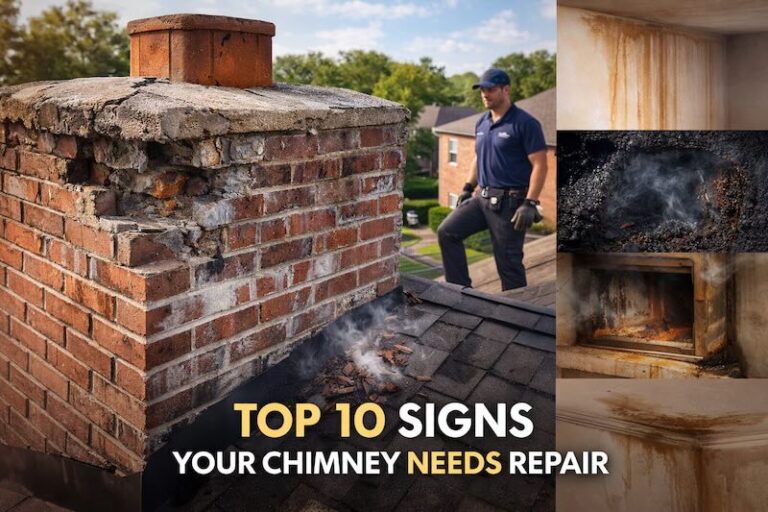
The key chimney repair signs most homeowners notice include crumbling mortar, flaking bricks, water stains, a leaning chimney, or heavy creosote buildup. But there’s more to it than just visible damage. Subtle issues like rust, odors, or poor airflow can quietly signal deeper structural problems.
In Texas, where heat, humidity, and sudden temperature shifts all play a role, chimneys tend to age in slightly unpredictable ways. One season everything looks fine, then after a storm or a cold snap, something changes. I’ve seen chimneys go from “probably okay” to “needs immediate repair” in just a few months.
So let’s walk through the top 10 warning signs of chimney damage, what they actually mean, and when it’s time to stop waiting and call a professional.
Why Recognizing Chimney Repair Signs Early Matters
Most homeowners don’t think about their chimney until something feels off. Maybe smoke doesn’t vent right. Or there’s a smell you can’t quite explain. That hesitation, that “maybe it’s nothing,” is usually where small problems turn into expensive repairs.
Here’s the reality:
- Minor masonry issues can turn into structural instability
- Water damage spreads faster than expected
- Fire hazards like creosote buildup don’t fix themselves
And in places like Dallas and surrounding Texas areas, moisture intrusion is a big deal. The combination of humidity and sudden weather changes can accelerate deterioration faster than in drier climates.
If you’ve ever searched for chimney inspection near me, chances are something already caught your attention.
Top 10 Chimney Repair Signs You Should Never Ignore
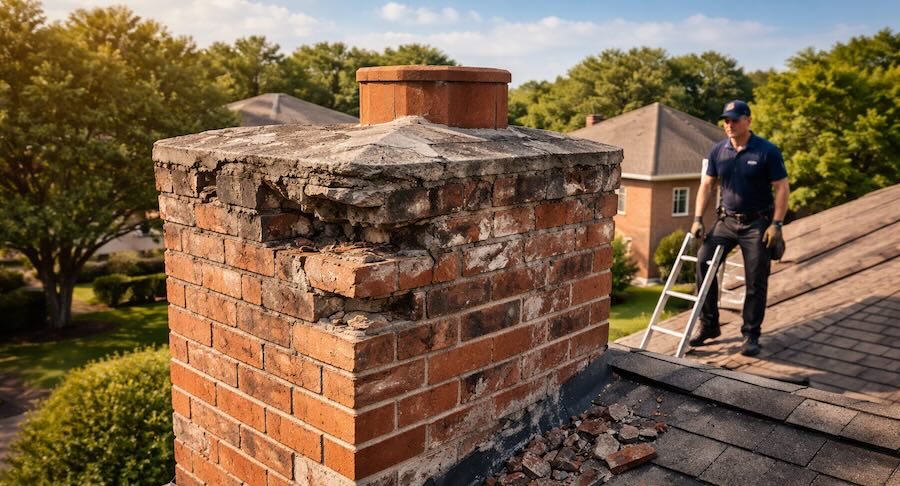
1. Crumbling Mortar Joints
Mortar is what holds your chimney together. When it starts breaking down, everything else follows.
You might notice:
- Gaps between bricks
- Powdery residue
- Small chunks falling off
This usually means water has already started getting in. And once that happens, freeze-thaw cycles, yes even in Texas winters, begin to expand those cracks.
Fix: Repointing or tuckpointing
Risk Level: Medium, but escalates quickly
2. Spalling Bricks (Flaking or Popping)
Spalling is one of those terms most homeowners don’t know until they see it. Basically, the brick face starts peeling or breaking apart.
This happens when moisture gets trapped inside the brick and expands.
If you ignore it, eventually:
- Bricks lose structural integrity
- Sections of the chimney may collapse
Fix: Brick replacement and waterproofing
Risk Level: High
3. Damaged or Cracked Chimney Crown
The chimney crown is like a roof for your chimney. It’s supposed to keep water out.
But cracks in the crown are surprisingly common, especially with heat expansion in Texas summers.
Once it cracks:
- Water flows directly into the chimney structure
- Internal damage accelerates
Fix: Crown sealing or rebuilding
Risk Level: High
4. Leaning or Tilting Chimney
This one is serious. If your chimney isn’t straight, something is wrong underneath.
Possible causes:
- Foundation movement
- Soil shifting (very common in Texas clay soil)
- Structural weakening
Even a slight tilt should not be ignored.
Fix: Structural reinforcement or rebuild
Risk Level: Critical
5. Rust in the Firebox or Damper
Rust is basically a moisture alarm system.
If you see rust:
- Water is getting in somewhere
- Components may stop working properly
Sometimes the damper won’t open or close fully, which leads to draft problems.
Fix: Replace rusted parts, fix moisture entry point
Risk Level: Medium
6. White Stains (Efflorescence)
That white powdery residue on your chimney? It’s not just cosmetic.
It means:
- Water is moving through your masonry
- Salts are being left behind as it evaporates
It’s one of the earliest warning signs of chimney damage, but people often ignore it.
Fix: Moisture control and sealing
Risk Level: Low to Medium
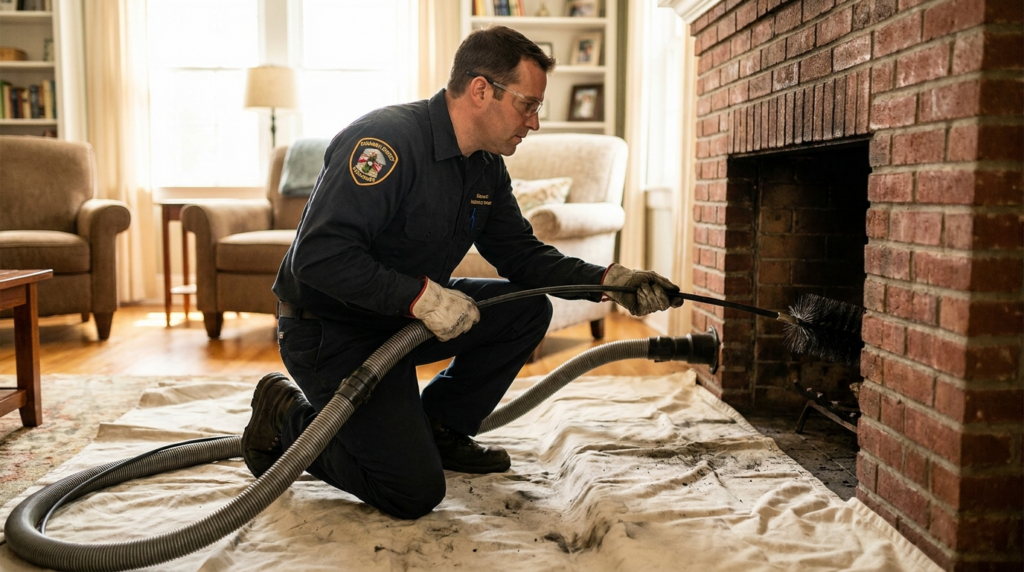
7. Excessive Creosote Buildup
Creosote is highly flammable. And it builds up faster than most people expect.
Signs include:
- Thick black residue
- Strong smoky smell
- Reduced airflow
If it gets to a glaze-like stage, it becomes extremely dangerous.
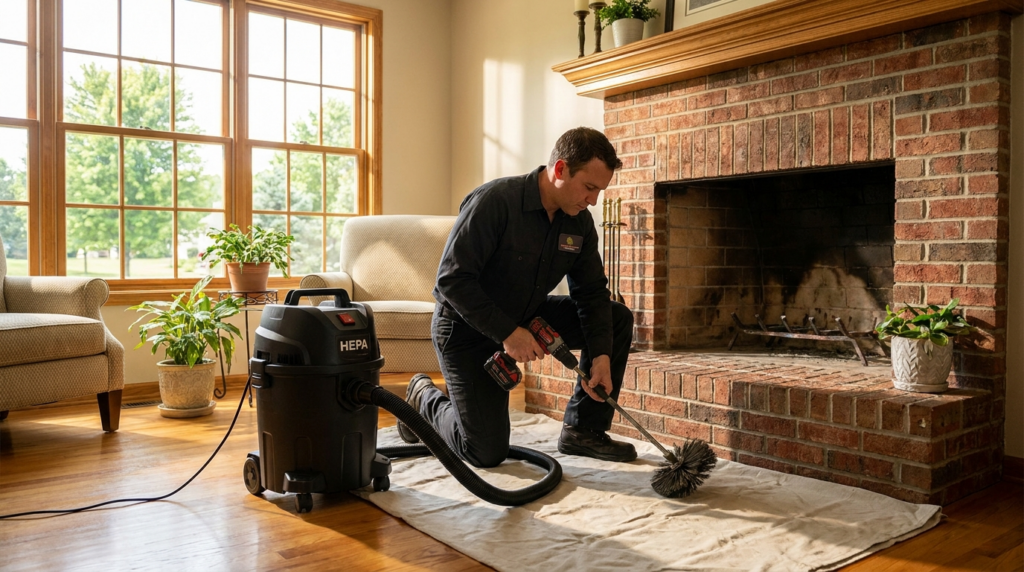
Fix: Professional chimney cleaning
Risk Level: Critical
8. Smoke Entering Your Living Space
Smoke should go up, not into your house. Sounds obvious, but this is one of the most common complaints.
Possible causes:
- Blockages
- Poor draft
- Flue size issues
And sometimes, it’s a combination of things.
Fix: Inspection and draft correction
Risk Level: High
9. Damaged or Cracked Flue Liner
The flue liner protects your home from heat and gases.
If it’s cracked:
- Heat can reach combustible materials
- Toxic gases may leak
This is one of the most dangerous hidden issues.
Fix: Relining or replacement
Risk Level: Critical
10. Water Stains, Odors, or Dampness
Water is the number one enemy of chimneys.
You might notice:
- Musty smells
- Stains near the fireplace
- Damp walls
And honestly, once you smell it, it’s already been happening for a while.
Fix: Leak repair, flashing repair, waterproofing
Risk Level: High
Quick Comparison Table: Chimney Repair Signs & Severity
| Chimney Issue | What It Means | Risk Level | Recommended Action |
|---|---|---|---|
| Crumbling Mortar | Water intrusion weakening structure | Medium | Repointing |
| Spalling Bricks | Moisture damage inside bricks | High | Brick replacement |
| Cracked Crown | Direct water entry point | High | Crown repair |
| Leaning Chimney | Structural failure | Critical | Rebuild |
| Creosote Buildup | Fire hazard | Critical | Cleaning |
When to Call Professional Chimney Repair Services
This is where most people hesitate. You might think:
- “It’s probably not that bad”
- “I’ll check it next season”
But chimney damage rarely stays the same.
If you notice even one of these signs, it’s worth scheduling a chimney repair near me, especially before winter or after heavy storms.
Chimney Inspection Cost in Texas, What to Expect in 2026
One of the most common questions I hear, and honestly, it makes sense, is: “How much does a chimney inspection cost?”
The short answer is, it depends. But that’s not very helpful, so let’s break it down in a way that actually helps you plan.
Average Chimney Inspection Cost (Texas 2026)
| Inspection Level | What’s Included | Average Cost (Texas) |
|---|---|---|
| Level 1 | Basic visual inspection | $80 – $150 |
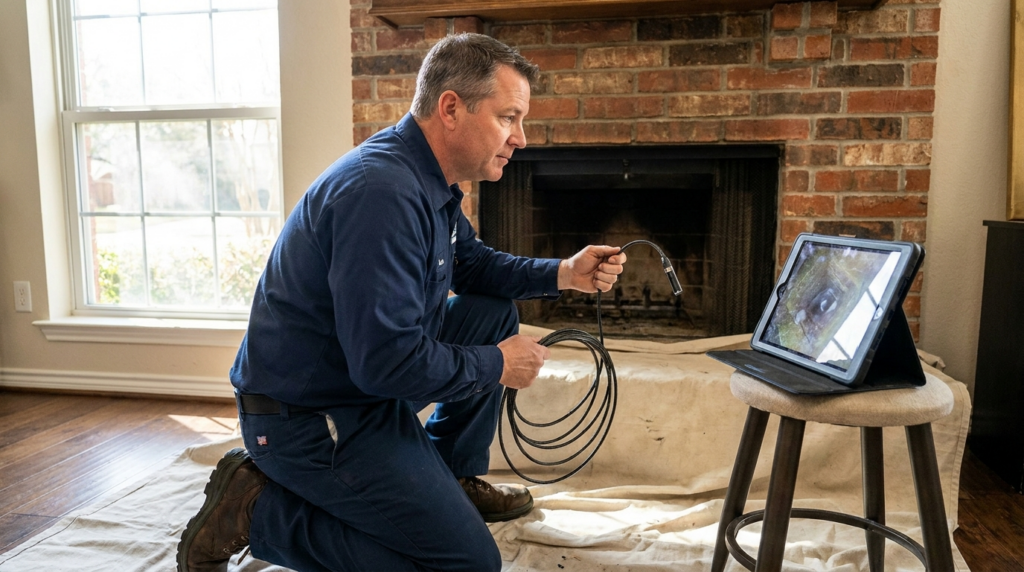
| Level 2 | Camera inspection of flue | $150 – $350 |
| Level 3 | Detailed inspection with partial teardown | $500+ |
In Dallas and surrounding areas, most homeowners fall into Level 1 or Level 2 inspections. Level 3 is rare, usually only needed after major damage or a chimney fire.
What’s interesting, and maybe a bit frustrating, is that many serious chimney issues aren’t visible from the outside. You could have a perfectly fine-looking chimney with a cracked flue liner inside. That’s why camera inspections are becoming more common.
When Should a Chimney Be Repaired?
This question doesn’t always have a clean answer. Some issues are urgent, others can wait, at least for a while.
Immediate Repair Needed (Don’t Wait)
- Leaning chimney
- Cracked flue liner
- Heavy creosote buildup
- Smoke entering the home
These are safety issues. Delaying repair here isn’t just a maintenance decision, it’s a risk.
Repair Soon (Within a Few Months)
- Spalling bricks
- Crown cracks
- Rusted damper
These won’t usually cause immediate danger, but they’re progressing.
Monitor Closely
- Efflorescence
- Minor mortar wear
These are early-stage problems. Still worth addressing, but not urgent.
If you’re unsure, this is where searching for the best chimney repair contractor near me becomes relevant. A good contractor won’t just sell you repairs, they’ll prioritize what actually matters.
Texas-Specific Chimney Problems Most Homeowners Miss
Chimneys in Texas behave a little differently than in colder states. And I think this gets overlooked a lot.
1. Expansive Clay Soil Movement
Texas soil expands and contracts depending on moisture levels.
What that means for your chimney:
- Foundation shifts
- Small cracks that grow over time
- Slight leaning that worsens slowly
It’s subtle at first. Then one day, it’s not.
2. Intense Heat + UV Exposure
Summer heat doesn’t just affect roofs, it impacts chimney crowns and masonry too.
- Crown cracking becomes more common
- Sealants break down faster
- Waterproofing wears off quicker
3. Sudden Storms and Flashing Failures
Texas storms can be intense, even if they’re short.
- Flashing can loosen or fail
- Water enters around chimney base
- Leaks show up inside days later
4. High Humidity and Moisture Retention
Humidity keeps masonry damp longer than expected.
That leads to:
- Moldy smells
- Efflorescence
- Accelerated brick damage
Honestly, moisture is the biggest long-term issue here.
Chimney Maintenance Tips That Actually Prevent Repairs
I’ll be honest, most repairs we see could have been avoided. Not all, but a good percentage.
Here’s what actually makes a difference:
Annual Inspection
Even if everything seems fine, inspections catch hidden problems early.
Regular Cleaning
Especially if you use your fireplace often. Creosote builds up faster than people expect.
Install a Chimney Cap
It keeps out:
- Rain
- Debris
- Animals
Simple upgrade, big impact.
Waterproofing
Not sealing, proper breathable waterproofing.
This helps prevent:
- Brick damage
- Mortar deterioration
- Internal leaks
How to Choose the Best Chimney Repair Contractor Near You
This part matters more than people think. Not all contractors approach chimney work the same way.
Look for:
- Certified chimney professionals
- Camera inspection capability
- Clear repair breakdowns
- Local experience in Texas homes
And maybe this is just me, but if a contractor jumps straight to “you need a full rebuild” without explaining anything, that’s usually a red flag.
Frequently Asked Questions
How much does a chimney inspection cost?
When should a chimney be repaired?
How often should a chimney be inspected?
What are the most common chimney problems in Texas?
Can I use my fireplace if my chimney is damaged?
How do I find professional chimney repair services near me?
Final Thoughts, What Most Homeowners Realize Too Late
Chimneys are one of those things you don’t think about until something goes wrong. And by then, it’s usually not a small fix anymore.
I’ve seen homeowners ignore minor signs, a little staining, a slight odor, and months later they’re dealing with major repairs. Not always, but often enough.
If something feels off, even slightly, it’s worth checking.