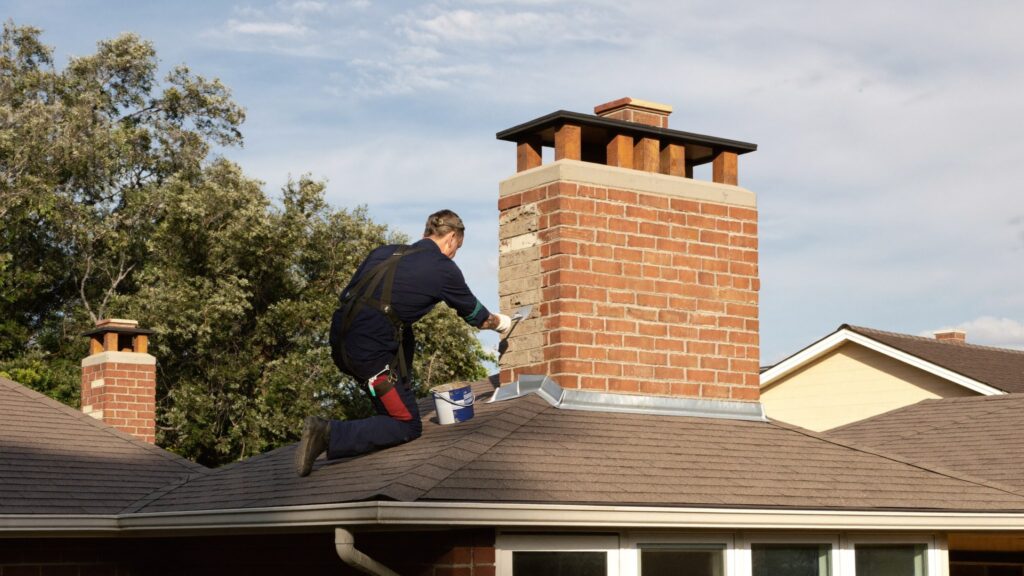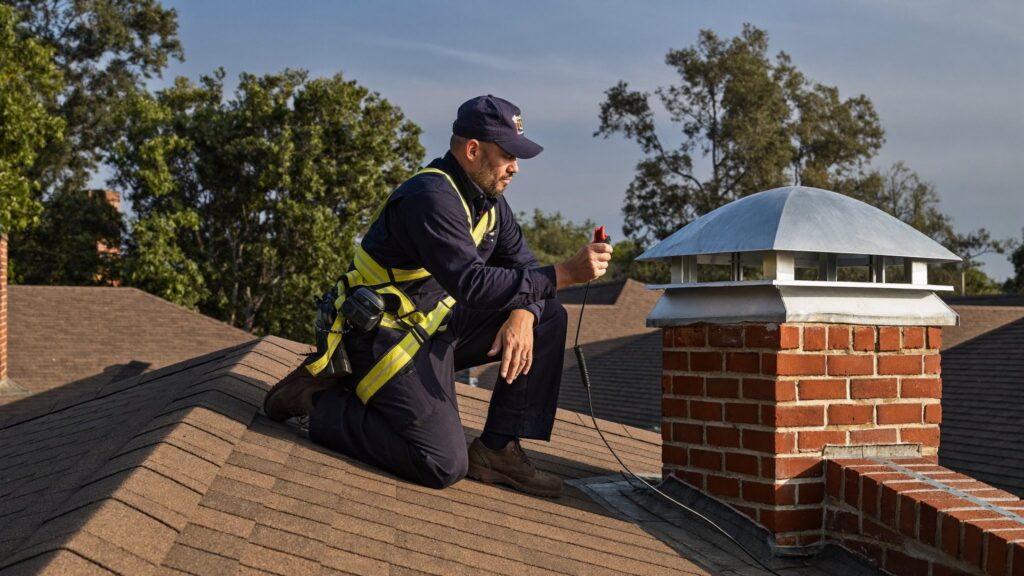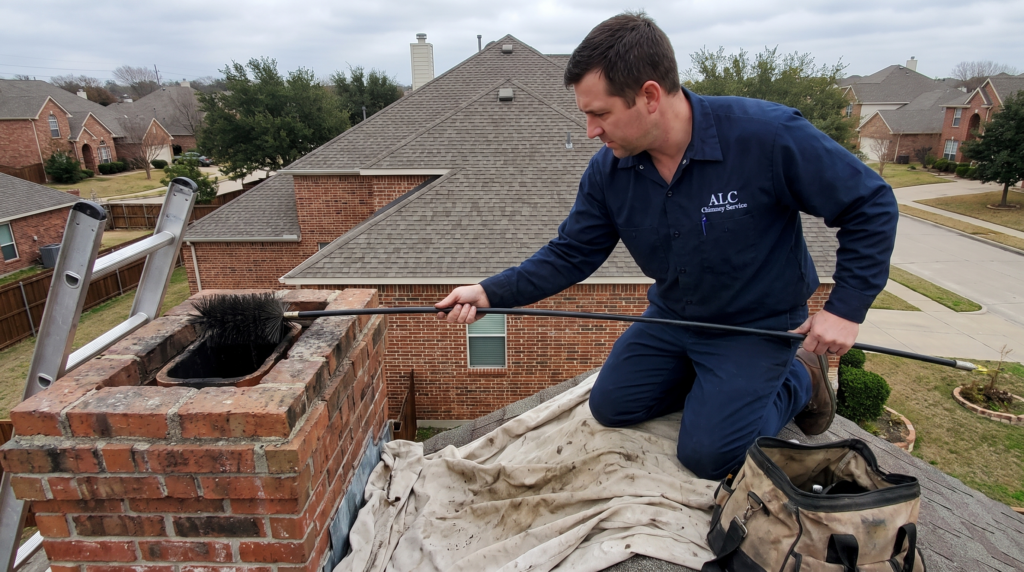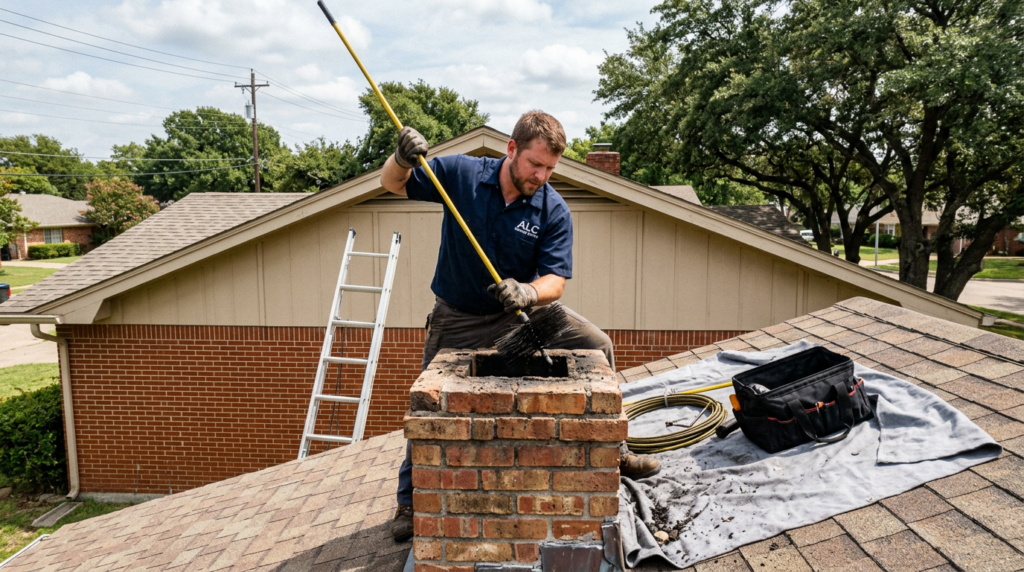
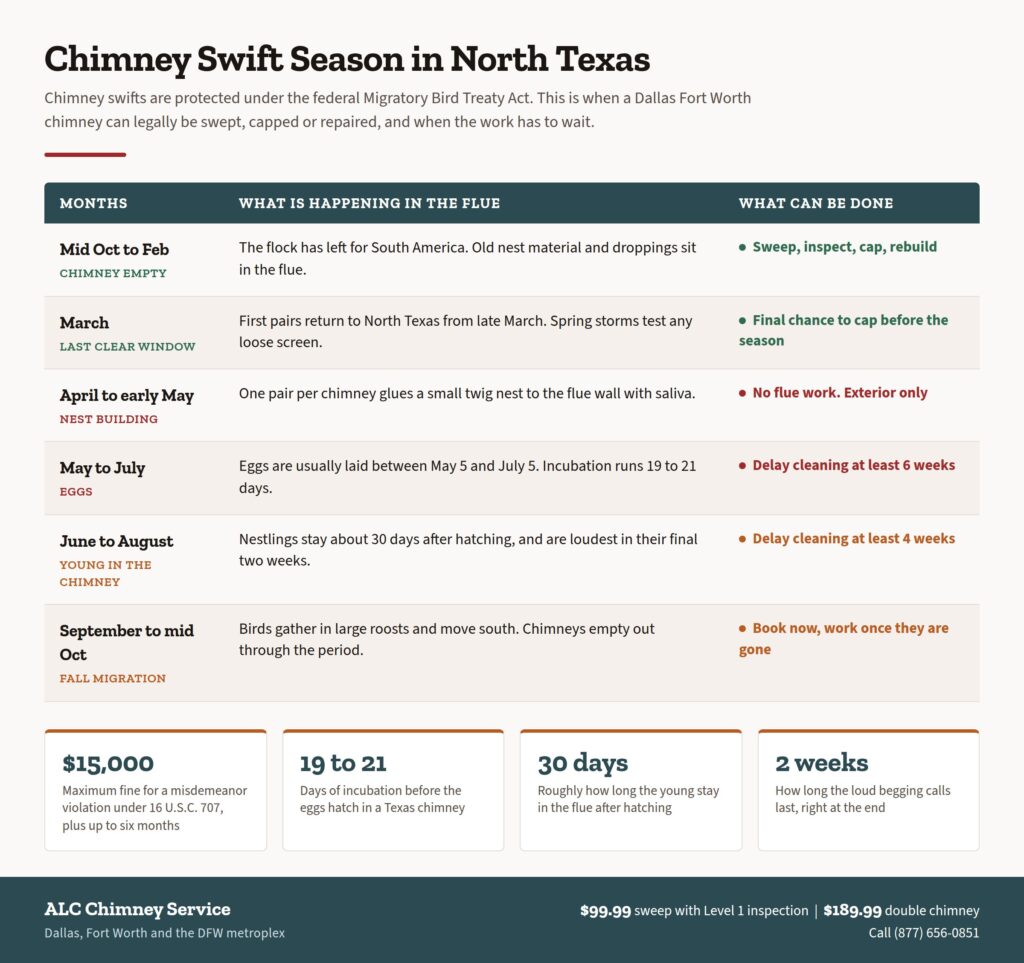
Chimney swifts cannot legally be removed from a Texas chimney from roughly late March through early October, because the birds, their nests, their eggs and their young are all protected under the federal Migratory Bird Treaty Act. In North Texas the window for sweeping, capping or repairing a chimney that swifts have used runs from about mid October, once the flock has left for South America, through the end of March. ALC Chimney Service books that fall window heavily across Dallas and Fort Worth, with a sweep and Level 1 inspection starting at $99.99 and $189.99 for a home with two flues. What shifts the timing for your house is which stage the birds have reached, whether the flue is clay lined or a metal lined prefab, and what comes out of the flue with the nest.
What swift related chimney work costs in the Dallas Fort Worth area:
- Sweep with a Level 1 inspection, $99.99 at ALC, rising toward $150 elsewhere in the metroplex when a season of nesting debris has to come out first.
- Second flue on the same visit, $189.99 for a double chimney, because the technician sets up twice and doubles the roof time.
- Nest and debris removal on top of a sweep, $100 to $300, depending on how much material packed onto the smoke shelf.
- Level 2 inspection with a video scan of the flue, $250 to $500, which confirms the liner survived a season of droppings and trapped moisture.
- Stainless steel cap with animal mesh, installed, $400 to $900, with copper and custom multi flue covers at $1,000 to $1,600.
- Chase cover replacement on a prefab chimney, $400 to $900, toward the top of that range on steep two story rooflines needing extra fall protection.
- Crown repair or sealing where water gets in alongside the birds, $300 to $1,200, depending on how far the cracking has traveled.
The parts of the system this guide keeps coming back to:
- Chimney swift. A small sooty gray migratory bird that cannot perch on a branch and clings to rough vertical surfaces instead.
- Flue. The vertical passage carrying smoke out of the house, lined with clay tile in older DFW masonry chimneys and with metal in post 1990 prefabs.
- Chimney cap. The covered metal fitting over the flue, keeping rain, embers and animals out, with side mesh that doubles as a spark arrestor.
- Chimney crown. The sloped concrete slab across the top of a masonry chimney that sheds water away from the brick.
- Chase cover. The metal lid on a prefab chimney’s framed chase, which does the crown’s job and rusts through long before brick fails.
- Damper. The plate above the firebox that opens and closes the flue, and where most homeowners first hear the birds.
- Smoke shelf. The ledge behind the damper where soot, nesting material and the occasional fallen nestling collect.
- Creosote. The flammable tar residue wood smoke leaves on the flue wall, which builds faster whenever airflow is restricted.
Treat every range above as a starting point rather than a quote. Flue height, roof pitch, how much has collected on the smoke shelf and whether the liner is clay or metal all move the number, and none of it can be judged over the phone, which is why a CSIA certified technician looks first and why the repair inspection here is free. Be careful with the $39 and $49 sweep coupons that fill DFW mailboxes every September, because that price does not cover the drive, the fall protection and an hour of skilled work on a roof. The visit has to produce a sale to be worth running.
Key Takeaways
- Chimney swifts, their nests, eggs and young are protected under the federal Migratory Bird Treaty Act, and a misdemeanor violation carries a fine of up to $15,000 and up to six months in jail.
- Texas Parks and Wildlife asks sweeps to delay cleaning at least six weeks for a chimney holding eggs and four weeks for one holding young.
- Eggs in Texas are usually laid between early May and early July, incubation runs 19 to 21 days, and the young leave roughly 30 days after hatching.
- The loud begging calls that send homeowners looking for help last about two weeks, at the end of the nestlings’ stay.
- The safe working window runs from mid October through the end of March, which is when sweeping, capping and masonry repair should be scheduled.
- A metal lined prefab flue should always be capped, because swifts cannot climb a slick liner and get trapped. An open masonry flue is a genuine choice.
What exactly is a chimney swift, and why is it in my chimney?
A chimney swift is a cigar shaped bird about five inches long, dark sooty gray, with long curved wings and a chattering call that carries across a neighborhood on a summer evening. Swifts spend almost their entire waking life in the air catching insects. What they cannot do is perch. Their feet are built for clinging to a rough vertical wall, which is why they nested inside hollow trees.
Those hollow trees are largely gone from North Texas, and what replaced them by accident is the brick chimney. A clay lined masonry flue offers the same rough vertical surface and the same shelter from a Texas thunderstorm, and across DFW subdivisions built between the 1960s and the late 1980s it is the last thing in the neighborhood that resembles the bird’s original habitat. The Texas Breeding Bird Atlas recorded a statewide decline of roughly 1.5 percent a year from 1966 to 1994, steepening after 1980, with nest removal and capping named among the causes.
How do I tell swifts from squirrels or raccoons?
Sound is the fastest test. Swifts produce a rapid mechanical chittering that spikes when the adults fly in to feed. Squirrels scratch and scrabble at dawn and dusk, and you hear claws on tile. Raccoons are heavier and mostly nocturnal. A daytime chatter that goes quiet at night is almost certainly swifts. Our guide to the animals that get into DFW chimneys covers the other species.
Do chimney swifts actually damage the chimney?
Less than most homeowners expect. A swift nest is a small half saucer of twigs glued to the flue wall with saliva, and only one pair nests per chimney per season. Texas Parks and Wildlife states that the nests pose no safety or health hazard in a properly maintained chimney. The problem is cumulative: droppings hold moisture against clay tile through a wet winter, and restriction slows the draft, which speeds up creosote buildup the following season.
Is it illegal to remove chimney swifts in Texas?
Yes, during the nesting season, and it is not a gray area. The Migratory Bird Treaty Act of 1918 makes it unlawful to take, capture, kill or possess a protected migratory bird, its eggs or its nest, and the chimney swift is on that list. Texas Parks and Wildlife says the same in guidance written for homeowners and chimney sweeps.
The protection does not care whose chimney it is. Owning the structure creates no right to destroy the nest inside it, and no reputable chimney company in DFW has an exemption to offer. The conversation therefore changes from removal to management.
What does the Migratory Bird Treaty Act actually prohibit?
Taking, killing, capturing, selling or possessing protected migratory birds along with their eggs and nests. Under 16 U.S.C. 707, a misdemeanor violation carries a fine of up to $15,000, imprisonment for up to six months, or both. In a chimney the prohibited acts are the obvious ones: knocking the nest down with a rod, running a fire to drive the birds out, or sealing the top while birds are inside.
What can a chimney sweep legally do during nesting season?
Plenty, just not inside that flue. A technician can inspect the exterior, the crown, the flashing and the chase cover from the roof, service a second flue if the swifts are only in one, seal around the damper to cut the noise, and quote the fall work.
When is chimney swift season in North Texas?
Swifts winter in South America and return to Texas from late March into April, with breeding underway by late April. The Texas Breeding Bird Atlas puts the usual egg dates between May 5 and July 5. Incubation runs 19 to 21 days, and the young then spend roughly 30 more days in the chimney, so a late clutch can still have birds in the flue into August.
Fall migration pulls them back south through September and into mid October. Anyone who has stood outside a Dallas school at dusk in late September has probably watched a few hundred swifts funnel into a smokestack to roost, which is migration rather than nesting. That leaves a working window of mid October through the end of March, overlapping the exact months DFW homeowners want their fireplaces running. Those edges move a week or two with the weather.
How long will the noise last?
Not as long as it feels. Texas Parks and Wildlife notes that nestlings make the most noise during their final two weeks in the chimney, so by the time the racket sends you looking for help you are near the end of it. Rigid insulation sealed around the damper cuts most of the sound and changes nothing for the birds.
What should I do if swifts are nesting in my chimney right now?
Start by not lighting a fire, both because smoke and heat in an occupied flue will kill the birds and because it is a federal violation. Close the damper if it moves without force, since that muffles the noise and keeps debris out of the firebox.
Then get the date on the calendar. Call a CSIA certified company, describe what you are hearing and when it started, and book the sweep for after the birds leave. Homeowners who do this in July get the October slot they want, while those who wait for the first cold front are calling the same week as everyone else in Collin and Tarrant County.
Can I still use the fireplace?
No, not while birds are in the flue, and not afterward until the chimney has been swept and inspected. A flue holding nesting material has a compromised draft, and the first burn of the season is exactly when that pushes smoke and carbon monoxide back into the room. Gas logs are no exception, because they vent through the same passage.
What if a young bird ends up in the firebox?
Texas Parks and Wildlife guidance is to place a fully feathered bird gently on the wall above the damper so it can climb back up, working in dim light and closing the damper afterward. For a bird that is not fully feathered, or one that is injured, contact a licensed migratory bird rehabilitator. If something other than a swift is in there, ALC handles animal removal from chimneys across DFW.
How do I keep chimney swifts out of my chimney for good?
A properly fitted chimney cap with stainless mesh is the answer, and it is the only one that holds up. Screens laid loose over the top blow off in the spring storms that come through North Texas every March, and hardware cloth wired on rusts out within two seasons. A cap sized to the flue and bolted down keeps swifts, squirrels, raccoons and rain out while the chimney drafts normally.
What kind of chimney cap keeps swifts out?
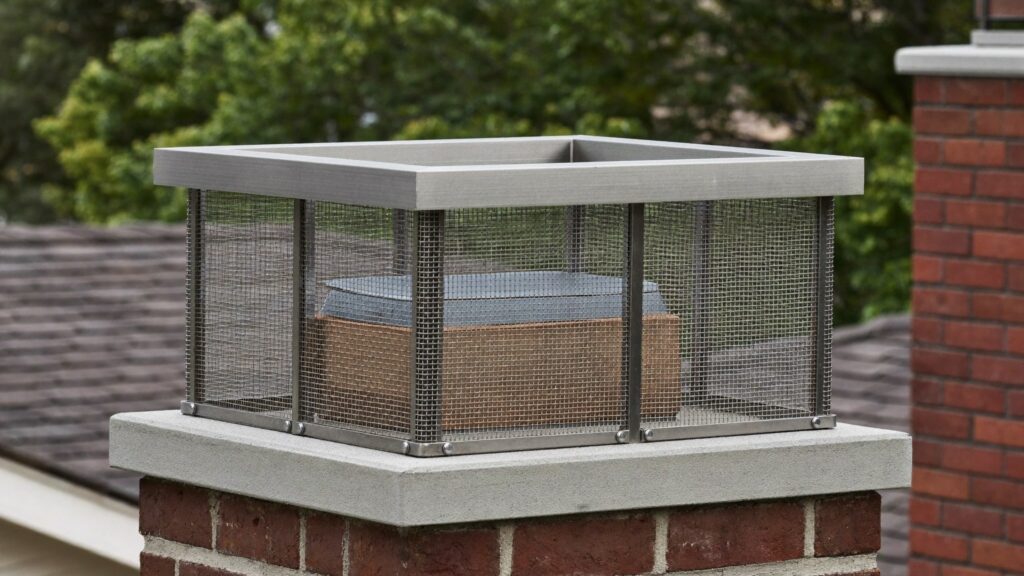
Stainless steel construction, mesh on all four sides at roughly three quarters of an inch, and a lid wide enough to shed rain clear of the crown. Galvanized caps cost less and streak rust down light brick within a few Texas summers. Multi flue covers that span the whole crown suit chimneys with two or three flues. ALC handles chimney cap installation and repair across Dallas, sized on site rather than pulled off a shelf.
Should every chimney be capped?
Every metal lined prefab, yes. A swift cannot climb a slick metal liner, so a bird that drops into one is trapped, and the Fish and Wildlife Service is direct about capping those. An open clay lined flue is a real choice: capping ends the issue permanently, while sweeping every fall and leaving it open keeps a nesting site for a declining species. What is not defensible is leaving it open and never sweeping it.
When can the cap legally go on?
After the birds have left, which in North Texas means mid October at the earliest and any time through March. Installing a cap over an occupied flue seals birds inside, which is what the Migratory Bird Treaty Act prohibits. Decide in June and the technician measures in June, then installs in October.
What happens to the chimney after the swifts leave?
The fall visit closes out a swift season properly. The technician runs the flue top to bottom, removes the nest and droppings, clears the smoke shelf, then looks at what the season left behind: cracked tile on a clay lined flue, liner seams and the chase cover on a prefab. NFPA 211 calls for a chimney to be inspected at least once a year and cleaned whenever obstruction warrants it, and a season of nesting is an obstruction by any reading. A standard sweep in Dallas at $99.99 includes the Level 1 inspection, which for most swift chimneys is all that is needed once the flue is clear.
One nesting season handled that way costs the price of a sweep. Several seasons ignored is where the numbers change, because the flue spends every winter holding moisture against tile and the draft stays restricted through every burn. The table below is what our technicians find most often on DFW chimneys that have hosted swifts without service.
When is a Level 2 inspection worth it?
When the chimney has held nests several seasons running, when the liner shows spalling from the top, when the house is changing hands, or when the draft has changed. A Level 2 puts a camera through the whole flue and runs $250 to $500. Our breakdown of the three chimney inspection levels covers what each one includes.
| What the technician finds | What it leads to if it is left | Typical cost to put right |
|---|---|---|
| A season of nesting material on the smoke shelf | Restricted draft, smoke into the room, faster creosote buildup | $100 to $300 on top of the sweep |
| Uncapped flue on a metal lined prefab | Birds trapped in the liner, blocked venting, persistent odor | $400 to $900 for a fitted cap |
| Packed debris or a dead bird in the flue | Carbon monoxide pushed back inside on the first cold weather burn | $175 to $400 for removal and a draft test |
| Droppings and trapped moisture against clay tile | Spalled and cracked liner tile, eventual liner failure | $250 to $500 for a Level 2 scan now |
| Cracked crown letting water in alongside the birds | Water into the brick, spalling, stained ceilings | $300 to $1,200 |
| Rusted chase cover on a 1990s prefab | Water into the chase, rusted firebox, rotted framing | $400 to $900 |
| Stage three glazed creosote after a restricted season | Chimney fire, cracked tile, damage to framing next to the flue | $400 to $1,500 to remove |
Why Choose ALC Chimney Service in Dallas and Fort Worth?
ALC Chimney Service is family owned, CSIA certified, licensed and insured, with more than 15 years of combined experience and over 10,000 jobs completed across the Dallas Fort Worth metroplex. We hold a 5.0 rating from more than 172 Google reviews, and a fair share of those come from homeowners we told to wait rather than homeowners we sold something to in a hurry.
A sweep with a Level 1 inspection is $99.99, a double chimney is $189.99, and the repair inspection is free. There are no trip fees anywhere in our service area, which runs from Denton and Frisco through Dallas and Irving out to Fort Worth and Arlington, and the full list is on our service area page. On swift calls we identify what is in the flue, say honestly how long the birds have left, and put you on the fall schedule.
Frequently Asked Questions
Is it illegal to remove a chimney swift nest in Texas?
Yes, during the breeding season. Chimney swifts are protected under the federal Migratory Bird Treaty Act, and Texas Parks and Wildlife states that it is illegal to remove or disturb the birds, their nests, eggs or young while they are nesting. A misdemeanor violation carries a fine of up to $15,000 and up to six months of imprisonment. Once the birds have migrated, usually by mid October, the old nest comes out during a normal sweep.
How long do chimney swifts stay in a chimney?
A single nesting cycle runs about seven weeks from the first egg. Incubation takes 19 to 21 days, and the young spend roughly 30 more days in the chimney before they fledge. With eggs typically laid in Texas between early May and early July, most chimneys are clear of nestlings by late August, and the adults leave with the fall migration.
Can I run a fire or smoke them out?
No. Running a fire in an occupied flue kills the birds, which violates federal law, and it is dangerous anyway because nesting material restricts the draft and can catch. The same applies to smoke bombs and repellents sold as a quick fix. The lawful options are to wait, muffle the noise at the damper, and cap the flue after the season ends.
How much does it cost to deal with swifts in a Dallas chimney?
For most homeowners it is the price of a fall sweep, $99.99 at ALC including the Level 1 inspection, or $189.99 for a double chimney. If several seasons of nesting material have to come out, add $100 to $300. A fitted stainless cap installed runs $400 to $900, more for copper or a custom multi flue cover.
Do chimney swifts bring disease or mites into the house?
Texas Parks and Wildlife states that swift nests pose no safety or health hazard in a properly maintained chimney. Droppings left to accumulate for years are a different matter, and that is one of several reasons the annual fall sweep exists. Keep the damper closed while the birds are present and sweep the flue once they have gone.
What is the best month to install a chimney cap in North Texas?
October and November, once the swifts have finished migrating and before the winter burning season gets going. February and March also work if you missed the fall, as long as the cap goes on before the first pairs return. Installing a cap between April and September risks sealing birds inside.
Does homeowners insurance cover chimney damage from birds?
Usually not. Most policies treat animal intrusion and the deterioration that follows as maintenance rather than a covered peril, and a cracked liner traced to years of trapped moisture is a hard claim to win. Check your own declarations page, because language varies by carrier.
If swifts spent this summer in your chimney, get on the fall schedule now rather than calling in December with everyone else. ALC Chimney Service covers Dallas, Fort Worth and the surrounding metroplex with a $99.99 sweep and Level 1 inspection, $189.99 for a double chimney, and free repair inspections. Call (877) 656-0851 or book an appointment through our contact page. For the underlying guidance, see the Texas Parks and Wildlife page for homeowners and chimney sweeps and the U.S. Fish and Wildlife Service overview of chimney swifts.
Find our chimney safety tips faster on Google