Skip to content


A standard chimney sweep in Little Elm, TX runs $99.99 for a single flue with a Level 1 inspection included, which is what ALC Chimney Service charges, and $189.99 when a home has two separate chimneys cleaned on the same visit. Open market pricing across Denton County generally falls between $99 and $250. The number moves for a few reasons. A flue with heavy third degree creosote glaze takes specialty tooling and several hours rather than one. A steep two story roofline needs more setup and fall protection. A chimney untouched for six or seven years usually hides a secondary problem, most often a rusted chase cover or a cracked refractory panel, priced separately from the cleaning.
What Little Elm homeowners typically pay, and why the figure moves:
- Sweep plus Level 1 inspection, single flue: $99.99 flat at ALC. Covers a normal soot and light creosote load on an accessible firebox. Heavy glaze or a blocked flue is quoted after the technician sees it.
- Second chimney on the same visit: $189.99. Applies to homes with a separate master bedroom or outdoor fireplace flue, which is common in the lakeside builds around The Tribute and Valencia on the Lake.
- Level 2 inspection with camera scan: $150 to $400. Required for a home sale, after a chimney fire, or any time the system or fuel type changes. The spread reflects how much flue needs filming and documenting.
- Chimney cap, single flue through multi-flue: $150 to $800. A stock stainless cap on one flue sits at the low end, a custom fabricated multi-flue cover for a wide chase at the top.
- Stainless chase cover replacement: $400 to $1,200. Driven by chase width, metal gauge, and how hard the roof is to work from. Most Little Elm homes with a metal chase are now at the age where the original galvanized cover has rusted through.
- Refractory panel set for a prefab firebox: $350 to $900. Depends on how many panels cracked past the quarter inch limit and whether the manufacturer still stocks that model.
- Full prefabricated firebox replacement: $2,500 to $5,500. Unit, chase framing and a new venting run. This is the bill avoided by replacing a $500 chase cover on time.
The parts of your chimney a technician will name during the visit:
- Flue: the vertical passage that carries smoke and combustion gases out of the house. In a prefab system it is a double or triple wall metal pipe rather than a clay tile stack.
- Refractory panels: the heat resistant ceramic or firebrick panels lining a factory built firebox. They are the firebox’s safety barrier, and cracks wider than a quarter inch mean they need replacing.
- Chase: the wood framed enclosure around a metal chimney pipe, finished in siding, stone veneer or stucco. It reads as masonry from the street but is not.
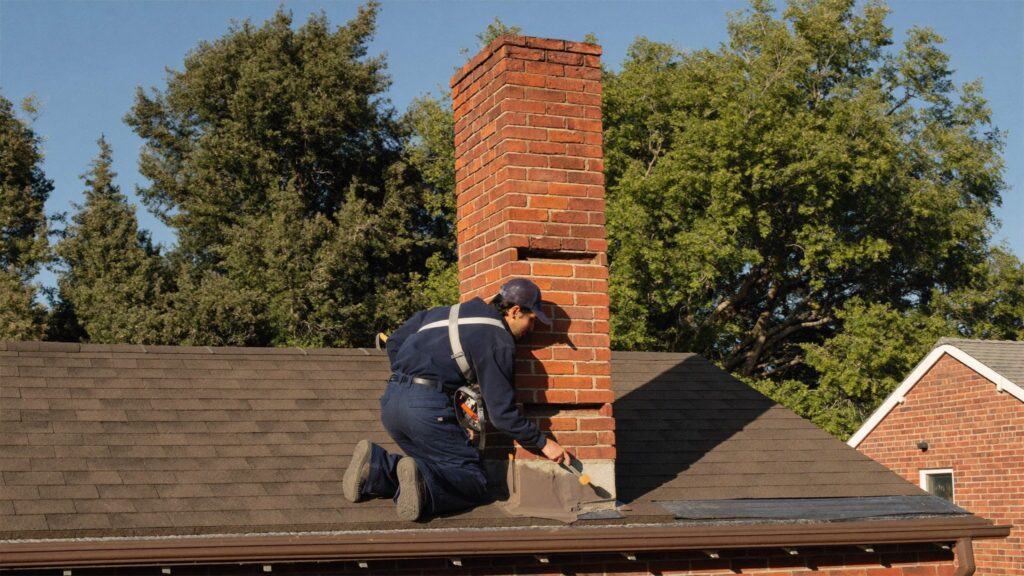
- Chase cover: the metal pan on top of the chase that sheds water away from the framing. Galvanized covers rust and pool water at the center, which is the leading cause of leaks in newer DFW homes.
- Chimney cap: the screened hood over the flue opening. It blocks rain, embers, birds and squirrels, and it is the cheapest part of the system to replace.
- Damper: the plate that opens and closes the flue. Prefab fireplaces use a light metal damper at the throat, which warps with heat and stops sealing.
- Creosote: the tar-like residue wood smoke leaves on flue walls. First degree brushes off, second degree is flaky, and third degree is a hardened glaze needing chemical or rotary removal.
- Flashing: the weatherproofing where the chase meets the roof deck. Failed flashing shows up as a ceiling stain near the fireplace wall long before anyone looks at the roof.
Treat all of these as starting ranges rather than a quote. A chimney system cannot be priced accurately over the phone, and any honest company will say so. A CSIA-certified technician needs to see the firebox, damper, flue and the top of the chase before committing to a number. One more thing worth knowing: the $39 and $49 coupon sweeps that circulate every autumn are almost never a real sweep. They buy twenty minutes, a flashlight, and a pitch for several thousand dollars of repairs the homeowner cannot verify. A flat published price with the inspection included is a better signal than the lowest number on the mailer.

Key Takeaways
- A single flue sweep with a Level 1 inspection is $99.99 in Little Elm, and a second chimney at the same address is $189.99.
- NFPA 211 calls for an inspection of every chimney, fireplace and vent once a year, regardless of how little the fireplace gets used.
- Most Little Elm homes were built after 2000, so the system is usually a factory built metal fireplace rather than full masonry, and it is serviced differently.
- A rusted chase cover is the most common expensive finding in newer DFW builds, and replacing it costs $400 to $1,200 against $2,500 or more for the firebox it protects.
- Book between May and early September. By the first cold snap in late October the schedule across Denton County is two to three weeks out.
- Third degree creosote glaze is a documented fire hazard and cannot be brushed out, so it is quoted separately from a standard sweep.
Why Is a Little Elm Chimney Different From an Older Dallas One?
Little Elm went from roughly 3,600 residents at the 2000 census to well over 50,000 today, which means the housing stock is unusually uniform. Walk through Sunset Pointe, Frisco Hills, Union Park or Paloma Creek and almost every fireplace was installed between 2001 and 2021. That matters more than most homeowners expect, because a factory built fireplace and a hand laid masonry chimney fail in completely different ways and on completely different timelines.
An older masonry chimney in East Dallas fails from the outside in: mortar joints erode, the crown cracks, bricks spall after a freeze. A prefabricated system fails from the top down. The galvanized chase cover rusts first, water gets into the chase framing, the flue pipe corrodes at the joints, and the refractory panels crack from normal thermal cycling. None of that is visible from the living room, which is why the annual inspection matters even on a fireplace that gets lit a dozen times a winter.
Does a prefab fireplace still need a yearly sweep?
Yes, and the inspection half of the visit matters more than the cleaning half. A prefab system has a manufacturer’s listing that governs what parts can be used and what clearances must be maintained. Once a panel cracks or a flue section corrodes, the system no longer performs the way it was tested to perform, and the only way to catch that is to look.
How long does a factory built fireplace last in North Texas?
Manufacturers generally describe 20 to 30 years of service life for the firebox with the venting maintained, which puts the earliest Little Elm installs into replacement territory now. Homes built in the 2010s are typically on their first chase cover and first set of panels, and those are the two items a sweep flags most often.
What Actually Happens During a Chimney Sweep Visit?
A proper sweep is a contained, unhurried process, and a Little Elm homeowner should expect it to take 45 minutes to about 90 minutes for a single flue. Nothing in the house should be dirtier when the technician leaves than it was when he arrived. If drop cloths never come out of the truck, that is a problem.

What does the technician do inside the house?
The firebox is sealed off and a HEPA rated vacuum runs the entire time to capture airborne soot. The damper is opened and checked for warping and for a proper seal. The smoke chamber and smoke shelf above the damper are brushed and vacuumed, since that is where debris collects first. The refractory panels are inspected for cracks, gaps at the joints and any sign that heat has reached the metal shell behind them. In a gas conversion, the log set, burner ports and pilot assembly get checked while the firebox is open.
What does the technician do on the roof?
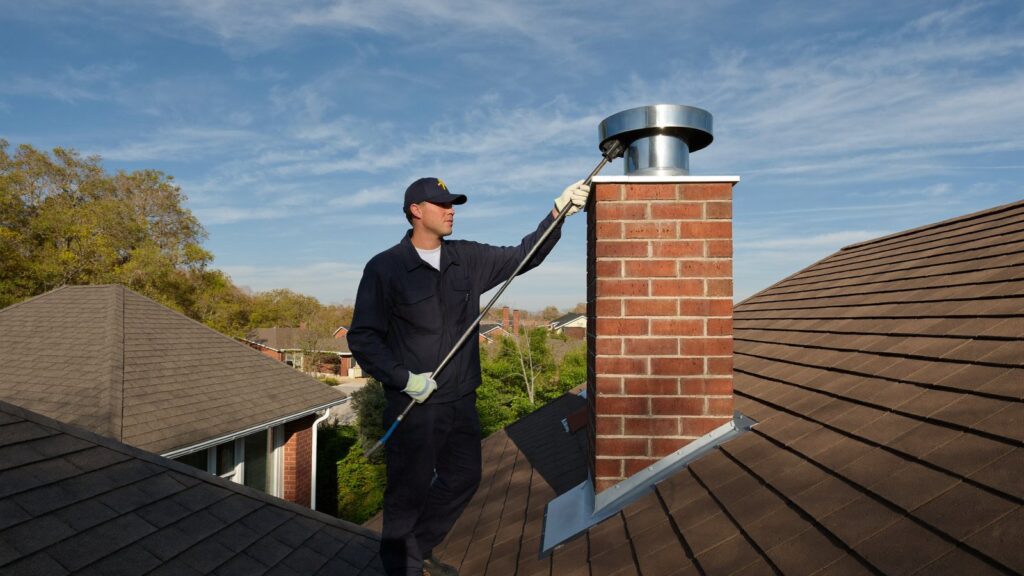
The cap comes off and the flue is brushed from the top with rods sized to that flue. The chase cover is checked for rust, standing water at the center, and seams opening at the corners. The cap screen is cleared of nesting material, and flashing at the roof line is checked for lifted edges and failed sealant. On a two story Little Elm roofline the setup takes longer than the brushing does, which is part of why honest pricing does not go much below $99.
What do you get at the end?
A written Level 1 inspection report, photographs of anything needing attention, and a plain explanation of what is urgent against what can wait a season. Nobody should be asked to approve a $900 repair on the strength of a verbal description of something on their own roof that they cannot see.
How Often Should a Little Elm Fireplace Be Swept?
NFPA 211 is clear on the inspection side: every chimney, fireplace and venting system gets inspected at least once a year. The cleaning side is condition based rather than calendar based. The practical rule the industry works to is a sweep once a quarter inch of creosote has built up on the flue walls, or sooner if there is glaze.
For most Little Elm households that works out to an annual visit. A family burning real wood two or three nights a week from Thanksgiving through February will hit the quarter inch threshold inside one season. A household that lights the fireplace four or five times a year will not, but they still need the annual look, because squirrels, chimney swifts and rust do not care how often the damper opens.
What about gas logs and gas inserts?
Gas still needs the annual inspection. It burns cleaner, so creosote is not the concern, but the vent can be blocked by nesting material or a collapsed cap screen, and a blocked gas vent puts carbon monoxide into the house rather than smoke, which gives no warning at all. The burner, oxygen depletion sensor and venting path all get checked.
Is a sweep needed before selling a Little Elm home?
A Level 2 inspection is the right call rather than a Level 1. Any transfer of property triggers a Level 2 under NFPA 211, meaning a camera scan of the full flue interior and documentation a buyer’s inspector can read. Given the resale volume through Little Elm ISD neighborhoods this comes up constantly, and doing it before the listing goes live is cheaper than renegotiating during the option period.
What Problems Do Sweeps Find Most Often in Little Elm?
The pattern here is consistent enough to predict. On a street of homes built in the same two year window, the same three findings come up again and again, because the same builder used the same components on the same timeline.
First is the chase cover. The original cover on most North Texas tract homes is galvanized steel with a flat or barely sloped top. Twelve to eighteen years of DFW weather, spring hail and standing water at the center, and it rusts through at the low point. Water then runs down inside the chase, soaks the framing, and corrodes the flue pipe. Replacing it with a sloped stainless cover is a half day job. Replacing a firebox and venting that water has destroyed is a different conversation.
Second is cracked refractory panels, which is ordinary thermal fatigue rather than anyone’s fault. Third is creosote buildup in households burning unseasoned wood, which is common given how much mesquite and post oak gets sold green around the lake.
Does the lake affect anything?
Humidity off Lewisville Lake accelerates corrosion on anything already compromised. A chase cover with a rust spot on a lakefront street in The Tribute will open up faster than the same cover inland in Frisco Hills. Wind exposure on open lakeside lots also drives more downdraft complaints, which usually get solved with a taller cap rather than anything structural.
What about animals?
Chimney swifts are federally protected and cannot be removed while nesting, which in Texas runs roughly March into August. That is one more argument for booking in late summer or early autumn, after the birds have gone and before the first cold front. Squirrels and raccoons are a year round problem on wooded lots near the shoreline, and a properly screened cap ends it permanently.
Most chimney problems are cheap early and expensive late, and the gap between the two is measured in years rather than weeks. This is what the common Little Elm findings turn into when nothing is done about them.
| What the sweep finds | Where it ends up if ignored | Typical repair cost |
|---|---|---|
| Rusted or pooling chase cover | Water into the chase framing, corroded flue pipe, eventual firebox replacement | $400 to $1,200 |
| Missing or damaged chimney cap | Rain in the flue, nesting birds, rusted damper, moisture in the firebox | $150 to $800 |
| Cracked refractory panels | Heat reaching the metal shell behind the firebox, which voids the listing | $350 to $900 |
| Third degree creosote glaze | Flue fire, which in a prefab system usually means replacing the venting | $400 to $900 |
| Failed roof flashing | Ceiling and drywall damage on the fireplace wall, then framing rot | $300 to $800 |
| Warped or stuck damper | Conditioned air lost year round, smoke spilling into the room | $250 to $700 |
| Nesting material in the cap screen | Blocked vent, smoke in the house, carbon monoxide risk on gas appliances | Included with the sweep |
When and How Should You Book a Chimney Sweep in Little Elm?
Book between May and early September. Demand across Denton County is almost perfectly seasonal and almost perfectly wrong: nobody calls in June, and everybody calls the week the first cold front arrives, usually between late October and mid November. In the off season the schedule is open, the technician is not rushed, and any repair that turns up gets fixed before the fireplace is needed. After the first freeze warning the whole metroplex is two to three weeks out, which is exactly when a cracked panel is most inconvenient to find. The same pattern holds for chimney sweeps in Denton and across the rest of the county.
What should you have ready when you call?
Booking takes about three minutes on (877) 656-0851 or the online form. Know how many flues the house has, since that is the difference between the $99.99 and the $189.99 price, roughly what year the house was built, what gets burned, and when the chimney was last serviced. Mention anything odd: smoke rolling into the room, a smell on humid days, scratching above the damper, or a stain on the ceiling near the fireplace wall.
What happens on the day?
Someone over 18 needs to be home, the appointment comes with an arrival window rather than an exact minute, and the technician will want the area within about six feet of the fireplace cleared. No trip fee applies anywhere in the Little Elm service area, and the same flat rates hold across the Frisco and Lewisville service areas, along with Oak Point, Cross Roads, Hackberry and The Colony.
Why Choose ALC Chimney Service in Little Elm?
ALC Chimney Service is a family owned company working across Dallas and Fort Worth, and the Little Elm work is handled by the same crews covering the rest of Denton County. The technicians are CSIA certified, the company is licensed and insured, and the team brings more than 15 years of combined experience across upward of 10,000 jobs in the metroplex, with a 5.0 Google rating from more than 172 reviews.
Pricing is published rather than quoted on the doorstep. A chimney sweep with a Level 1 inspection is $99.99, a second chimney on the same visit is $189.99, and a repair inspection is free. There are no trip fees anywhere in the service area, which covers Little Elm, Oak Point, Hackberry, Cross Roads, The Colony and the surrounding Denton County communities. If the inspection finds nothing needing attention this year, that is what the report will say, and cap and chase cover work is quoted in writing with photographs attached.
Frequently Asked Questions
How much is a chimney sweep in Little Elm, TX?
A single flue sweep including a Level 1 inspection is $99.99, and a second chimney on the same visit is $189.99. Across Denton County generally, expect $99 to $250. Heavy creosote glaze, a blocked flue, or six or more years without service carries additional cost, quoted after the technician has seen the system rather than over the phone.
How long does a chimney sweep take?
Plan on 45 to 90 minutes for a single flue, covering the interior work, the roof work and the written report. A second flue adds roughly 30 to 45 minutes. A steep two story roofline or a heavy soot load pushes the visit toward the longer end, mostly because setup and fall protection take longer than the brushing.
Will a sweep make a mess in the house?
It should not. The firebox is sealed and a HEPA rated vacuum runs for the whole visit, with drop cloths protecting the floor and anything within a few feet of the hearth. A technician who starts brushing without putting drop cloths down is not doing the job properly, and that is fair reason to stop the appointment.
Does a gas fireplace need a chimney sweep?
It needs the annual inspection even though there is no creosote to remove. A gas appliance vents through the same flue, and that flue can be blocked by nesting material, debris or a collapsed cap screen. A blocked gas vent pushes carbon monoxide back into the house with no smoke and no smell to warn anyone, which makes the annual check more important rather than less.
What is the difference between a Level 1 and a Level 2 inspection?
A Level 1 covers the readily accessible parts of the system and comes with a routine sweep. A Level 2 adds a camera scan of the flue interior plus accessible attic and crawl space areas. NFPA 211 requires it when a home changes hands, after a chimney fire or severe storm, or when the appliance or fuel type changes.
My fireplace is almost never used. Can the sweep be skipped?
The cleaning can often wait, since creosote accumulates from burning. The inspection cannot. Rust, failed sealant, storm damage, a rotted chase cover and animals in the flue all happen to a fireplace that is never lit, and those are the findings that get expensive when they go unnoticed for years.
Why does my house smell like smoke when the fireplace is cold?
Usually creosote absorbing humidity, which is why it shows up on muggy days. Sometimes it is negative pressure pulling air down the flue, common in tightly built newer homes with powerful range hoods. A sweep removes the odour source, and a top sealing damper fixes the draft side if it persists.
Are the $49 chimney sweep coupons real?
Rarely. That price does not cover the labour, equipment or insurance for a genuine sweep and inspection, so the visit is usually a short look followed by a pitch for thousands of dollars of repairs the homeowner cannot confirm. A published flat rate with the inspection included and photographs of every finding is a better signal than the lowest number on a mailer.
Little Elm’s fireplaces are younger than most of the metroplex, which is good news: nearly everything found at this stage is cheap to fix if it is caught on time. A sweep with a Level 1 inspection is $99.99, a second chimney is $189.99, repair inspections are free, and there are no trip fees in the service area. Call (877) 656-0851 or request an appointment online before the first cold front fills the schedule.
Find our chimney safety tips faster on Google