Skip to content


Chimney repair in Waxahachie usually lands between $350 and $2,800, while a masonry rebuild above the roofline runs $1,500 to $5,000 and a full rebuild from the firebox up reaches $5,000 to $12,000. ALC Chimney Service sends a technician out for a free repair inspection first, so you know which bracket you are in before anyone writes a number on a contract. What moves the price in Ellis County is age and soil. Much of the housing stock inside the loop went up between 1880 and 1935 with soft lime mortar and an unlined clay flue, and the Houston Black clay under these neighborhoods swells and shrinks enough through a Texas year to pull a chimney off the wall it was built against. Access matters too, since a steep roof on a two story Victorian costs more to work safely than a ranch out in Garden Valley.
Typical chimney repair pricing in Waxahachie and the rest of Ellis County:
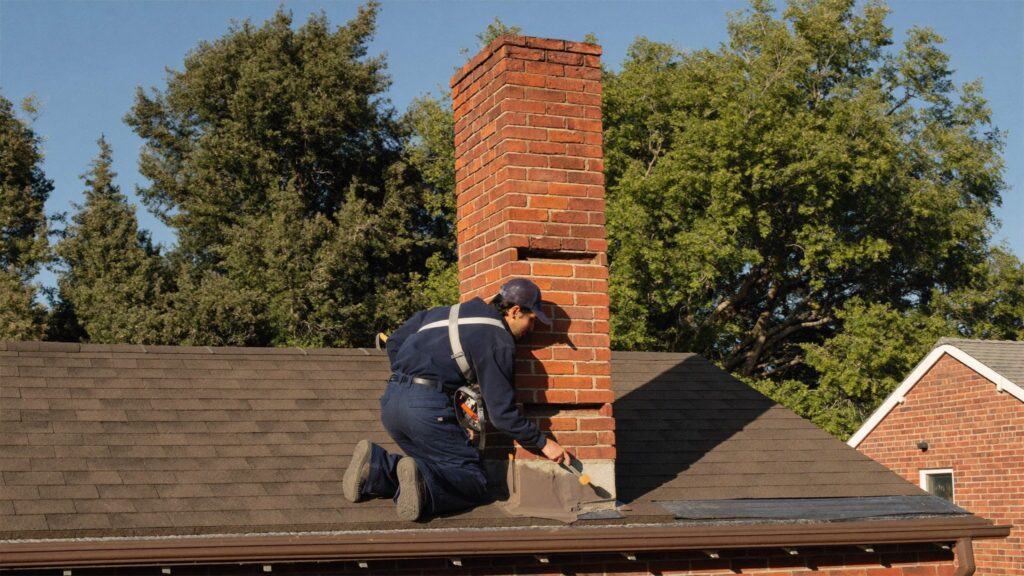
- Tuckpointing and repointing, $450 to $2,500. Price follows how many square feet of joint get ground out and refilled, and whether a ladder reaches it or the crew needs staging.
- Chimney crown repair or replacement, $300 to $2,200. Sealing hairline cracks sits at the low end, pouring a reinforced crown with a real overhang at the top.
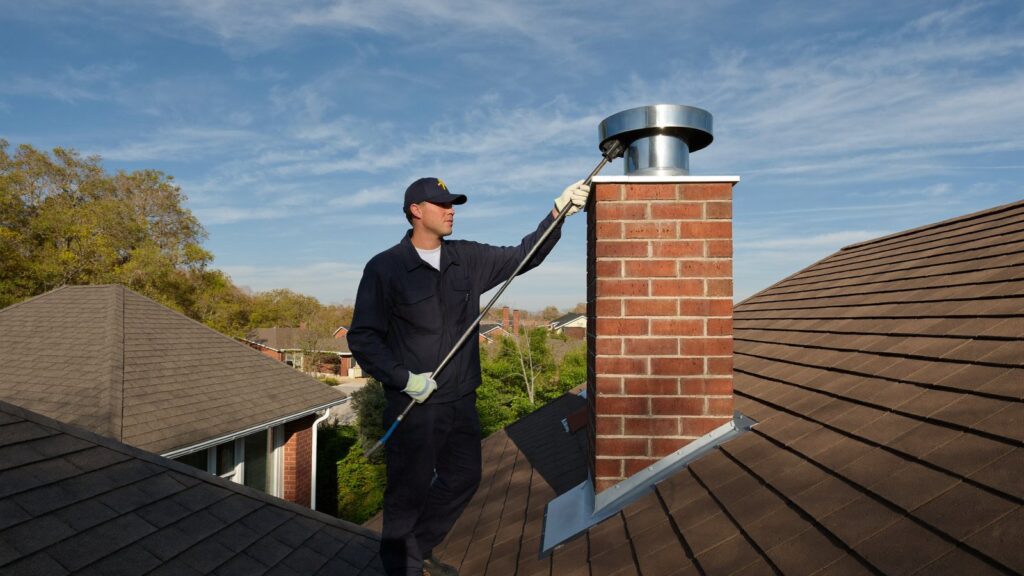
- Chimney cap or chase cover, $150 to $1,200. A stainless single flue cap is cheap. A chase cover fabricated to measure for a wide prefab chase costs several times that.
- Flashing repair at the roofline, $300 to $1,200. Resealing existing step flashing is inexpensive. Pulling shingles for new counter flashing with a reglet cut into the brick is where it climbs.
- Liner repair or stainless relining, $1,800 to $5,000. Driven by flue height, offsets, and whether the appliance is an open fireplace, an insert or a furnace.
- Firebox repair, $500 to $2,800. A few cracked firebrick and refractory joints is the low end, rebuilding the back wall and throat the high end.
- Partial rebuild above the roofline, $1,500 to $5,000. Set by course count, brick match on a historic elevation, and whether crown, flashing and cap go at the same time.
The parts of your chimney a technician will name on the report:
- Flue. The vertical passage carrying smoke and combustion gases out of the house. On some pre 1930 Waxahachie chimneys there is no liner in it at all.
- Liner. The protective inner surface of the flue, clay tile, stainless pipe or cast in place. It keeps heat and acidic gases off the brick and framing.
- Creosote. The tarry residue wood smoke leaves on the flue walls. It burns, and a heavy glazed layer turns a normal fire into a chimney fire.
- Damper. The plate above the firebox that opens for a fire and closes to stop conditioned air escaping. On century old fireplaces it is often rusted open.
- Chimney crown. The concrete slab across the top that sheds water off the brick. A thin mortar wash instead of a real crown is the most common local defect.
- Chase cover. The metal lid on a framed prefab chase, common in subdivisions built from the late 1990s on. Galvanized covers rust through and let water in.
- Flashing. The layered sheet metal sealing the joint where the chimney passes through the roof. It fails quietly and shows up as a ceiling stain inside.
Treat every range above as a starting point rather than a quote. Two chimneys on the same street in the North Rogers historic district can need very different work, and the only way to price yours is to have a CSIA certified technician look at the crown, flue, firebox and flashing together. Be careful with the $49 and $59 sweep coupons that circulate every fall. They are a foot in the door, and the visit tends to end with an urgent finding and a bill that bears no relation to the advertised price. A fair sweep price here includes a real Level 1 inspection and a written report with photographs.

Key Takeaways
- Most Waxahachie chimney repairs fall between $350 and $2,800, a partial rebuild above the roofline runs $1,500 to $5,000, and a full rebuild reaches $5,000 to $12,000.
- Homes built before about 1935 were laid up in soft lime mortar, which needs a softer repointing mortar rather than a harder modern mix.
- The Houston Black clay across Ellis County moves seasonally, and that movement is behind most of the stair step cracks and leaning stacks on local chimneys.
- NFPA 211 calls for an inspection every year, and a Level 2 inspection whenever the system changes, after a chimney fire, or before a sale.
- A failed crown or rusted chase cover is the cheapest problem to fix and the most expensive to ignore, because water damage compounds with every freeze.
- Spring and late summer are the easiest times to book masonry work here, since the October through December rush pushes scheduling out by weeks.
Why do older Waxahachie chimneys crack more than newer ones?
Waxahachie holds one of the better preserved collections of late Victorian and early twentieth century housing in North Texas, and that is why repair calls here look different from the ones in Frisco or Prosper. A chimney built in 1898 was laid up with lime based mortar, deliberately softer than the brick so the wall could flex and moisture could leave through the joint rather than the brick face. That lasts when it is maintained, but after a century of Texas weather the joints give up first.
The second factor is underfoot. Most of Ellis County sits on expansive Houston Black clay, which takes on water in spring, loses it in a dry August, and moves vertically by inches rather than fractions. A chimney is a heavy narrow column on its own footing, so it does not always move in step with the house. Over several cycles that shows up as a gap between chimney and siding, a stair step crack, or a stack out of plumb. Add a wet November and a hard freeze, and water sitting in open joints turns to ice, which is where the flaking brick faces on north facing walls come from.

What did the February 2021 freeze do to local masonry?
It drove the frost line deeper into brick than a normal North Texas winter does, and chimneys with open joints or a cracked crown took on water and then froze. Much of the spalling and crown failure we still find here traces back to that week, and it usually surfaced as a leak two or three rainy seasons later.
What are the most common chimney repairs in Waxahachie homes?
Across the historic districts and the older streets off Marvin and Oldham, the list is predictable. Eroded mortar joints come first, usually above the roofline where brick takes weather from every direction. Crown failure is close behind, because many of these chimneys never had a poured crown, only a thin mortar wash that cracks within two decades. Flashing is third and the one homeowners find last, since it shows up as a ceiling stain rather than anything visible outside.
Unlined or deteriorated clay flues come up often on pre 1940 homes, particularly when someone wants to use a fireplace that sat idle for years. On the newer side of town the Buffalo Ridge and Emory Lakes era subdivisions bring a different list: rusted chase covers, cracked refractory panels and caps that blew off in a spring storm. Because chimney swifts are federally protected while nesting, a blocked flue found in May is a timing question as much as a repair.
How do I know if I need repointing or a rebuild?
Depth and plumb. If mortar is eroded less than roughly three quarters of an inch deep and the stack is straight, repointing is the right repair. Once joints are raked deeper than that, bricks can be rocked by hand, or the chimney is leaning, refilling joints is money spent on something already compromised and a partial rebuild is the honest recommendation.
Is a cracked crown urgent?
More urgent than it looks. The crown keeps rain out of the space between the flue liner and the brick shell. Hairline cracks seal for a few hundred dollars. Leave them two winters and water gets into the core, freezes and pushes brick apart from inside, turning a $400 repair into a $3,000 one. Our guide to chimney waterproofing in North Texas walks through that sequence.
How much does chimney repair cost in Waxahachie, TX?
Small repairs, meaning crown sealing, a new stainless cap, flashing resealing or a modest section of repointing, run $350 to $1,200. Mid range work such as full crown replacement, extensive repointing or firebox repair lands between $1,200 and $3,000. Structural work is its own tier: a partial rebuild above the roof is $1,500 to $5,000, and a rebuild reaching the firebox runs $5,000 to $12,000.
Waxahachie sits below the Dallas average on labor and above it on historic brick matching, since salvage or custom brick for an 1890s elevation costs more than a stock modern unit. To compare against the metro baseline, our chimney repair service page lays out the same categories across DFW, and the city pages for DeSoto and Duncanville show what the same work costs further up US 67.
What makes one quote double another?
Scope and access. A quote covering repointing alone is far cheaper than one covering repointing plus a new crown, flashing and cap, and the second is usually the right job. Roof pitch and height change the labor too, since a two story historic home needs staging a ranch does not. Ask every bidder to itemize.
Does insurance cover any of it?
Sudden damage is often covered and gradual deterioration generally is not. Hail that cracks a crown, wind that takes a cap off, or a lightning strike that splits brick are usually claimable under Texas policies. Mortar that eroded over forty years is maintenance. Photograph everything before work starts, keep the inspection report, and file inside your policy’s reporting window.
Does a historic home in Waxahachie need a special approach?
Yes, and getting it wrong is how good brick gets ruined. Repointing mortar must be softer than the brick around it. When a contractor repoints an 1890s chimney with a hard portland mix, the new joints end up stronger than the brick, so the next round of movement and freeze cycling relieves itself through the brick faces instead, often within five to ten years.
Brick matching matters too. The soft orange and red common brick on turn of the century Waxahachie houses is not what a modern supply yard stocks, so an honest rebuild means salvage or custom brick, and a reputable crew will hold a sample against your wall before ordering.
What mortar should be used on 1890s brick?
A lime based mix, commonly Type O or Type K depending on how soft the brick tests, rather than the Type N or S used on modern construction. The goal is compressive strength below that of the brick. Any contractor who cannot name the mix they plan to use should not be grinding out your joints.
Do I need a permit or historic district approval?
Routine repair such as repointing, a crown pour or a cap install normally needs no permit, while a rebuild, a relining or anything structural usually does. Properties in Waxahachie’s historic districts can carry an extra review for changes visible from the street. Our overview of chimney repair permits and codes across Dallas and Fort Worth explains how these work, and the city building office is the final word.
When does a chimney need to be rebuilt instead of repaired?
Four findings move a chimney from the repair column to the rebuild column. The stack is out of plumb or separating from the house. Joints are raked deep enough that bricks rock by hand. Brick faces have spalled across a broad area, meaning the hard outer skin is gone and the soft interior exposed. Or the liner has collapsed and brick is cracked through the full wall thickness, which NFPA 211 treats as a direct fire and carbon monoxide risk.
What does the inspection look for?
A Level 1 inspection covers everything readily accessible: firebox, damper, visible flue, crown, cap and flashing. A Level 2 inspection adds video scanning of the full flue plus attic and crawlspace checks, and is what you want before a sale, after a chimney fire, or when a repair decision hinges on liner condition. Level 3 opens up structure for suspected hidden damage.
How do you keep a repaired chimney from failing again?
Water is what kills masonry here, so every durable repair ends with a water plan: a crown with a real overhang and drip edge, a stainless cap with a spark arrestor over every flue, layered flashing rather than caulk, and a vapor permeable repellent on the exposed brick. The breathable part matters, because a film forming sealer traps moisture in the wall and makes spalling worse.
After that it is annual attention. A yearly sweep and inspection catches a cracked crown or a lifted flashing edge while it is still a small bill. We handle that alongside the rest of our chimney services in Waxahachie, and the report gives you a dated photographic record for any future storm claim.
Is waterproofing worth it?
On older brick in Ellis County, yes. A vapor permeable siloxane repellent runs $400 to $1,000 and holds seven to ten years. Against a $1,500 to $5,000 rebuild driven by freeze damage that is straightforward math.
How often should it be swept and inspected?
NFPA 211 calls for an annual inspection of every chimney, fireplace and vent regardless of how much you burn, and a sweep once creosote reaches roughly an eighth of an inch. For a household burning most weekends through a North Texas winter, that is one sweep a year. Occasional users still need the inspection, because crowns, caps and flashing deteriorate whether you light a fire or not. The Chimney Safety Institute of America publishes the certification standard we work to, and NFPA publishes the code itself.
| What the inspection finds | What it leads to if ignored | Typical repair cost |
|---|---|---|
| Eroded mortar joints above the roofline | Water into the chimney core, freeze damage, loose brick, eventual rebuild | $450 to $2,500 |
| Cracked or missing chimney crown | Saturated masonry, spalling brick faces, liner damage from the top down | $300 to $2,200 |
| Rusted chase cover on a prefab chimney | Water into the chase, rotted framing, firebox and wall damage | $400 to $1,200 |
| Failed flashing at the roof joint | Ceiling stains, attic framing rot, drywall and insulation replacement | $300 to $1,200 |
| Cracked or missing clay flue liner | Heat and combustion gas reaching framing, chimney fire and carbon monoxide risk | $1,800 to $5,000 |
| Stair step cracking with the stack out of plumb | Progressive separation from the house, partial collapse in high wind | $1,500 to $5,000 |
| No cap over an open flue | Rain, debris, swift nesting and raccoon entry, blocked draft | $150 to $600 |
Why Choose ALC Chimney Service in Waxahachie?
We are a family owned, CSIA certified chimney company, licensed and insured, with more than 15 years of combined experience and over 10,000 jobs completed across the Dallas Fort Worth metroplex. Our Google rating is 5.0 from more than 172 reviews, which we guard carefully, because a chimney company’s reputation in a town the size of Waxahachie travels faster than any advertising.
In practice that means a few specific things here. Our sweep is $99.99 and includes a Level 1 inspection with photographs, and a double chimney is $189.99. Repair inspections are free, and there are no trip fees anywhere in our service area, Waxahachie included. We carry the softer lime based mortars that pre 1935 brick needs, and we will tell you plainly when a chimney needs a rebuild instead of selling repointing on a stack that will not hold it. Every finding comes with a photograph or a flue camera scan.
Frequently Asked Questions
How much does chimney repair cost in Waxahachie, TX?
Most repairs run $350 to $2,800 depending on scope. Crown sealing, a new cap or flashing work sits at the low end, full crown replacement and extensive repointing in the middle, and a partial rebuild above the roofline runs $1,500 to $5,000. A complete rebuild from the firebox up is $5,000 to $12,000.
How do I know if my chimney needs repair or just a sweep?
A sweep removes creosote and soot. Repair addresses the structure. Crumbling mortar, cracked brick, a stained ceiling near the chimney, a damper that will not move, or white chalky staining on the brick all point to repair work. A Level 1 inspection, included with our $99.99 sweep, tells you which you need and documents it with photographs.
Can I use my fireplace in an older Waxahachie home with an unlined chimney?
Not safely. NFPA 211 treats an unlined or failed flue as unsuitable for use, because heat and acidic gases reach the surrounding brick and any framing touching it. Many pre 1940 chimneys here were built without a liner. A stainless liner installation, generally $1,800 to $5,000, brings the system back into service.
Why does my chimney crack keep coming back after it was patched?
Usually because the cause was never addressed. On expansive Ellis County clay, seasonal soil movement reopens a cosmetic patch within a year or two. If a crack opens in summer and closes in spring, you are watching soil movement. The fix accounts for it, through a flexible lime mortar, a proper rebuild of that section, or the chimney’s own footing.
Does homeowners insurance cover chimney repair in Texas?
It depends on the cause. Sudden events such as hail, wind, lightning or a chimney fire are commonly covered. Gradual deterioration, including mortar that eroded over decades, is treated as maintenance and is not. Photograph the damage and keep your inspection report, since adjusters rely on dated evidence.
Do you work on prefab fireplaces in newer Waxahachie subdivisions?
Yes. Factory built systems in the post 1990 builds around Garden Valley, Buffalo Ridge and Lake Waxahachie fail differently: rusted chase covers, cracked refractory panels and storm damaged caps. These need manufacturer approved parts rather than masonry repair, and the wrong component voids the listing that makes the appliance legal to operate.
If your chimney is showing crumbling mortar, a cracked crown, a stained ceiling or brick that is starting to flake, get eyes on it before the first cold snap. ALC Chimney Service offers a free repair inspection across Waxahachie and Ellis County, a $99.99 sweep with a Level 1 inspection, $189.99 for a double chimney, and no trip fees. Call (877) 656-0851 or reach us through our contact page to get on the schedule.
Find our chimney safety tips faster on Google