Skip to content
Chimney leaks are usually caused by broken flashing, cracked crowns, damaged caps, or deteriorating masonry that allows water to enter the chimney system or surrounding structure. You might first notice subtle signs, a faint musty smell, maybe a small stain on the ceiling, and then suddenly it’s obvious something’s wrong.
In Texas, this tends to show up a bit differently. The heat, sudden storms, humidity swings, all of it puts extra stress on chimney components. Materials expand, contract, and eventually… fail. Not always dramatically, sometimes it’s just a small gap that slowly lets water in over months.
And that’s the tricky part. Chimney leaks rarely start as emergencies, but they almost always end that way if ignored.
Common Signs Your Chimney Is Leaking
Before getting into causes, it helps to recognize what a chimney leak actually looks like in real life, not just in theory.
Sometimes it’s obvious. Other times, it’s frustratingly subtle.
Interior Warning Signs
Water stains on ceilings or walls near the fireplace
Peeling paint or bubbling drywall
Musty or damp odors, especially after rain
Rust on the damper or firebox
Dripping sounds inside the chimney
I’ve seen cases where homeowners assumed it was a roof leak, only to later realize the chimney was the real source. It happens more often than you’d think.
Exterior Warning Signs
Cracked or missing mortar joints
White staining on bricks, called efflorescence
Visible crown cracks at the top
Loose or missing chimney cap
Damaged flashing where chimney meets roof
Why Chimneys Leak More in Texas
This is worth calling out because Texas homes face a slightly different set of challenges.
Heat is one factor. Intense sun exposure dries out mortar and accelerates cracking. Then you get sudden storms, heavy rain hitting already weakened surfaces. Add humidity, and moisture gets trapped instead of drying out properly.
It’s kind of a cycle, dry, crack, absorb, repeat.
Older homes in Dallas and surrounding areas are especially vulnerable because many chimneys were built with materials that weren’t designed for these temperature swings long term.
Common Reasons for a Leaking Chimney
Let’s break down the actual causes. Not just a list, but how they happen, and why they matter.
1. Damaged or Improper Flashing
Flashing is the metal barrier that seals the joint between your chimney and roof. It’s one of the most common failure points.
Over time, flashing can:
Rust
Warp from heat
Separate from the chimney or roof
Be installed incorrectly from the start
And once there’s even a small gap, water finds it. Always does.
In Texas, thermal expansion makes this worse. Metal expands in the heat, contracts at night, and that constant movement loosens seals.
Why it matters:
Water entering through flashing doesn’t just affect the chimney. It can damage your roof decking, insulation, and interior ceilings.
2. Cracked Chimney Crown
The chimney crown sits at the very top. It’s supposed to direct water away from the structure.
But crowns crack. Especially in climates with heat fluctuations.
Even small hairline cracks allow water to seep in. Then that water expands when temperatures shift, making the cracks worse over time.
It’s gradual. Almost quiet damage.
Common issues include:
Poor initial construction
Lack of waterproof coating
Aging concrete
Exposure to sun and storms
3. Missing or Damaged Chimney Cap
This one is surprisingly common, and honestly, one of the easiest to fix.
A chimney cap acts like a roof for your flue. Without it, rain goes straight down the chimney.
No resistance. No protection.
Caps can be:
Missing entirely
Rusted through
Blown off during storms
Improperly sized
Why it matters:
Water inside the flue can damage liners, dampers, and even seep into the firebox.
4. Brick and Mortar Deterioration
Bricks are naturally porous. Mortar joints, even more so.
Over time, especially in Texas conditions, they absorb water, dry out, crack, and begin to break apart.
This process is called spalling, where bricks start flaking or chipping.
Once that starts, water penetration increases quickly.
Signs to watch:
Flaking brick surfaces
Gaps in mortar joints
White residue on brick (efflorescence)
5. Chimney Condensation Issues
This one confuses a lot of homeowners because it doesn’t always feel like a “leak.”
Condensation forms when warm air meets a cold chimney liner. If the liner is damaged or improperly sized, moisture builds up inside.
Eventually, that moisture shows up as:
Drips inside the firebox
Rusted components
Damp smells
So technically, water isn’t entering from outside, but the result looks very similar.
Chimney Leak Causes vs Severity
| Cause | Severity Level | Repair Complexity | Urgency |
|---|---|---|---|
| Damaged Flashing | High | Medium | Immediate |
| Cracked Crown | Medium to High | Medium | High |
| Missing Cap | Medium | Low | High |
| Brick/Mortar Damage | High | High | Immediate |
| Condensation | Low to Medium | Medium | Moderate |
| Problem | Recommended Fix |
|---|---|
| Flashing Failure | Re-seal or replace flashing |
| Cracked Crown | Seal or rebuild crown |
| No Chimney Cap | Install proper cap |
| Masonry Damage | Repointing and waterproofing |
| Condensation | Fix liner or ventilation |
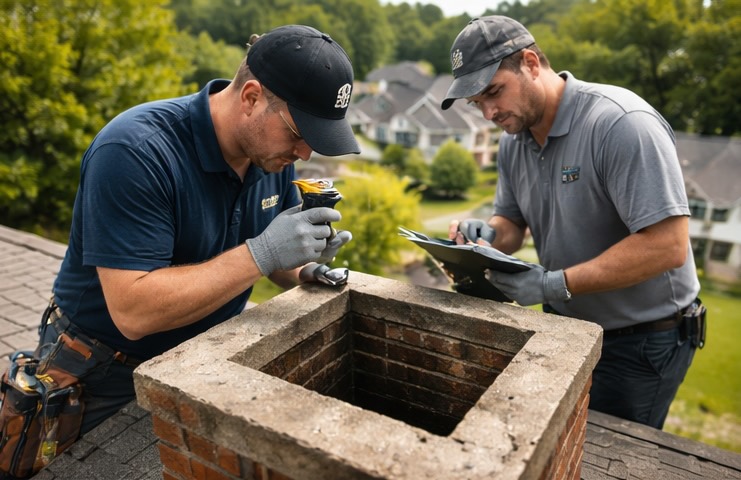
How to Identify Exactly Where Your Chimney Is Leaking
This is where things get a bit tricky. Because a chimney leak rarely announces itself clearly. It doesn’t say, “hey, I’m coming from the flashing” or “this is definitely the crown.” It just shows symptoms, and you’re left connecting the dots.
And sometimes… the dots don’t connect neatly.
Step-by-Step Leak Inspection Process
If you’re trying to narrow it down, here’s a practical way to approach it.
1. Start Inside the Home
Look around the fireplace and nearby ceiling areas.
Are stains appearing after rain specifically?
Is there rust on the damper or firebox?
Do you smell moisture even when it hasn’t rained?
If the issue appears only after storms, it’s likely an external entry point like flashing or crown.
If it’s constant, even in dry weather, you might be dealing with condensation or internal damage.
That distinction matters more than people realize.
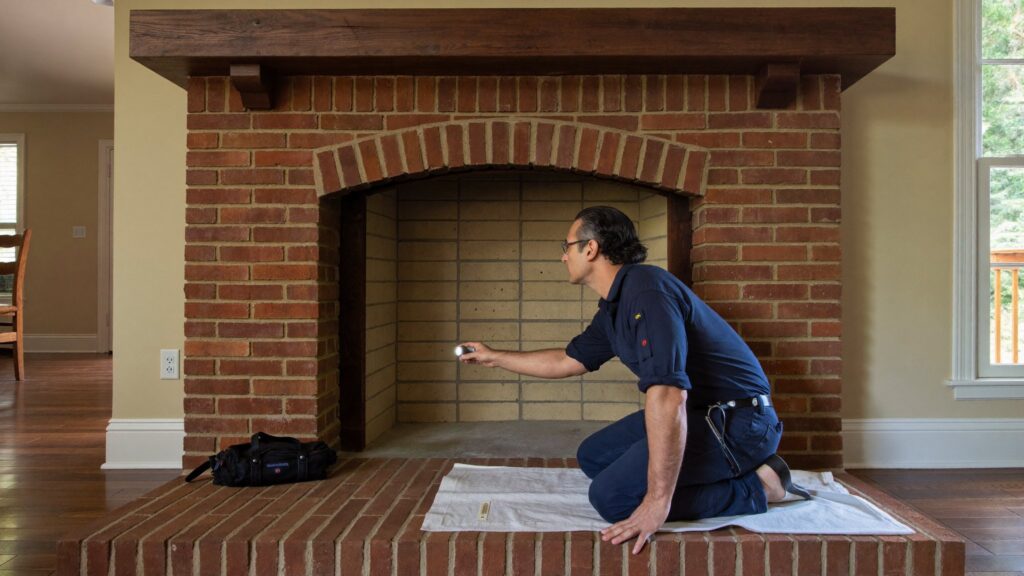
2. Check the Firebox and Flue
Open the damper and look upward.
Any visible water streaks?
Debris or signs of water pooling?
Rust forming on metal components?
If water is clearly coming down the flue, I’d almost immediately suspect a missing or damaged chimney cap.
It’s one of the more straightforward diagnoses.
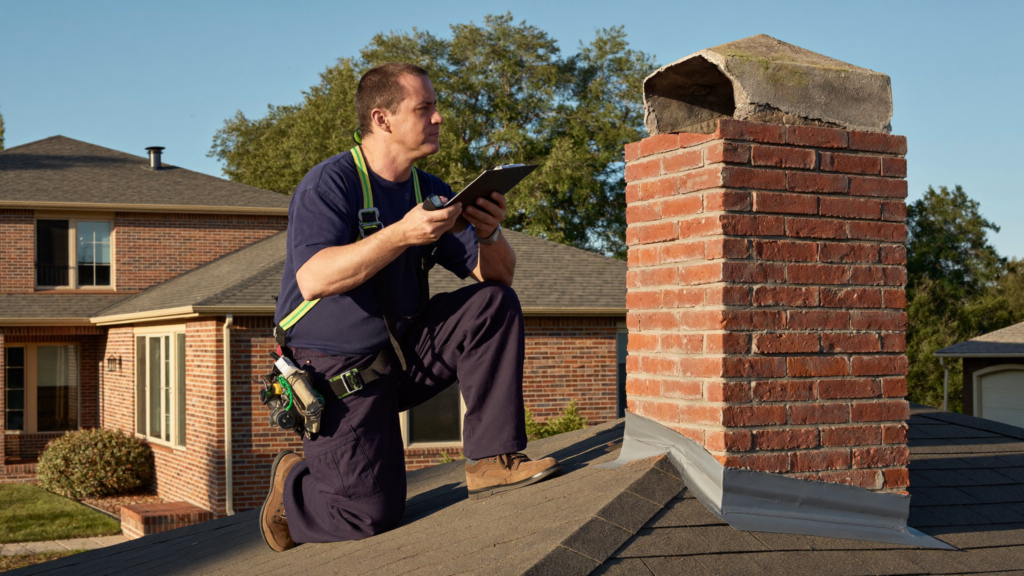
3. Inspect the Roofline and Flashing Area
This is often the real culprit, especially in Texas homes.
Look for:
Gaps between flashing and chimney
Rusted metal edges
Lifted shingles around the chimney base
Here’s the thing, even a tiny separation here can allow significant water entry over time. It doesn’t need to be obvious.
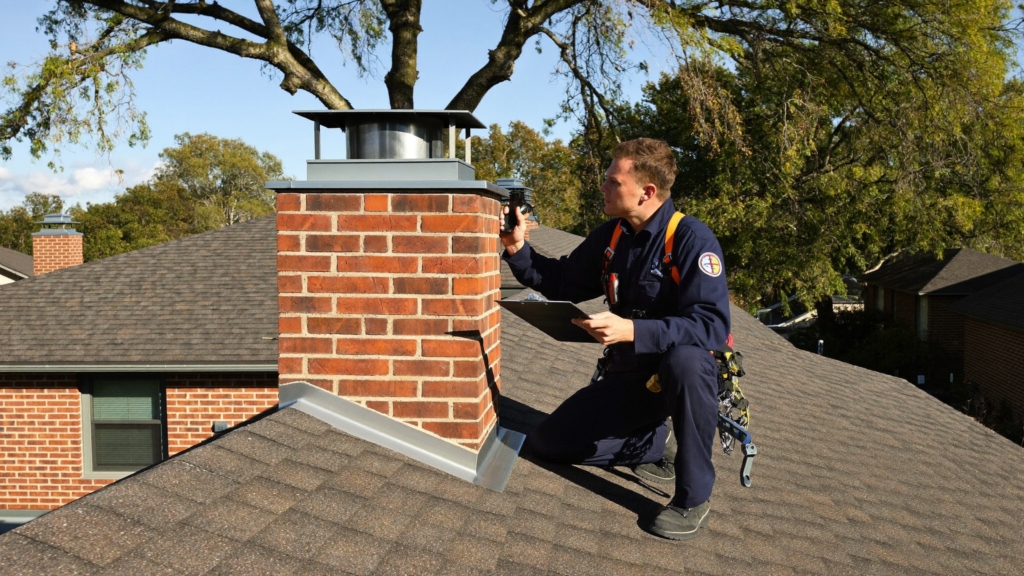
4. Examine the Chimney Crown
You may need binoculars or a roof inspection for this.
Check for:
Visible cracks
Uneven or crumbling surface
Water pooling on top
Even hairline cracks are enough. And honestly, those are the ones people ignore most.
5. Look at the Masonry Condition
Walk around the exterior.
Are bricks flaking or chipping?
Mortar joints missing or recessed?
White staining (efflorescence)?
This usually indicates long-term water absorption, not just a recent leak.
Pro Tip: Simulate a Rain Test
This is something professionals often do.
Using a hose, apply water to different parts of the chimney system, one section at a time:
Start at the bottom
Move upward gradually
Observe when water appears inside
It’s surprisingly effective. Not perfect, but it helps isolate the problem.
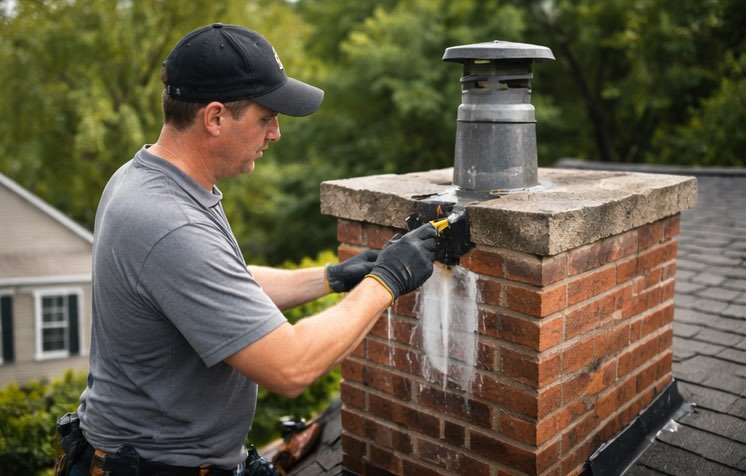
Chimney Leak Repair Solutions (What Actually Works)
Now, let’s talk solutions. Not just theory, but what tends to work in real-world Texas conditions.
1. Chimney Cap Installation or Replacement
If your chimney doesn’t have a cap, this should be the first fix. No debate.
Typical benefits:
Keeps rain out completely
Prevents animal entry
Reduces downdrafts
Estimated Cost in Texas:
$150 – $600 depending on size and material
This is one of those fixes that feels almost too simple, but it solves a lot of problems.
2. Flashing Repair or Replacement
If flashing is compromised, patching sometimes works, but not always long term.
Options include:
Resealing with roofing cement
Installing new step flashing
Full flashing replacement
Estimated Cost in Texas:
$300 – $1,500+ depending on complexity
And honestly, if the flashing was installed poorly the first time, it might be better to redo it entirely.
3. Chimney Crown Repair or Rebuild
Small cracks can be sealed. Larger damage usually requires rebuilding.
Common approaches:
Elastomeric sealant application
Crown resurfacing
Full crown reconstruction
Estimated Cost in Texas:
$300 – $2,500 depending on severity
I’ve seen crowns that look fine from a distance but are completely compromised up close. It’s deceptive.
4. Masonry Repair and Waterproofing
This is usually needed when leaks have been present for a while.
Includes:
Tuckpointing (replacing mortar joints)
Brick replacement
Waterproof sealant application
Estimated Cost in Texas:
$800 – $4,000+ depending on extent
Waterproofing alone is not a fix if structural damage already exists. That’s a common mistake.
5. Chimney Liner Repair (Condensation Issues)
If the problem is internal, you may need:
Flue liner repair or replacement
Insulated liner installation
Ventilation adjustments
Estimated Cost:
$1,500 – $5,000
This is less common, but when it’s the issue, it’s usually not minor.
Cost Breakdown Table (Texas Market)
| Repair Type | Low Cost | Average Cost | High Cost |
|---|---|---|---|
| Chimney Cap Installation | $150 | $350 | $600 |
| Flashing Repair | $300 | $800 | $1,500+ |
| Crown Repair | $300 | $1,200 | $2,500 |
| Masonry Repair | $800 | $2,500 | $4,000+ |
| Liner Replacement | $1,500 | $3,000 | $5,000+ |
Preventing Chimney Leaks (Long-Term Strategy)
This part often gets overlooked, but it’s probably the most valuable.
What Actually Helps:
Annual chimney inspections
Waterproofing every 5–7 years
Installing a quality chimney cap
Addressing minor cracks early
And maybe the most important one, don’t wait.
Because once water damage spreads, repairs escalate quickly. What could’ve been a $300 fix turns into a $3,000 project. I’ve seen that progression more times than I can count.
When to Call a Professional vs DIY Fixes
This is where things get a bit… subjective. Because technically, yes, there are some chimney issues you can handle yourself. But whether you should is another question.
I’ve seen homeowners successfully install a chimney cap in under an hour. I’ve also seen DIY flashing repairs that looked fine from the ground, but leaked worse after the next storm.
So it really depends on the problem, and maybe your tolerance for risk.
DIY Repairs (When It Might Be Okay)
You can usually handle these safely:
Installing or replacing a chimney cap
Applying waterproof sealant to minor crown cracks
Cleaning debris from the chimney top
Visual inspections from the ground
These are relatively low-risk. Still, climbing on a roof always carries some danger, especially with Texas roof pitches and heat.
Professional Repairs (Recommended)
You should strongly consider hiring a professional if:
Flashing needs repair or replacement
Crown damage is structural, not just surface-level
Masonry is deteriorating or spalling
There’s internal water damage or liner issues
You’re unsure of the exact leak source
The reality is, chimney systems are interconnected. Fixing one component without addressing the root cause sometimes makes things worse.
Common Mistakes Homeowners Make (That Lead to Bigger Problems)
This part is important. Not just for SEO, but because it genuinely saves people money.
And maybe some frustration.
1. Assuming It’s a Roof Leak
This happens all the time.
Water shows up on the ceiling near the fireplace, and the first instinct is to blame the roof. Roofing companies get called, repairs are made, and… the leak continues.
Because the chimney was the issue all along.
2. Using the Wrong Sealant
Not all sealants are designed for chimney use.
Some homeowners use basic caulking or roof tar. It might look sealed temporarily, but it cracks quickly under heat and sun exposure.
Chimneys need breathable waterproofing, not just a surface barrier.
3. Ignoring Small Cracks
Hairline cracks in the crown or mortar seem harmless.
They’re not.
Water finds those cracks, expands them over time, and eventually creates structural damage.
It’s slow. But consistent.
4. Skipping Annual Inspections
This one’s understandable. If nothing looks wrong, it’s easy to assume everything’s fine.
But chimney leaks often develop internally before visible signs appear.
By the time you see damage, it’s usually been there for a while.
5. Delaying Repairs
This is probably the biggest one.
A small issue today can turn into:
Interior drywall damage
Mold growth
And the cost difference is… significant.
Seasonal Chimney Maintenance Tips for Texas Homes
Texas weather doesn’t follow a gentle pattern. It swings.
Hot summers, sudden storms, occasional freezes. Your chimney feels all of it.
So maintenance should be seasonal, not just annual.
Spring (Post-Storm Check)
After heavy rain season:
Inspect for new leaks or stains
Check chimney cap condition
Look for flashing separation
This is often when new issues show up.
Summer (Heat Damage Prevention)
This is when materials expand and dry out.
Check for crown cracks
Inspect mortar joints
Consider waterproofing application
Heat is quiet damage. You don’t always see it immediately.
Fall (Pre-Use Inspection)
Before using your fireplace:
Schedule a professional inspection
Clean the chimney if needed
Ensure no moisture damage inside
Even if you don’t use it often, it’s still worth checking.
Winter (Active Monitoring)
During use:
Watch for unusual smells
Check for draft issues
Monitor for moisture buildup
Texas winters aren’t extreme, but they still expose underlying problems.
Maintenance Checklist
| Season | Recommended Action | Priority Level |
|---|---|---|
| Spring | Inspect for leaks after storms | High |
| Summer | Check crown and masonry cracks | Medium |
| Fall | Full chimney inspection and cleaning | High |
| Winter | Monitor usage and moisture signs | Medium |
Frequently Asked Questions
Why does my chimney leak only when it rains?
Can chimney leaks fix themselves?
How urgent is a chimney leak?
Is chimney waterproofing worth it?
How much does chimney leak repair cost in Dallas?
Final Thoughts
Chimney leaks don’t usually start as emergencies. They start small. Quiet. Easy to ignore.
A tiny crack. A loose seal. A missing cap that no one noticed.
And then, over time, it builds.
If there’s one takeaway here, it’s this, early detection changes everything. The sooner you identify the issue, the simpler, and cheaper, the fix tends to be.
Or at least, that’s been the pattern I’ve seen over and over.
Find our chimney safety tips faster on Google